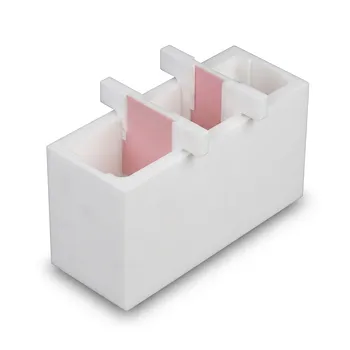
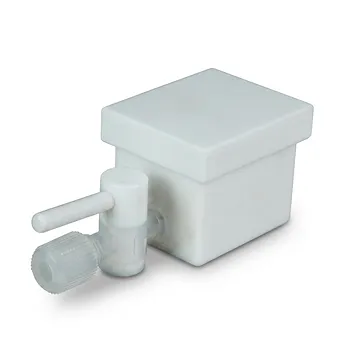
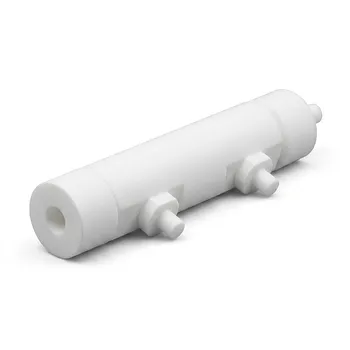
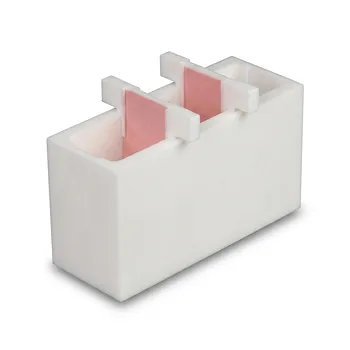
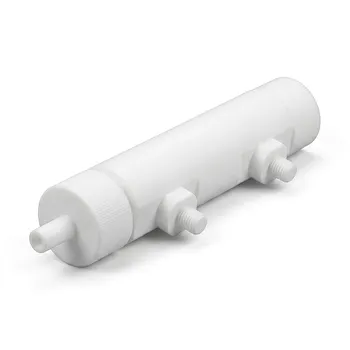
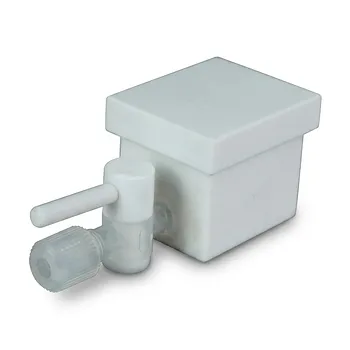
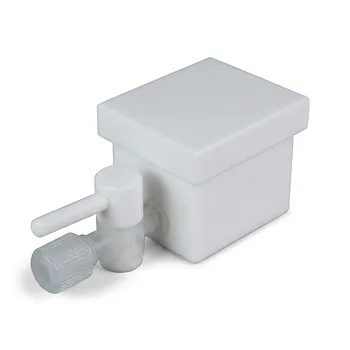
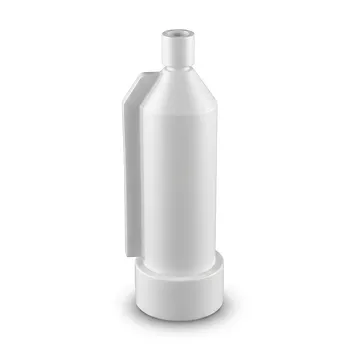
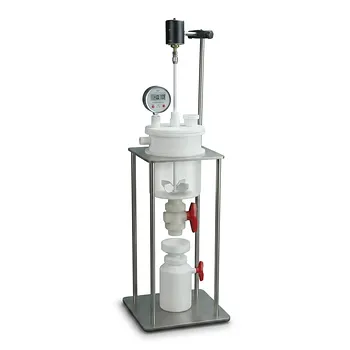
Custom PTFE electrochemical cells provide a robust, chemically inert environment optimized for high-precision optical access. These cells utilize integrated quartz windows and fixed-geometry housings to maintain a constant laser focus on the electrode surface during polarization. This specific design enables the real-time detection of transient reaction intermediates while protecting the system from corrosive electrolytes and electrical interference.
Using custom PTFE cells ensures signal purity and mechanical stability during in-situ experiments. By combining extreme chemical resistance with precision-machined geometry, researchers can capture accurate vibrational spectra without interference from cell degradation or electrode shifting.
Superior Chemical and Electrical Isolation
Exceptional Resistance to Corrosive Electrolytes
Polytetrafluoroethylene (PTFE) is chosen for its superior chemical stability and resistance to corrosion, even when exposed to high concentrations of acids or alkalis. Unlike glass, which can degrade in alkaline environments or hydrofluoric acid, PTFE remains inert, ensuring that no material degradation leaches into the electrolyte.
Elimination of Background Interference
The high-purity nature of PTFE prevents the introduction of background signals or interference currents during testing. Its properties as an electrical insulator allow for precise control over the electrochemical environment, which significantly improves the reliability of the resulting data.
Long-Term Material Durability
Custom-machined PTFE cells offer physical toughness and resistance to long-term immersion. This durability ensures the cell maintains its structural integrity and sealing performance even during extended experiments or under high oxidation potentials.
Precision Optical and Geometric Design
Optimized Laser Penetration and Focus
Custom cells feature an integrated quartz optical window that allows laser beams to penetrate and focus directly on the electrode-electrolyte interface. This high-transparency window ensures maximum transmittance for both the excitation laser and the returning Raman scattered signals.
Minimizing Signal Absorption
A key design advantage is the ability to minimize the travel distance of the laser through the electrolyte. By reducing this path length, the cell limits signal absorption by the liquid, allowing for the clear detection of faint vibrational signals from active sites.
Fixed Electrode Geometry
High-precision CNC machining ensures that the electrode position remains fixed at a constant vertical angle relative to the laser. This stability is critical for maintaining focus on the catalyst layer, enabling the consistent capture of transient intermediates like *CO or *NH2.
Mitigation of Gas Bubble Interference
The non-polar surface of PTFE naturally helps minimize the adhesion of gas bubbles to the cell walls. This prevents bubbles from obstructing the optical path, ensuring the Raman laser remains accurately focused on the working electrode throughout the reaction.
Understanding the Trade-offs
While PTFE offers unmatched chemical resistance, it is a soft fluoropolymer that can be prone to "creep" or deformation under extreme mechanical pressure. This means that while sealing is excellent, over-tightening components can lead to permanent structural changes over time.
Additionally, because PTFE is completely opaque, researchers cannot visually monitor the entire interior of the cell during the experiment. Reliance is placed entirely on the optical window and the precision of the initial setup, making the quality of the custom machining and assembly paramount.
How to Apply This to Your Research
When designing or selecting a custom PTFE cell, your choice should be driven by the specific requirements of your catalyst and electrolyte system.
- If your primary focus is high-sensitivity intermediate detection: Prioritize a design that minimizes the electrolyte gap between the quartz window and the electrode surface to reduce Raman signal attenuation.
- If your primary focus is aggressive alkaline or acidic testing: Ensure the cell body is machined from high-purity PTFE to prevent leaching and ensure long-term stability that glass cannot provide.
- If your primary focus is data reproducibility: Utilize a cell with fixed internal guides and CNC-machined interfaces to ensure the three-electrode geometry remains identical across every trial.
By aligning the cell's geometric precision with the chemical demands of your electrolyte, you ensure that your Raman spectra reflect true surface chemistry rather than experimental artifacts.
Summary Table:
| Key Feature | Design Advantage | Research Impact |
|---|---|---|
| High-Purity PTFE Body | Universal chemical resistance (pH 0-14) | Prevents electrolyte contamination and cell corrosion |
| Integrated Quartz Window | High optical transmittance & short path length | Maximizes signal detection of transient intermediates |
| Fixed CNC-Machined Geometry | Stable electrode positioning | Ensures consistent laser focus and data reproducibility |
| Non-polar Surface | Reduced bubble adhesion | Prevents optical obstruction during gas-evolving reactions |
Elevate Your Research with KINTEK’s Precision PTFE Solutions
Maximize your experiment's accuracy with KINTEK, your premier partner for high-performance fluoropolymer laboratory supplies. From everyday essentials like beakers, crucibles, and centrifuge tubes to advanced tools like custom-machined PTFE/PFA electrochemical cells, battery testing fixtures, and microwave digestion vessels, we offer unmatched end-to-end custom CNC fabrication.
Our expertise extends across high-purity trace analysis instruments, fluid transfer components (tubing, fittings, valves), and specialized reaction apparatus. Whether you require bespoke laboratory setups or high-volume orders for consumables like stirring bars, O-rings, and gaskets, KINTEK delivers the durability and chemical inertness your research demands.
Ready to optimize your lab setup with superior fluoropolymer performance? Contact our technical experts today to discuss your custom project!
References
- Pandi Muthukumar, Chundong Wang. Unlocking a Water Coordination Environment in Co-Based Metal–Organic Frameworks for Advanced Nitrate-to-Ammonia Electroreduction. DOI: 10.1021/jacs.5c07066
This article is also based on technical information from Kintek Knowledge Base .
Related Products
- Corrosion Resistant PTFE Electrochemical Cell for New Energy Research Inert Insulating Customizable Lab Reaction Vessel
- Custom PTFE Corrosion Resistant Insulating Electrophoresis Reaction Cell with Septum and Valves for Low Background Trace Analysis
- Custom PTFE Reaction Box Opaque White Square Electrochemical Cell Tank
- White PTFE Electrolytic Cell with Movable Slider and Insulated Lid for Fluorine Corrosion Resistance
- Custom PTFE Electrolytic Cell Corrosion Resistant Low Background Reaction Vessel with Inlet Outlet Ports
People Also Ask
- What parameters govern the electrochemical decomposition of perfluorooctanoic acid (PFOA) in aqueous solutions, and why are custom PTFE electrochemical cells preferred? Key factors include anode material, current density, electrolyte, and cell design.
- How do custom PTFE electrochemical cells improve the accuracy of stability testing for alkaline catalysts compared to glass cells?
- How does the hydrophobicity of PTFE benefit electrochemical measurements? Enhance Stability and Precision in Your Lab
- What makes PTFE an ideal construction material for custom electrochemical cells and electronic analytical instrumentation housings? Discover superior chemical resistance and electrical insulation
- Why must seawater electrolysis test cells have high corrosion resistance? Protect catalyst stability & data accuracy.