All Questions
How Do The Chemical Resistance And Low-Temperature Flexibility Mechanisms Of Fluorinated Elastomers Compare When Selecting Materials For Fluid Transfer Components Like Seals, Gaskets, And O-Rings In Aggressive Chemical Environments?
Compare chemical resistance vs low-temp flexibility in fluorinated elastomers for seals. Learn how to match materials to aggressive fluids.
How Do Ptfe And Pfa Compare To Fep, Etfe, And Pvdf In Temperature And Insulation? Discover The Top Choice For Lab And Fluid Handling.
Compare continuous-use temperatures and electrical properties of PTFE, PFA, FEP, ETFE, and PVDF. Find the best fluoropolymer for your lab.
What Are The Chemical Resistance Limitations Of Pei Vs Ptfe/Pfa? Key Differences For Lab Use
Discover PEI's chemical limitations vs PTFE/PFA: solvent attack, stress cracking, and why fluoropolymers excel in aggressive lab environments.
How Does An Acid Primer Containing A Ptfe Dispersion Work? Bonding Fluoropolymers To Metal Substrates Effectively
Learn how acid primers with PTFE dispersion create a durable inorganic bridge for strong adhesion of fluoropolymer coatings.
What Role Do Phosphorus-Containing Segments Play In Improving The Flame Retardancy And Thermal Safety Of Fluoropolymer Fluid Transfer Components And Storage Tanks? Discover Key Benefits For Enhanced Fire Safety.
Phosphorus segments reduce peak heat release and support self-extinguishing, enhancing fire safety in fluoropolymer fluid handling. Learn more.
How Do Fluorinated Functional Groups And Cross-Linking Mechanisms Enhance The Thermal Stability And Chemical Resistance Of High-Performance Fluoropolymer Labware Used In High-Temperature Applications? Discover Key Insights
Learn how fluorination and cross-linking boost thermal stability and chemical resistance in PTFE/PFA labware for high-temperature use.
How Do Fep And Pfa Differ In Continuous Service Temperature? Pfa Wins For High-Temp Lab Use
Discover the key difference: PFA withstands continuous heat up to 260°C, FEP only 200°C. Choose wisely for lab apparatus.
How Does Pfa Compare To Ptfe Regarding Continuous Operating Temperature And Processability? Discover Why Pfa Offers Similar Thermal Limits With Superior Melt Processing For Complex Lab Components.
Compare PFA vs PTFE: both withstand ~260°C, but PFA's melt processability enables complex, seamless lab equipment. Choose the right material.
Why Do Single-Crystalline P(Vdf-Trfe) Fluoropolymer Films Demonstrate Superior Piezoelectric Performance Compared To Conventional Folded-Chain Lamellar Films? Achieve Higher D33 Up To -38 Pc/N
Discover how single-crystalline P(VDF-TrFE) films enhance piezoelectric output via extended-chain crystals, high crystallinity, and orientation, achieving d33 up to -38 pC/N.
What Mechanisms Determine The Thermal Depolymerization Limits And Flame-Retardant Safety Of High-Performance Fluorinated Polymers In High-Temperature Laboratory Equipment? A Comprehensive Guide To Ptfe, Pfa, And More.
Learn how backbone chemistry, morphology, and environment affect fluoropolymer thermal limits and fire safety. Essential for lab equipment selection.
How Do Micro-Structuring And Surface Plasma Treatments Modify The Hydrophobic And Hydrophilic Properties Of Fluorinated Polymer Components Used In Advanced Fluid Handling And Laboratory Apparatus?
Learn how micro-texturing and plasma processing control wetting on PTFE/PFA for precise fluid handling.
What Structural Factors Influence The Crystallinity, Optical Transparency, And Mechanical Flexibility Of Fluoroalkoxy Polymer Films Used In Laboratory Applications?
Learn how side-chain length, terminal fluorination, and processing affect crystallinity, transparency, and flexibility in fluoroalkoxy films.
How Does Mixed-Substituent Side-Chain Engineering In Fluoropolymer Materials Achieve Low-Temperature Flexibility And Resistance To Aggressive Hydraulic Fluids For Critical Seals And Fluid Transfer Components?
Discover how mixed-substituent engineering enables flexible, chemical-resistant fluoropolymers for critical seals and fluid handling.
How Do Perfluorinated Monomer Building Blocks Impart Superhydrophobic And Oleophobic Properties? Low Surface Energy Is Critical For Fluoropolymer Labware.
Learn how fluorinated monomers reduce surface energy, enabling water/oil repellency, and why low-surface-energy PTFE/PFA lab equipment prevents contamination.
How Do Fluorinated Fluids And Lubricants Maintain Compatibility With Gaskets And O-Rings In High-Performance Fluid Systems? Achieve Reliable Sealing And Long Service Life With Kemper's Expert Fluid Selection.
Learn how fluorinated fluids preserve gasket and O-ring integrity through chemical inertness and thermal stability for leak-free systems.
Why Is Ptfe An Ideal Material Choice For Sealing Gaskets, Valves, And Fluid Transfer Tubing Exposed To Extremely Aggressive Chemicals? Discover Its Superior Chemical Resistance And Reliability
Learn why PTFE is the top choice for aggressive chemical service, offering unmatched inertness, purity, and durability in gaskets, valves, and tubing.
Why Are Ptfe Gaskets Required For The Microwave-Assisted Hydrothermal Synthesis Of Cau-63? Ensuring Mof Phase Purity
Discover why PTFE gaskets are essential for CAU-63 MOF synthesis, offering chemical inertness, microwave transparency, and high-pressure sealing.
Why Is It Necessary To Use High-Performance Sealing Gaskets In A Single Cell Test Fixture? Ensure Data Precision
Discover why high-performance gaskets are vital for single cell test fixtures to prevent gas crossover, protect catalysts, and optimize compression.
What Are The Primary Material Properties Of Ptfe That Contribute To Its Effectiveness As A Sealing Material? Key Benefits
Explore why PTFE is the premier choice for sealing, featuring chemical inertness, low friction, and resilience from -200°C to +260°C.
What Installation Considerations Are Necessary To Ensure The Maximum Reliability Of Ptfe Gaskets? Pro Sealing Guide
Master PTFE gasket installation with our guide on surface finish, torque sequences, and material selection for a leak-free, reliable seal.
How Does The Use Of Ptfe Gaskets Impact The Total Cost Of Ownership In Industrial Fluid-Handling? Optimize Long-Term Roi
Learn how PTFE gaskets lower total cost of ownership by reducing maintenance, preventing leaks, and extending equipment life in industrial systems.
What Are The Benefits Of Using Ptfe Gaskets In Semiconductor And High-Purity Electronics Manufacturing? Ensure Ultra-Purity
Discover how PTFE gaskets prevent contamination, resist aggressive etchants, and ensure high process yields in semiconductor manufacturing.
What Role Do Ptfe Gaskets Play In Power Generation Systems? Critical Reliability For Fossil And Nuclear Plants
Discover how PTFE gaskets ensure safety and efficiency in power plants through superior chemical resistance, insulation, and thermal stability.
How Do Ptfe Gaskets Perform In Oil And Gas Environments? Superior H2S Resistance And Rgd Durability For Sour Service
Discover how PTFE gaskets handle sour service (H2S) and high pressure. Learn about RGD resistance, creep reduction, and sealing in oil & gas environments.
Why Are Ptfe Gaskets Preferred For Pharmaceutical, Biotechnology, And Food And Beverage Applications? Ensure Ultra-Purity
Learn why PTFE gaskets are the top choice for pharma and food industries, offering chemical inertness, FDA compliance, and resilience to CIP/SIP.
What Advantages Do Ptfe Gaskets Provide In The Chemical Processing Industry? Top Benefits For Safety And Reliability
Learn how PTFE gaskets ensure safety in chemical processing with chemical immunity, extreme thermal stability, and leak prevention up to 260°C.
How Do Filled Ptfe And Eptfe Gaskets Differ From Virgin Ptfe? Optimize Your Seals For Strength And Stability
Compare virgin, filled, and ePTFE gaskets. Learn how to solve PTFE cold flow and choose the best material for high-pressure or high-purity sealing.
What Are The Primary Material Characteristics Of Ptfe Gaskets? Achieve Superior Sealing Performance & Durability.
Explore the key traits of PTFE gaskets, from chemical inertness and thermal range to managing cold flow for reliable, leak-free industrial seals.
What Are The Common Design Configurations For Ptfe-Based Industrial Gaskets? A Guide To Eptfe, Filled, & Hybrid Seals
Explore PTFE gasket designs including virgin, filled, ePTFE, and spiral-wound configurations to prevent cold flow and ensure chemical resistance.
How Do Fillers Improve The Mechanical Performance Of Ptfe Gaskets Compared To Virgin Ptfe? Boost Strength & Reliability
Learn how fillers like glass and carbon enhance PTFE gaskets by reducing creep, increasing wear resistance 1,000x, and improving thermal stability.
Why Is Expanded Ptfe (Eptfe) Specifically Advantageous For Sealing Fragile Or Irregular Flanges? Protect Your Hardware
Discover how ePTFE seals irregular and fragile flanges at low bolt loads while resisting creep and universal chemicals for long-term reliability.
What Is Creep Or Cold Flow In Ptfe Gaskets And How Does It Affect Seal Integrity? Expert Guide To Leak-Proof Seals
Learn how PTFE creep and cold flow lead to bolt relaxation and leaks. Discover engineering solutions like ePTFE to ensure long-term seal integrity.
What Is The Primary Sealing Mechanism Of A Ptfe Gasket When Installed In A Flanged Joint? Understanding Plastic Flow
Learn how PTFE gaskets create leak-proof seals through stress-induced plastic deformation, filling surface irregularities under compressive stress.
What Is The Functional Temperature Range For Ptfe Gaskets In Continuous Service? Master Thermal Stability And Limits
Master the thermal limits of PTFE gaskets (-268°C to +260°C). Discover how to prevent decomposition and ensure reliable cryogenic sealing.
What Are The Chemical Resistance Characteristics Of Ptfe In Industrial Sealing Applications? Ensure Ultimate Inertness
Discover how PTFE’s carbon-fluorine bonds provide universal pH 0-14 resistance and thermal stability up to 260°C for industrial sealing safety.
What Types Of Gasket Materials Are Available Besides Ptfe? Find The Perfect Seal For Your Application
Explore gasket materials beyond PTFE like Viton, EPDM, graphite, and more. Learn their properties for temperature, pressure, and chemical resistance.
Why Are Ptfe Gaskets Considered Reliable Sealing Solutions? Unmatched Chemical & Thermal Stability
Discover why PTFE gaskets are the top choice for sealing in harsh environments, offering extreme chemical resistance and a wide temperature range from -200°C to +260°C.
What Are The Steps For Installing A Ptfe Gasket? A Guide To A Leak-Free Seal
Learn the critical steps for installing a PTFE gasket, from surface preparation to controlled bolt tightening, to ensure a reliable, long-lasting seal.
How Do You Select The Right Ptfe Gasket For An Application? A Guide To Matching Material To Your Demands
Learn how to choose the right PTFE gasket by evaluating temperature, pressure, chemical compatibility, and mechanical stress to prevent failure.
What Are The Characteristics Of Glass-Filled Ptfe Gaskets? Boost Strength & Stability For Demanding Seals
Discover how glass-filled PTFE gaskets enhance mechanical strength, reduce creep, and improve wear resistance for high-pressure, high-temperature applications.
What Are The Different Types Of Ptfe Gaskets? A Guide To Choosing The Right Seal
Compare Virgin, Filled, Expanded, and Envelope PTFE gaskets. Understand their strengths for chemical resistance, pressure, and temperature to select the best seal.
What Are The Benefits Of Using Ptfe Gaskets? Superior Sealing For Extreme Conditions
Discover why PTFE gaskets excel in chemical resistance, temperature stability, and long-term performance across industries.
What Are The Main Properties Of Ptfe Gaskets? Unlock Superior Sealing In Extreme Conditions
Explore the key properties of PTFE gaskets: chemical inertness, extreme temperature range, low friction, and how to manage creep for reliable sealing.
What General Maintenance Practices Can Extend The Lifespan Of Ptfe Gaskets? Optimize Selection, Installation, And Monitoring
Learn how to extend PTFE gasket lifespan through proper material selection, correct installation techniques, and effective monitoring strategies.
How Can Anti-Stick Coatings Benefit Ptfe Gasket Maintenance? Reduce Downtime And Protect Equipment
Learn how anti-stick coatings prevent PTFE gaskets from sticking to flanges, enabling faster removal, preventing damage, and improving seal reliability.
Why Is Regular Inspection Of Ptfe Gaskets Necessary? Ensure Safety And Prevent Costly Leaks
Learn why regular PTFE gasket inspection is critical for detecting creep, chemical attack, and damage to maintain system integrity and safety.
What Are The Critical Factors For Proper Ptfe Gasket Installation? Ensure A Leak-Free, Long-Lasting Seal
Learn the critical steps for proper PTFE gasket installation, including flange prep, alignment, and torque patterns, to prevent cold flow and ensure a reliable seal.
How Should Ptfe Gaskets Be Stored To Maintain Their Quality? Ensure Long-Term Sealing Reliability
Learn the best practices for storing PTFE gaskets to prevent distortion and contamination, ensuring optimal performance and sealing integrity.
What Precautions Should Be Taken When Handling Ptfe Gaskets? Ensure Longevity & Performance
Learn essential handling tips for PTFE gaskets to prevent contamination, damage, and ensure reliable sealing in industrial applications.
Why Is Understanding Operating Conditions Important For Ptfe Gasket Maintenance? Prevent Costly Seal Failure
Learn how temperature, pressure, and chemical media dictate PTFE gasket selection to ensure seal integrity and prevent downtime.
What Industries Benefit The Most From Using Ptfe Gaskets? Ensure Reliability In Critical Applications
Discover why chemical, pharmaceutical, food & beverage, and electronics industries rely on PTFE gaskets for superior chemical resistance, purity, and temperature stability.
How Do Ptfe Gaskets Contribute To Cost Savings? Achieve Long-Term Operational Efficiency
Discover how PTFE gaskets reduce costs through superior durability, less maintenance, and minimized downtime in harsh chemical and thermal environments.
What Electrical Insulation Benefits Do Ptfe Gaskets Provide? Unmatched Protection For Harsh Environments
Discover how PTFE gaskets provide superior dielectric strength, chemical resistance, and thermal stability for reliable electrical insulation.
What Are The Benefits Of The Low Friction And Non-Stick Surface Of Ptfe Gaskets? Enhance Equipment Life And Process Purity
Discover how PTFE gaskets' low friction and non-stick properties reduce wear, prevent contamination, and simplify maintenance for superior sealing performance.
How Does The Wide Temperature Range Of Ptfe Gaskets Benefit Industrial Applications? Achieve Reliable Sealing From -200°C To +260°C
Explore how PTFE gaskets maintain sealing integrity from cryogenic to high-temperature processes, ensuring safety and reducing downtime in harsh industrial environments.
What Makes Ptfe Gaskets Suitable For The Electrical And Electronics Industry? Superior Insulation & Sealing For Critical Electronics
Discover why PTFE gaskets are ideal for electronics: superior dielectric strength, high-temperature resistance, and chemical inertness for reliable performance.
Why Are Ptfe Gaskets Used In Pharmaceutical And Food Industries? Ensuring Purity, Safety, And Compliance
Discover why PTFE gaskets are essential for purity, safety, and regulatory compliance in pharmaceutical and food processing. Learn about their chemical inertness and non-stick properties.
What Is The Temperature Range That Ptfe Gaskets Can Withstand? A Guide From -200°C To +260°C
Learn the operating temperature range of PTFE gaskets (-200°C to +260°C), their performance in extreme conditions, and how to select the right type for your application.
In Which Chemical Environments Are Ptfe Gaskets Commonly Used? Sealing Solutions For Aggressive Chemicals
Explore the applications of PTFE gaskets in sealing corrosive acids, bases, solvents, and oxidizers across chemical, pharmaceutical, and industrial sectors.
What Are The Key Properties That Make Ptfe Gaskets Suitable For Industrial Applications? | Kintek
Explore PTFE gasket properties: extreme chemical resistance, high-temperature stability, low friction, and purity for demanding industrial sealing.
What Is The Ph Range That Ptfe Enveloped Gaskets Can Handle? Achieve Universal Chemical Resistance
PTFE enveloped gaskets handle the full pH 0-14 spectrum, offering superior chemical resistance for acids, caustics, and aggressive media.
What Are The Available Configurations For Ptfe Envelope Gaskets? Engineer The Perfect Seal For Your Application
Explore PTFE envelope gasket configurations: envelope type (milled/slit), insert material, and dimensions. Match the seal to your chemical and mechanical needs.
What Materials Are Used In The Core Of Ptfe Envelope Gaskets? Select The Right Core For Chemical Resistance & Strength
Learn about the core materials (CNAF, Flexible Graphite) in PTFE envelope gaskets and how they combine chemical inertness with mechanical strength for demanding seals.
What Are The Key Characteristics Of Ptfe Enveloped Gaskets? Solve Demanding Sealing Challenges
Discover how PTFE enveloped gaskets combine universal chemical resistance with mechanical strength for high-purity, aggressive chemical sealing applications.
Which Industries Commonly Use Ptfe Envelope Gaskets? Critical Seals For Chemical & Hygienic Processes
Explore the key industries—chemical, pharmaceutical, food & beverage—that rely on PTFE envelope gaskets for chemical resistance, purity, and reliability.
In What Types Of Environments Are Ptfe Envelope Gaskets Effective? Superior Sealing For Corrosive & Delicate Flange Systems
Discover the key applications for PTFE envelope gaskets, including corrosive chemical processing, delicate glass-lined flanges, and moderate temperature/pressure systems.
Why Are Envelope Gaskets Also Called 'Encased' Or 'Enclosed' Ptfe Seals? The Key To Superior Chemical Sealing
Learn how the unique enclosed design of PTFE envelope gaskets combines chemical resistance with mechanical strength for reliable sealing.
What Are The Main Benefits Of Using Ptfe Envelope Gaskets? Achieve Superior Sealing In Harsh Environments
Discover the key benefits of PTFE envelope gaskets, including unmatched chemical resistance, superior sealing for imperfect flanges, and high purity for sensitive processes.
What Is The Temperature Range For Expanded Ptfe? From -400°F To 500°F For Extreme Environments
ePTFE performs reliably from -240°C (-400°F) to 260°C (500°F), maintaining flexibility and sealing integrity in cryogenic and high-heat applications.
How Does Expanded Ptfe Sheet Compare To Other Ptfe-Based Gaskets? Discover The Superior Sealing Solution
Learn why expanded PTFE (ePTFE) outperforms virgin and filled PTFE in sealability, creep resistance, and chemical resistance for demanding applications.
What Microstructure Does Expanded Ptfe Sheet Have? Unlock Superior Sealing & Insulation
Learn how the unique node-and-fibril structure of ePTFE sheet provides exceptional sealability, dielectric strength, and thermal insulation.
What Additional Advantages Does Expanded Ptfe Offer? Superior Sealing, Stability & Purity For Critical Applications
Discover how expanded PTFE (ePTFE) offers superior mechanical stability, sealing reliability, and food-grade purity for demanding industrial applications.
What Are The Primary Advantages Of Expanded Ptfe? Achieve Superior Sealing And Performance
Discover the key benefits of expanded PTFE (ePTFE), including superior conformability for sealing, extreme chemical resistance, and biocompatibility for medical implants.
How Is Expanded Ptfe Typically Used In Flange Applications? Solve Leaks On Worn Or Damaged Flanges
Discover how ePTFE gaskets create superior seals on imperfect flanges, offering chemical inertness and high-temperature resistance for industrial applications.
Is Expanded Ptfe Suitable For Food And Pharmaceutical Applications? Ensure Purity And Compliance
Learn why FDA-approved expanded PTFE is ideal for food & pharma due to its chemical inertness, non-toxicity, and high-temperature resistance.
What Are The Common Applications Of Expanded Ptfe? Unlock High-Performance Sealing, Filtration & Medical Solutions
Explore the key uses of expanded PTFE (ePTFE) in industrial sealing, medical implants, and high-performance filtration. Learn how its microporous structure enables superior performance.
What Is Expanded Ptfe (Eptfe) And What Makes Its Structure Unique? Unlock Superior Sealing & Performance
Discover expanded PTFE (ePTFE): a microporous, fibrous material offering superior sealing, chemical inertness, and flexibility for demanding applications.
What Are The Safety Benefits Of Using Ptfe Flange Gaskets? Prevent Hazardous Leaks And Ensure System Integrity
Discover how PTFE flange gaskets prevent leaks with unmatched chemical resistance, extreme temperature stability, and superior seal reliability for hazardous applications.
Are Ptfe Flange Gaskets Customizable? Tailor Your Sealing Solution For Peak Performance
Learn how to customize PTFE flange gaskets by size, shape, and material composition to meet specific chemical, thermal, and pressure requirements.
What Makes Ptfe Flange Gaskets A Better Choice For Operational Efficiency? Maximize Uptime And Cut Costs
Discover how PTFE flange gaskets' chemical resistance, wide temperature range, and non-stick surface reduce maintenance and downtime for industrial operations.
Why Are Ptfe Flange Gaskets Suitable For Chemical Processing Industries? Unlock Superior Safety & Reliability
Discover why PTFE flange gaskets are the standard for chemical processing, offering unmatched chemical inertness, high temperature resistance, and enhanced safety.
What Temperature Range Can Ptfe Flange Gaskets Withstand? From Cryogenic -200°C To High-Temp +260°C
Learn the temperature limits of PTFE gaskets: standard range is -200°C to +260°C, with ePTFE options up to 315°C. Understand pressure-temperature trade-offs.
How Does The Non-Stick Surface Of Ptfe Flange Gaskets Benefit Installation And Maintenance? Cut Costs & Downtime
Discover how PTFE flange gaskets' non-stick surface prevents adhesion, reduces labor time, and protects flanges for faster, safer maintenance.
What Are The Benefits Of Using Ptfe Flange Gaskets? Achieve Superior Sealing In Harsh Industrial Environments
Discover the key benefits of PTFE flange gaskets: extreme chemical resistance, wide temperature range, and long-term reliability for demanding applications.
In Which Industries Are Ptfe Flange Gaskets Commonly Used? Essential Sealing Solutions For Demanding Applications
Discover key industries using PTFE flange gaskets for chemical resistance, purity & temperature stability in chemical, pharma, food & semiconductor applications.
What Are The Key Properties Of Ptfe Flange Gaskets? Unmatched Chemical & Thermal Resistance
Discover the key properties of PTFE gaskets: extreme chemical resistance, wide temperature range, low friction, and non-stick surface. Learn the trade-offs.
What Material Is Used To Make Ptfe Flange Gaskets? Choose The Right Ptfe For Your Sealing Needs
Learn about PTFE gasket materials: Virgin, Filled, and Expanded PTFE. Discover their properties, applications, and how to select the right type for your industry.
Why Are Ptfe Gaskets Considered A Preferred Sealing Solution? Ensure Reliability In Demanding Environments
Discover why PTFE gaskets are the top choice for sealing in harsh conditions, offering unmatched chemical inertness, extreme temperature stability, and superior conformability.
What Are The Longevity And Durability Benefits Of Ptfe Gaskets? Achieve Reliable, Long-Lasting Sealing Performance
Discover the key benefits of PTFE gaskets: exceptional chemical resistance, extreme temperature stability, and low wear for reduced maintenance costs.
How Do Ptfe Gaskets Contribute To Electrical Insulation? Ensuring Reliability In Harsh Environments
Learn how PTFE gaskets provide superior electrical insulation with high dielectric strength, chemical resistance, and thermal stability for demanding applications.
Why Are Ptfe Gaskets Considered Safe For Sensitive Applications? Ensure Purity And Reliability
Learn why PTFE gaskets are the safe choice for sensitive applications in food, pharma, and medical industries due to their chemical inertness and non-toxicity.
What Advantages Do Ptfe Gaskets Offer In Terms Of Friction And Wear? Achieve Low-Friction, Long-Lasting Seals
Discover how PTFE gaskets' low friction and non-stick surface reduce wear, lower energy costs, and extend service life in harsh environments.
What Electrical Properties Do Ptfe Gaskets Possess? Unmatched Insulation For High-Frequency & High-Voltage Applications
Discover why PTFE gaskets are elite electrical insulators with high resistivity, dielectric strength, and low signal loss for demanding applications.
Why Are Ptfe Gaskets Used In The Pharmaceutical And Food Industries? Ensure Purity And Safety In Sanitary Applications
Discover why PTFE gaskets are the top choice for pharmaceutical and food industries, offering chemical inertness, non-toxicity, and compliance with FDA/USDA standards.
What Makes Ptfe Gaskets Suitable For Cryogenic Applications? Maintain A Reliable Seal At -200°C
Discover why PTFE gaskets excel in cryogenic applications with superior flexibility, strength, and chemical inertness at temperatures as low as -200°C.
Why Are Ptfe Gaskets Preferred In High-Temperature Environments? Ensure Reliable Sealing Under Extreme Heat
Discover why PTFE gaskets excel in high-temperature applications up to 260°C (500°F), offering superior thermal stability, chemical resistance, and long-term performance.
In Which Industries Are Ptfe Gaskets Commonly Used? Ensuring Safety & Purity In Demanding Applications
Discover why PTFE gaskets are essential for chemical resistance in pharmaceuticals, food processing, petrochemicals, and more. Ensure purity and safety.
What Are The Key Properties Of Ptfe Gaskets? Unlock Superior Sealing In Harsh Industrial Environments
Discover the core properties of PTFE gaskets: chemical inertness, extreme temperature range, and low friction for reliable sealing in demanding applications.
What Are The Different Forms Of Ptfe Sheet Gasket Materials? Select The Right Ptfe For Your Sealing Needs
Compare virgin, filled, and expanded PTFE gasket materials. Learn how to choose based on chemical resistance, creep, and pressure for your application.
What Is The Correct Placement Of The Ptfe Washer In A Stopcock Plug Assembly? Ensure Smooth, Leak-Free Operation
Learn the critical role of PTFE washer placement in stopcock assemblies for reliable, grease-free sealing and smooth rotation in lab applications.
Related Products
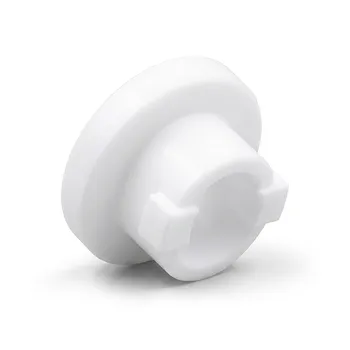
Custom PTFE Insulating Gaskets Corrosion Resistant Teflon Seals Tailored Engineering Plastic Components
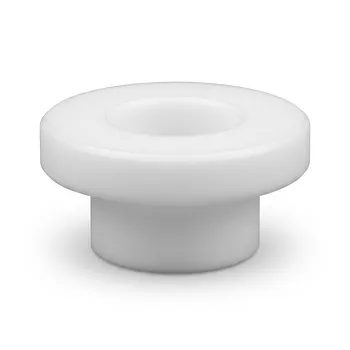
Custom PTFE Insulating Gaskets and Corrosion Resistant Fluoropolymer Seals for Industrial Electrical Applications
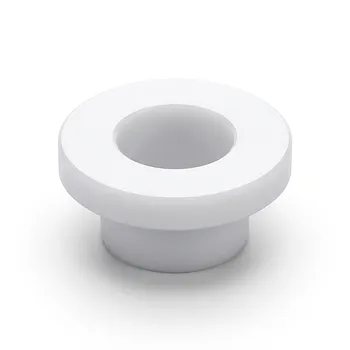
Customizable High Temperature Resistant Anti Static PTFE Insulating Gaskets Flame Retardant Corrosion Proof Industrial Seals

PTFE Deep Evaporating Dishes Customizable Laboratory and Industrial Solutions
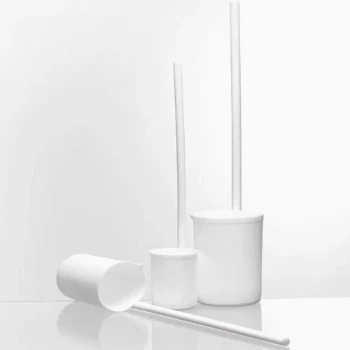
PTFE Chemical Solvent Sampling Spoon