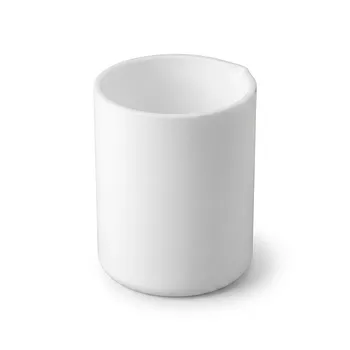
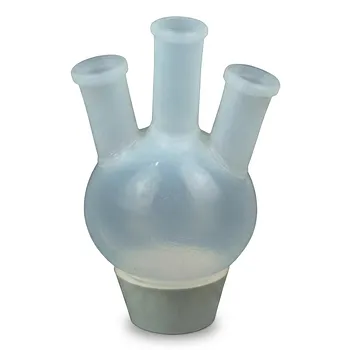
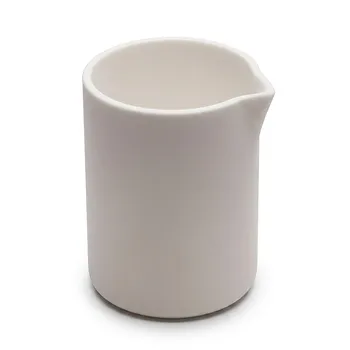
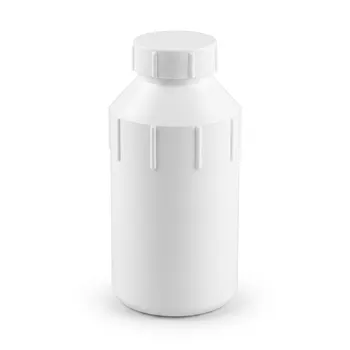
Fluorinated functional groups and cross-linking improve high-temperature fluoropolymer labware by protecting the molecular backbone and creating a more stable three-dimensional network. Pendant groups such as -CF₃, together with strong carbon-fluorine bonds, shield the polymer from chemical attack and delay thermo-oxidative degradation. Cross-linkable groups then connect polymer chains, reducing molecular movement, solvent penetration, and deformation at elevated temperatures; in certain systems, this produces 10% weight-loss degradation temperatures of approximately 480-530°C in air.
Fluorination provides the chemical shield, while cross-linking provides network stability. Together, these mechanisms help labware retain its shape, resist aggressive chemicals, and minimize contamination during high-temperature digestion, reaction, and sample-processing operations.
How Fluorinated Groups Protect the Polymer
Strong Carbon-Fluorine Bonds Resist Breakdown
The carbon-fluorine bond is highly stable, and fluorine's high electronegativity creates a strongly electron-withdrawing environment around the polymer chain. This makes the backbone less vulnerable to oxidation, hydrolysis, and attack by acids, bases, and reactive solvents.
Fully fluorinated materials such as PTFE and PFA use this effect extensively. Their fluorine-rich structures remain chemically inert in conditions where conventional hydrocarbon-based plastics can swell, crack, soften, or decompose.
Fluorine Creates a Protective Molecular Sheath
Fluorine atoms and bulky perfluoroalkyl groups, including -CF₃, surround and electronically shield the carbon backbone. This protective sheath limits access by aggressive reagents and reduces the likelihood that atmospheric oxygen or corrosive chemicals will initiate chain degradation.
The same shielding helps explain the resistance of fluoropolymer labware to concentrated alkaline solutions, strong acids, and aggressive organic solvents. It is particularly valuable in microwave digestion, acid digestion, and high-temperature reaction workflows.
Fluorinated Units Raise Thermal Decomposition Temperatures
Replacing vulnerable hydrocarbon or unfluorinated vinyl ether segments with units such as chlorotrifluoroethylene, hexafluoropropylene, or perfluoromethyl vinyl ether can substantially delay thermal decomposition. Fluorinated segments generally withstand higher temperatures before breakdown begins.
The exact temperature depends on the polymer architecture, fluorine content, atmosphere, heating rate, and measurement method. Therefore, a material's published operating limit should be used for equipment selection rather than relying only on a decomposition temperature.
How Cross-Linking Improves High-Temperature Performance
Cross-Linking Restrains Chain Movement
In an uncross-linked thermoplastic, polymer chains can move more freely as temperature rises. This movement can cause softening, creep, dimensional change, or loss of mechanical strength even before chemical decomposition occurs.
Cross-linking connects neighboring chains into a network. The resulting structure restricts chain mobility, helping components maintain their dimensions and mechanical integrity during prolonged exposure to heat and pressure.
Cross-Linking Reduces Solvent Penetration
A dense cross-linked network is difficult for solvent molecules to separate or dissolve. In trifunctional or tetrafunctional trifluorovinyl ether systems, cross-linking can transform a linear thermoplastic into an insoluble perfluorocyclobutane-based network.
These networks can resist solvents such as THF, DMF, and chloroform, while also maintaining high thermal endurance. This property is useful when labware must be washed, post-treated, or exposed to solvent systems that would dissolve or swell less robust polymers.
Cross-Linking Improves Shape Stability
Thermal cross-linking of internal fluoroolefin groups can produce insoluble materials with high thermal endurance and no observed glass transition below approximately 350°C in the referenced systems. This indicates that the material remains relatively resistant to large-scale molecular softening within that temperature range.
For specialized fluid-transfer components, electrochemical cell bodies, and custom-machined parts, this stability reduces the risk of warping, dimensional drift, and loss of sealing or fit during elevated-temperature service.
What This Means for Fluoropolymer Labware
Microwave and Acid Digestion Vessels
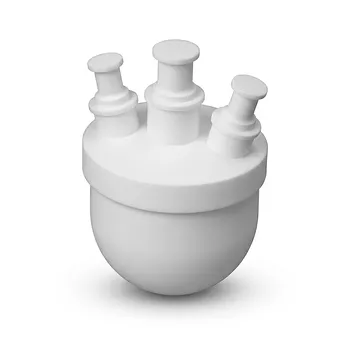
Digestion vessels must tolerate combinations of heat, pressure, corrosive reagents, and chemically active sample matrices. Fluorinated structures reduce chemical attack, while appropriate cross-linking can improve resistance to deformation and solvent-related damage.
This combination helps vessels preserve their containment function and reduces the possibility of polymer degradation contributing contaminants to the sample.
Crucibles and Reaction Tubes
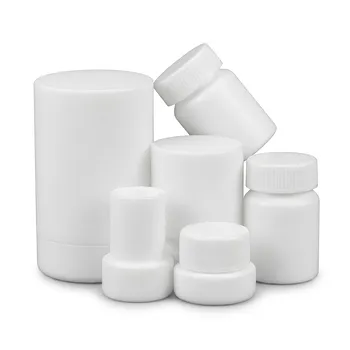
Crucibles and high-pressure reaction tubes experience direct contact with hot chemicals and may face steep thermal gradients. High fluorine content helps preserve chemical inertness, while a stable network structure can improve dimensional retention under demanding thermal cycles.
The result is more reliable contact with seals, caps, fixtures, and analytical instruments.
Custom-Machined Components
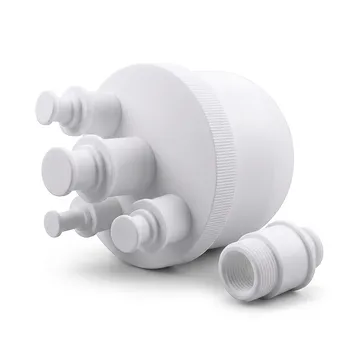
CNC-machined fluoropolymer parts may be used in fluid-transfer systems, electrochemical cells, filtration equipment, and specialized reaction assemblies. Their value depends on retaining tight tolerances while resisting extraction, swelling, and chemical attack.
Cross-linked materials can offer particularly strong solvent resistance, although their insolubility also affects how they are machined, repaired, or recycled.
Understanding the Trade-offs
More Fluorine Is Not Always Better Mechanically
Increasing fluorine content generally improves thermal stability, chemical resistance, flame resistance, photostability, and low-friction behavior. However, highly fluorinated structures can have weaker mechanical properties and lower solubility than partially fluorinated alternatives.
Perfluoropolymers are therefore selected when chemical inertness and thermal resistance dominate. Partially fluorinated materials may be preferable when greater rigidity, strength, or easier processing is required.
Cross-Linking Reduces Reprocessability
Cross-linking improves heat resistance and solvent resistance by making the polymer network insoluble. The same characteristic makes the material more difficult to melt-process, reshape, weld, or recycle after manufacture.
This is an important distinction between a cross-linked fluoropolymer network and conventional melt-processable materials such as PFA. The correct choice depends on whether the component prioritizes network stability or fabrication flexibility.
Decomposition Temperature Is Not the Operating Temperature
A reported Td,10% or Td,5% value describes when a specified percentage of mass has been lost under a particular test method. It does not mean the labware can safely operate continuously at that temperature.
Long-term service limits must also account for pressure, mechanical load, thermal cycling, chemical exposure, geometry, seals, and the surrounding atmosphere.
Chemical Resistance Remains Application-Specific
Fluoropolymers resist a broad range of acids, bases, solvents, and oxidizing environments, but no material is universally inert. Extreme temperatures, radiation, molten alkali metals, reactive fluorinating agents, or combinations of pressure and aggressive chemistry can change performance.
Compatibility should therefore be confirmed against the actual reagent concentration, temperature, exposure time, and stress state.
Making the Right Choice for Your Goal
The material selection should match the dominant failure risk in the laboratory process.
- If your primary focus is maximum chemical inertness: Choose a high-fluorine material such as PTFE or PFA when the application requires broad resistance to acids, bases, organic solvents, and corrosive digestion reagents.
- If your primary focus is dimensional stability at high temperature: Consider a suitably cross-linked fluoropolymer network that restricts chain movement and resists thermal deformation.
- If your primary focus is solvent resistance: Use a dense cross-linked architecture when insolubility and resistance to swelling or extraction are more important than melt reprocessability.
- If your primary focus is mechanical strength and fabrication: Evaluate partially fluorinated or melt-processable grades, which may provide better rigidity, machining behavior, or manufacturing flexibility.
- If your primary focus is sample purity: Select high-purity labware with low extractables and verify compatibility under the complete temperature, pressure, and reagent profile.
Fluorinated functional groups protect the chemistry of the polymer, while cross-linking protects its structure, enabling high-performance labware to operate more reliably under severe thermal and chemical conditions.
Summary Table:
| Mechanism | Key Feature | Benefit |
|---|---|---|
| Fluorinated Functional Groups | Strong C-F bonds; -CF3 shielding | Protects backbone from chemical attack; raises decomposition temperature |
| Cross-linking | 3D network formation | Restricts chain movement; reduces solvent penetration; improves shape stability |
Elevate your high-temperature lab processes with KINTEK's precision-engineered PTFE/PFA labware. From digestion vessels to custom-machined components, our fluoropolymer products deliver exceptional thermal stability and chemical resistance. Contact us today to discuss your requirements and experience the KINTEK advantage. Get in touch!
Related Products
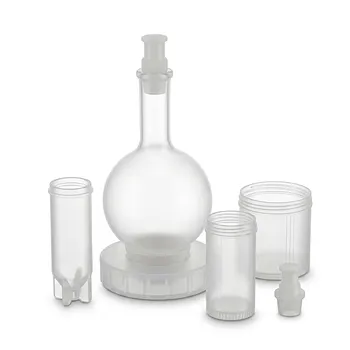
- Custom PFA Pear Shaped Flask High Purity Corrosion Resistant Labware Custom Molded Fluoropolymer Flask Glass Replacement Solution
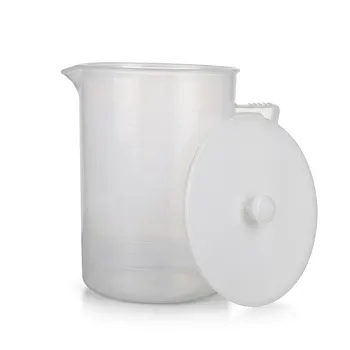
- High Purity PFA Beaker with Handle and Large Capacity Washable Soak Basket Multi Spec Teflon Laboratory Labware
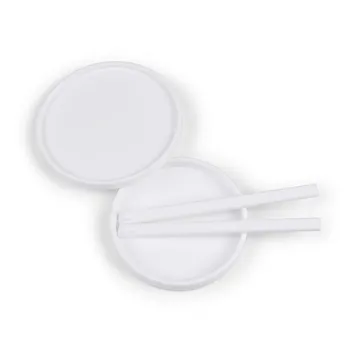
- Custom PTFE Petri Dish 30mm Corrosion Resistant Low Background Non Leaching Laboratory Ware
- Custom Polytetrafluoroethylene PTFE Petri Dishes 60mm Corrosion Resistant Low Background Labware
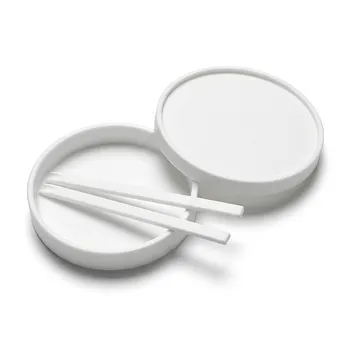
- Custom PTFE Petri Dish 120mm Diameter Corrosion Resistant Low Background High Purity Labware
People Also Ask
- Why Use PFA Labware for MnFe2O4/rGO Precursors? Ensure Stoichiometric Precision and Purity
- Why is PFA labware recommended for CuBi2O4? Protect high-purity precursors and ensure semiconductor bandgap accuracy.
- What are the primary properties of PFA for high-performance labware? Achieve ultra-trace purity & thermal stability.
- How does PFA labware enhance the accuracy of ultra-trace element analysis? Achieving PPT Precision with Zero Leaching
- What role does PFA labware play in semiconductor manufacturing? Ensuring Ultra-Pure Yields and Zero Contamination