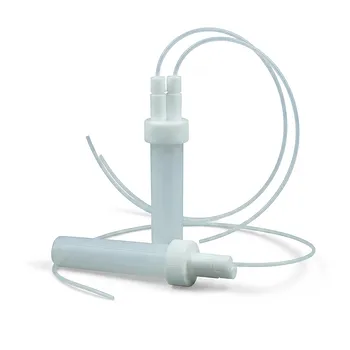
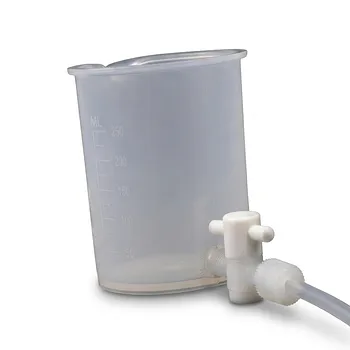
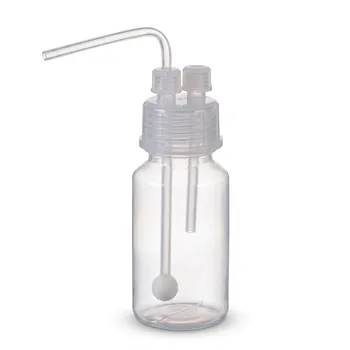
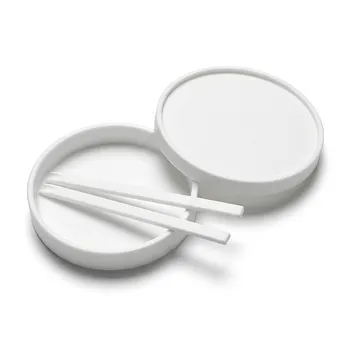
The critical role of Perfluoroalkoxy alkane (PFA) labware in semiconductor and electronics manufacturing is to serve as the primary containment and transport medium for ultra-pure chemicals where zero contamination is a requirement. PFA facilitates the handling of aggressive etchants and photoresist strippers while ensuring that no metallic ions or particulates compromise the integrity of silicon wafers. By maintaining extreme purity and structural stability under thermal stress, PFA directly supports the high-yield production of advanced integrated circuits.
PFA labware acts as a contamination-proof barrier that preserves the integrity of ultra-pure reagents and wafers throughout the fabrication process. Its unique combination of chemical inertness, thermal resilience, and low extractables makes it indispensable for achieving the sub-parts-per-billion purity levels required in modern electronics.
Safeguarding Purity in Advanced Fabrication
Eliminating Metallic Ion Contamination
PFA is a melt-processable fluoropolymer that contains no additives, catalysts, or fillers, which are common sources of contamination in other plastics. This lack of additives ensures near-zero leaching of trace metals such as aluminum, chromium, and magnesium, which could otherwise alter the electrical properties of semiconductors.
Meeting Stringent SEMI Standards
The material features a smooth, non-shedding surface that resists the generation of particulates. This property is essential for meeting SEMI standards, as even microscopic debris can cause catastrophic defects during the lithography and etching phases of wafer production.
Minimizing Memory Effects
PFA surfaces are hydrophobic and anti-adhesive, which prevents target molecules or contaminants from sticking to the walls of the labware. This minimizes "memory effects," where residues from a previous batch contaminate the next, ensuring the absolute repeatability of delicate chemical processes.
Responding to Harsh Chemical and Thermal Environments
Resistance to Aggressive Etchants
Unlike glass, which reacts with and is dissolved by hydrofluoric acid (HF), PFA is chemically inert to virtually all aggressive reagents. This makes it the standard material for handling the etchants and photoresist strippers necessary for defining the intricate patterns on a semiconductor wafer.
Stability During Thermal Cycling
Semiconductor processes often involve repeated heating and cooling cycles that can make lesser plastics brittle or cause them to warp. PFA maintains its structural integrity and mechanical toughness across a wide temperature range, preventing leaks or failures in high-stakes environments.
Superior Electrical Insulation
Beyond chemical handling, PFA provides excellent electrical insulation. This property is critical in electronics manufacturing environments where managing static charges and preventing electrical interference is necessary to protect sensitive components.
Understanding the Trade-offs
Temperature and Physical Limitations
The primary limitation of PFA is its maximum continuous service temperature of 260°C. While it is thermally stable, exceeding this limit can compromise the dimensional stability of the labware, leading to potential deformations.
Surface Sensitivity and Maintenance
Although PFA is mechanically tough and resists cracking, it has lower scratch resistance than materials like PTFE. Abrasive cleaning tools must be avoided, as surface scratches can become traps for contaminants, undermining the material's ultra-pure advantages.
The Cost of Ownership
PFA labware carries a higher initial purchase price compared to polypropylene or standard glass. However, its extended service life, reduced risk of batch failure, and minimal need for replacement usually result in a lower total cost of ownership in high-tech manufacturing.
Integrating PFA into Your Manufacturing Workflow
Choosing the Right Grade for Your Goals
Selecting PFA labware requires balancing the specific purity requirements of your process with the mechanical demands of your equipment.
- If your primary focus is ultra-trace metal analysis: Utilize high-purity PFA vessels to ensure that leachable metals remain at ppt (parts-per-trillion) levels.
- If your primary focus is handling aggressive acids at high temperatures: Ensure your PFA components are rated for continuous use up to 260°C to prevent structural deformation.
- If your primary focus is maximizing wafer yield: Standardize on PFA for all fluid-handling paths to eliminate particulate shedding and cross-contamination between batches.
By leveraging the chemical and physical advantages of PFA, manufacturers can maintain the rigorous purity standards necessary to push the boundaries of modern electronic components.
Summary Table:
| Feature | Impact on Manufacturing | Key Benefit |
|---|---|---|
| Chemical Inertness | Resists HF and aggressive acid etchants | Prevents reagent degradation |
| Zero Leachable Metals | Eliminates metallic ion contamination | Protects wafer electrical integrity |
| Non-Stick Surface | Minimizes "memory effects" and residues | Ensures batch repeatability |
| Thermal Stability | Operates reliably up to 260°C | Maintains structure during cycling |
| Particulate Control | Smooth, non-shedding surface texture | Meets stringent SEMI purity standards |
Achieve Absolute Purity with KINTEK PFA Solutions
At KINTEK, we understand that in semiconductor and electronics manufacturing, even a single particulate can compromise an entire batch. We manufacture a comprehensive range of laboratory supplies crafted exclusively from high-performance PTFE and PFA to guarantee the integrity of your fabrication process.
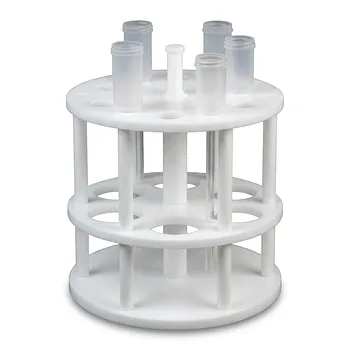
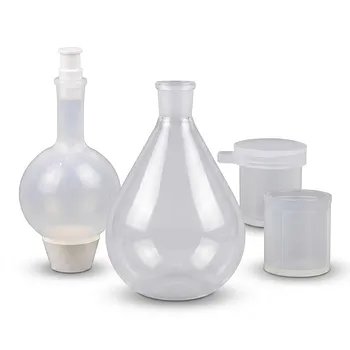
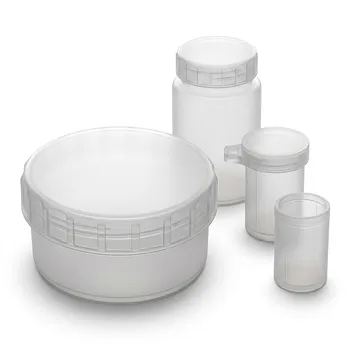
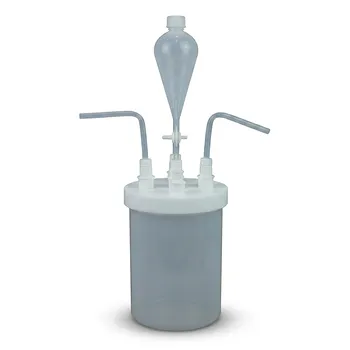
From everyday basics like PFA beakers, reagent bottles, and digestion tubes to advanced fluid transfer components (tubing, valves, fittings) and custom reaction apparatus, our products are designed for zero-contamination environments. Partnering with us gives you access to:
- End-to-end custom CNC fabrication for complex, non-standard machined parts and bespoke setups.
- High-purity trace analysis tools including filters, pipettes, tweezers, and crucibles.
- Specialized hardware like electrochemical cells, battery testing fixtures, and microwave digestion vessels.
Whether you need high-volume consumables or a bespoke laboratory setup, KINTEK delivers the structural stability and chemical resistance your high-tech processes demand. Contact KINTEK today to optimize your manufacturing workflow and secure your yields.
Related Products
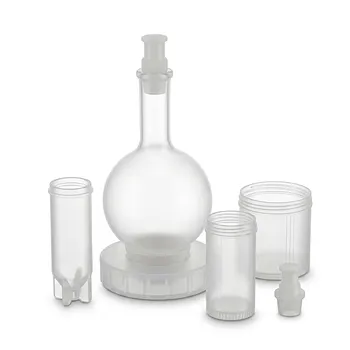
- Custom PFA Pear Shaped Flask High Purity Corrosion Resistant Labware Custom Molded Fluoropolymer Flask Glass Replacement Solution
- High Purity PFA Crucible and Corrosion Resistant PTFE Beaker for Trace Analysis and Custom Laboratory Applications
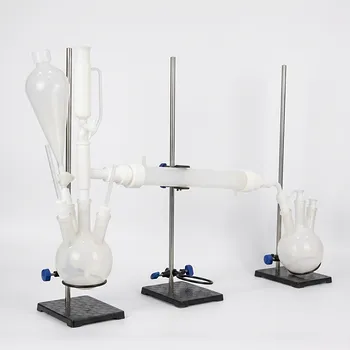
- High Purity PFA Constant Pressure Condensation Reaction System Acid Resistant High Temperature Customizable Teflon Labware
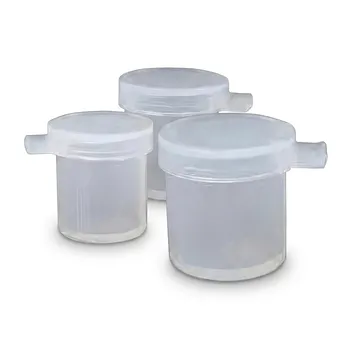
- High Purity PFA Sample Dissolution Cups Acid Resistant Chemical Digestion Vessels with Lids Trace Analysis Labware
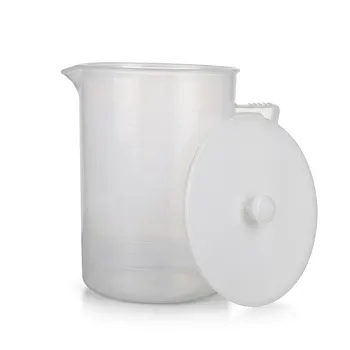
- High Purity PFA Beaker with Handle and Large Capacity Washable Soak Basket Multi Spec Teflon Laboratory Labware
People Also Ask
- Why Use PFA Labware for MnFe2O4/rGO Precursors? Ensure Stoichiometric Precision and Purity
- How does PFA labware enhance the accuracy of ultra-trace element analysis? Achieving PPT Precision with Zero Leaching
- What are the primary properties of PFA for high-performance labware? Achieve ultra-trace purity & thermal stability.
- Why is PFA labware recommended for CuBi2O4? Protect high-purity precursors and ensure semiconductor bandgap accuracy.
- What are the advantages of PFA labware in terms of trace-metal leaching? Achieving PPT-Level Purity in Analysis