PFA supports a substantially higher continuous service temperature than FEP when both are evaluated as melt-processable fluoropolymers. FEP is generally limited to approximately 200°C (400°F) in continuous operation, while PFA can maintain thermal stability and mechanical integrity up to approximately 260°C (500°F). For high-temperature laboratory apparatus, this makes PFA the better choice when sustained exposure approaches or exceeds FEP’s operating limit.
FEP is suitable for moderate-temperature melt-processed labware, but PFA is preferred for sustained high-temperature service. The key distinction is not simply melting point; it is the ability to retain mechanical performance during continuous operation.
Why Continuous Service Temperature Matters
Service temperature is not melting temperature
A polymer’s melting point indicates when its crystalline structure transitions into a melt. It does not indicate the temperature at which a fabricated component can safely operate for extended periods.
Continuous service temperature reflects whether the material can retain sufficient strength, dimensional stability, chemical containment, and mechanical integrity during long-term exposure.
FEP has the lower continuous operating limit
FEP’s continuous-use limit is approximately 200–204°C, depending on the rating system and specific grade. As temperature rises toward this range, its mechanical properties decline, making it less suitable for sustained structural or pressure-containing service at the upper end.
FEP remains valuable where the operating temperature is moderate and its melt-processing capability, flexibility, optical clarity, or electrical performance is important.
PFA retains performance at higher temperatures
PFA supports continuous operation up to approximately 260°C, comparable to the commonly cited continuous rating for PTFE. It therefore provides a larger thermal margin for hot chemical exposure, thermal cycling, and heated fluid handling.
This higher limit is especially important when laboratory equipment must remain mechanically reliable rather than merely survive brief temperature excursions.
What This Means for Laboratory Apparatus
High-temperature digestion vessels
PFA is generally preferred for digestion vessels, tubes, and reaction containers exposed to sustained high temperatures. Its higher service rating helps preserve vessel shape and containment during prolonged heating.
FEP may be appropriate for lower-temperature digestion or components that are not exposed continuously to the most severe thermal conditions.
Thermal reaction apparatus
For heated reaction systems, PFA provides greater protection against creep, deformation, and loss of mechanical strength. This is valuable for vessels, fittings, and other components that must maintain precise geometry during operation.
FEP is better suited when the process temperature remains comfortably below its continuous-use limit and the application benefits from its processing or optical characteristics.
Hot chemical transfer lines
PFA is the safer selection for hot chemical transfer tubing, manifolds, and fittings when fluid temperatures may approach 200°C or remain elevated for extended periods. The additional temperature margin reduces the risk that the tubing will soften or lose dimensional stability.
FEP can serve moderate-temperature transfer duties effectively, but it should not be selected merely because its melting range is high.
The Processing Advantage They Share
Both can be melt-processed
Unlike conventional PTFE, both FEP and PFA can be melt-molded and extruded. This enables manufacturers to produce complex laboratory geometries, seamless tubing, fittings, molded vessels, and other integrated fluid-handling components.
The shared processing capability is important when the design requires intricate shapes or pore-free, leak-resistant components.
PFA combines processability with higher thermal endurance
PFA is often selected when designers need the fabrication flexibility of a melt-processable polymer without giving up a continuous temperature capability close to PTFE’s. It is particularly useful for high-purity and high-temperature apparatus.
PFA generally requires higher processing temperatures than FEP, so manufacturing requires careful resin-specific thermal control.
FEP remains useful below its thermal limit
FEP offers a practical balance of melt processability, flexibility, chemical resistance, and electrical performance. It is not an inferior material in general; it is the more appropriate choice when the application’s thermal demands remain within its lower service range.
Understanding the Trade-offs
Do not use melting point as the selection criterion
FEP’s melting range is substantially above its continuous-use temperature, just as PFA’s melting point is above its long-term operating limit. Selecting based only on melting temperature can lead to unsafe assumptions about structural performance.
For apparatus design, the relevant value is the continuous service rating under the actual chemical, mechanical, and thermal conditions.
Temperature ratings are not universal across every grade
The approximately 200°C FEP and 260°C PFA values are practical general ratings, but exact limits can vary with resin grade, component geometry, load, pressure, exposure duration, and manufacturer qualification data.
For a critical apparatus, use the supplier’s temperature-pressure charts and application-specific data rather than relying on a generic material label alone.
Thermal margin is important
Operating exactly at a material’s stated maximum leaves little room for temperature overshoot, hot spots, thermal cycling, or mechanical loading. A component that is acceptable in an unloaded static test may perform differently under pressure, bending, or repeated heating.
Where failure would compromise containment or sample integrity, PFA’s higher limit can provide valuable design margin.
PFA costs more to process
PFA’s higher thermal capability comes with more demanding processing conditions and may increase material or manufacturing cost. FEP can be the more economical solution when the process temperature is well below its continuous limit.
Making the Right Choice for Your Goal
Choose according to the highest sustained operating temperature, not simply the polymer’s melting point.
- If your primary focus is maximum continuous temperature: Choose PFA, which supports approximately 260°C (500°F) and is better suited to high-temperature digestion vessels, reaction apparatus, and hot chemical lines.
- If your primary focus is moderate-temperature melt processing: Choose FEP when continuous operation remains below approximately 200–204°C and its flexibility, clarity, or electrical properties provide useful advantages.
- If your primary focus is complex, high-purity laboratory geometry: Evaluate PFA first when the design combines melt-processability with sustained high-temperature chemical service.
- If your primary focus is cost-effective fluid handling: FEP may be sufficient when the application has adequate thermal margin and does not impose demanding mechanical loads at elevated temperature.
For sustained high-temperature laboratory service, PFA is the more capable melt-processable fluoropolymer, while FEP is appropriate when the operating temperature remains within its lower thermal range.
Summary Table:
| Property | FEP | PFA |
|---|---|---|
| Continuous Service Temperature | ~200°C (400°F) | ~260°C (500°F) |
| Melting Point | Higher than service temp | Higher than service temp |
| Best Suited For | Moderate-temperature labware | High-temperature digestion, reaction, and transfer apparatus |
| Processing | Melt-processable | Melt-processable |
| Cost | Lower | Higher |
Ensure your lab apparatus meets high-temperature demands. Contact KINTEK today for expert guidance on PFA and FEP solutions tailored to your needs. Our high-performance fluoropolymer labware ensures reliability and safety. Contact us now to discuss your requirements!
Related Products
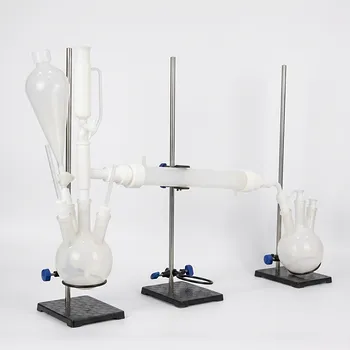
- High Purity PFA Constant Pressure Condensation Reaction System Acid Resistant High Temperature Customizable Teflon Labware
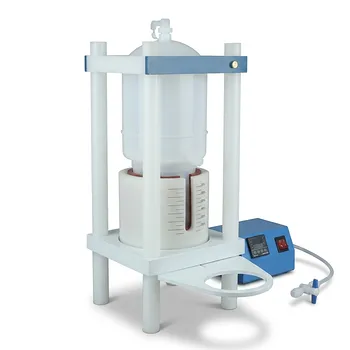
- High Purity PFA Acid Purifier Maintenance and Refurbishment System with Silicone Heating Jacket and Digital Temperature Control Box
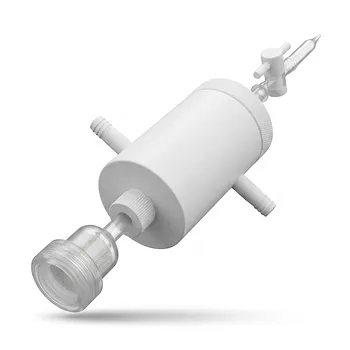
- High Purity PFA Water Cooled Micro Chromatography Column Corrosion Resistant High Temperature Thermal Condensation System
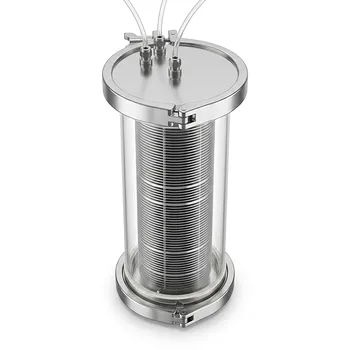
- Continuous Flow Tubular Microchannel Reactor with Oil Bath Temperature Control and Transparent High Borosilicate Glass Jacket for High Temperature Corrosion Resistant Chemical Synthesis
- Transparent Corrosion Resistant PFA Thermometer Sleeve and Customizable Hydrogen Fluoride Condensation Device
People Also Ask
- Why is high-purity PFA labware preferred when preparing mixed solutions? Prevent Trace-Metal Leaching & Contamination
- What are the core advantages of high-purity PFA labware? Achieve Unmatched Precision in Trace Analysis
- Why Is High-Purity PFA Preferred for Trace Analysis and Synthesis? Achieve Unmatched Analytical Precision
- Why use PFA labware for LiFePO4 precursor preparation? Ensure Trace Metal Purity & Superior Battery Performance.
- What technical advantages does high-purity PFA labware provide in trace fluorescence detection? Ensure Peak Sensitivity