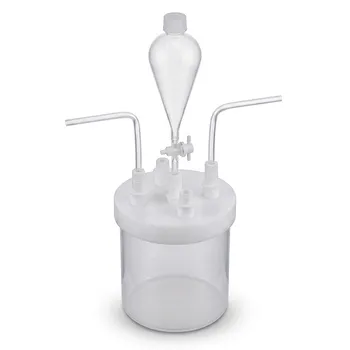
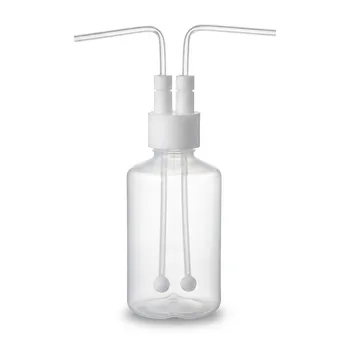
High-purity PFA labware is the industry standard for preparing complex metal solutions because it eliminates the risk of trace-metal leaching and secondary contamination. When handling salts like zinc, gallium, germanium, and cobalt, even microscopic levels of foreign ions can disrupt chemical reactions or destroy the functional properties of the final material. In high-sensitivity applications like phosphor synthesis, PFA ensures that the precise stoichiometric ratios and purity of the precursors remain untainted.
Core Takeaway: PFA's exceptional chemical inertness and low-leaching profile are critical for maintaining the integrity of metal-ion precursors. By preventing "fluorescence quenching" and ion interference, PFA guarantees the stability and performance of high-precision materials.
The Technical Superiority of PFA in Metal Chemistry
Eliminating Trace-Metal Leaching
High-purity PFA (Perfluoroalkoxy) has an extremely low metal-ion background. Unlike glass or lower-grade plastics, it does not release unwanted ions into the solution when exposed to the corrosive environments required to dissolve metal salts.
This characteristic is vital when working with a cocktail of metals like zinc, gallium, and germanium. If the container leaches even a few parts-per-billion (ppb) of an external metal, it can alter the chemical behavior of the entire mixture.
Resistance to Corrosive Dissolution Processes
Preparing mixed metal solutions often requires the use of strong acids or bases for dissolution and subsequent pH adjustment. PFA can withstand these harsh chemicals without degrading or reacting.
Because PFA is chemically inert, it acts as a neutral environment. It ensures that the only chemical reactions occurring are the ones intended by the researcher, preserving the precursor's purity.
High Surface Smoothness and Low Adsorption
The surface of high-purity PFA is exceptionally smooth, which minimizes liquid residue and solute adsorption. In precision chemistry, metal ions can sometimes "stick" to the walls of a container, changing the final concentration of the solution.
PFA’s non-stick properties ensure that the full amount of each metal salt—whether it’s cobalt or gallium—stays in the solution. This is essential for maintaining the exact stoichiometry required for advanced material synthesis.
Preventing Performance Failure in Advanced Materials
Avoiding Fluorescence Quenching
In the synthesis of complex phosphors like ZGGO:Co²⁺, the introduction of even a single impurity ion can lead to fluorescence quenching. This phenomenon occurs when foreign ions act as "traps" for energy, preventing the material from emitting light correctly.
Utilizing PFA labware prevents these "impurity traps" from entering the system. This directly protects the long-persistent luminescence properties of the material, ensuring the final product performs as designed.
Ensuring Experimental Reproducibility
For research to be valid, results must be reproducible. Because PFA provides a consistent, non-contaminating environment, it eliminates the "noise" caused by container-based interference.
This consistency is the foundation for high-sensitivity analytical research. It allows scientists to attribute the performance of their mixed metal solutions to their own formulations rather than accidental contamination.
Understanding the Trade-offs
The Cost of Purity
High-purity PFA is significantly more expensive than standard borosilicate glassware or polypropylene plastic. For routine, low-sensitivity work, the cost may not be justified.
However, in trace analysis or semiconductor-grade synthesis, the cost of a failed experiment or a contaminated batch of reagents far outweighs the initial investment in PFA labware.
Temperature and Pressure Constraints
While PFA has excellent thermal stability, it is still a fluoropolymer and has lower maximum operating temperatures than quartz or certain ceramics. It is essential to ensure that the dissolution process does not exceed PFA's thermal limits (typically around 260°C).
How to Apply This to Your Project
Recommendations for Material Choice
- If your primary focus is Phosphor or MOF Synthesis: Use high-purity PFA beakers and fluid transfer components to prevent ion interference and ensure long-range structural order.
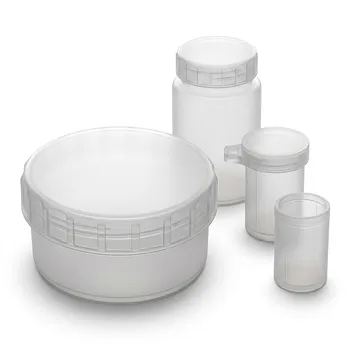
- If your primary focus is Trace-Element Analysis: Utilize PFA sampling bottles to ensure your background values remain at the lowest possible levels for maximum data accuracy.
- If your primary focus is Storage of High-Purity Reagents: Opt for PFA containers to prevent secondary contamination during long-term contact with acids or organic solvents.
By prioritizing high-purity PFA labware, you ensure that the chemical integrity of your precursors remains uncompromised from dissolution to final synthesis.
Summary Table:
| Feature | Technical Benefit | Impact on Mixed Metal Chemistry |
|---|---|---|
| Ultra-Low Leaching | Minimal metal-ion background | Prevents secondary contamination of Zn, Ga, Ge, Co |
| Chemical Inertness | Resists strong acids/bases | Ensures neutral environment for complex reactions |
| Surface Smoothness | Low solute adsorption | Maintains exact stoichiometry and ion concentration |
| Fluorescence Safety | Prevents impurity traps | Protects phosphor properties and prevents quenching |
| Thermal Stability | Reliable up to 260°C | Safe for high-temperature acid dissolution processes |
Secure the Integrity of Your Trace Analysis with KINTEK
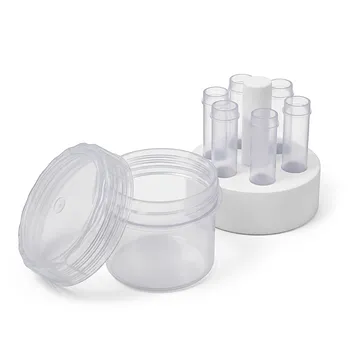
Don't let microscopic contaminants compromise your high-sensitivity research. KINTEK specializes in high-performance fluoropolymer solutions designed for the most demanding laboratory environments. From everyday basics like PFA beakers, measuring cylinders, crucibles, and reagent bottles to precision-engineered centrifuge tubes and digestion vessels, we ensure your precursors remain untainted.
Our comprehensive range includes:
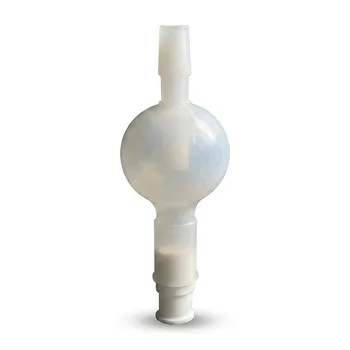
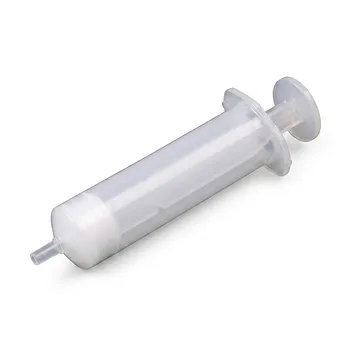
- Fluid Transfer & Prep: High-purity tubing, fittings, valves, separatory funnels, and filters.
- General Consumables: Stirring bars, O-rings, and bespoke seal tapes.
- Advanced Apparatus: Custom electrochemical cells, battery testing fixtures, and microwave digestion liners.
Leveraging end-to-end custom CNC fabrication, KINTEK is equipped to deliver everything from complex non-standard machined parts to high-volume orders with an exclusive focus on PTFE and PFA. Contact us today to discuss your custom laboratory setup and ensure absolute purity!
References
- Yaqi Zhu, Zhen Lei. Crystal lattice site occupation-based optical properties in Co2+-doped ZGGO persistent luminescence nanoparticles. DOI: 10.1038/s41598-025-23381-5
This article is also based on technical information from Kintek Knowledge Base .
Related Products
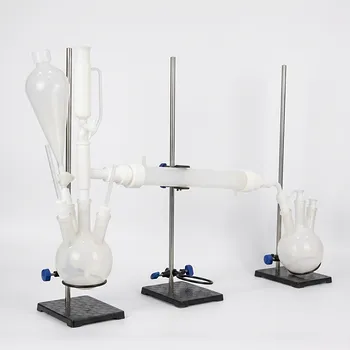
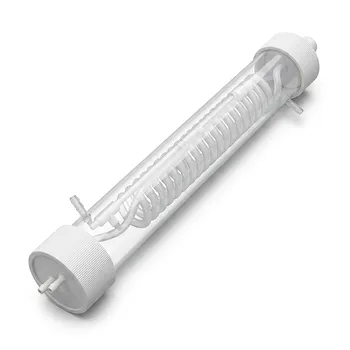
- High Purity PFA Constant Pressure Condensation Reaction System Acid Resistant High Temperature Customizable Teflon Labware
- High Purity PFA Crucible and Corrosion Resistant PTFE Beaker for Trace Analysis and Custom Laboratory Applications
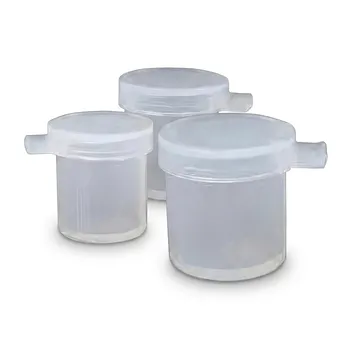
- High Purity PFA Sample Dissolution Cups Acid Resistant Chemical Digestion Vessels with Lids Trace Analysis Labware
- High Purity PFA Beakers with Handles Large Capacity Chemical Resistant Teflon Laboratory Beakers and Custom Cleaning Baskets
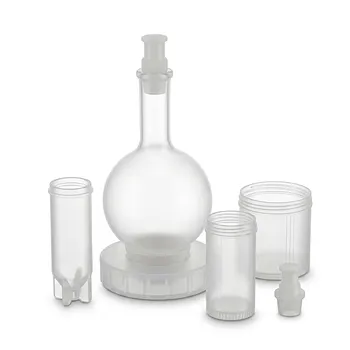
- Custom PFA Pear Shaped Flask High Purity Corrosion Resistant Labware Custom Molded Fluoropolymer Flask Glass Replacement Solution
People Also Ask
- What are the core advantages of high-purity PFA labware? Achieve Unmatched Precision in Trace Analysis
- Why Is High-Purity PFA Preferred for Trace Analysis and Synthesis? Achieve Unmatched Analytical Precision
- Why use PFA labware for LiFePO4 precursor preparation? Ensure Trace Metal Purity & Superior Battery Performance.
- What technical advantages does high-purity PFA labware provide in trace fluorescence detection? Ensure Peak Sensitivity
- What are the advantages of high-purity PFA labware for NiFe catalyst prep? Ensure Precision and Trace-Level Purity.