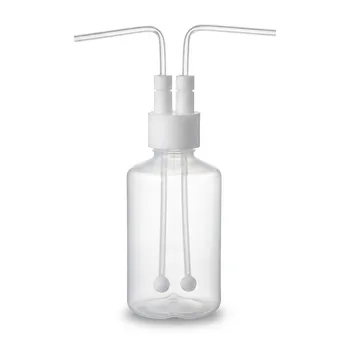
High-purity PFA labware is critical for trace fluorescence detection because it provides extremely low surface adsorption and exceptional chemical purity. These properties prevent the loss of target analytes like Lamotrigine to the vessel walls and eliminate background signal interference, ensuring accurate results at micromolar concentrations.
Core Takeaway: High-purity PFA (Perfluoroalkoxy) labware ensures the integrity of trace-level samples by combining an inert, non-stick surface with ultra-low leaching characteristics, directly enabling the high sensitivity required for fluorescence-based analysis.
Preventing Analyte Loss Through Surface Dynamics
The Role of Low Surface Adsorption
In trace analysis, the ratio of the sample volume to the container surface area can lead to significant errors if the analyte sticks to the walls. High-purity PFA features a naturally low-energy surface that minimizes the adsorption of organic molecules and metal ions.
Maintaining Concentration Integrity
For substances like Lamotrigine, maintaining a precise micromolar concentration is vital for quantitative fluorescence. Because PFA does not "trap" these molecules on its surface, the actual concentration in the solution remains stable from the point of preparation to the point of detection.
Smooth Surface Architecture
The interior of PFA bottles and centrifuge tubes is engineered to be extremely smooth at the molecular level. This lack of porosity prevents sample entrapment, which is common in standard plastics, ensuring that every drop of the sample is available for analysis.
Eliminating Signal Interference and Background Noise
High Chemical Purity and Background Suppression
Fluorescence detection is highly sensitive to impurities that may "quench" signals or create false positives. High-purity PFA prevents background signal interference by ensuring that no leachable contaminants are introduced into the sample matrix during the experiment.
Superiority Over Traditional Glass
Unlike glass, which can leach alkali metal impurities or adsorb target ions onto its silicate structure, PFA is chemically inert. This eliminates the risk of secondary contamination that often plagues high-sensitivity trace element or molecular detection.
Low Metal Ion Background
Even trace amounts of metal ions can interfere with the fluorescence of certain organic compounds. High-purity PFA is manufactured to have extremely low metal ion leaching rates, providing a "clean" environment that protects the optical clarity of the sample.
Ensuring Long-Term Sample Stability
Chemical Inertness Across Reagents
Research often involves complex solvents or acidic environments to stabilize analytes. PFA’s exceptional chemical resistance ensures that the labware does not degrade or react with the sample, regardless of the chemical environment required for the fluorescence assay.
Thermal Resistance and Stability
Trace analysis may require samples to be heated or stored at cryogenic temperatures. PFA maintains its structural integrity and non-leaching properties across a wide temperature range, ensuring that sample processing does not introduce new variables.
Prevention of Cross-Contamination
Because PFA is so easy to clean and has such low adsorption, it significantly reduces the risk of carry-over between different samples. This rigor is essential for maintaining the data integrity required in high-level academic and clinical research.
Understanding the Trade-offs
Cost and Resource Allocation
High-purity PFA is significantly more expensive than standard polypropylene or glass labware. While it is technically superior for trace analysis, its use should be targeted at experiments where detection limits are critical to justify the higher investment.
Handling and Maintenance
Despite its chemical toughness, PFA is softer than glass and can be prone to scratching if cleaned with abrasive tools. Scratches can create new sites for adsorption, potentially compromising the very advantages that make PFA desirable for trace fluorescence.
Specialized Cleaning Protocols
To achieve the "high-purity" performance levels, PFA often requires stringent acid-washing protocols before use. This adds a layer of operational complexity and time to the laboratory workflow compared to disposable alternatives.
How to Apply This to Your Project
When choosing labware for trace-level detection of substances like Lamotrigine, consider your specific analytical goals and sensitivity requirements.
- If your primary focus is reaching the lowest possible detection limits: Use high-purity PFA for all storage, dilution, and centrifugation steps to eliminate background noise and analyte loss.
- If your primary focus is long-term sample storage: Choose PFA reagent bottles to ensure that the concentration of your trace samples remains stable over weeks or months without leaching or adsorption.
- If your primary focus is routine screening at higher concentrations: Consider using standard high-quality plastics for less sensitive steps to manage costs, reserving PFA only for the final analytical measurements.
Choosing the right material ensures that your experimental data reflects the true nature of your sample rather than the limitations of your equipment.
Summary Table:
| Feature | Advantage in Trace Analysis | Impact on Results |
|---|---|---|
| Low Surface Energy | Minimizes analyte adsorption to walls | Maintains stable sample concentration |
| Ultra-Low Leaching | Eliminates background chemical noise | Prevents signal quenching/interference |
| Molecular Smoothness | Prevents sample entrapment in pores | Ensures maximum sample recovery |
| Chemical Inertness | Resists aggressive solvents and acids | Guarantees long-term sample stability |
Elevate Your Analytical Precision with KINTEK
Achieve unmatched sensitivity in your trace fluorescence detection and high-purity applications. KINTEK manufactures a comprehensive range of laboratory supplies exclusively from high-performance PTFE and PFA, ensuring zero contamination and maximum sample integrity.
From everyday basics like beakers, centrifuge tubes, and reagent bottles to specialized sample prep tools, filtration components, and custom-machined fluid transfer parts, we provide everything your lab needs. Our expertise extends to advanced apparatus, including electrochemical cells, hydrothermal synthesis liners, and microwave digestion vessels, all backed by end-to-end custom CNC fabrication.
Whether you need high-volume standard orders or bespoke non-standard parts, KINTEK delivers the fluoropolymer solutions essential for your most critical research.
Contact our experts today to optimize your laboratory setup!
References
- Lina Hristova, María del Pozo. Optical Sensor Based on WS<sub>2</sub> Quantum Dots for Lamotrigine Determination. DOI: 10.1021/acsomega.4c09476
This article is also based on technical information from Kintek Knowledge Base .
Related Products
- High Purity PFA Constant Pressure Condensation Reaction System Acid Resistant High Temperature Customizable Teflon Labware
- High Purity PFA Crucible and Corrosion Resistant PTFE Beaker for Trace Analysis and Custom Laboratory Applications
- High Purity PFA Sample Dissolution Cups Acid Resistant Chemical Digestion Vessels with Lids Trace Analysis Labware
- High Purity PFA Beakers with Handles Large Capacity Chemical Resistant Teflon Laboratory Beakers and Custom Cleaning Baskets
- Custom PFA Pear Shaped Flask High Purity Corrosion Resistant Labware Custom Molded Fluoropolymer Flask Glass Replacement Solution
People Also Ask
- Why is high-purity PFA labware preferred when preparing mixed solutions? Prevent Trace-Metal Leaching & Contamination
- What are the core advantages of high-purity PFA labware? Achieve Unmatched Precision in Trace Analysis
- Why use PFA labware for LiFePO4 precursor preparation? Ensure Trace Metal Purity & Superior Battery Performance.
- What are the advantages of high-purity PFA labware for NiFe catalyst prep? Ensure Precision and Trace-Level Purity.
- Why is high-purity PFA laboratory labware essential for high-sensitivity trace analysis? Maximize data accuracy.