Modified PTFE improves sealing reliability primarily by reducing microscopic voids and limiting creep under load. A small amount of comonomer, commonly a perfluoro(alkyl vinyl ether), improves particle fusion during sintering without materially sacrificing PTFE’s chemical inertness or thermal resistance. Compared with standard PTFE, the resulting material generally provides lower permeation, better dimensional stability, and longer-lasting sealing performance in chemical seals, gaskets, and fluid-handling diaphragms.
The central advantage of modified PTFE is structural integrity: better particle coalescence produces fewer microvoids, while reduced creep helps components maintain their shape and sealing force over time.
Why Standard PTFE Can Limit Seal Performance
Microscopic voids can form during sintering
Standard PTFE has extremely high melt viscosity, so its powder particles do not readily flow together during processing. Even after sintering, microscopic spaces may remain between incompletely fused particles.
These voids can increase gas or fluid permeation and create potential paths for micro-leakage, particularly in thin seals, diaphragms, and components exposed to pressure gradients.
PTFE can deform under sustained load
PTFE has excellent chemical resistance, but it is susceptible to creep, also called cold flow. Under continuous compression or pressure, standard PTFE can slowly deform.
In a gasket, this may reduce contact pressure. In a diaphragm or seal, it may alter the component’s geometry, stroke, or sealing behavior over time.
How Modification Improves PTFE
Improved particle fusion
Modified PTFE contains a very small concentration of a comonomer, often approximately 0.01–0.1 mol%, depending on the grade. Perfluoro(alkyl vinyl ether) compounds such as PPVE are commonly used.
The comonomer changes the polymer’s processing behavior, allowing PTFE particles to coalesce more effectively during sintering. This produces a more uniform and less void-prone structure.
Lower permeation
Fewer microvoids mean fewer internal pathways for gases, vapors, and fluids to migrate through the material. Modified PTFE therefore offers lower permeability than conventionally processed standard PTFE.
This is especially valuable when a seal must contain volatile chemicals, maintain vacuum integrity, or prevent trace contamination between the process fluid and the surrounding environment.
Greater creep resistance
The improved structure also helps modified PTFE resist deformation under sustained mechanical stress. It is less likely to lose its original dimensions or sealing force during long-term compression.
This does not make PTFE immune to creep, but it substantially improves its suitability for pressure-loaded and continuously compressed components.
Retained chemical and thermal performance
The modification uses a very small comonomer concentration and does not change PTFE’s fundamental fluoropolymer character. Modified PTFE generally retains the high chemical inertness and thermal resistance expected from PTFE.
The improvement is therefore mainly in mechanical stability, permeability resistance, and processing-related structure—not in creating a new level of chemical compatibility.
Performance in Specific Components
Chemical seals
Chemical seals must resist both chemical attack and mechanical deterioration. Modified PTFE addresses the second challenge by reducing deformation and limiting permeation through microscopic internal defects.
The result is a seal that can maintain its geometry and containment performance more reliably during prolonged exposure to aggressive reagents.
Gaskets
Gaskets depend on sustained contact pressure between mating surfaces. If the material creeps excessively, the gasket can relax, lose compression, or develop leakage paths.
Modified PTFE’s improved creep resistance helps preserve sealing force and dimensional stability, especially in static gaskets exposed to pressure, temperature cycling, or long service intervals.
Fluid-handling diaphragms
Diaphragms repeatedly flex while separating or controlling fluids. They therefore require a balance of chemical resistance, flexural durability, dimensional stability, and low permeation.
Modified PTFE can provide improved resistance to stress-related deformation and repeated mechanical loading, making it well suited to laboratory valve diaphragms and other high-purity fluid-handling components.
Vessel linings and fittings
In linings, connectors, and fluid-handling fittings, reduced porosity helps limit permeation and improves structural purity. Reduced creep also helps components remain dimensionally stable around joints, fasteners, and pressure boundaries.
These benefits are particularly relevant where contamination control, leak prevention, and long service life are more important than the lowest material cost.
Understanding the Trade-offs
Modified PTFE is not automatically the best choice for every seal
The improvement is most valuable when permeation, creep, or long-term dimensional stability is a concern. For low-stress applications with modest containment requirements, standard PTFE may already provide adequate performance.
Material selection should also consider temperature, pressure, cycling frequency, geometry, surface finish, and installation conditions.
Processing quality still matters
Modified PTFE reduces the tendency toward microvoid formation, but final performance depends on molding, sintering, machining, and inspection. Poor processing can compromise even a high-performance resin.
A modified grade should therefore be evaluated together with the manufacturer’s processing controls and component design.
Modified PTFE is different from filled PTFE
Modified PTFE should not be confused with filled PTFE. Modified PTFE changes the polymer structure through a small comonomer addition, while filled PTFE incorporates materials such as glass fiber, carbon, graphite, bronze, or other additives.
Fillers can further improve wear resistance, dimensional stability, or load capacity, but they may affect chemical purity, electrical properties, surface behavior, and compatibility with the process fluid.
Chemical compatibility and permeation are separate issues
PTFE’s chemical inertness concerns whether the fluid attacks the polymer. Permeation concerns whether molecules pass through or along microscopic pathways in the material.
Modified PTFE primarily improves the latter while preserving the former. It can reduce leakage and transport through the component, but it cannot eliminate permeation for every chemical, pressure, and temperature condition.
Making the Right Choice for Your Goal
The appropriate grade depends on the failure mode you are trying to prevent.
- If your primary focus is chemical containment: Choose modified PTFE when lower permeation and reduced microvoid content are important, particularly for aggressive, volatile, or high-purity fluids.
- If your primary focus is long-term gasket sealing: Prefer modified PTFE when sustained compression could cause creep, loss of contact pressure, or dimensional distortion.
- If your primary focus is diaphragm durability: Consider modified PTFE for components exposed to repeated flexing, pressure cycling, and chemical service.
- If your primary focus is wear or high mechanical load: Compare modified PTFE with an appropriate filled PTFE compound, recognizing that fillers can change purity and chemical-performance characteristics.
For demanding fluid-handling applications, modified PTFE offers a more stable and less permeable sealing structure while preserving the core chemical and thermal advantages of PTFE.
Summary Table:
| Feature | Standard PTFE | Modified PTFE |
|---|---|---|
| Particle fusion | Incomplete, more microvoids | Improved, fewer microvoids |
| Permeation | Higher | Lower |
| Creep resistance | Lower | Higher |
| Dimensional stability | Lower | Higher |
| Chemical inertness | Excellent | Retained |
| Thermal resistance | Excellent | Retained |
| Best for | Low-stress, non-critical applications | Chemical containment, gaskets, diaphragms |
Enhance your fluid handling with high-performance modified PTFE components from KINTEK. Our precision-machined PTFE and PFA seals, gaskets, and diaphragms are designed for superior reliability and long service life. Contact us today to discuss your requirements and discover how our custom solutions can optimize your operations. Contact us now!
Related Products
- Customizable PTFE Heat Insulation Plate High Temperature Corrosion Resistant Laboratory Support Layered Multi Tier Stand
- PTFE Anti Scald Heat Insulation Sleeve Hot Plate Support Feet Laboratory Benchtop Protection Customizable Thermal Barrier
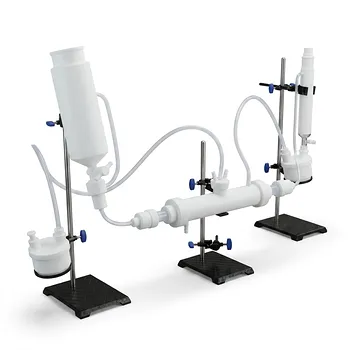
- Custom Polytetrafluoroethylene PTFE Constant Pressure Dropping Funnel Corrosion Resistant Fluid Control Assembly with Conversion Stopper Compatibility
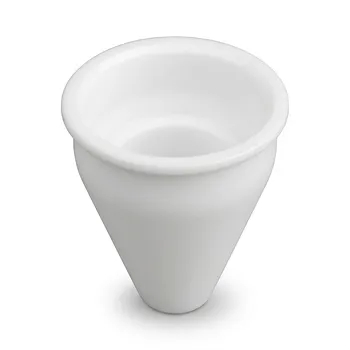
- Custom Machined PTFE Conical Sample Cell Corrosion Resistant Triangular Fluoropolymer Container for Trace Analysis
- Custom PTFE Constant Pressure Separatory Funnel Corrosion Resistant Low Background Labware for PFA Flasks
People Also Ask
- What customization options are available for PTFE materials? Tailor Performance for Your Application
- What are the limitations of pure PTFE in high temperature applications? Understanding the 200°C Ceiling
- What key electrical and thermal insulation characteristics make PTFE suitable for high-frequency electronics and elevated temperature laboratory apparatus? Discover the secret to reliable performance.
- How is PTFE used in the automotive industry? Enhancing Vehicle Reliability and Performance
- How do fillers improve the properties of PTFE? Boost Wear Resistance, Creep Resistance & Thermal Conductivity