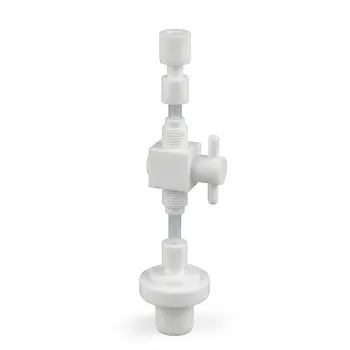
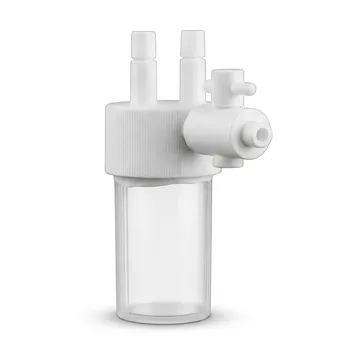
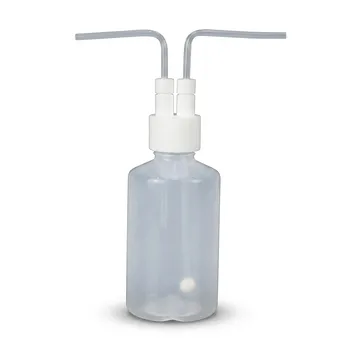
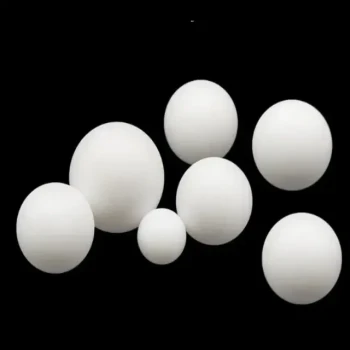
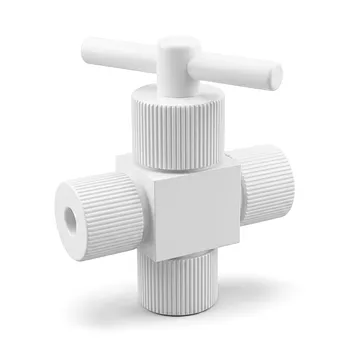
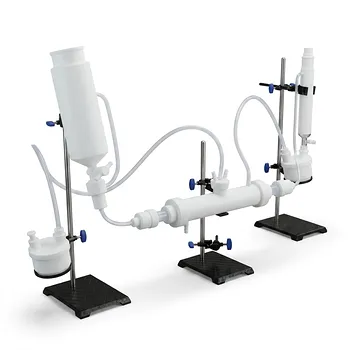
PTFE is an ideal choice for aggressive chemical service because it combines exceptional chemical resistance with reliable sealing performance. It is insoluble in virtually all industrial solvents, strong acids, and bases, and it resists corrosive gases, vapors, and reactive fluids that can rapidly degrade metals, plastics, or rubber elastomers. This makes PTFE especially valuable for gaskets, valve components, and fluid-transfer tubing where leakage, contamination, or material failure is unacceptable.
PTFE’s low chemical reactivity protects the containment component itself, helping it maintain integrity and avoid contaminating the process fluid. Its value is greatest when chemical compatibility, purity, and long service life matter more than the lowest initial cost.
Why PTFE Resists Extremely Aggressive Chemicals
Its molecular structure is highly stable
PTFE, or polytetrafluoroethylene, has a carbon backbone surrounded by fluorine atoms. This structure creates exceptionally strong carbon–fluorine bonds and shields the polymer from chemical attack.
As a result, most acids, bases, solvents, and corrosive gases cannot readily react with or break down PTFE.
It is insoluble in nearly all common process media
PTFE does not dissolve in virtually all industrial solvents, strong acids, or strong bases. This is a critical distinction for sealing materials because dissolution can cause swelling, softening, cracking, or loss of dimensional accuracy.
A PTFE gasket or valve seat can therefore remain exposed to hostile fluids without rapidly losing its shape or function.
It resists degradation and leaching
Many materials gradually release additives, plasticizers, corrosion products, or decomposition by-products into the fluid they contain. PTFE is highly resistant to this type of contamination under appropriate operating conditions.
That makes it useful in high-purity chemical processing and laboratory work, where even minor contamination can compromise analysis or product quality.
How PTFE Protects Gaskets, Valves, and Tubing
Gaskets maintain a chemical barrier
A gasket’s primary job is to prevent fluid from escaping through a joint. If the gasket material is chemically attacked, it may swell, embrittle, crack, or lose compression.
PTFE helps preserve the sealing barrier because aggressive media generally do not react with the material. This supports reliable containment in chemical-processing equipment, reaction systems, and laboratory apparatus.
Valve components remain functional
Valves may expose seats, seals, diaphragms, and liners to concentrated chemicals during every operating cycle. PTFE’s chemical resistance reduces the likelihood that these components will deteriorate or become contaminated.
Its low-friction behavior also helps reduce sliding resistance and wear in suitable valve designs, supporting smoother operation and potentially longer maintenance intervals.
Tubing provides clean fluid transfer
Fluid-transfer tubing must resist both internal chemical exposure and the mechanical demands of installation and operation. PTFE tubing is well suited to aggressive fluids because its interior surface is chemically stable and resistant to many solvents, acids, and bases.
This helps prevent the tubing from dissolving, contaminating the fluid, or developing premature chemical damage.
Additional Performance Advantages
Low friction reduces mechanical resistance
PTFE has a naturally low coefficient of friction. In valves and dynamic sealing applications, this can reduce friction between moving surfaces.
Lower friction may reduce actuator effort, wear, and heat generation, although the actual result depends on pressure, temperature, motion, and component design.
Wide temperature capability supports demanding processes
PTFE remains useful across a broad operating-temperature range compared with many rubber elastomers and conventional plastics. This allows one material family to serve both chemically aggressive and thermally demanding applications.
The allowable temperature is application-specific, however, and must account for pressure, load, cycling, and the exact PTFE grade.
It supports high-purity applications
Because PTFE is highly non-reactive and resistant to many chemicals, it is commonly used in laboratory vessels, crucibles, reagent containers, seals, valves, and transfer lines.
This is particularly valuable in trace analysis and aggressive chemical treatment, where preserving sample integrity is as important as preventing leaks.
Understanding the Trade-offs
PTFE is not literally resistant to every condition
PTFE is often described as chemically inert, but “complete resistance” should not be interpreted as universal resistance under every temperature and concentration. Certain highly reactive substances, including elemental fluorine and molten alkali metals, can attack PTFE, particularly at elevated temperatures.
A compatibility review should always consider the specific chemical, concentration, temperature, pressure, and exposure time.
Cold flow can affect sealing force
PTFE is relatively soft and can deform slowly under sustained load, a behavior commonly called cold flow or creep. In a gasket, this may reduce contact pressure over time if the design does not adequately support the material.
For demanding applications, designers may use modified PTFE, filled PTFE, encapsulated seals, or anti-extrusion features to improve dimensional stability.
Chemical resistance does not guarantee mechanical suitability
A material can be chemically compatible but mechanically unsuitable. Pressure, temperature cycling, extrusion gaps, bending, vibration, and installation forces can still cause failure.
PTFE components must therefore be sized and supported for the actual operating conditions rather than selected on chemical resistance alone.
Permeation may still matter
PTFE resists chemical attack, but some gases and small molecules can permeate through it over time. In high-pressure gas service, vacuum applications, or ultra-high-purity systems, permeation may be an important design consideration.
The correct choice may involve a different wall thickness, a barrier construction, or a different sealing technology.
Making the Right Choice for Your Goal
PTFE is most effective when its chemical inertness is matched with an appropriate mechanical design and operating envelope.
- If your primary focus is chemical containment: Choose PTFE when concentrated acids, bases, solvents, corrosive gases, or reactive fluids could rapidly degrade conventional seals and tubing.
- If your primary focus is fluid purity: Choose PTFE when minimizing leaching, contamination, and material reactivity is essential to laboratory or high-purity processing.
- If your primary focus is valve reliability: Consider PTFE for chemically exposed seats, liners, and seals, while checking pressure, temperature, wear, and cold-flow requirements.
- If your primary focus is long service life: Use PTFE to reduce chemical degradation and friction-related wear, but verify that creep, permeation, and mechanical loading are properly controlled.
With the right design and compatibility check, PTFE provides one of the most dependable material barriers against extremely aggressive chemicals.
Summary Table:
| Feature | Benefit |
|---|---|
| Exceptional chemical resistance | Resists acids, bases, solvents, and corrosive gases |
| Low reactivity | Prevents contamination and maintains fluid purity |
| Broad temperature range | Suitable for demanding thermal processes |
| Low friction | Reduces wear in moving parts like valves |
| High purity | Ideal for laboratory and trace analysis |
| Long service life | Minimizes degradation and extends component lifespan |
Looking for reliable PTFE components for your most aggressive chemical applications? At KINTEK, we specialize in high-performance fluoropolymers, offering everything from gaskets and valves to tubing and custom machined parts. Our PTFE/PFA products ensure chemical resistance, purity, and durability. Contact us today to discuss your requirements and discover how we can enhance your operations. Get in touch now!
Related Products
- Custom PTFE Insulating Gaskets and Corrosion Resistant Fluoropolymer Seals for Industrial Electrical Applications
- Customizable High Temperature Resistant Anti Static PTFE Insulating Gaskets Flame Retardant Corrosion Proof Industrial Seals
- Custom PTFE Insulating Gaskets Corrosion Resistant Teflon Seals Tailored Engineering Plastic Components
- Custom PTFE Sealing Caps and Corrosion Resistant Low Background Teflon Adapters
- Custom PTFE Sealing Tapes for Industrial and High Tech Applications
People Also Ask
- What are the three primary types of PTFE available for gaskets and seals? Choose the Right Material for Your Application
- How is PTFE utilized in seals and gaskets? Leverage Its Chemical & Temperature Resistance
- What are the key properties of PTFE that make it suitable for seals and gaskets? Unlock Superior Sealing Performance
- How are custom PTFE parts used in the automotive sector? Enhance Vehicle Performance & Durability
- What are the different forms of PTFE used for manufacturing gaskets and seals? Choose the Right Material for Your Application