Maximizing PTFE gasket reliability requires a meticulous balance of mechanical preparation and controlled compression. To ensure a long-term, leak-free seal, you must maintain a flange surface finish between 32 and 125 RMS, perform precise bolt-load calculations, and use application-specific PTFE grades like ePTFE for high-pressure or cyclic environments.
The reliability of a PTFE seal is determined before the first bolt is even turned; it depends on the precise synergy between surface preparation, material selection, and a controlled, incremental tightening sequence to mitigate the material's inherent tendency to creep.
Precision Surface Preparation
Optimizing the Flange Finish
For PTFE to seal effectively, the flange surface must be neither too smooth nor too rough. A finish between 32 and 125 RMS provides the necessary "bite" to hold the gasket in place without creating leak paths.
Essential Cleaning and Inspection
Mating surfaces must be entirely free of debris, old gasket material, rust, and oil. Use a compatible solvent to ensure a pristine interface, as even minor contaminants can lead to micro-leakage or seal degradation.
Removing Mechanical Obstructions
Before assembly, ensure the gland is free of burrs and that all equipment bearings or moving parts operate flexibly. Protecting the gasket from weld spatter, metal swarf, or paint spray during this phase is critical to maintaining its structural integrity.
Accurate Alignment and Assembly
Centering for Uniform Compression
The gasket must be placed precisely on the lip or raised surface of the flange. Proper centering ensures that when pressure is applied, it is distributed evenly across the entire sealing area, preventing localized points of failure.
Utilizing Alignment Tools
For larger or complex flange systems, use alignment tools or guide pins. These ensure the bolt holes match perfectly, preventing the gasket from shifting or buckling as the flanges are brought together.
The Role of Lubrication
Apply lubrication only if explicitly specified by the manufacturer. When required, a thin layer of a compatible lubricant can reduce friction during the initial seating process, helping the gasket conform more effectively to the flange.
Advanced Fastening Strategies
Calculated Bolt Loads
Relying on "feel" is insufficient for high-performance PTFE seals. You must perform precise bolt-load calculations to ensure the gasket is compressed enough to seal but not so much that the material is crushed or permanently deformed.
The Incremental Torque Sequence
Tighten bolts gradually using a diagonal or crisscross pattern. This "star" sequence prevents flange misalignment and ensures the gasket is compressed symmetrically, which is vital for maintaining a robust, low-maintenance seal.
Mitigating Material Creep
In applications using virgin PTFE, the material is prone to "cold flow" or creep over time. To compensate for this loss of tension, Belleville washers should be employed to maintain a constant live load on the assembly.
Understanding the Trade-offs and Pitfalls
The Limitations of Virgin PTFE
While virgin PTFE offers excellent chemical resistance, it lacks mechanical stability under high pressure or temperature cycling. In these scenarios, failing to upgrade to ePTFE (expanded PTFE) or filled PTFE often leads to premature seal failure due to excessive creep.
The Danger of Over-Tightening
Exceeding the recommended torque is a common mistake that can destroy the gasket’s prefabricated structure. Excessive force can crush the soft sealing line, creating hidden vulnerabilities that only manifest as leaks once the system reaches operating pressure.
Environmental Vulnerabilities
The sealing surfaces of PTFE gaskets are often made of soft, resilient materials that are easily damaged during transportation or storage. Any nick or scratch on the sealing line acts as a pre-made leak path that no amount of tightening can fully close.
How to Apply This to Your Project
Implementation Path
- If your primary focus is high-pressure or cyclic-duty applications: Transition to ePTFE or filled PTFE grades to ensure long-term mechanical stability and reduced maintenance.
- If your primary focus is using virgin PTFE in standard conditions: Integrate Belleville washers into your bolting assembly to provide the necessary live-loading that compensates for material creep.
- If your primary focus is ensuring an immediate leak-free startup: Strict adherence to a 32-125 RMS surface finish and a calibrated crisscross torque sequence is non-negotiable.
A successful PTFE installation treats the gasket not as a simple consumable, but as a precision-engineered component of a larger mechanical system.
Summary Table:
| Installation Step | Key Specification / Requirement | Primary Benefit |
|---|---|---|
| Surface Finish | 32 to 125 RMS | Provides grip and prevents leak paths |
| Cleaning | Compatible Solvent Clean | Prevents micro-leakage and degradation |
| Fastening | Calculated Bolt Loads | Avoids material crushing and deformation |
| Torque Pattern | Diagonal / Crisscross Sequence | Ensures uniform, symmetrical compression |
| Creep Control | Use of Belleville Washers | Maintains constant live load on assembly |
| Material Grade | ePTFE or Filled PTFE | Higher stability for cyclic/high-pressure use |
Optimize Your Lab Performance with KINTEK’s Fluoropolymer Expertise
Maximize the reliability of your experiments with high-performance materials tailored for precision. KINTEK specializes in the absolute focus of high-performance fluoropolymer materials, manufacturing virtually every lab supply imaginable from PTFE and PFA.
Whether you need everyday essentials like beakers, stirring bars, and gaskets, or advanced apparatus such as custom electrochemical cells and microwave digestion vessels, our end-to-end custom CNC fabrication delivers exactly what you need. From high-volume consumables to complex, non-standard machined parts, we provide the mechanical stability and chemical resistance your research demands.
Ready to elevate your lab’s efficiency? Contact KINTEK today to source premium laboratory supplies and bespoke fluoropolymer solutions.
Related Products
- Customizable High Temperature Resistant Anti Static PTFE Insulating Gaskets Flame Retardant Corrosion Proof Industrial Seals
- Custom PTFE Insulating Gaskets Corrosion Resistant Teflon Seals Tailored Engineering Plastic Components
- Custom PTFE Insulating Gaskets and Corrosion Resistant Fluoropolymer Seals for Industrial Electrical Applications
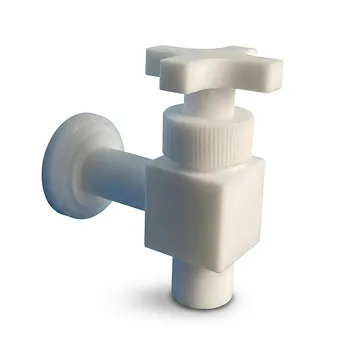
- High Corrosion Resistant PTFE Faucet Polytetrafluoroethylene Valve for Chemical Storage Drums and Fluid Transfer Systems Customizable Industrial Grade
- Custom PTFE Acid Resistant Support Rack Multi Hole PFA Hydrogen Absorption System Bracket
People Also Ask
- Why is PTFE an ideal material choice for sealing gaskets, valves, and fluid transfer tubing exposed to extremely aggressive chemicals? Discover Its Superior Chemical Resistance and Reliability
- How is PTFE utilized in seals and gaskets? Leverage Its Chemical & Temperature Resistance
- What are the key properties of PTFE that make it suitable for seals and gaskets? Unlock Superior Sealing Performance
- What are the different types of PTFE gaskets? A Guide to Choosing the Right Seal
- Why are PTFE gaskets used in the petrochemical industry? For Superior Chemical & Thermal Resistance