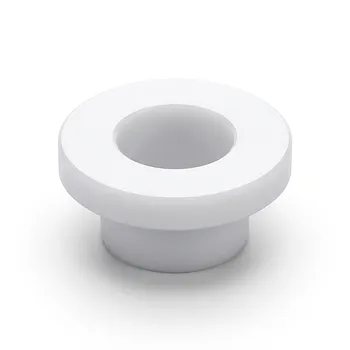
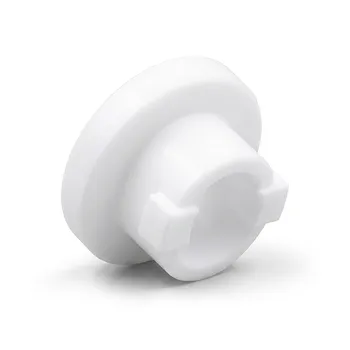
PTFE gaskets are the critical failure-prevention component in CAU-63 synthesis because they provide a leak-proof, chemically inert seal capable of withstanding the autogenous pressure generated at 135 °C. These gaskets prevent the volatilization of reaction solvents and organic acids, ensuring the stable pressure environment required to produce high-crystallinity, ultra-microporous aluminum-based metal-organic frameworks (MOFs). Furthermore, their unique microwave transparency allows electromagnetic energy to heat the reaction mixture directly and uniformly without interference from the sealing material.
Core Takeaway: PTFE gaskets are mandatory for CAU-63 synthesis because they combine extreme chemical resistance with microwave transparency, allowing the system to maintain the high internal pressures and precise temperatures necessary for MOF crystallization.
Maintaining the Autogenous Pressure Environment
The Necessity of a Hermetic Seal
The synthesis of CAU-63 occurs at 135 °C, a temperature that generates significant internal pressure from the heating of water and organic solvents. PTFE gaskets utilize high compression performance to create a zero-leakage barrier between the reactor body and the lid. This containment is vital because any drop in pressure due to leakage would disrupt the hydrothermal kinetics required for MOF formation.
Preventing Solvent Volatilization
In hydrothermal synthesis, the concentration of precursors must remain constant to ensure the predictable growth of aluminum-based frameworks. PTFE prevents the escape of volatile organic acids and reaction media during the multi-hour heating cycles. If these solvents were allowed to escape, the reaction chemistry would shift, likely resulting in amorphous solids rather than the desired ultra-microporous structure.
Material Compatibility with Microwave Synthesis
The Importance of Microwave Transparency
Unlike metal components that reflect microwaves or certain plastics that absorb them, PTFE is microwave-transparent. This property allows electromagnetic energy to pass through the gasket and liner to act directly on the precursors via volumetric heating. This ensures a rapid temperature increase and uniform thermal distribution, which are the primary advantages of using microwave-assisted methods over conventional heating.
Resistance to Corrosive Precursors
The synthesis of aluminum MOFs often involves acidic environments that would degrade standard rubber or low-grade plastic seals. PTFE’s exceptional chemical inertness ensures it does not react with or contaminate the CAU-63 reaction mixture. This resistance prevents the introduction of impurities that could interfere with the crystallinity or pore volume of the final product.
Ensuring High Crystallinity and Framework Integrity
Promoting Phase Purity
The formation of CAU-63 is sensitive to the stability of the hydrothermal environment. A stable pressure-temperature profile, maintained by the PTFE seal, ensures that the aluminum nodes and organic linkers assemble into the correct geometry. Fluctuations in pressure caused by a faulty seal often lead to the formation of competing phases or collapsed frameworks.
Facilitating Long-Duration Synthesis
While microwave synthesis is faster than traditional methods, it still requires several hours of sustained heat and pressure. PTFE’s thermal stability up to 200 °C provides a significant safety margin for the 135 °C CAU-63 process. This durability ensures the seal remains intact throughout the entire crystallization window, preventing mid-reaction failures.
Understanding the Trade-offs and Limitations
The Challenge of Mechanical Creep
While PTFE is chemically superior, it is susceptible to "creep" or "cold flow," where the material slowly deforms under constant pressure. Users must periodically replace gaskets or use filled PTFE variants to ensure the seal remains tight over many synthesis cycles. A deformed gasket can lead to subtle leaks that are difficult to detect but ruin the MOF's surface area.
Temperature Thresholds
PTFE is highly effective up to approximately 200–260 °C, but it begins to lose structural integrity and can release toxic fumes if overheated. For syntheses exceeding 250 °C, researchers must transition to more specialized materials like PFA or metal-reinforced seals. For the 135 °C requirement of CAU-63, however, PTFE remains the optimal balance of performance and cost.
How to Apply This to Your Synthesis Project
When selecting components for your microwave-assisted MOF synthesis, consider your specific environmental requirements:
- If your primary focus is maximizing crystallinity: Ensure you use high-purity, virgin PTFE gaskets to avoid any leaching of additives into the reaction mixture.
- If your primary focus is high-pressure safety: Regularly inspect gaskets for signs of thinning or deformation (creep) and replace them every 5–10 runs to maintain a perfect seal.
- If your primary focus is rapid, uniform heating: Always verify that your sealing materials are microwave-transparent to prevent "cold spots" or localized melting of the gasket itself.
By precisely controlling the pressure environment through high-performance PTFE seals, you ensure the successful assembly of the complex, ultra-microporous architecture of CAU-63.
Summary Table:
| Feature | Role in CAU-63 Synthesis | Key Benefit |
|---|---|---|
| Chemical Inertness | Resists acidic MOF precursors | Prevents contamination and impurity formation |
| Microwave Transparency | Allows electromagnetic energy passage | Ensures rapid, uniform volumetric heating |
| High-Pressure Sealing | Maintains autogenous pressure at 135°C | Prevents solvent loss and ensures MOF growth |
| Thermal Stability | Durable up to 200°C+ | Safely handles multi-hour hydrothermal cycles |
| Compression Performance | Creates a hermetic seal | Prevents leaks and maintains reaction kinetics |
Optimize Your Synthesis with KINTEK’s Fluoropolymer Expertise
Achieving high-crystallinity MOFs like CAU-63 requires components that never compromise on purity or pressure integrity. KINTEK specializes in high-performance PTFE and PFA laboratory supplies designed for the most demanding hydrothermal and microwave-assisted applications.
From everyday basic labware (beakers, crucibles, reagent bottles) and fluid transfer components (tubing, valves, fittings) to advanced reaction apparatus—including hydrothermal synthesis liners, microwave digestion vessels, and custom electrochemical cells—we provide the tools you need for precise scientific outcomes.
Why partner with KINTEK?
- End-to-End Customization: Benefit from our precision CNC fabrication for complex, non-standard machined parts and bespoke laboratory setups.
- Material Excellence: We maintain an absolute focus on high-purity fluoropolymers to ensure zero contamination in trace analysis and synthesis.
- Comprehensive Range: We supply everything from sample prep tools (filters, pipettes, tweezers) to high-volume consumables (O-rings, gaskets, septa).
Ensure the success of your next synthesis project with reliable, high-performance components. Contact us today to discuss your custom requirements!
References
- Lasse Wegner, Norbert Stock. CAU-63, an Ultramicroporous Al-MOF with a Honeycomb-Shaped 2D IBU. DOI: 10.1021/acs.inorgchem.5c03315
This article is also based on technical information from Kintek Knowledge Base .
Related Products
- Customizable High Temperature Resistant Anti Static PTFE Insulating Gaskets Flame Retardant Corrosion Proof Industrial Seals
- Custom PTFE Insulating Gaskets Corrosion Resistant Teflon Seals Tailored Engineering Plastic Components
- Custom PTFE Insulating Gaskets and Corrosion Resistant Fluoropolymer Seals for Industrial Electrical Applications
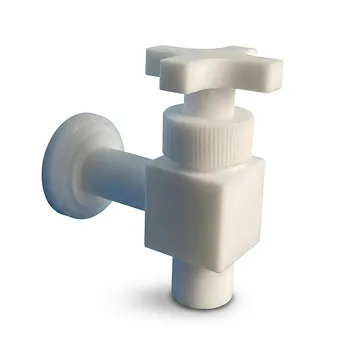
- High Corrosion Resistant PTFE Faucet Polytetrafluoroethylene Valve for Chemical Storage Drums and Fluid Transfer Systems Customizable Industrial Grade
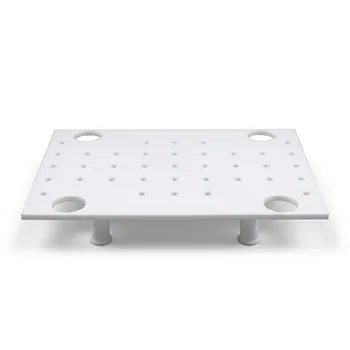
- Custom PTFE Acid Resistant Support Rack Multi Hole PFA Hydrogen Absorption System Bracket
People Also Ask
- Why is PTFE an ideal material choice for sealing gaskets, valves, and fluid transfer tubing exposed to extremely aggressive chemicals? Discover Its Superior Chemical Resistance and Reliability
- How is PTFE utilized in seals and gaskets? Leverage Its Chemical & Temperature Resistance
- What are the key properties of PTFE that make it suitable for seals and gaskets? Unlock Superior Sealing Performance
- What are the advantages of using PTFE gaskets? Achieve Superior Chemical and Thermal Sealing
- What are the different types of PTFE gaskets? A Guide to Choosing the Right Seal