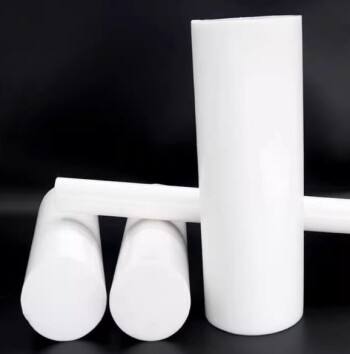
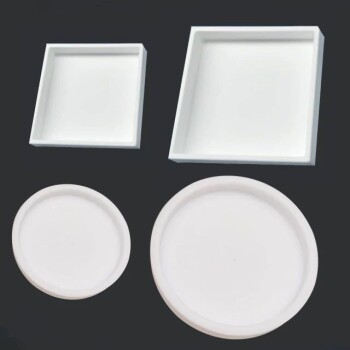
Polytetrafluoroethylene (PTFE) is a premier sealing material primarily because of its nearly universal chemical inertness, an exceptionally low coefficient of friction, and a vast operational temperature range. These properties arise from its high-strength carbon-fluorine bonds, which allow the material to remain stable and functional in environments—ranging from cryogenic cold to extreme heat—that would cause standard elastomers to fail or degrade.
Core Takeaway: PTFE’s effectiveness is rooted in its unique molecular stability, providing a "triple threat" of chemical immunity, permanent self-lubrication, and thermal resilience. It is the definitive choice for applications where reliability is non-negotiable under aggressive conditions.
The Foundation of Chemical and Thermal Resilience
Universal Chemical Inertness
PTFE is virtually chemically invisible, meaning it does not react with almost any acid, base, or solvent. This inertness prevents the material from swelling, softening, or degrading when exposed to aggressive media, ensuring the seal maintains its physical integrity over time.
Extreme Temperature Versatility
The material maintains its mechanical properties across a staggering temperature gradient, typically from -200°C to +260°C. Unlike many plastics that become brittle in the cold or lose shape in the heat, PTFE retains the flexibility required to maintain a positive seal in both cryogenic and high-heat environments.
High Thermal Stability
With a melting point of approximately 327°C, PTFE provides a significant safety margin for high-temperature operations. It does not undergo significant thermal degradation until it nears these extreme limits, making it a stable barrier for steam and hot process gases.
Physical Properties for Dynamic and Static Seals
The Lowest Coefficient of Friction
PTFE possesses a coefficient of friction as low as 0.05 to 0.10, which is the lowest of any known solid material. In dynamic sealing applications, this minimizes heat generation and wear, allowing for smoother movement and longer component life without the need for external lubricants.
Mechanical Conformity and Deformation
PTFE is a relatively soft fluoropolymer, which allows it to deform under pressure. This characteristic is vital for sealing because it enables the material to "flow" into the microscopic imperfections and uneven gaps of mating surfaces, creating a tighter leak-proof barrier.
Hydrophobic and Non-Stick Nature
The material is inherently hydrophobic and non-adhesive, meaning it resists the buildup of process media and contamination. This non-stick quality is particularly valuable in sanitary or food-grade applications (FDA compliant) where ease of cleaning and purity are paramount.
Understanding the Trade-offs
The Challenge of Cold Flow (Creep)
While PTFE’s softness helps it seal, it also leads to "cold flow" or creep, where the material gradually deforms under a constant load. If not properly "energized" with a spring or reinforced with fillers, a pure PTFE seal may eventually lose its sealing tension and leak.
Thermal Expansion and Pressure Limits
PTFE has a high coefficient of thermal expansion, meaning it expands and contracts significantly more than the metal hardware surrounding it. This can lead to sealing gaps during thermal cycling if the seal design does not account for these dimensional changes.
Sensitivity to Abrasive Media
Because pure PTFE is soft, it can be susceptible to mechanical wear if the process fluid contains abrasive particles. In these specific scenarios, the material is often alloyed with glass, carbon, or bronze to increase its structural hardness and wear resistance.
How to Apply PTFE to Your Project
Selecting the Right Configuration
To maximize the benefits of PTFE, you must match the material grade to your specific operating environment.
- If your primary focus is Chemical Purity: Use Virgin PTFE, as it offers the highest level of inertness and is FDA-approved for food and pharmaceutical contact.
- If your primary focus is High-Pressure Durability: Select Reinforced PTFE (filled with carbon or glass) to mitigate the effects of cold flow and increase mechanical strength.
- If your primary focus is Dynamic Performance: Leverage PTFE’s low friction in rotary or reciprocating seals to reduce torque requirements and prevent "stick-slip" motion.
- If your primary focus is Cryogenic Sealing: Utilize PTFE’s ability to remain flexible at -200°C, ensuring the seal does not shatter or crack under extreme thermal shock.
By understanding these fundamental properties, you can deploy PTFE as a high-performance solution that ensures system longevity and safety in the most demanding industrial environments.
Summary Table:
| Property | Key Benefit | Ideal Application |
|---|---|---|
| Chemical Inertness | Resists acids, bases, and solvents | Corrosive chemical processing |
| Low Friction | Minimizes wear and heat generation | Dynamic rotary and reciprocating seals |
| Thermal Range | Stable from -200°C up to +260°C | Cryogenic and high-heat environments |
| Conformity | Deforms to fill microscopic gaps | Positive leak-proof static sealing |
| Non-Stick | Hydrophobic and easy to clean | Food-grade and pharmaceutical use |
Optimize Your Lab Performance with KINTEK’s Precision Fluoropolymers
Maximize the reliability of your experiments with KINTEK, your premier partner for high-performance PTFE and PFA laboratory solutions. We understand that in demanding research environments, material integrity is non-negotiable.
Whether you require everyday basic labware (beakers, crucibles, reagent bottles), high-purity trace analysis instruments, or fluid transfer components (tubing, fittings, valves), KINTEK provides the chemical immunity and thermal resilience your work demands. Our capabilities extend to advanced reaction apparatus, including standard or custom electrochemical cells, battery testing fixtures, and microwave digestion vessels.
Why Partner with KINTEK?
- Comprehensive Catalog: From simple stirring bars and gaskets to complex sample prep and filtration tools.
- Bespoke Engineering: End-to-end custom CNC fabrication for non-standard machined parts and bespoke laboratory setups.
- Material Expertise: An exclusive focus on high-performance fluoropolymers for maximum durability.
Don't settle for standard when you can have precision-engineered excellence. Contact KINTEK today to discuss your high-volume or custom project requirements!
Related Products
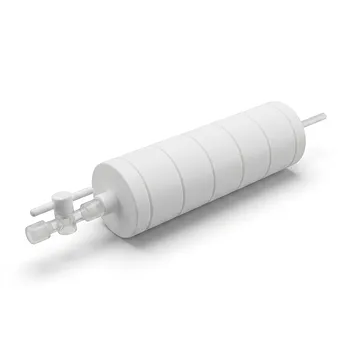
- Custom PTFE Filtration System Acid Resistant High Purity Semiconductor Grade Chemical Processing Filter
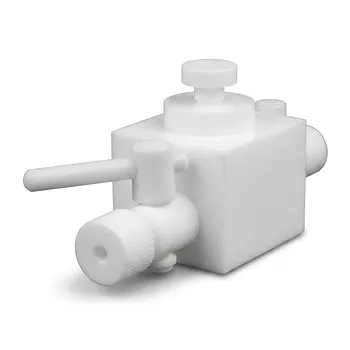
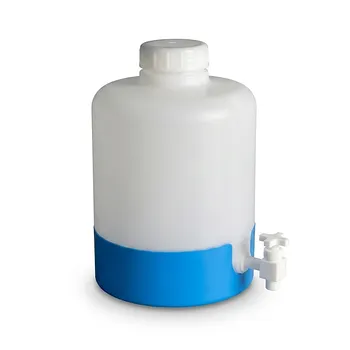
- High Corrosion Resistant PTFE Faucet Polytetrafluoroethylene Valve for Chemical Storage Drums and Fluid Transfer Systems Customizable Industrial Grade
- PTFE PFA Vacuum Filtration System Corrosion Resistant Customizable Shatterproof Laboratory Device
- PTFE Corrosion Resistant Filter with PFA Valve Connections and Integrated Sieve Plate
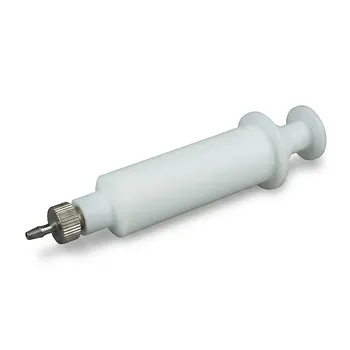
- High Temperature Chemical Resistant 50ml PTFE Syringe Customized Teflon Injector with Threaded Seal for Trace Analysis
People Also Ask
- What makes PTFE filtration systems advantageous for industrial and scientific use? Unmatched Chemical & Thermal Stability
- What sizes and pore options are available for PTFE filters? Choose the Right Filter for Your Application
- What steps are involved in selecting the proper PTFE filter? A 4-Step Guide to Optimal Filtration
- How does the hydrophobicity of PTFE filters benefit their use? Ensure Uninterrupted Gas Flow and Solvent Filtration
- What temperature resistance do PTFE filters offer? Unmatched Thermal Stability from -200°C to +260°C