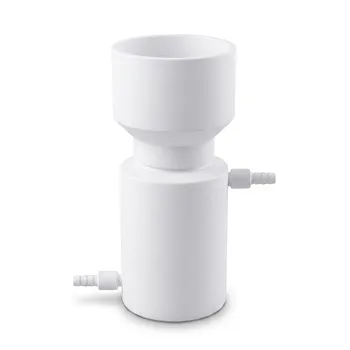
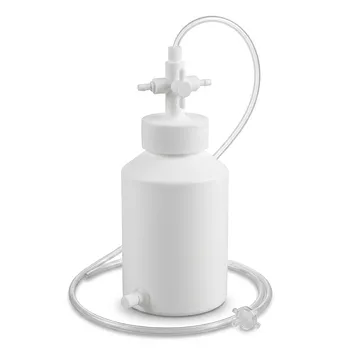
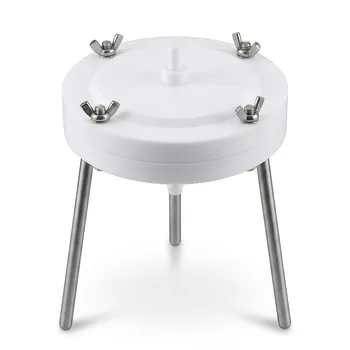
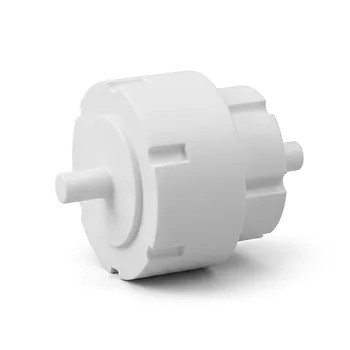
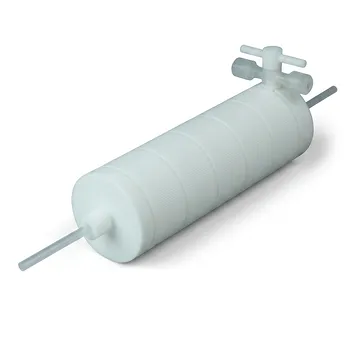
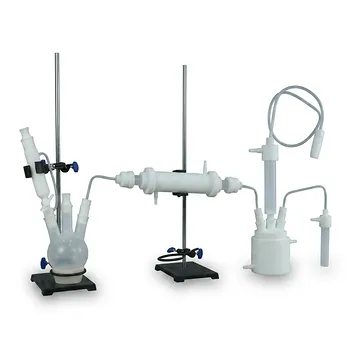
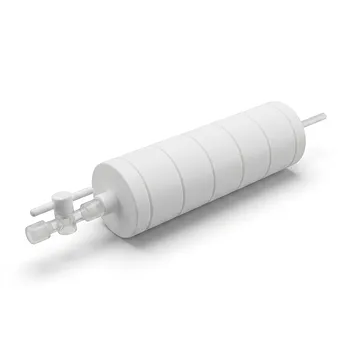
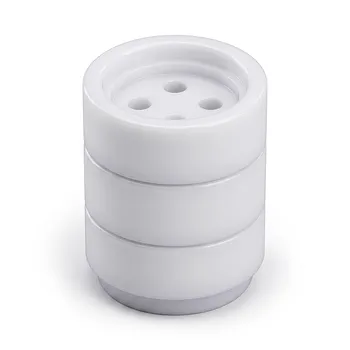
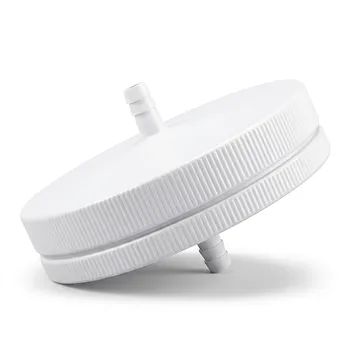
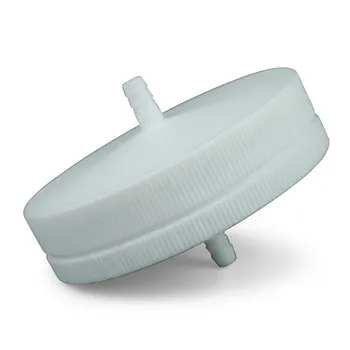
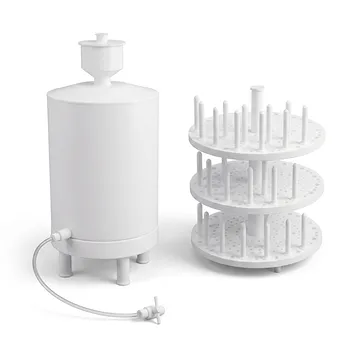
In short, PTFE filtration systems are advantageous because of their fundamental material properties. Polytetrafluoroethylene (PTFE) is chemically inert, resistant to extreme temperatures, and naturally hydrophobic (water-repellent). This unique combination results in highly durable, non-contaminating, and efficient filters ideal for aggressive industrial and sensitive scientific environments.
In environments where filter failure means costly downtime or compromised results, PTFE stands apart. Its core advantage isn't just one feature, but its unparalleled chemical stability and non-stick nature, which together deliver exceptional reliability and longevity for critical filtration tasks.

The Core Properties Defining PTFE Performance
To understand why PTFE is a superior material for demanding filtration, we must first look at its intrinsic chemical and physical characteristics. These properties are not additives; they are inherent to the material itself.
Unmatched Chemical Inertness
PTFE is a synthetic fluoropolymer, making it one of the most nonreactive materials known. It resists degradation from nearly all industrial chemicals, including aggressive acids, bases, and solvents.
This inertness ensures the filter itself does not break down, leach chemicals into the filtrate, or react with the substance being filtered. This is critical for maintaining the purity of the final product or sample.
Extreme Temperature Stability
PTFE maintains its structural integrity across a vast temperature range, with a high melting point well suited for industrial processes.
This allows PTFE filters to be used in high-temperature applications or undergo sterilization processes like autoclaving without warping, melting, or losing performance.
Inherent Hydrophobicity and Non-Stick Surface
PTFE is naturally water-repellent and has an extremely low coefficient of friction, creating a non-stick surface.
For filtration, this means aqueous solutions are repelled, preventing the filter membrane from becoming water-logged and clogged. This property is excellent for venting applications and gas filtration, as it allows air to pass freely while blocking moisture and aerosol contaminants.
High Durability and Wear Resistance
Despite being a flexible thermoplastic, PTFE is highly durable and resistant to wear and tear.
This physical resilience contributes directly to a longer operational lifespan, especially in systems with continuous flow or mechanical stress, enhancing the overall efficiency of industrial operations.
Translating Properties into Operational Advantages
These fundamental properties directly translate into tangible benefits that impact productivity, accuracy, and cost.
Superior Filtration Efficiency
Because PTFE does not react with or bind to the filtered substance, it provides a very high sample recovery rate. This ensures that analytical results are accurate and not skewed by interactions with the filter media.
Extended Lifespan and Reduced Downtime
Filters made from PTFE last longer in harsh chemical and thermal environments. Their non-stick nature also reduces fouling and clogging.
This durability means fewer filter replacements are needed, which minimizes process downtime, reduces maintenance labor, and lowers the generation of waste.
Lower Total Cost of Ownership
While the initial purchase price of PTFE components may be higher than some alternatives, their longevity and reliability offer a superior return on investment.
The significant savings from reduced maintenance, fewer replacements, and the prevention of costly system failures make PTFE a highly cost-effective solution over the long term.
Understanding the Trade-offs and Considerations
No material is perfect for every application. Objectivity requires acknowledging PTFE's specific limitations.
Hydrophobicity Requires Pre-Wetting for Liquids
PTFE's greatest strength for gas filtration is its primary challenge for liquid filtration. It will not allow water-based liquids to pass through without first being "pre-wetted" with a low-surface-tension solvent, such as isopropanol or ethanol. This adds an extra step to the process.
Susceptibility to Cold Flow
Under sustained high pressure and mechanical load, PTFE can be subject to "creep" or cold flow. In high-pressure differential filtration applications, the filter membrane must have adequate physical support to prevent deformation.
Not Ideal for All Applications
For simple, non-aggressive, room-temperature filtration of aqueous solutions, a less expensive hydrophilic membrane material like nylon or PVDF may be a more direct and suitable choice.
Making the Right Choice for Your Application
Selecting the correct filter material is crucial for operational success. Your decision should be guided by the specific demands of your process.
- If your primary focus is filtering aggressive chemicals or solvents: PTFE is the industry-standard choice due to its unmatched chemical inertness.
- If your primary focus is high-temperature processes or steam sterilization: PTFE's exceptional thermal stability makes it one of the most reliable options available.
- If your primary focus is sterile venting or gas/air filtration: PTFE's inherent hydrophobicity is a key advantage, as it prevents pore blockage from moisture condensation.
- If your primary focus is filtering standard aqueous solutions at ambient temperature: Consider a naturally hydrophilic membrane unless the chemical resistance or durability of PTFE is also required.
By understanding these core principles, you can confidently select PTFE for applications where chemical resilience, thermal stability, and long-term reliability are non-negotiable.
Summary Table:
| Key Property | Advantage for Filtration |
|---|---|
| Chemical Inertness | Resists aggressive acids, bases, and solvents; prevents contamination |
| Temperature Stability | Withstands high temperatures and autoclaving without degradation |
| Hydrophobicity | Repels water, ideal for gas filtration and venting applications |
| Durability | Long lifespan, reduces downtime and replacement costs |
Optimize your critical filtration processes with KINTEK's precision PTFE components.
For semiconductor, medical, laboratory, and industrial applications where filter failure is not an option, our custom-fabricated PTFE seals, liners, labware, and filtration elements deliver the reliability you need. From prototypes to high-volume orders, we ensure precision production and material integrity for your most demanding environments.
Contact our experts today to discuss how our PTFE solutions can enhance your system's performance and reduce your total cost of ownership.
Visual Guide

Related Products
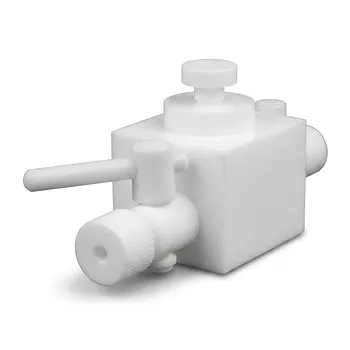
- Custom PTFE Filtration System Acid Resistant High Purity Semiconductor Grade Chemical Processing Filter
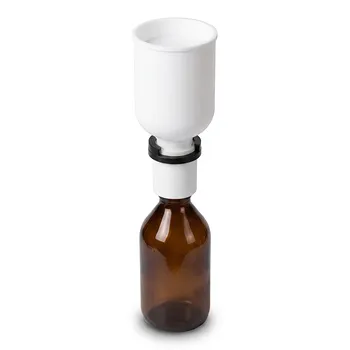
- PTFE PFA Vacuum Filtration System Corrosion Resistant Customizable Shatterproof Laboratory Device
- Custom Corrosion Resistant PTFE Vacuum Filtration System with Teflon Buchner Funnel for Research Laboratories
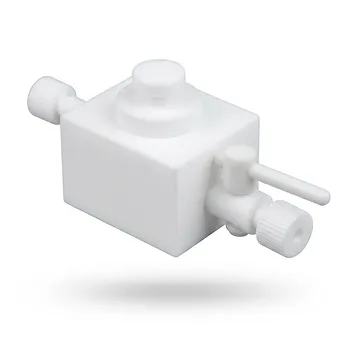
- Custom PTFE Filtration System Acid Resistant Chemical Semiconductor Fluoropolymer Filter Assembly
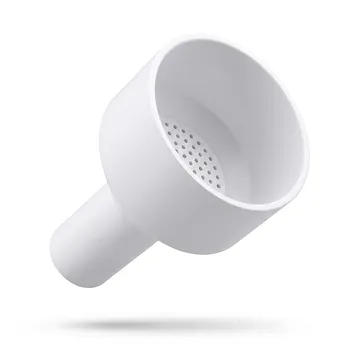
- Corrosion Resistant PTFE Buchner Funnel and Vacuum Filtration System Unbreakable Chemical Solvent Filter Unit
People Also Ask
- What sizes and pore options are available for PTFE filters? Choose the Right Filter for Your Application
- What steps are involved in selecting the proper PTFE filter? A 4-Step Guide to Optimal Filtration
- What temperature resistance do PTFE filters offer? Unmatched Thermal Stability from -200°C to +260°C
- How does the hydrophobicity of PTFE filters benefit their use? Ensure Uninterrupted Gas Flow and Solvent Filtration
- Which chemicals are fully compatible with PTFE filters? Discover Unmatched Chemical Resistance