PTFE and PFA provide the strongest combination of continuous-use temperature and electrical insulation among these common fluoropolymers. Both are generally rated for continuous operation up to 260°C (500°F) and offer volume resistivity above 10¹⁸ Ω·cm, with UL 94 V-0 flammability performance. FEP retains comparable resistivity but is limited to approximately 204°C, while ETFE and PVDF operate at lower temperatures; PVDF, however, provides substantially higher dielectric strength.
For extreme-temperature, chemically aggressive, or ultra-pure fluid handling, PTFE and PFA provide the greatest overall margin. FEP is a practical moderate-temperature alternative, while ETFE and PVDF are better suited to applications that prioritize toughness, stiffness, or dielectric strength over maximum thermal resistance.
How the Temperature Ratings Compare
PTFE and PFA Set the High-Temperature Benchmark
PTFE and PFA share the highest commonly cited continuous-use temperature rating in this comparison: 260°C.
This makes them suitable for high-temperature laboratory equipment and fluid systems, including digestion vessels, reaction components, crucibles, high-purity tubing, and sample-handling hardware.
The rating describes recommended long-term service, not the temperature at which the polymer immediately melts. PTFE melts at approximately 320-340°C, while PFA melts at approximately 302-310°C.
FEP Handles Moderate High Temperatures
FEP is typically rated for continuous use around 204°C, sometimes reported as approximately 205°C depending on the grade or reference source.
It provides strong chemical resistance and electrical insulation, but its lower thermal ceiling reduces its margin in boiling acid digestion, high-temperature synthesis, and other processes that approach the limits of PTFE or PFA.
FEP melts at approximately 260-270°C, so its continuous-use rating should not be confused with its melting range.
ETFE and PVDF Trade Heat Resistance for Other Properties
ETFE and PVDF have lower continuous-use temperature ratings than PTFE, PFA, and FEP. The supplied references place ETFE at approximately 150°C and PVDF at approximately 120-150°C, depending on the material grade and rating system.
That range matters when comparing product data. Engineers should use the rating for the specific resin, geometry, stress level, and operating environment rather than treating a polymer family value as universal.
For applications that remain comfortably below these limits, ETFE and PVDF can provide mechanical or electrical advantages that justify their lower temperature capability.
How the Electrical Insulation Properties Compare
Volume Resistivity Measures Leakage Resistance
PTFE, PFA, and FEP are exceptional electrical insulators, with the supplied data identifying volume resistivity above 10¹⁸ Ω·cm for PTFE, PFA, and FEP.
High volume resistivity indicates very low current leakage through the bulk material. This is valuable in laboratory instruments, sensor assemblies, cable insulation, electrically heated fluid systems, and components exposed to conductive chemicals.
The similarity in resistivity means that temperature, moisture, contamination, geometry, and surface condition may be more important than small differences between these three materials in a finished assembly.
Dielectric Strength Measures Breakdown Resistance
Dielectric strength is different from volume resistivity. It describes the electric field the material can withstand before electrical breakdown, commonly expressed in kV/mm.
FEP is identified in the reference data with a dielectric strength of approximately 19.7 kV/mm. PVDF is reported at approximately 63-67 kV/mm, which is substantially higher under the relevant test conditions.
A higher dielectric-strength value does not automatically make PVDF the better insulator for every application. The result depends on test method, thickness, frequency, temperature, conditioning, defects, and the specific grade.
PVDF Can Be Strong Electrically at Lower Temperatures
PVDF's higher reported dielectric strength makes it attractive where compact insulation, electrical isolation, or high electric-field tolerance is important and operating temperatures remain within its lower thermal range.
PVDF also offers higher flexural modulus than PTFE and PFA, providing a stiffer material for structural or semi-structural components.
Its electrical advantage therefore comes with a temperature constraint. PVDF is a strong candidate for moderate-temperature electrical and fluid-handling systems, but not for applications requiring the thermal margin of PTFE or PFA.
ETFE Provides Useful Insulation with Greater Toughness
ETFE is a partially fluorinated fluoropolymer known for toughness, tensile strength, and cut-through resistance. These properties can be important in cable jackets, protective tubing, and fluid-handling components exposed to abrasion or mechanical damage.
Its approximately 150°C continuous-use rating is considerably below PTFE and PFA. ETFE should be selected when mechanical durability is central and the process temperature is controlled accordingly.
What This Means for Laboratory and Fluid Handling Design
Choose PTFE for Maximum Chemical and Thermal Margin
PTFE is the conservative choice for severe chemical exposure, very high temperatures, low friction, and demanding laboratory environments.
It is well suited to machined labware, vessel liners, seals, reaction components, and tubing where thermal and chemical stability matter more than simple melt-processing.
PTFE's processing limitation is important: its very high melt viscosity prevents conventional melt extrusion and injection molding. It is commonly paste-extruded, compression-molded, or machined.
Choose PFA for High-Purity Complex Components
PFA provides comparable continuous-use temperature and chemical inertness while being melt-processible.
That allows manufacturers to produce intricate tubing, valves, fittings, vessels, and heat-tracing jackets through extrusion, injection molding, or related processes.
PFA is particularly useful when the application requires high purity, low permeation, complex geometry, and high-temperature service in the same component.
Choose FEP for Moderate-Temperature Fluids and Insulation
FEP is a practical alternative when the operating temperature remains below approximately 204°C.
It offers excellent chemical resistance, volume resistivity above 10¹⁸ Ω·cm, and melt-processability similar to PFA. These characteristics support moderate-temperature tubing, liners, cable jackets, and electrically insulating components.
The main question is whether the lower thermal rating leaves enough operating margin for excursions, cleaning cycles, and long-term aging.
Choose ETFE for Mechanical Durability
ETFE is preferable when toughness, tensile strength, and cut-through resistance are more important than maximum chemical or thermal resistance.
It can be a good choice for mechanically exposed tubing, protective jackets, and components that must resist abrasion or handling damage.
Its lower temperature rating and reduced chemical resistance relative to fully fluorinated materials must be checked against the actual process chemicals and temperature profile.
Choose PVDF for Stiffness and Dielectric Strength
PVDF is appropriate when higher flexural stiffness or high dielectric strength is valuable at moderate temperatures.
It can support fluid-handling and laboratory components that need more structural rigidity than PTFE typically provides, provided the chemical environment and temperature are suitable.
PVDF should not be selected solely from its dielectric-strength value. Long-term chemical compatibility, temperature, stress, and permeation requirements remain decisive.
Understanding the Trade-offs
Temperature Ratings Are Not Interchangeable
A continuous-use temperature rating is not a universal material constant. It can vary with grade, load, exposure time, geometry, atmosphere, and the acceptable level of deformation or property loss.
For final specification, use the manufacturer's data for the exact product and consider a margin below the published maximum.
Electrical Data Requires Test-Method Context
Volume resistivity and dielectric strength describe different failure mechanisms. Comparing a dielectric-strength value from one test method with a resistivity value from another does not produce a single overall insulation ranking.
Surface contamination can also dominate real-world leakage, especially in laboratory systems handling ionic solutions, acids, salts, or condensate.
Chemical Resistance and Mechanical Strength Can Conflict
PTFE and PFA offer the strongest combination of chemical inertness and thermal stability in this group, but they are not always the stiffest materials.
ETFE and PVDF can provide better structural behavior, while PTFE's low friction and PFA's processability solve different manufacturing and performance problems.
Processing Influences Cost and Geometry
PTFE's manufacturing routes can make intricate shapes more difficult or expensive to produce. PFA and FEP are easier to melt-process, which can simplify complex tubing, valves, and molded components.
This manufacturing advantage does not eliminate the need to evaluate welds, joints, wall thickness, permeation, and dimensional stability at operating temperature.
Making the Right Choice for Your Goal
Select the polymer by matching the full operating envelope, not by optimizing a single catalog property.
- If your primary focus is maximum temperature and chemical resistance: Choose PTFE or PFA, generally using PTFE for machined or molded high-performance components and PFA when melt-processable, high-purity geometries are required.
- If your primary focus is moderate-temperature fluid handling and insulation: Choose FEP when its approximately 204°C continuous-use rating provides adequate process margin.
- If your primary focus is mechanical toughness and cut-through resistance: Choose ETFE for applications operating within its approximately 150°C temperature range.
- If your primary focus is dielectric strength and structural stiffness: Evaluate PVDF for moderate-temperature service, while verifying chemical compatibility and the exact grade's thermal rating.
The right fluoropolymer is the one that preserves the required thermal, electrical, chemical, mechanical, and manufacturing performance throughout the complete service life.
Summary Table:
| Property | PTFE | PFA | FEP | ETFE | PVDF |
|---|---|---|---|---|---|
| Continuous-Use Temperature | 260°C | 260°C | 204°C | 150°C | 120-150°C |
| Volume Resistivity (Ω·cm) | >10^18 | >10^18 | >10^18 | Not specified | Not specified |
| Dielectric Strength (kV/mm) | Not specified | Not specified | ~19.7 | Not specified | ~63-67 |
| Flammability | UL 94 V-0 | UL 94 V-0 | UL 94 V-0 | Not specified | Not specified |
Choose the right fluoropolymer for your application with confidence. At KINTEK, we specialize in high-performance PTFE and PFA labware and fluid handling components, from beakers and tubing to custom machined parts for extreme environments. Our team can help you select the ideal material for your temperature and insulation needs. Contact us today to discuss your requirements and get a tailored solution.
Related Products
- Custom PTFE Insulating Gaskets and Corrosion Resistant Fluoropolymer Seals for Industrial Electrical Applications
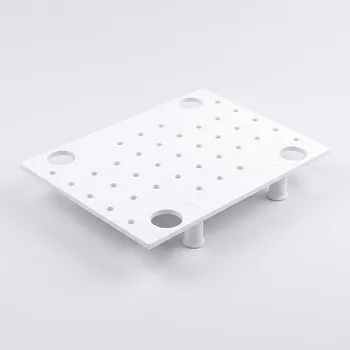
- High Temperature Resistant PTFE Thermal Insulation Board Corrosion Resistant Metal Free Fluoropolymer Stand for Ultra Clean Laboratories
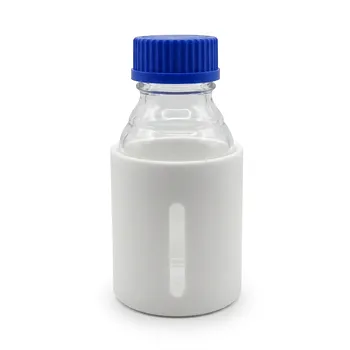
- Custom PTFE Thermal Insulation Sleeves Laboratory Vessel Condensation Jackets Virgin Fluoropolymer Machined Components
- Customizable High Temperature Resistant Anti Static PTFE Insulating Gaskets Flame Retardant Corrosion Proof Industrial Seals
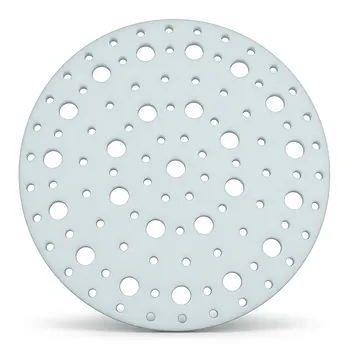
- High Temperature Resistant Insulating TFM Separator and Ultra Clean Laboratory PTFE Baffle Plate with Customizable Pore Size and Hole Configuration
People Also Ask
- What are the three primary types of PTFE available for gaskets and seals? Choose the Right Material for Your Application
- Why is PTFE an ideal material choice for sealing gaskets, valves, and fluid transfer tubing exposed to extremely aggressive chemicals? Discover Its Superior Chemical Resistance and Reliability
- How is PTFE utilized in seals and gaskets? Leverage Its Chemical & Temperature Resistance
- What are the key properties of PTFE that make it suitable for seals and gaskets? Unlock Superior Sealing Performance
- How are custom PTFE parts used in the automotive sector? Enhance Vehicle Performance & Durability