Creep and cold flow represent the permanent, time-dependent deformation of PTFE when subjected to mechanical stress. In sealing applications, this means the gasket material physically moves or "flows" away from the compressive load exerted by the flange bolts. This thinning of the material directly causes a relaxation in bolt preload, which eventually compromises the joint's ability to maintain a leak-proof seal.
Core Takeaway: Because PTFE lacks molecular cross-links, its polymer chains slide past one another under constant pressure, leading to a loss of clamping force. To ensure long-term seal integrity, engineers must utilize modified PTFE structures or mechanical hardware to compensate for this inherent material behavior.
Why PTFE "Flows" Under Pressure
The Molecular Root Cause
Unlike many elastomers, standard PTFE molecules lack strong intermolecular cross-links. This structural void allows the polymer chains to slide past each other when subjected to a constant compressive load.
Time and Temperature Sensitivity
Creep is a progressive, non-reversible deformation. While it occurs at room temperature (often called "cold flow"), the rate of deformation increases significantly at elevated temperatures, particularly those exceeding 100°C.
Continuous Mechanical Stress
The very stress required to create a seal—the bolt load—is the catalyst for creep. The material treats the constant pressure as a signal to redistribute itself, moving toward areas of lower pressure.
How Creep Compromises Seal Integrity
Relaxation of Bolt Preload
As the gasket thins due to creep, the distance between the flange faces decreases slightly. This movement causes the tension in the bolts to drop, reducing the total clamping force holding the joint together.
Radial Extrusion
When the material is compressed and has nowhere to go within the flange serrations, it may experience radial extrusion. The gasket "squeezes out" from between the flanges, reducing the effective sealing area and structural stability.
The Path to Leakage
Once the clamping force falls below the minimum required seating stress, the internal fluid pressure can overcome the seal. This result is often a delayed failure, where a joint that passed an initial pressure test leaks weeks or months later.
Understanding the Trade-offs
Chemical Resistance vs. Dimensional Stability
Standard PTFE offers nearly universal chemical resistance, but its dimensional stability is its primary weakness. Users often have to choose between the pure chemical purity of virgin PTFE and the mechanical reliability of reinforced versions.
The Cost of Modification
Addressing creep usually involves material additives or specialized manufacturing processes. While these "filled" or "expanded" PTFE gaskets offer superior performance, they typically carry a higher upfront cost than standard virgin PTFE.
Mechanical Complexity
Compensating for creep through hardware, such as Belleville washers, adds complexity to the assembly. If these components are specified or installed incorrectly, they can lead to uneven loading and premature seal failure.
Engineering Solutions for Cold Flow
Material Modifications
Adding fillers like silica, barium sulfate, or carbon helps "anchor" the polymer chains, significantly reducing the material's tendency to flow. Alternatively, expanded PTFE (ePTFE) uses a multi-directional fibrillar structure to provide excellent resistance to creep while maintaining softness.
Mechanical Compensation
In high-load or high-temperature applications, engineers often use spring-loaded mechanisms. Tools like Belleville (disc) washers can maintain a consistent load on the gasket even as the material thins, effectively "soaking up" the relaxation.
Design Adjustments
Increasing the wall thickness or using metal-backed PTFE components can provide the necessary structural support for the PTFE. This is particularly common in valve seats and laboratory apparatus where structural integrity is as vital as the seal itself.
How to Apply This to Your Project
Making the Right Choice for Your Goal
- If your primary focus is extreme chemical purity: Use virgin PTFE but implement a strict re-torquing schedule or use spring-loaded fasteners to compensate for inevitable cold flow.
- If your primary focus is high-temperature reliability: Specify filled PTFE or ePTFE, which are specifically engineered to resist deformation at temperatures where virgin PTFE would fail.
- If your primary focus is long-term maintenance reduction: Opt for ePTFE gaskets, as their operational lifespan is significantly longer than typical plastic sealing products due to their superior resistance to creep.
Understanding that PTFE is a dynamic material allows you to design systems that account for its movement rather than being surprised by its eventual relaxation.
Summary Table:
| Aspect | Impact of Creep/Cold Flow | Engineering Solution |
|---|---|---|
| Molecular Level | Polymer chains slide under pressure due to lack of cross-links. | Use fillers (silica/carbon) or Expanded PTFE (ePTFE). |
| Bolt Preload | Gasket thinning leads to relaxation of clamping force. | Implement spring-loaded Belleville washers. |
| Structural | Radial extrusion reduces effective sealing area. | Opt for metal-backed or reinforced PTFE components. |
| Temperature | Flow rate increases significantly above 100°C. | Specify high-performance filled PTFE for heat stability. |
Optimize Your Lab Sealing with KINTEK’s Fluoropolymer Expertise
Don’t let PTFE cold flow compromise your critical seals or experimental accuracy. At KINTEK, we specialize in high-performance fluoropolymer solutions, offering everything from standard labware—like beakers, crucibles, and reagent bottles—to complex fluid transfer components including tubing, valves, and fittings.
Whether you require expanded PTFE for leak-proof gaskets or advanced reaction apparatus like custom electrochemical cells, battery testing fixtures, and microwave digestion vessels, our end-to-end CNC fabrication ensures precision for every non-standard part. From high-volume consumables to bespoke laboratory setups, we deliver absolute reliability with an exclusive focus on high-performance PTFE and PFA.
Contact KINTEK today to discuss your custom PTFE/PFA requirements!
Related Products
- Customizable High Temperature Resistant Anti Static PTFE Insulating Gaskets Flame Retardant Corrosion Proof Industrial Seals
- Custom PTFE Insulating Gaskets Corrosion Resistant Teflon Seals Tailored Engineering Plastic Components
- Custom PTFE Insulating Gaskets and Corrosion Resistant Fluoropolymer Seals for Industrial Electrical Applications
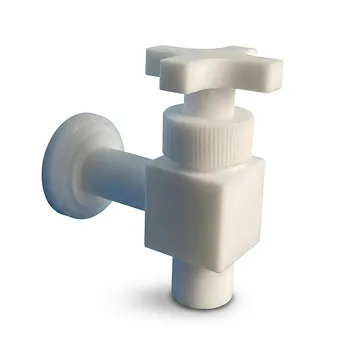
- High Corrosion Resistant PTFE Faucet Polytetrafluoroethylene Valve for Chemical Storage Drums and Fluid Transfer Systems Customizable Industrial Grade
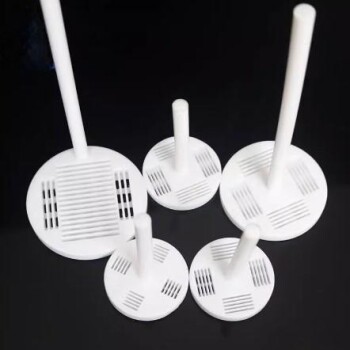
- Custom PTFE Acid Resistant Support Rack Multi Hole PFA Hydrogen Absorption System Bracket
People Also Ask
- Why is PTFE an ideal material choice for sealing gaskets, valves, and fluid transfer tubing exposed to extremely aggressive chemicals? Discover Its Superior Chemical Resistance and Reliability
- How is PTFE utilized in seals and gaskets? Leverage Its Chemical & Temperature Resistance
- What are the key properties of PTFE that make it suitable for seals and gaskets? Unlock Superior Sealing Performance
- What are the best applications for standard PTFE gaskets? Ideal for Chemical & High-Temp Sealing
- How do filled PTFE and ePTFE gaskets differ from virgin PTFE? Optimize Your Seals for Strength and Stability