The key structural control is chain packing: fluoroalkoxy polymer films become more crystalline and mechanically rigid when their chains pack into ordered domains, but they become clearer and more flexible when side-chain steric effects, backbone kinks, and amorphous regions disrupt that packing. Side-chain length, terminal fluorination, backbone symmetry, and processing-induced morphology therefore determine the balance among crystallinity, transparency, and flexibility.
Core takeaway: Short, symmetrical fluorinated side chains favor microcrystallite formation, producing stronger but often opalescent films. Longer fluoroalkoxy chains and kinked or asymmetric structures suppress crystallinity, creating clearer, lower-glass-transition materials with greater flexibility; increased crystallinity generally improves stiffness but reduces elongation and impact resistance.
How Molecular Packing Controls Film Properties
Short, symmetrical side chains favor crystallinity
Short fluorinated side chains with relatively symmetrical geometry can pack efficiently between neighboring polymer chains. This ordered packing promotes microcrystallite formation and produces a more crystalline material.
These films tend to have higher strength and stiffness, but the crystalline domains can scatter visible light, giving the film an opalescent or hazy appearance rather than full transparency.
Longer side chains disrupt close packing
Lengthening the fluoroalkoxy side chain—for example, to an octafluoropentoxy group—increases steric hindrance around the backbone. The chains can no longer approach and align as efficiently.
The resulting reduction in crystallinity shifts the material toward a non-crystalline or highly amorphous structure. This generally improves optical clarity and lowers the glass-transition temperature, supporting greater flexibility at laboratory operating temperatures.
Terminal fluorination changes ordering and solubility
Replacing terminal –CF₂H groups with fully fluorinated –CF₃ groups can increase the tendency toward crystallization. It can also reduce solvent solubility, which is useful where chemical resistance and dimensional stability are more important than ease of processing.
The effect of a terminal fluorine group is architecture-dependent. In some transparent polymer designs, bulky –CF₃ groups disrupt coplanar alignment and suppress charge-transfer interactions; therefore, terminal fluorination should be evaluated together with side-chain geometry and backbone structure rather than treated as an isolated design rule.
Why Crystallinity Affects Optical Transparency
Crystalline domains scatter light
Transparency depends not only on chemical composition but also on morphological uniformity. Differences in refractive index between crystalline domains, amorphous regions, and larger spherulitic structures can scatter light.
As crystallinity and domain size increase, scattering generally becomes more visible. A finely dispersed or sufficiently dense morphology can reduce this effect, but uncontrolled crystallization commonly produces haze or opalescence.
Kinks and asymmetric groups improve clarity
Backbone kinks, asymmetric structures, ether linkages, and bulky fluorinated groups restrict rigid, coplanar chain alignment. These features reduce the formation of extended ordered regions and can limit inter- and intramolecular charge-transfer complexes.
The result is typically higher visible-light transmission and lower color intensity, which is valuable for sight windows, transparent tubing, reaction vessels, and films used for visual monitoring.
Amorphous density also matters
A transparent film is not necessarily completely amorphous. A high-density amorphous phase can minimize internal voids and refractive-index fluctuations, reducing light scattering while preserving useful thermal and mechanical performance.
This explains why controlled semicrystalline morphologies can sometimes combine clarity with greater strength instead of requiring a fully amorphous material.
How Structure Determines Mechanical Flexibility
Higher crystallinity increases stiffness
Crystalline regions act as physical reinforcing domains that restrict chain movement. As crystallinity increases, the film generally exhibits higher tensile yield strength, flexural modulus, and resistance to deformation under load.
This structure is appropriate when a laboratory film or component must retain shape, resist creep, or provide dimensional stability.
Lower crystallinity increases flexibility
Amorphous regions allow polymer chains to move and rearrange more readily. Lower-crystallinity fluoroalkoxy polymers therefore tend to show greater elongation, impact resistance, and mechanical flexibility.
The trade-off is greater deformation under sustained load and lower rigidity. A flexible film may tolerate bending and impact better but may not hold a precise shape under pressure or prolonged stress.
Stretching can orient crystalline structures
Crystalline or partially crystalline films may undergo molecular orientation during stretching. Drawing aligns chains and lamellae in the loading direction, potentially increasing directional strength and changing flexibility between the machine and transverse directions.
The resulting properties may therefore be anisotropic: the film can be stronger along the draw direction while becoming less uniform in bending behavior.
Processing Can Reshape the Molecular Structure
Cooling rate controls the material state
Crystallinity is influenced by the rate at which the polymer is cooled from the melt. Slower cooling generally provides more time for ordered domains to form, while faster cooling can preserve a more amorphous structure.
This gives processors a practical way to choose between higher rigidity and enhanced flexibility, provided the selected condition is stable under the intended thermal history.
Nanofillers can initiate crystallization
Surface-functionalized nanofillers can provide sites for heterogeneous nucleation, encouraging crystalline domains to form at higher temperatures. They can also refine the size of spherulitic structures.
The effect is not simply “more crystallinity equals more haze.” If the resulting domains are sufficiently fine and the amorphous phase becomes denser, optical scattering can decrease while strength and thermal stability improve.
High-temperature drawing refines morphology
High-temperature drawing can alter the lamellar structure by reducing the inter-lamellar spacing, increasing lamellar thickness, and densifying the remaining amorphous phase.
This combination of directional orientation and morphological refinement can improve transparency and mechanical strength, although it may also introduce direction-dependent properties.
Understanding the Trade-offs
Clarity versus crystalline reinforcement
A highly crystalline film can be strong and dimensionally stable but may appear hazy because of optical scattering. A more amorphous film is usually clearer and more flexible but may deform more readily under load.
The correct choice depends on whether visual inspection or structural rigidity is the dominant laboratory requirement.
Flexibility versus creep resistance
Long, sterically hindered side chains and low crystallinity reduce the glass-transition temperature and improve bending flexibility. However, the same chain mobility can increase creep and permanent deformation during long-term loading.
Flexible tubing and films can benefit from this behavior, whereas precision parts or load-bearing components may require more crystalline reinforcement.
Chemical resistance versus processability
Greater fluorination, particularly terminal –CF₃ substitution, can support crystallization and reduce solvent solubility. That can improve resistance to aggressive laboratory chemicals, but it may complicate solution processing, bonding, or post-fabrication modification.
Material selection should therefore consider fabrication methods as well as final-use performance.
Transparency is not determined by one structural feature
Bulky fluorinated groups may disrupt alignment and improve clarity in one polymer architecture, while a different arrangement of fluorinated groups may promote crystallization. Side-chain length, symmetry, backbone conformation, domain size, and processing history must be considered together.
Making the Right Choice for Your Goal
The most reliable specification begins by defining the required balance between optical performance, flexibility, strength, and chemical resistance.
- If your primary focus is maximum optical transparency: Favor longer or sterically hindered fluoroalkoxy side chains, kinked or asymmetric backbones, ether linkages, and a finely controlled amorphous morphology that minimizes light scattering.
- If your primary focus is stiffness and dimensional stability: Select a structure and thermal history that promote higher crystallinity, while accepting potentially greater haze and lower elongation.
- If your primary focus is flexibility and impact resistance: Favor lower-crystallinity or predominantly amorphous material with a low glass-transition temperature, while checking deformation under sustained load.
- If your primary focus is chemical resistance and solvent insolubility: Consider highly fluorinated terminal groups and crystalline structures, but verify that the resulting material remains processable for the intended laboratory component.
- If your primary focus is balanced clarity and strength: Use controlled nucleation, fine crystalline domains, and high-temperature drawing to densify the amorphous phase without creating excessive light-scattering structures.
By treating molecular packing, morphology, and processing history as a single design system, engineers can select fluoroalkoxy films that match the actual demands of laboratory use.
Summary Table:
| Factor | Effect on Crystallinity | Effect on Transparency | Effect on Flexibility |
|---|---|---|---|
| Short, symmetrical side chains | Increases crystallinity | Often reduces transparency (haze) | Reduces flexibility |
| Longer side chains | Decreases crystallinity | Improves transparency | Increases flexibility |
| Terminal -CF3 groups | Can increase crystallinity | Depends on architecture | May reduce flexibility |
| Kinked/asymmetric backbone | Decreases crystallinity | Improves transparency | Increases flexibility |
| Slower cooling | Increases crystallinity | May reduce transparency | Reduces flexibility |
| High-temperature drawing | Orients crystals | Can improve transparency | May become anisotropic |
To optimize fluoroalkoxy films for your specific lab application, trust KINTEK's expertise in high-performance fluoropolymers. Our PTFE and PFA labware, custom parts, and processing insights help you balance clarity, strength, and flexibility. Contact us today for tailored solutions!
Related Products
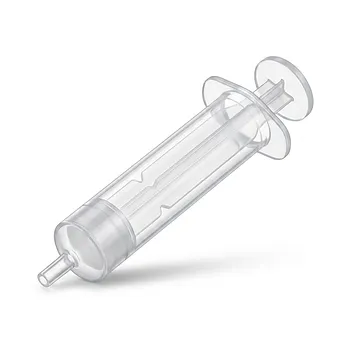
- Corrosion Resistant PFA Syringe Translucent Visual Fluoropolymer Labware 10ml Chemical Handling Tool
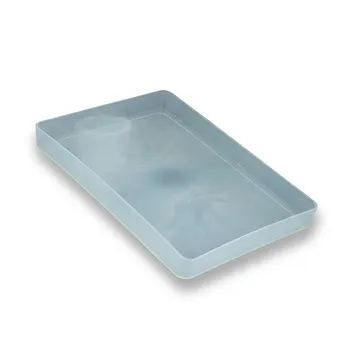
- Customizable PFA Square Tray Corrosion Resistant High Temperature Large Petri Dish Electrolytic Cell
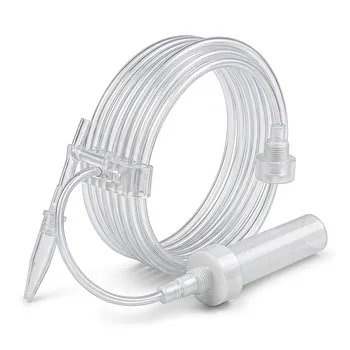
- Custom PFA Tubing 1/4 Inch High Purity Corrosion Resistant Fluoropolymer Tube with Welding and Machining Services
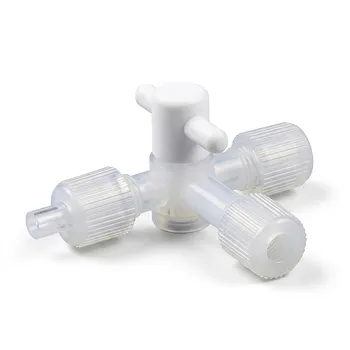
- Corrosion Resistant High Purity PFA Valve and Weldable Transparent Tubing for Semiconductor Fluid Transfer
- High Purity 4L PFA Reaction Tank for Proton Exchange Membrane Electrolysis Water Oxygen Separation Systems
People Also Ask
- Why do PFA fluoropolymer laboratory products offer different melt-processability and structural toughness compared to standard PTFE labware?
- Which material characteristics make fluoropolymers suitable for lithium-ion battery separators, and how do fluoropolymer laboratory supplies support separator performance testing?
- Why use PTFE/PFA for pH adjustment in dye studies? Ensure chemical purity and reliable adsorption data accuracy.
- How do the chemical properties of fluorinated materials support specialized processing requirements in semiconductor cleanrooms and analytical labs? Discover high-purity PTFE/PFA solutions.
- How does structural integration of flame-retardant elements in fluorinated polymers compare to small-molecule additives, and why is this relevant to fluoropolymer laboratory material selection?