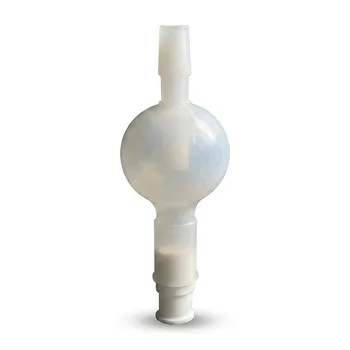
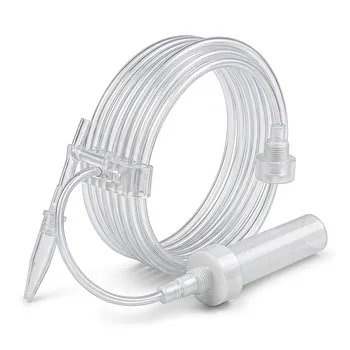
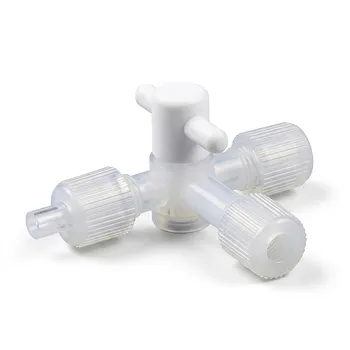
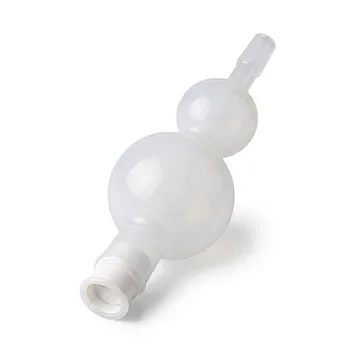
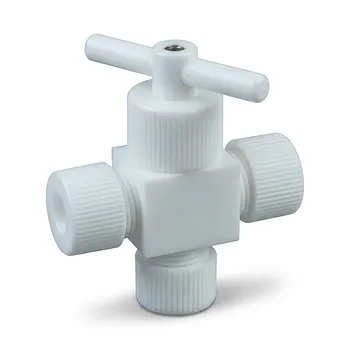
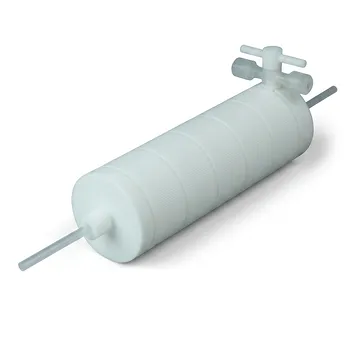
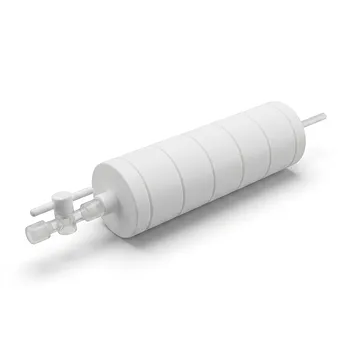
Fluorinated materials support semiconductor and analytical processing by combining exceptional chemical resistance with low contamination risk. Fluorinated gases such as NF3 and BF3, along with aggressive fluorinated cleaning and etching chemicals, can attack conventional metals, plastics, and elastomers. High-purity fluoropolymers such as PTFE and PFA resist these environments while contributing very little elemental contamination, making them suitable for cleanroom labware, tubing, fittings, tanks, and storage containers.
In semiconductor cleanrooms and analytical laboratories, the value of fluoropolymers is not simply that they resist corrosion. Their chemical inertness, low surface energy, thermal stability, and low extractables help preserve both equipment integrity and the chemical purity of sensitive processes.
Why Semiconductor Processing Requires Specialized Materials
Highly Reactive Chemistries Create Materials Challenges
Semiconductor fabrication uses reactive gases and chemicals for plasma etching, chamber cleaning, surface treatment, and micro-cleaning. These materials must be contained and handled without corrosion, swelling, degradation, or release of contaminants.
A material that survives ordinary laboratory acids may still be unsuitable for semiconductor processing if it releases metals, particles, organic residues, or other trace species into a process stream.
Contamination Has an Outsized Impact
At semiconductor dimensions, very small amounts of contamination can affect device performance, yield, or analytical results. The container, tubing, fitting, or cleaning tank is therefore part of the process environment, not merely passive support equipment.
This makes purity and compatibility equally important. A chemically resistant component that leaches contaminants can still compromise the process.
How Fluoropolymer Chemistry Supports These Requirements
Strong Carbon-Fluorine Bonds Provide Chemical Inertness
Fluoropolymers are built around carbon-fluorine chemistry, which gives their molecular structure high resistance to chemical attack. PTFE and PFA are therefore compatible with many aggressive acids, solvents, etchants, and fluorinated process chemicals.
This resistance helps prevent cracking, embrittlement, dissolution, and surface degradation during repeated exposure.
Low Surface Energy Reduces Chemical Retention
Fluoropolymers have very low surface energy, so many liquids do not readily wet or adhere to their surfaces. This reduces the tendency of residues to remain on tubing walls, containers, and cleaning equipment.
Lower retention can simplify rinsing and reduce carryover between process steps, although cleaning validation remains necessary for critical applications.
Low Extractables Help Preserve Purity
High-purity fluoropolymer products can provide low elemental leaching and low extractables compared with less specialized materials. This is particularly important when handling ultra-pure chemicals, wafer samples, trace-analysis solutions, or samples prepared for sensitive instrumentation.
The benefit depends on the grade, manufacturing process, surface condition, and cleaning history of the specific component. “Fluoropolymer” alone does not guarantee semiconductor-grade cleanliness.
Thermal Stability Broadens the Processing Window
PTFE and PFA retain useful performance across a broad temperature range and can tolerate many heated chemical-processing steps. This supports applications such as chemical storage, wet cleaning, heated transfer, and laboratory preparation.
PFA is often selected when a combination of chemical resistance, purity, transparency, and thermal processability is needed. PTFE is valued for its broad chemical resistance and low-friction surfaces, though its fabrication and mechanical behavior differ from those of PFA.
Where These Properties Matter in Practice
Dedicated Cleaning Tanks
Fluoropolymer cleaning tanks can withstand concentrated acids, oxidizing chemistries, and other aggressive solutions used for component, wafer, and sample preparation. Their resistance reduces the risk that the tank itself will corrode or contribute unwanted species.
Dedicated tanks also help maintain process segregation. Using separate equipment for incompatible or contamination-sensitive chemistries reduces cross-contamination risk.
Acid-Resistant Tubing and Fittings
Tubing and fittings made from PTFE, PFA, or compatible fluorinated materials can transfer corrosive chemicals without the rapid degradation associated with ordinary elastomers or general-purpose plastics.
These components must still be selected for pressure, temperature, flexibility, dimensional stability, and connection design. Chemical compatibility is only one part of a reliable fluid-handling system.
Storage Containers and Sample Handling
Fluoropolymer containers can protect high-purity chemicals and analytical samples from container-derived contamination. Their low reactivity is especially useful where trace metals, ions, or organic residues could distort measurements.
For analytical work, container cleanliness and blank testing are essential. A chemically inert container can still introduce contamination from manufacturing residues, handling, or an inadequate cleaning procedure.
Process and Laboratory Accessories
Funnels, beakers, transfer vessels, liners, trays, and other labware benefit from the same combination of chemical resistance and low extractables. Standardizing these accessories around qualified high-purity materials can make cleaning procedures more consistent.
In cleanrooms, the material must also be evaluated for particle generation, packaging, surface finish, and compatibility with the facility’s cleaning and gowning protocols.
The Difference Between Chemical Resistance and Process Suitability
Resistance Does Not Mean Unlimited Compatibility
PTFE and PFA are highly resistant materials, but no material is universally unaffected by every chemical, temperature, pressure, or exposure condition. Strong reducing environments, extreme temperatures, radiation, mechanical stress, and certain reactive species can change performance.
The correct decision requires reviewing the actual chemical concentration, temperature, exposure time, pressure, flow conditions, and failure consequences.
Gas Service Requires Additional Evaluation
Fluorinated gases such as NF3 and BF3 may be used in systems where seal integrity, permeation, dead volume, and surface conditioning matter as much as bulk chemical resistance. A polymer that resists liquid corrosion may not automatically be the best choice for gas containment.
Gas delivery systems should therefore evaluate tubing, valves, seals, fittings, and joining methods as a complete assembly.
Understanding the Trade-offs
Mechanical Performance Can Be More Limited
Fluoropolymers are chemically robust but can have relatively low stiffness, creep under sustained load, and sensitivity to deformation at elevated temperatures. These characteristics may affect fitting torque, dimensional stability, and long-term sealing performance.
Designers often compensate through suitable wall thickness, mechanical supports, engineered connections, or compatible backup materials.
Cleanliness Depends on the Entire Supply Chain
A high-purity polymer can be compromised by machining lubricants, metal tooling, poor packaging, uncontrolled handling, or insufficient post-fabrication cleaning. Material selection must therefore include manufacturing and qualification controls.
For demanding applications, users should specify required purity, surface finish, cleaning method, packaging, and documentation rather than requesting only a generic PTFE or PFA component.
Plasma and Radiation Exposure May Change Surfaces
Direct exposure to energetic plasma or radiation can modify polymer surfaces, generate particles, or produce decomposition products depending on the conditions. Fluoropolymers are often useful for chemical handling around semiconductor processes, but that does not mean every fluoropolymer component belongs directly in every plasma-exposed zone.
Placement, exposure duration, and process chemistry should be considered during equipment design.
Fluoropolymers Are Not Always the Most Economical Choice
PTFE and PFA components typically cost more than general-purpose plastics and may require specialized fabrication. Their use is justified when contamination control, equipment life, or chemical compatibility is more important than initial purchase price.
Using them selectively in the highest-risk chemical-contact areas can provide a practical balance between performance and cost.
How to Apply This to Your Project
Fluoropolymer selection should begin with the process chemistry and contamination limits, then extend to mechanical, thermal, and cleanliness requirements.
- If your primary focus is chemical containment: Select qualified PTFE or PFA components based on the exact chemical concentration, temperature, exposure time, pressure, and connection method.
- If your primary focus is trace contamination control: Specify high-purity grades, low-extractable construction, controlled fabrication, validated cleaning, and clean packaging.
- If your primary focus is wet semiconductor processing: Use dedicated fluoropolymer tanks, tubing, fittings, and containers to reduce corrosion and cross-contamination between chemistries.
- If your primary focus is analytical accuracy: Evaluate container blanks, leachables, adsorption, carryover, and cleaning recovery rather than relying on chemical resistance alone.
- If your primary focus is fluorinated gas handling: Assess permeation, sealing, dead volume, particle generation, and assembly integrity in addition to bulk polymer compatibility.
The right fluorinated material is one that protects both the process chemistry and the cleanliness of the system under its actual operating conditions.
Summary Table:
| Property | Benefit | Application |
|---|---|---|
| Chemical Inertness | Resists acids, solvents, etchants | Cleaning tanks, tubing |
| Low Surface Energy | Reduces residue retention | Containers, labware |
| Low Extractables | Minimizes contamination | Trace analysis, high-purity chemicals |
| Thermal Stability | Withstands heated processing | Heated transfers, storage |
Ensure purity and reliability in your semiconductor or analytical processes. At KINTEK, we offer high-performance PTFE and PFA labware, tubing, fittings, and custom machined components tailored to your exact needs. Our products are designed to minimize contamination and resist aggressive chemistries. Contact our experts today to find the ideal fluoropolymer solution for your lab or cleanroom. Get in touch with us to discuss your requirements and receive a quote.
Related Products
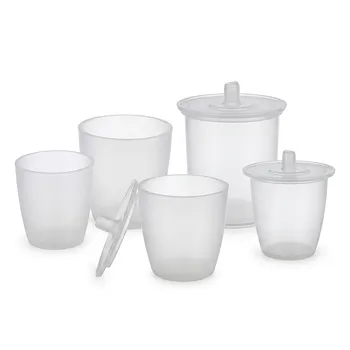
- High Purity PFA Crucible and Corrosion Resistant PTFE Beaker for Trace Analysis and Custom Laboratory Applications
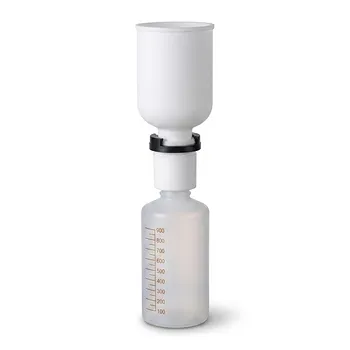
- PTFE PFA Vacuum Filtration System Corrosion Resistant Customizable Shatterproof Laboratory Device
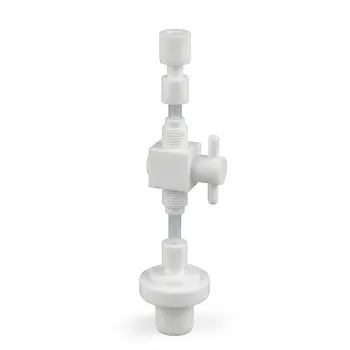
- High Purity PFA PTFE Flare Stop Valves Customizable 2-Way 3-Way Reducing Fluoropolymer Fluid Control Solutions
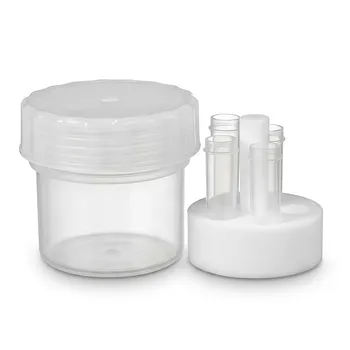
- Corrosion Resistant PTFE Support with PFA Transparent Reaction Tank and High Purity PFA Sampling Tube for Trace Analysis
- High Purity PFA Coiled Tubing Custom PTFE Machining PFA Welding and Precision Bending Solutions
People Also Ask
- Why are high-purity vessels critical for BiFeO3 synthesis? Ensuring Phase Purity
- Why is the use of high-purity PFA or PTFE labware critical during TiO2 nanoparticle purification? Protect Sample Purity
- Why is high-purity PFA trace analysis labware used for MXene? Ensure Superior Material Integrity in Research
- Why is high-purity PFA labware necessary for Znx@LS-2 zeolite ICP-OES analysis? Ensure Trace-Level Precision
- Why is high-purity PFA trace analysis labware used for sample processing when preparing Mo2CTx@MoS2? Ensure Material Purity