Structural integration provides more durable flame resistance than additive-based modification. Small-molecule flame retardants can migrate through a polymer matrix, diffuse to surfaces, or leach into contacting fluids, causing performance loss and potential contamination. When fluorinated groups are built into the polymer architecture, flame resistance is an inherent material property rather than a temporary additive effect; reported limiting oxygen index (LOI) values can exceed 59. This distinction is directly relevant when selecting fluoropolymer labware, tubing, and components for high-purity processing and trace analysis.
The key difference is permanence: structurally integrated fluorinated elements remain part of the polymer chains, while small-molecule additives can leave them. For laboratory materials, this reduces concern about additive migration, preserves long-term thermal and flame performance, and supports low-contamination chemical handling.
Why Structural Integration Changes Flame Resistance
Additives are physically retained, not chemically anchored
Traditional flame-retardant systems commonly disperse small molecules throughout a polymer matrix. These molecules may be effective initially, but their mobility allows them to diffuse, evaporate, or leach over time.
That creates two separate risks: loss of flame-retardant performance and release of unwanted chemical species into the surrounding environment.
Integrated fluorinated groups are part of the polymer structure
In an intrinsically flame-resistant polymer, fluorinated moieties are incorporated into the polymer backbone or attached as stable side groups. They are therefore not present as freely mobile additives that can readily separate from the matrix.
This structural integration supports permanent, non-leaching flame resistance under the intended operating conditions. It also helps maintain performance over repeated exposure to heat and aggressive chemicals.
Fluorine contributes to broader material stability
High fluorine content is associated with strong chemical resistance, thermal stability, flame resistance, low solvent solubility, and low friction. These properties arise from the polymer’s molecular structure rather than from a removable surface treatment.
For fully fluorinated materials such as PTFE and PFA, the result is a combination of chemical inertness, thermal endurance, and inherent resistance to combustion that is valuable beyond flame performance alone.
Why This Matters in Laboratory Material Selection
Laboratory contamination can be more serious than visible degradation
In routine industrial service, a small amount of additive migration may be difficult to detect. In trace analysis or high-purity chemical processing, even low-level contamination can affect blanks, detection limits, sample composition, or analytical reproducibility.
A material that does not rely on migratory flame-retardant additives reduces one potential source of extractables and leachables.
Performance must persist through repeated use
Laboratory components may experience heating, cooling, solvent contact, aggressive acids, microwave digestion, and repeated cleaning cycles. Additive migration can become more consequential as exposure time and temperature increase.
A structurally stable fluoropolymer is better suited to applications where thermal and chemical performance must remain consistent over the service life.
Material purity is part of functional performance
For a trace-analysis vessel, tubing assembly, valve, or digestion container, chemical purity is not separate from mechanical or thermal performance. A material that withstands temperature but contaminates the sample is not fit for purpose.
This is why PTFE and PFA laboratory products are often selected for applications requiring low leachability, minimal chemical sorption, and resistance to aggressive reagents.
What Structural Details Should Be Evaluated
Polymer identity alone is not always sufficient
Fluoropolymers with different molecular weights, chain architectures, monomer sequences, and end groups can exhibit different thermal, mechanical, surface, and leaching behavior. The label “fluoropolymer” does not by itself describe every performance-relevant property.
For critical applications, the specific grade, formulation, processing history, and intended temperature and chemical exposure should be verified.
End groups and microstructure can influence performance
Chain-end structures, including carboxyl or halide terminations, may affect stability and other material characteristics. Molecular architecture also influences dimensional stability, surface energy, permeability, and mechanical behavior.
These details matter when selecting custom-machined components or parts exposed to pressure, heat, solvents, or repeated sterilization.
Analytical verification can support qualification
Advanced methods such as multidimensional ¹⁹F NMR spectroscopy can identify fluorinated structural elements, monomer sequences, and chain ends. Such characterization is useful when material consistency, synthetic accuracy, or contamination control is especially important.
In practice, laboratory buyers should combine supplier documentation with application-specific testing rather than relying solely on a generic polymer name.
Understanding the Trade-offs
Intrinsic flame resistance does not eliminate all failure modes
Structural integration reduces additive migration, but it does not make a component immune to mechanical damage, dimensional change, permeation, or chemical attack under every condition. Temperature, pressure, exposure time, geometry, and fabrication method still matter.
Material selection must therefore consider the complete service environment, not only the LOI or fluorine content.
“No additives” should be interpreted carefully
A polymer may be free of migratory flame-retardant additives while still being affected by processing residues, contaminants, fillers, pigments, machining debris, or unsuitable cleaning practices. Finished-part purity depends on both the resin and the manufacturing process.
For high-purity work, request information about grade, additives, processing controls, extractables, and cleaning or packaging procedures.
Flame resistance is not the same as non-combustibility in every scenario
A high LOI indicates that a material requires a relatively oxygen-rich atmosphere to sustain combustion. It does not replace application-specific fire testing or establish that a finished assembly cannot burn under severe conditions.
Use the material’s documented flammability data together with the laboratory’s actual fire, heat, and ventilation requirements.
Making the Right Choice for Your Goal
The best selection depends on whether the dominant risk is contamination, thermal exposure, mechanical demand, or fire performance.
- If your primary focus is sample purity: Prefer fluoropolymer grades and finished components designed without migratory flame-retardant additives, and verify extractables and manufacturing controls.
- If your primary focus is long-term thermal and flame stability: Favor materials whose resistance is intrinsic to the polymer structure rather than dependent on a mobile additive package.
- If your primary focus is aggressive chemical processing: Evaluate PTFE or PFA for chemical inertness and low leachability, while checking the actual temperature, pressure, and exposure duration.
- If your primary focus is critical custom components: Qualify the specific grade and fabrication process, including microstructure, end-group characteristics, dimensional stability, and cleanliness.
When laboratory accuracy depends on material stability, structurally integrated fluorinated polymers provide a stronger basis for reliable, low-contamination performance than additive-dependent systems.
Summary Table:
| Aspect | Structural Integration | Small-Molecule Additives |
|---|---|---|
| Permanence | Permanent, inherent | Temporary, can migrate |
| Leaching risk | Low | High |
| Performance longevity | Consistent | Degrades over time |
| Contamination potential | Minimal | Potential source |
| Suitability for high-purity | Excellent | May not be suitable |
| Mechanism | Part of polymer chain | Physically dispersed |
| Example | PTFE, PFA | Additive-loaded polymers |
For high-purity lab materials that deliver lasting performance, trust KINTEK's PTFE and PFA products. Our labware, custom parts, and fluid handling components are engineered without migratory additives, ensuring low contamination and dependable flame resistance. Contact us today to discuss your custom requirements and experience the KINTEK difference. Contact us
Related Products
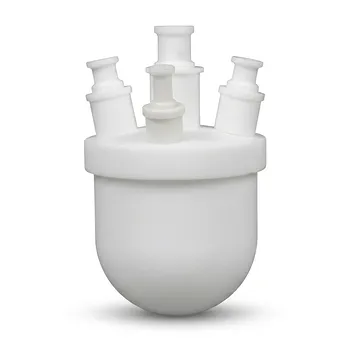
- Custom PTFE Flask 250ml High Purity Fluoropolymer Laboratory Vessel for Chemical Research
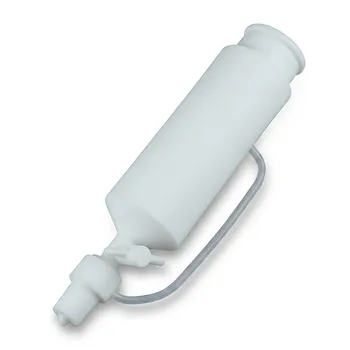
- Custom PTFE Constant Pressure Separatory Funnel 100ml Fluoropolymer Labware for Corrosive Chemical Transfer
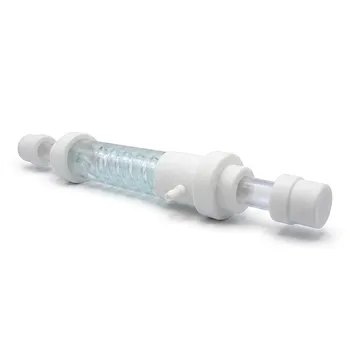
- Custom PTFE Condenser Tube 100ml Serpentine and Straight Fluoropolymer Laboratory Heat Exchanger with Flask Adapters
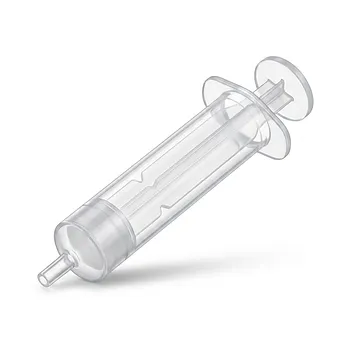
- Corrosion Resistant PFA Syringe Translucent Visual Fluoropolymer Labware 10ml Chemical Handling Tool
- High Temperature Resistant PTFE Thermal Insulation Board Corrosion Resistant Metal Free Fluoropolymer Stand for Ultra Clean Laboratories
People Also Ask
- What are the key steps for structural integrity in molded PTFE lab reaction vessels? Master fine powder processing.
- When synthesizing TFVE monomers involving reactive organometallic reagents and aggressive polar solvents, what material performance characteristics are required? Ensure purity with PTFE/PFA.
- Why Are High-Purity Fluoropolymer Vessels and Tubing Critical for Trace Analysis? Prevent Contamination Reliably
- Why do PTFE fluoropolymer laboratory vessels and containers exhibit superior chemical resistance against harsh solvents and corrosive acids compared to standard plastic labware? Discover the molecular secrets
- Why are fluoropolymer reaction vessels essential for SnO2/rGO synthesis? The Key to High-Performance Composites