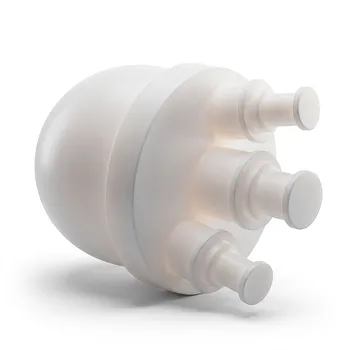
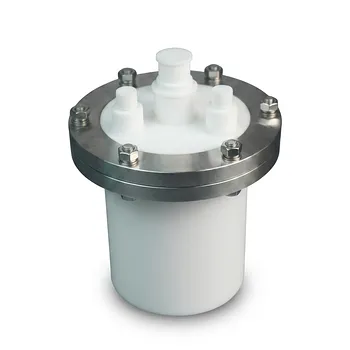
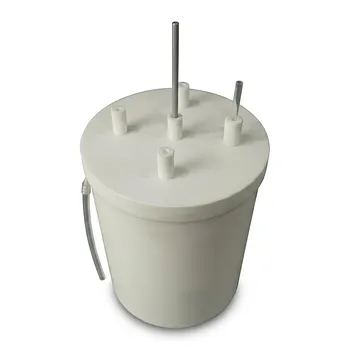
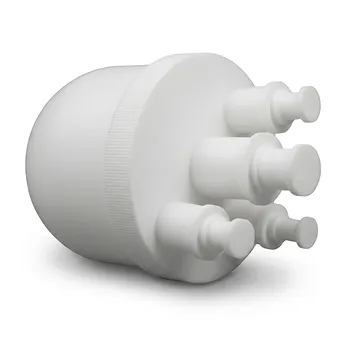
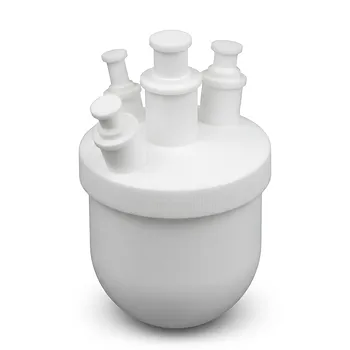
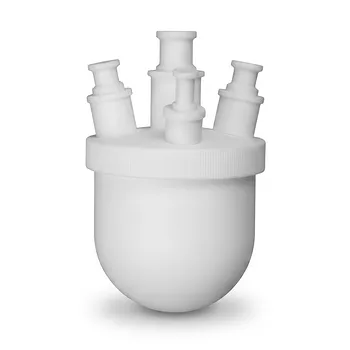
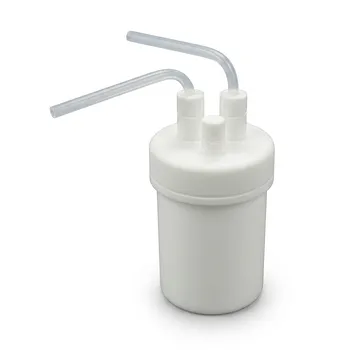
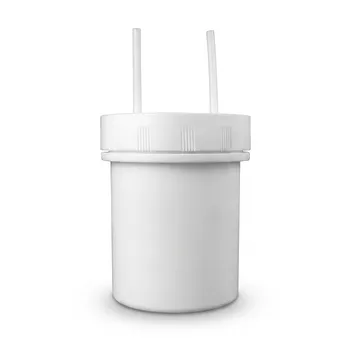
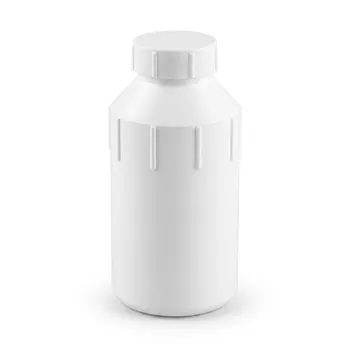
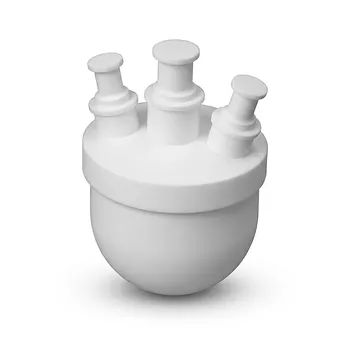
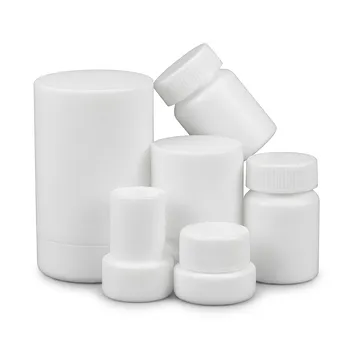
PTFE reaction vessels must be treated as a serious toxic-gas hazard once pyrolysis begins. Although solid PTFE is generally inert during normal use, overheating can release corrosive gases, oxygen-displacing perfluorocarbons, toxic fluoroalkenes, fine particulates, and—at higher temperatures—perfluoroisobutene (PFIB). Facilities must establish temperature controls, source-capture ventilation, gas detection, exposure-response procedures, and emergency medical protocols before operating PTFE vessels near decomposition temperatures.
The central control is prevention: keep PTFE below its validated operating and decomposition limits. If overheating or pyrolysis occurs, treat the area as a toxic-gas release, isolate it, prevent re-entry, and use trained emergency responders with appropriate respiratory protection.
When PTFE Pyrolysis Becomes a Hazard
Normal service is not the same as pyrolysis service
PTFE is physiologically inert under ordinary laboratory conditions, with typical continuous-use temperatures substantially below its decomposition range. A commonly cited continuous service limit is approximately 260°C, but the applicable limit depends on vessel design, pressure, exposure duration, chemicals, seals, and the manufacturer’s rating.
Thermal degradation may begin gradually above approximately 300°C, while significant decomposition and toxic emissions are generally associated with temperatures around 420–450°C and above. Temperatures above approximately 475°C are particularly concerning because PFIB may be generated.
Chemical conditions can lower the practical limit
Strong Lewis acids and other reactive chemicals can catalyze fluoropolymer degradation at temperatures below those expected from temperature alone. Temperature limits must therefore be evaluated together with the full chemical inventory, pressure, heating rate, and vessel configuration.
Principal Toxicological Hazards
Corrosive gases: HF and carbonyl fluoride
Hydrogen fluoride (HF) can damage the eyes, skin, and respiratory tract. Exposure may cause severe chemical injury, and some effects can be delayed; apparent early improvement must not be treated as evidence of safety.
Carbonyl fluoride (COF₂) is a highly irritating and corrosive respiratory hazard. It can also hydrolyze in moist tissues or environments to form HF, increasing the potential for delayed or progressive injury.
Toxic and potentially carcinogenic fluoroalkenes
Pyrolysis can generate unsaturated perfluorocarbons, including:
- Tetrafluoroethylene (TFE)
- Hexafluoropropylene (HFP)
- Octafluorocyclobutane (OFCB)
These compounds require strict exposure control. The supplied reference identifies TFE as having a chronic exposure threshold of 2 ppm and identifies these unsaturated gases as toxic and carcinogenic to organs including the liver and kidneys.
Exposure limits must be confirmed against current occupational-hygiene standards, the applicable jurisdiction, and the specific material and process.
PFIB: the critical acute hazard
Perfluoroisobutene (PFIB) is an exceptionally hazardous decomposition product associated with severe pulmonary toxicity. The reference gives a chronic exposure limit of 0.001 ppm and an LC50 of 0.25 ppm; the latter is an acute lethality measure, not a permissible workplace exposure limit.
PFIB exposure can produce polymer fume fever, nausea, coughing, severe chest pain, and pulmonary edema. Serious respiratory deterioration may be delayed, so every suspected exposure requires urgent medical evaluation.
Asphyxiation and oxygen deficiency
Saturated perfluorocarbon gases may act primarily as simple asphyxiants by displacing oxygen. This creates a dual hazard: a person may be exposed to toxic decomposition products and simultaneously enter an oxygen-deficient atmosphere.
Oxygen monitoring alone is therefore insufficient. A normal oxygen reading does not demonstrate that HF, COF₂, PFIB, TFE, or other decomposition products are absent.
Polymer fume fever and particulates
Thermal degradation can release ultrafine particles and low-molecular-weight fragments. Inhalation may cause polymer fume fever, typically involving fever, chills, malaise, cough, and flu-like symptoms.
More severe exposure can cause acute lung inflammation, pulmonary edema, chest pain, and respiratory failure.
Controls Required Before Operating the Vessel
Establish a documented thermal envelope
The operating procedure should specify:
- Normal operating temperature
- Maximum allowable temperature
- Maximum excursion and exposure time
- Independent over-temperature shutdown point
- Pressure and seal limits
- Chemical combinations that may accelerate degradation
- Required response to temperature-control failure
Use the lowest temperature that achieves the process objective. Do not treat the PTFE melting point or a heater’s set point as a safe operating limit.
Use independent temperature protection
Heating systems should include an independent temperature sensor and a hardwired or otherwise independent high-temperature limit switch. The protective device should remove heating power or place the system in a safe state if the primary controller fails.
Temperature sensors should be positioned to detect the hottest relevant part of the vessel or heating zone. A sensor that measures only the surrounding air may miss localized overheating at the vessel wall, seal, or reaction interface.
Provide source-capture exhaust
Use local exhaust ventilation positioned to capture emissions at the vessel, oven, or process enclosure rather than relying on general room ventilation. The design should prevent contaminated air from passing through the operator’s breathing zone.
The supplied reference identifies a capture velocity of approximately 0.5 m/s for forced or local exhaust applications. The actual design must be verified by a qualified ventilation professional because required performance depends on enclosure geometry, heat plume, vessel size, and release rate.
Exhaust discharge must not recirculate into occupied areas. Ductwork, fans, seals, and treatment equipment must be compatible with HF and other fluorinated decomposition products.
Install appropriate monitoring
A suitable monitoring strategy may include:
- Continuous oxygen monitoring where oxygen displacement is credible
- Fixed or portable instruments selected for the expected gases
- HF and acid-gas detection where applicable
- Process temperature alarms independent of the heater controller
- Visual and audible alarms
- Periodic exposure assessment by a competent industrial hygienist
No single sensor should be assumed to detect all PTFE pyrolysis products. PFIB and some fluorocarbons may require specialized sampling or analytical methods rather than ordinary broad-spectrum gas detectors.
Define access and operating conditions
High-temperature PTFE operations should be conducted in a closed apparatus, ventilated enclosure, or otherwise controlled area. Personnel should not work alone when a credible pyrolysis scenario exists.
The procedure should define who may enter the area, what constitutes an alarm, how the process is shut down remotely, and when the area may be reoccupied.
Personal Protection and Work Practices
Treat PPE as a secondary control
Engineering controls and prevention are more reliable than PPE for PFIB, HF, and oxygen-deficiency hazards. Standard laboratory gloves, safety glasses, or a conventional dust mask do not protect against toxic decomposition gases.
Where a release is possible, the respiratory-protection program must be selected by a qualified professional and comply with applicable regulations. Emergency entry into an unknown or potentially oxygen-deficient atmosphere generally requires trained responders using positive-pressure supplied-air or self-contained breathing apparatus, not an air-purifying respirator.
Prevent contaminated dust from becoming a secondary exposure
Do not smoke or use tobacco products in areas where PTFE dust or residue may be present. Contaminated particles can be heated or burned during smoking, producing hazardous fumes.
Use appropriate cleaning methods and hygiene controls. Avoid dry sweeping or actions that aerosolize fine particulate; select cleanup methods based on the material, contamination, and facility procedure.
Inspect vessels and seals after overheating
Any PTFE vessel exposed to an over-temperature event should be removed from service until it has been assessed. Inspect for discoloration, deformation, cracking, seal damage, loss of dimensional integrity, and evidence of chemical attack.
Do not simply cool and reuse a vessel after suspected pyrolysis. Damage may compromise pressure containment even when the vessel appears intact.
Emergency Response and Medical Management
Immediate actions for suspected release
If overheating, visible fumes, an alarm, or an unexplained respiratory symptom occurs:
- Stop heating remotely if it is safe to do so.
- Warn personnel and evacuate the affected area.
- Prevent unprotected re-entry.
- Activate the site emergency response and obtain specialist assistance.
- Do not enter to rescue someone without appropriate respiratory protection and training.
- Provide responders with the vessel material, chemicals, temperature history, and suspected decomposition products.
Ventilation should not be altered in a way that spreads contamination into occupied areas. Emergency actions must follow the facility’s incident plan and the capabilities of the installed exhaust system.
Exposure symptoms require urgent evaluation
Symptoms such as cough, chest pain, nausea, fever, chills, shortness of breath, or eye and skin irritation require prompt medical assessment. Pulmonary injury from PFIB and corrosive fluorinated gases can progress after the initial exposure.
Move an exposed person to fresh air only when this can be done without exposing rescuers. Keep the person at rest and avoid exertion.
Immobilization and specialist treatment
The supplied reference emphasizes immediate and complete immobilization after PFIB exposure because physical exertion may aggravate lung injury. This should be interpreted as keeping the exposed person calm, resting, and medically supervised—not as delaying evacuation or emergency care.
The reference also identifies edema management and N-acetylcysteine for severe exposure. Such treatment must be directed by emergency clinicians or a poison-control/toxicology service; it should not be administered by untrained personnel or treated as a substitute for respiratory support and hospital evaluation.
Understanding the Trade-offs
Temperature performance versus chemical containment
PTFE provides excellent chemical resistance, but that resistance does not make it suitable for unlimited temperature service. A vessel may remain chemically compatible with a reagent while becoming thermally unsafe.
The correct selection must consider temperature, pressure, duration, chemical catalysis, vessel geometry, and failure consequences together.
Detection versus prevention
Gas monitoring can provide warning, but it is not a guarantee of protection. Sensors may have cross-sensitivities, response delays, calibration requirements, or no practical capability to detect PFIB at extremely low concentrations.
Monitoring should verify—not replace—temperature control, enclosure, local exhaust, and preventive maintenance.
Respirators versus engineering controls
Respirators can protect trained personnel during defined tasks, but they introduce fit, cartridge, communication, maintenance, and oxygen-deficiency limitations. They are especially unsuitable as the routine control for an uncontrolled pyrolysis event.
A facility should design the process so that personnel do not need to approach a vessel during an active release.
Published values require context
Values such as 0.001 ppm, 0.014–0.042 ppm, and 0.25 ppm must not be used as universal decision thresholds without confirming their source, units, exposure duration, species, and regulatory status.
The site’s occupational hygienist, safety professional, current SDS information, and applicable exposure limits should establish the authoritative limits and response levels.
How to Apply This to Your Project
The following recommendations should be incorporated into the vessel design review, process hazard analysis, and written operating procedure:
- If your primary focus is prevention: Keep PTFE below the manufacturer’s validated temperature limit, use independent over-temperature shutdowns, and screen chemicals for catalytic or otherwise accelerated degradation.
- If your primary focus is worker protection: Install verified source-capture exhaust, prevent recirculation, and establish oxygen and toxic-gas monitoring appropriate to the expected decomposition products.
- If your primary focus is emergency readiness: Create a remote shutdown and evacuation plan, prohibit unprotected entry, and prearrange emergency medical and toxicology support for suspected PFIB or HF exposure.
- If your primary focus is equipment integrity: Quarantine and inspect every vessel, seal, and exhaust component after an over-temperature event before returning the system to service.
- If your primary focus is regulatory compliance: Have a qualified industrial hygienist confirm exposure limits, ventilation performance, respiratory-protection requirements, detector suitability, and documentation for the specific process.
Safe PTFE pyrolysis work depends on preventing decomposition altogether and treating any suspected off-gassing as a potentially life-threatening toxic-gas incident.
Summary Table:
| Hazard | Description | Key Exposure Limit/Effect |
|---|---|---|
| Hydrogen fluoride (HF) | Corrosive gas causing severe respiratory and skin damage | Delayed effects possible |
| Carbonyl fluoride (COF₂) | Highly irritating and corrosive, hydrolyzes to HF | Respiratory hazard |
| Tetrafluoroethylene (TFE) | Toxic and carcinogenic fluoroalkene | Chronic threshold: 2 ppm |
| Hexafluoropropylene (HFP) | Toxic and carcinogenic, affects liver and kidneys | Occupational limits apply |
| Octafluorocyclobutane (OFCB) | Toxic and carcinogenic, similar effects | Strict control needed |
| Perfluoroisobutene (PFIB) | Extremely toxic, causes pulmonary edema | Chronic: 0.001 ppm; LC50: 0.25 ppm |
| Saturated perfluorocarbons | Simple asphyxiants displacing oxygen | Oxygen deficiency risk |
| Ultrafine particles | Cause polymer fume fever and lung inflammation | Flu-like symptoms |
Protect your lab from PTFE pyrolysis dangers. Our high-performance PTFE and PFA labware, including reaction vessels, are designed with safety in mind. Backed by custom CNC machining and extensive expertise, we ensure your equipment meets stringent safety standards. Contact us today to discuss your needs and enhance your lab's safety and efficiency. Contact us now to learn more.
Related Products
- High Purity Custom PTFE Large Volume 15L Flask Corrosion Resistant Low Trace Background Fluoropolymer Reaction Vessel
- Custom PTFE Reaction Kettle 2L Flanged Fluoropolymer Reactor Tank Acid and Alkali Resistant Polytetrafluoroethylene Vessel
- PTFE 10L Reaction Vessel with Stirring Paddle Customizable Corrosion Resistant High Temperature Reactor for Biopharmaceutical and Chemical Processing
- Laboratory PTFE Three Neck Reaction Flask Corrosion Resistant 2000ml Low Background Fluoropolymer Vessel
- Custom PTFE Flask 250ml High Purity Fluoropolymer Laboratory Vessel for Chemical Research
People Also Ask
- Why are high-purity PTFE or PFA reaction vessels recommended for the synthesis of PANI-TiC hybrid materials? - Guide
- How do perfluorinated solvent environments influence the selection of reaction vessels and fluid handling components in nonaqueous emulsion polymerizations? Choose fluoropolymer materials.
- What reaction vessel and fluid handling considerations are necessary for living cationic polymerization of fluorinated monomers involving Lewis acid catalysts? Key design and safety tips
- Ion Activation Reaction Vessel Requirements: Why PTFE is Critical for Membrane Performance
- Why are fluoroplastic (PTFE) reaction vessels recommended for Methylene Blue (MB) adsorption kinetic experiments?