Pressure management is a control variable, not merely a way to accelerate VDF polymerization. In semi-batch iodine transfer emulsion polymerization (ITP) of vinylidene fluoride at approximately 75°C and 10–30 bar, lower initial pressure helps establish the iodine-transfer equilibrium and produces better control over molar mass distribution. After that equilibrium is established, increasing pressure raises dissolved VDF availability, increasing the polymerization rate without necessarily sacrificing molecular-weight control.
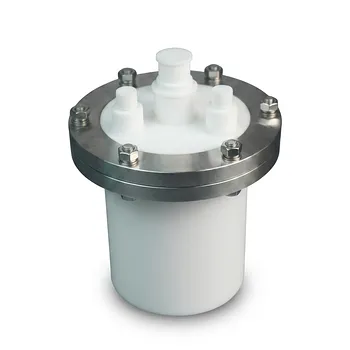
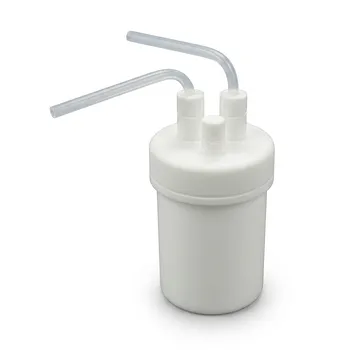
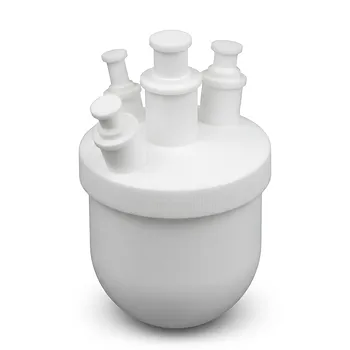
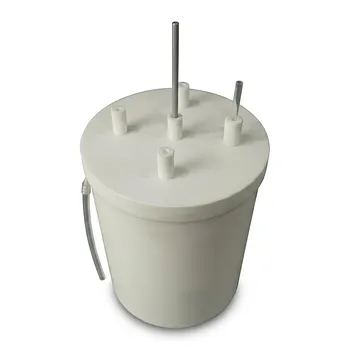
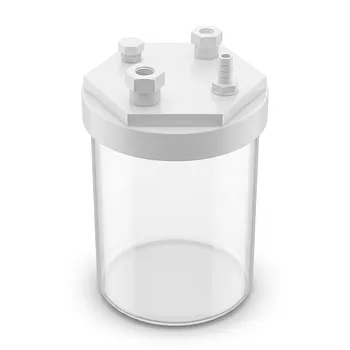
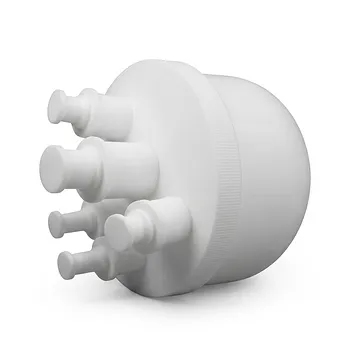
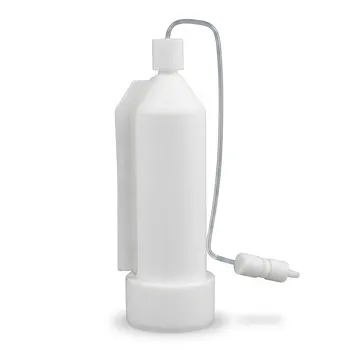
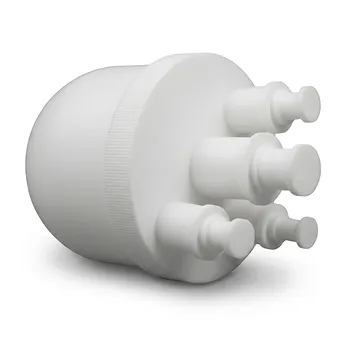
The most effective strategy is staged pressure control: begin at a moderate or lower pressure to stabilize the ITP equilibrium, then increase pressure to improve monomer transport and reaction rate. Custom fluoropolymer reaction vessels make this possible by combining pressure integrity, chemical resistance, contamination control, and precise mixing.
Why Pressure Changes the Polymerization
Pressure controls VDF availability
VDF is present primarily as a gas under typical reaction conditions. Polymerization therefore depends on transferring monomer from the reactor headspace through the aqueous phase and into latex particles.
Increasing pressure generally increases the amount of VDF dissolved in the reaction medium. A higher dissolved-monomer concentration gives propagating radicals more monomer to consume, which can accelerate the polymerization rate.
Pressure affects reaction transport
In gas-phase-fed emulsion polymerization, pressure influences more than the chemical reaction itself. It also affects the driving force for VDF transfer from the headspace into the aqueous latex system.
Stable pressure helps maintain a predictable monomer supply. Pressure fluctuations can instead create changing monomer concentrations, making reaction-rate control and molecular-weight prediction more difficult.
How Pressure Influences Molar Mass Distribution
Lower initial pressure supports ITP equilibrium
The defining advantage of ITP is its ability to regulate chain growth through reversible iodine-transfer reactions. Starting at a lower or moderate pressure gives this equilibrium time to become established before the system is exposed to the highest monomer concentrations.
This supports more predictable chain-length development and a narrower, better-controlled molar mass distribution. The key benefit is not simply lower pressure, but the opportunity to establish the transfer-controlled regime before accelerating the reaction.
Excessive initial pressure can disrupt early control
A high initial pressure increases VDF availability immediately. That can accelerate early propagation before the ITP equilibrium has fully stabilized, causing the number-average molar mass, Mn, to depart from the desired linear growth behavior.
The result may be broader molecular-weight distributions or less predictable molecular architecture, particularly during the early reaction stage. High pressure is therefore not automatically better for molecular-weight control.
Pressure staging separates control from speed
A staged pressure profile addresses the competing objectives directly. The initial phase prioritizes transfer equilibrium and molecular-weight control, while the later phase uses higher pressure to increase monomer concentration and reaction rate.
This approach allows pressure to serve as a process-control tool rather than treating it as a fixed operating condition.
How Pressure Influences Reaction Rate
Higher pressure increases propagation opportunities
Once the ITP equilibrium is established, increasing pressure typically increases the concentration of VDF available to growing polymer chains. This raises the frequency of productive monomer encounters and can significantly increase the polymerization rate.
In practical terms, the reaction can be accelerated without relying solely on higher temperature or initiator concentration. That is important when those variables could adversely affect latex stability or chain-growth control.
Reaction rate remains coupled to mass transfer
A higher pressure does not eliminate transport limitations. VDF must still move from the headspace into the aqueous phase and then into the latex particles.
Agitation, reactor geometry, gas-liquid interfacial area, and latex stability all influence how effectively the increased pressure translates into polymerization rate. Pressure control must therefore be coordinated with mixing and feeding control.
Semi-batch feeding improves predictability
Precision VDF dosing allows the pressure and monomer supply to be adjusted as conversion progresses. This is particularly useful when the desired process requires an initial equilibrium-establishing period followed by a faster polymerization stage.
Stable pressure and controlled feeding help avoid abrupt changes in monomer availability that could affect both reaction kinetics and molar mass progression.
How the Reaction Vessel Supports Control
Fluoropolymer linings resist the reaction environment
PFA- or PTFE-lined vessels provide strong chemical resistance against fluorinated monomers, aggressive surfactants, and other reactive materials used in fluoropolymer synthesis.
This resistance helps prevent corrosion, swelling, chemical degradation, and vessel failure during high-pressure operation. It also reduces the risk that the vessel material will react with or absorb process chemicals.
Inert construction reduces contamination
Metal-ion contamination can affect radical polymerization, surfactant behavior, chain-transfer reactions, and final polymer purity. Corrosion or leaching from conventional metallic components can therefore introduce variability that pressure control alone cannot correct.
Chemically inert fluoropolymer contact surfaces and fluid-transfer fittings reduce this source of process uncertainty. The vessel becomes a more reliable part of the reaction system rather than an uncontrolled contributor to the chemistry.
Pressure-rated design enables staged operation
The apparatus must withstand the intended pressure range while maintaining reliable sealing and controlled gas dosing. A custom vessel can be designed around the required pressure profile, feed arrangement, temperature, volume, and sampling needs.
This supports deliberate transitions from lower initial pressure to higher operating pressure. Without pressure-rated hardware and precise control equipment, staged pressure management becomes difficult to reproduce safely.
Why Mixing and Reactor Geometry Matter
Stirring creates the gas-liquid transfer area
Because VDF enters the aqueous system from the headspace, the reactor needs sufficient gas-liquid interfacial area for effective mass transfer. Stirrer and baffle configurations strongly influence this area.
Custom mixing hardware can be matched to the vessel geometry so that pressure-generated monomer availability is converted efficiently into dissolved monomer concentration.
Moderate agitation protects latex stability
Agitation must be strong enough to support monomer transfer and maintain a uniform reaction medium. Excessive shear, however, can destabilize the emulsion and cause premature latex breakdown.
The appropriate speed is therefore a balance between mass-transfer performance and particle stability. A custom fluoropolymer reactor can accommodate this balance through tailored impeller, baffle, and internal-surface design.
Vessel materials support long-term operation
Fluorinated surfactants and reactive monomer environments can challenge seals, fittings, and internal components over repeated runs. PFA, PTFE, and compatible inert fluid-transfer components help maintain chemical integrity throughout the process.
This is especially important when reproducibility depends on stable agitation, reliable semi-batch feeding, and consistent pressure over extended reaction times.
Other Variables That Affect Molar Mass
Chain-transfer-agent selection remains important
Pressure does not replace the role of the iodine transfer agent. Difunctional agents such as 1,4-diiodoperfluorobutane can provide stronger molar-mass control and lower Mn than monofunctional agents at comparable molar amounts.
Among monofunctional perfluoroalkyl iodides, shorter-chain materials such as C4F9I may provide more effective transfer and more linear molar-mass control than longer-chain alternatives such as C6F13I under certain concentrations.
Solvent effects can dominate in solution systems
The pressure strategy described here applies primarily to semi-batch iodine transfer emulsion polymerization. In solution polymerization, solvents such as DMF, DMAc, and NMP can act as strong chain-transfer media and substantially lower Mn.
Acetonitrile, by contrast, can support heterogeneous precipitation polymerization with much higher molecular weights because chain transfer is less pronounced. These solvent effects demonstrate why pressure must be evaluated alongside the reaction medium and transfer chemistry.
Understanding the Trade-offs
Higher rate can reduce early-stage control
Increasing pressure improves VDF availability and can accelerate polymerization, but applying high pressure too early may compromise the linearity of molar-mass growth.
The practical trade-off is between kinetic productivity and molecular-weight predictability. A pressure ramp or staged profile is generally more useful than choosing either uniformly low or uniformly high pressure.
Pressure alone cannot correct poor mass transfer
A reactor with inadequate mixing or insufficient gas-liquid contact may not benefit fully from increased pressure. The system can remain transport-limited even when the pressure reading appears appropriate.
Pressure must therefore be considered together with agitation, reactor geometry, feed precision, temperature, initiator concentration, and chain-transfer-agent concentration.
Excessive agitation can damage the emulsion
More vigorous mixing may increase gas-liquid transfer, but it can also impose excessive shear on the latex. Emulsion breakdown can undermine particle stability and make the polymerization less controllable.
The vessel and agitator should be designed for the required interfacial area at a mixing intensity compatible with the latex formulation.
Materials compatibility is a process variable
A pressure vessel that is mechanically adequate but chemically incompatible can still compromise the reaction through corrosion, leaching, swelling, or degradation.
Fluoropolymer-lined and inert-component construction reduces these risks, but the complete system still requires compatible seals, fittings, tubing, valves, and gas-dosing equipment.
Making the Right Choice for Your Goal
Pressure should be selected as part of an integrated reaction, mixing, and materials strategy.
- If your primary focus is molar mass control: Start at a lower or moderate pressure long enough for the ITP equilibrium to establish before increasing pressure.
- If your primary focus is reaction rate: Raise pressure after equilibrium establishment to increase dissolved VDF concentration and monomer transport.
- If your primary focus is reproducibility: Use precision pressure regulation, semi-batch gas dosing, and a defined pressure trajectory rather than a single uncontrolled setpoint.
- If your primary focus is product purity: Use PFA/PTFE-lined contact surfaces and inert fittings to limit corrosion and metal-ion contamination.
- If your primary focus is latex stability: Optimize stirrer and baffle geometry for adequate gas-liquid transfer while avoiding excessive shear.
- If your primary focus is safe scale-up: Specify a pressure-rated custom vessel around the operating envelope, feed system, temperature, mixing load, and chemical compatibility requirements.
The central principle is straightforward: establish molecular-weight control first, then use pressure to accelerate the reaction within a chemically inert and precisely engineered reactor system.
Summary Table:
| Factor | Influence of Pressure | Optimal Strategy |
|---|---|---|
| Molar Mass Distribution | Lower initial pressure stabilizes ITP equilibrium, narrowing MWD. | Start with moderate pressure; ramp up after equilibrium. |
| Reaction Rate | Higher pressure increases dissolved VDF, accelerating polymerization. | Increase pressure after equilibrium to boost rate. |
| Mass Transfer | Higher pressure improves monomer transport from gas to liquid. | Combine with efficient agitation and reactor design. |
| Latex Stability | Excessive pressure or agitation can destabilize emulsion. | Balance pressure and mixing intensity. |
| Purity | Inert fluoropolymer linings prevent corrosion and contamination. | Use PFA/PTFE contact surfaces. |
Optimize your VDF polymerization with custom PFA/PTFE reactors from KINTEK. Our fluoropolymer vessels provide chemical resistance, precise pressure control, and inert surfaces to ensure high purity and reproducibility. Whether you need standard labware or complex custom reaction vessels, our CNC machining capabilities deliver solutions for your specific process. Contact us today to discuss your requirements and enhance your polymerization efficiency.
Related Products
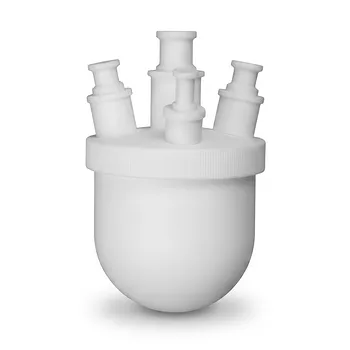
- Custom PTFE Reaction Kettle 2L Flanged Fluoropolymer Reactor Tank Acid and Alkali Resistant Polytetrafluoroethylene Vessel
- High Purity Custom PTFE Large Volume 15L Flask Corrosion Resistant Low Trace Background Fluoropolymer Reaction Vessel
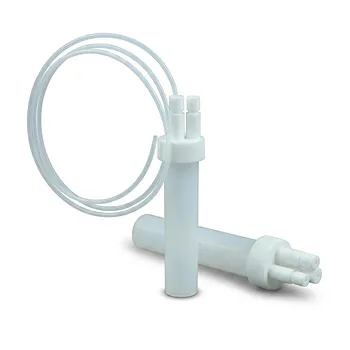
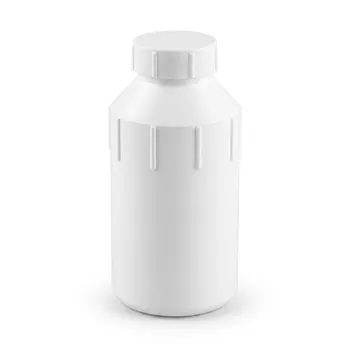
- Custom PTFE Continuous Reaction Bottles Virgin Fluoropolymer High Purity Low Background Synthesis Vessels
- Custom PTFE Flask 250ml High Purity Fluoropolymer Laboratory Vessel for Chemical Research
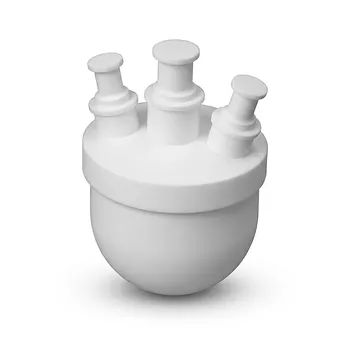
- Custom 12L PTFE Multi Neck Reaction Flask Laboratory Fluoropolymer Chemical Vessel with Stirrer Compatibility
People Also Ask
- What toxicological hazards and safe handling protocols must be established when PTFE fluoropolymer reaction vessels are subjected to pyrolysis temperatures? Learn essential safety measures now.
- What reaction vessel and fluid handling considerations are necessary for living cationic polymerization of fluorinated monomers involving Lewis acid catalysts? Key design and safety tips
- Why are high-purity PTFE or PFA reaction vessels recommended for the synthesis of PANI-TiC hybrid materials? - Guide
- Ion Activation Reaction Vessel Requirements: Why PTFE is Critical for Membrane Performance
- Why are fluoroplastic (PTFE) reaction vessels recommended for Methylene Blue (MB) adsorption kinetic experiments?