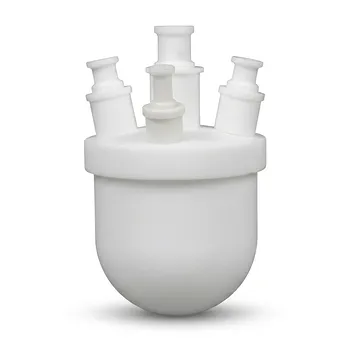
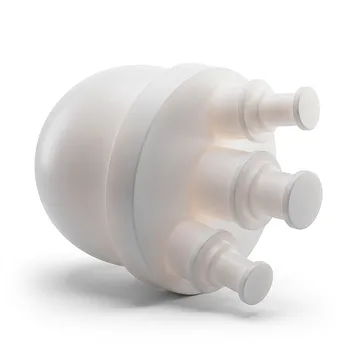
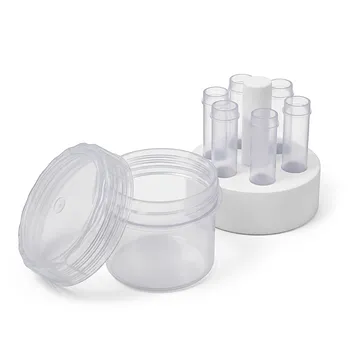
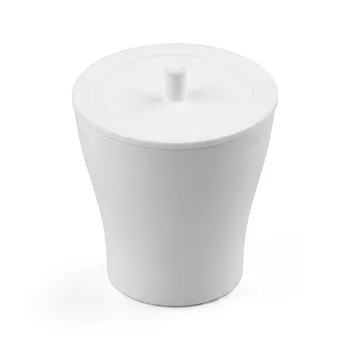
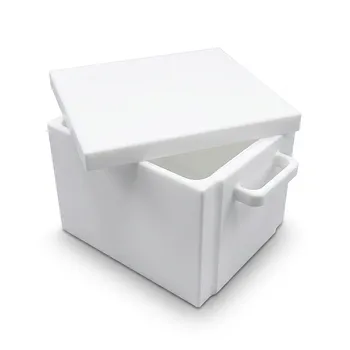
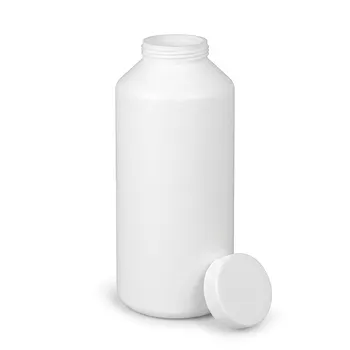
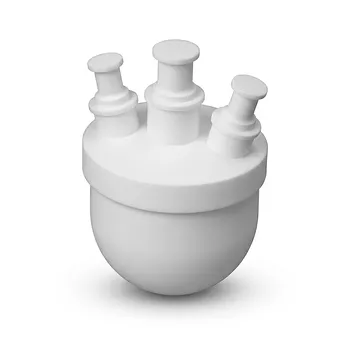
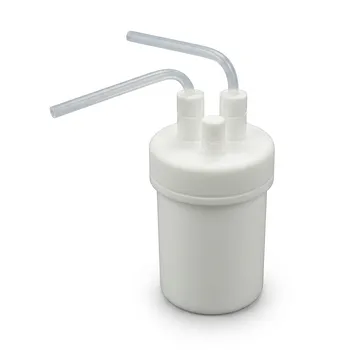
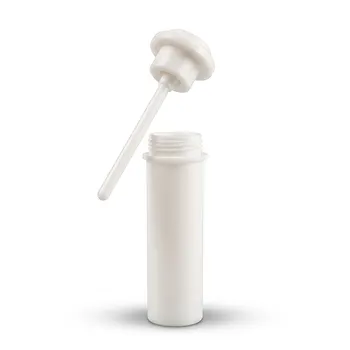
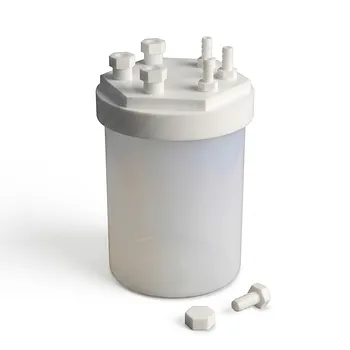
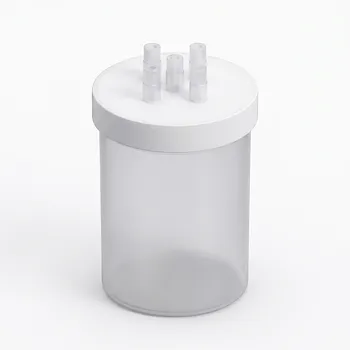
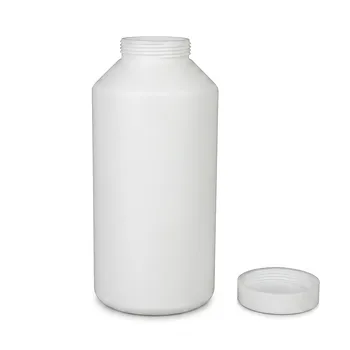
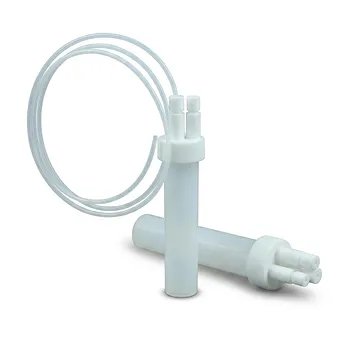
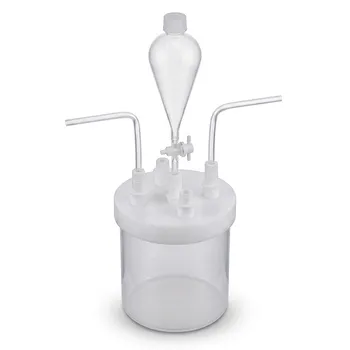
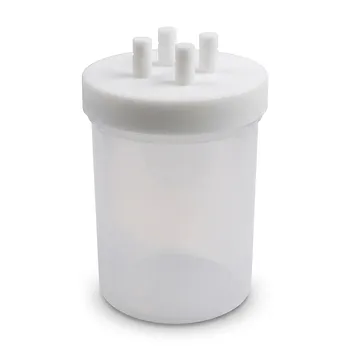
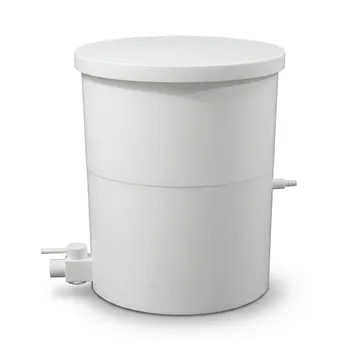
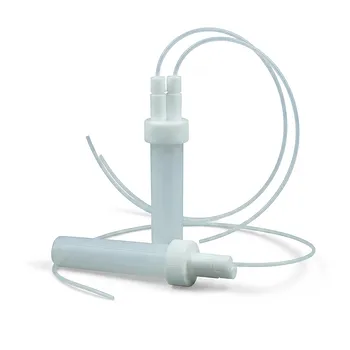
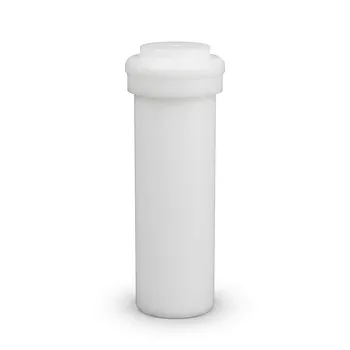
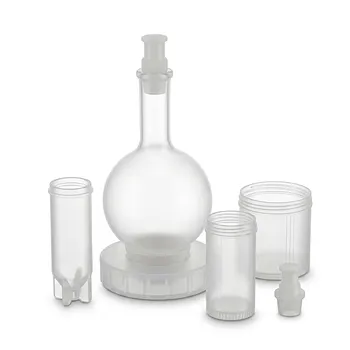
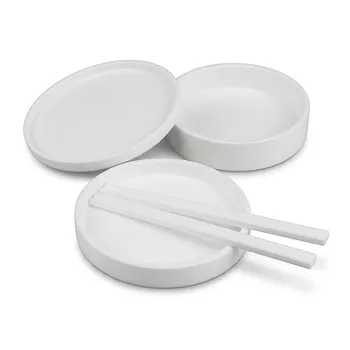
High-purity fluoropolymer vessels, digestion tools, and transfer tubing are critical because they reduce the risk that the equipment itself will alter a sample or process stream. Materials such as virgin PTFE and PFA resist aggressive acids, oxidizing reagents, solvents, and many biopharmaceutical fluids. Their low surface energy also limits adsorption, liquid retention, residue buildup, and carryover, helping preserve accurate trace measurements and high-purity process fluids.
In trace analysis and biopharmaceutical processing, the container and fluid path are part of the analytical or manufacturing system. High-purity fluoropolymers help control contamination by combining chemical inertness, low extractables and leachables, low metal background, and resistance to demanding cleaning or digestion conditions.
Why Equipment Materials Affect Sample Integrity
Contamination Can Come From the Process Hardware
At ultra-trace concentrations, contamination does not need to be visible to affect the result. Metals, processing residues, plastic additives, or previously handled analytes can enter a sample from vessel walls, fittings, tubing, funnels, pipette tips, and other contact surfaces.
This is especially important when analyzing elements such as lead and cadmium, or persistent compounds present at nanogram-per-milliliter concentrations. A small contribution from the equipment can create a false signal, elevate the reported concentration, or reduce confidence in the detection limit.
Sample Loss Is Also a Contamination Problem
Accuracy depends on both preventing impurities from entering the sample and preventing target analytes from disappearing before measurement. Adsorption onto vessel walls or tubing can reduce recovery and produce inconsistent results between preparation batches.
Fluoropolymers have very low surface energy, which reduces wetting and liquid retention. This helps limit residue accumulation and makes it easier to rinse or recover samples consistently.
Why PTFE and PFA Perform Well in Aggressive Chemistry
Fully Fluorinated Structures Resist Chemical Attack
PTFE and PFA contain highly fluorinated polymer structures that are resistant to many aggressive chemical environments. They generally do not react readily with concentrated acids, oxidizing reagents, or corrosive process streams used in sample digestion and purification.
This resistance is valuable when working with reagents such as nitric acid and hydrogen peroxide, particularly when elevated temperature or pressure increases the stress on the equipment.
Digestion Requires Thermal and Chemical Stability
Acid digestion breaks down complex matrices so that trace elements can be measured by techniques such as ICP-OES. The vessel must withstand the digestion chemistry without corroding, deforming, or releasing significant impurities.
High-purity fluoropolymer digestion vessels can tolerate demanding heating and cleaning cycles while maintaining their physical integrity. That reduces the chance of vessel degradation becoming a source of background contamination.
Material Selection Still Matters
PTFE and PFA are both chemically resistant, but they are not interchangeable in every design. PFA is melt-processable and is often selected for transparent or complex molded components, while PTFE is commonly used for machined parts and robust chemical-contact applications.
The correct choice depends on temperature, pressure, mechanical design, transparency requirements, flexibility, sterilization conditions, and the specific chemicals involved.
How Vessels and Digestion Tools Protect Trace Analysis
Low Metal Background Supports Reliable Detection
Trace-analysis vessels must contribute as little elemental background as possible. Lower-quality plastics or metal-containing components may release impurities when exposed to strong digestion acids.
Virgin, high-purity PTFE and PFA can provide very low metal backgrounds compared with materials that contain fillers, pigments, stabilizers, or other additives. This helps preserve the analytical signal generated by the sample rather than adding a signal from the labware.
Smooth Surfaces Reduce Carryover
Digestion tubes, bottles, funnels, pipette tips, and centrifuge tubes are frequently exposed to concentrated reagents and highly concentrated sample residues. Rough or easily wetted surfaces can retain material that later contaminates another preparation.
The smooth, low-energy surfaces of fluoropolymers help reduce retention and cross-contamination. They also support more effective rinsing when the cleaning procedure is appropriate for the application.
Consistent Recovery Improves Repeatability
Sensitive instruments require more than a low blank. They also require consistent sample recovery from one preparation to the next.
Using high-purity fluoropolymer contact surfaces throughout filtration, digestion, transfer, and storage reduces uncontrolled variation caused by adsorption, corrosion, or leaching. That supports more reliable calibration, recovery studies, detection-limit assessments, and batch-to-batch comparisons.
Why Tubing and Fittings Are Part of the Purity Strategy
Fluid Paths Have Large Contact Areas
Tubing can expose a sample or process fluid to a substantial internal surface area over time. Long residence times, repeated recirculation, elevated temperature, and aggressive cleaning can increase the opportunity for adsorption or extraction.
High-purity fluoropolymer tubing provides a chemically resistant internal path that is less likely to react with the fluid or contribute metal contamination. This is important in reagent delivery, sample transfer, filtration, and high-purity fluid handling.
Tubing Prevents Cross-Contamination Between Steps
Residual fluid in tubing, connectors, and fittings can carry material from one batch or sample into the next. Low surface energy helps reduce retained liquid, but it does not eliminate the need for validated flushing and cleaning procedures.
The tubing material, internal geometry, fittings, and cleaning sequence must be considered together. A high-purity tube connected to a contaminated fitting can still compromise the entire fluid path.
Flexibility Must Be Balanced Against Purity
Flexible fluoropolymer tubing can simplify routing and reduce the number of connections. However, flexibility, pressure rating, wall thickness, permeability, and mechanical durability vary by construction and grade.
For critical applications, the selected tubing should be evaluated under actual flow, temperature, pressure, sterilization, and cleaning conditions rather than chosen solely by polymer name.
Why Additive Control Is Important
Formulations Can Introduce Extractables
Some fluorocarbon elastomers rely on curing systems that include cross-linking agents, accelerators, radical traps, and inorganic metal compounds. Residual materials from these systems may leach into a process stream under certain operating conditions.
That risk is particularly serious in trace analysis, where even very small quantities can exceed the target analyte concentration or raise the method blank.
Virgin Materials Reduce an Important Risk
Additive-free or minimally formulated virgin PTFE and PFA can reduce the potential contribution from fillers, pigments, vulcanization agents, and metal-containing additives. This is one reason they are used for high-purity vessels, fittings, labware, and tubing.
“High purity” should be treated as a material and manufacturing specification, not an assumption based only on the polymer family. Processing history, machining lubricants, packaging, handling, and cleaning can all affect actual cleanliness.
How These Benefits Apply to Biopharmaceutical Processing
Chemical Compatibility Protects High-Purity Fluids
Biopharmaceutical fluid paths may carry buffers, intermediates, active ingredients, cleaning agents, and other sensitive materials. The contact material must resist the process chemistry without degrading or releasing substances that could affect product quality.
Fluoropolymers can provide broad chemical resistance and low interaction with many process streams. This makes them useful in selected transfer lines, fittings, containers, and custom-machined components.
Extractables and Leachables Require Evidence
Biopharmaceutical suitability cannot be established by chemical resistance alone. Extractables and leachables testing is needed to determine what a material may release under exaggerated or actual process conditions.
The evaluation should reflect the real fluid composition, temperature, contact time, sterilization method, cleaning agents, and number of process cycles. Material certificates and supplier claims are useful inputs, but they do not replace application-specific qualification.
Sterilization and Cleaning Affect Material Choice
Repeated exposure to heat, chemical sanitants, or other sterilization methods can change equipment performance or increase the release of residual processing substances. Fluoropolymer components may tolerate demanding conditions, but the specific grade and component design must be validated.
For regulated biopharmaceutical operations, the relevant question is whether the complete component remains fit for use after its intended lifecycle, not merely whether an unused resin is chemically resistant.
Understanding the Trade-offs
Chemical Inertness Does Not Mean Zero Risk
PTFE and PFA are highly resistant materials, but no product should be described as automatically contamination-free. Manufacturing residues, machining debris, packaging particles, prior-use carryover, and unsuitable additives can still affect purity.
The practical standard is controlled and demonstrated contamination performance through blanks, rinsing studies, extractables and leachables testing, and process-specific qualification.
Low Adsorption Is Not Universal for Every Analyte
Low surface energy generally reduces wetting and retention, but analyte behavior depends on molecular structure, solvent composition, concentration, temperature, and contact time. Some compounds can still interact with fluoropolymer surfaces or be affected by the broader sampling system.
Critical methods should therefore include recovery and stability studies using the actual analytes and matrix.
Mechanical and Permeation Limits Remain
Fluoropolymers may have lower stiffness or different pressure and permeation characteristics than metals or other engineering plastics. Tubing can also be vulnerable to kinking, creep, or damage if the design does not account for its operating conditions.
Chemical purity must be evaluated alongside pressure rating, dimensional stability, flexibility, permeability, and service life.
Cleaning Alone Cannot Correct Poor Material Selection
An aggressive cleaning cycle may remove residual sample but can also extract additives, damage components, or create new contamination if the materials are incompatible. Cleaning should be designed around the component materials and verified with appropriate analytical tests.
The most reliable systems combine suitable materials, controlled manufacturing, validated cleaning, and disciplined handling.
Making the Right Choice for Your Goal
Select the material and component as part of the complete sample or process-contact system.
- If your primary focus is ultra-trace elemental analysis: Use high-purity, low-metal-background PTFE or PFA vessels and tools, and verify performance with method blanks, recovery studies, and contamination testing.
- If your primary focus is aggressive acid digestion: Choose fluoropolymer vessels designed for the required temperature, pressure, and reagent combination, then validate dimensional stability and cleaning performance.
- If your primary focus is high-purity fluid transfer: Evaluate the complete tubing and fitting assembly for extractables, leachables, adsorption, flushing efficiency, pressure, and residence time.
- If your primary focus is biopharmaceutical manufacturing: Require application-specific extractables and leachables data, sterilization compatibility, cleaning validation, and lifecycle qualification for the complete component.
- If your primary focus is minimizing cross-contamination: Use low-surface-energy fluoropolymer contact surfaces throughout the workflow, while maintaining validated rinsing, segregation, and handling procedures.
High-purity fluoropolymers protect data and product quality by making the equipment an intentionally controlled part of the contamination strategy rather than an unknown source of error.
Summary Table:
| Component | Key Benefit | Consideration |
|---|---|---|
| PTFE/PFA Vessels | Chemical inertness, low metal background | Avoid additives; validate cleaning |
| Digestion Tools | Withstand aggressive acids and heat | Match design to temperature/pressure |
| Transfer Tubing | Reduces adsorption and carryover | Evaluate complete fluid path |
| All Fluoropolymer Contact Surfaces | Low surface energy minimizes retention | Confirm performance with specific analytes |
Ensure contamination-free trace analysis and biopharmaceutical processing with KINTEK's high-purity PTFE/PFA labware, digestion vessels, and tubing. Our products are designed for ultra-low extractables and chemical resistance. Contact us today to discuss your requirements and benefit from our custom fabrication and expertise. Request a quote.
Related Products
- Custom PTFE Flask 250ml High Purity Fluoropolymer Laboratory Vessel for Chemical Research
- High Purity Custom PTFE Large Volume 15L Flask Corrosion Resistant Low Trace Background Fluoropolymer Reaction Vessel
- High Purity Corrosion Resistant PFA Reaction Vessel with PTFE Holder and Integrated Sampling Tube for Trace Analysis
- High Purity 30ml PTFE Corrosion Resistant Fluoropolymer Crucible with Graphite Heating Block Compatibility
- High Purity Virgin PTFE Square Tank Corrosion Resistant Acid Soaking Bath Custom Fluoropolymer Cleaning Vessel
People Also Ask
- What are the key steps for structural integrity in molded PTFE lab reaction vessels? Master fine powder processing.
- Why do PTFE fluoropolymer laboratory vessels and containers exhibit superior chemical resistance against harsh solvents and corrosive acids compared to standard plastic labware? Discover the molecular secrets
- How do choice of solvent and chain transfer activity affect molecular weight during vinylidene fluoride (VDF) radical polymerization? Learn Key Factors for High-MW PVDF
- Why are fluoropolymer reaction vessels essential for SnO2/rGO synthesis? The Key to High-Performance Composites
- How does monomer purity during polymerization of fluoropolymers affect high-purity lab vessels? Key factors explained