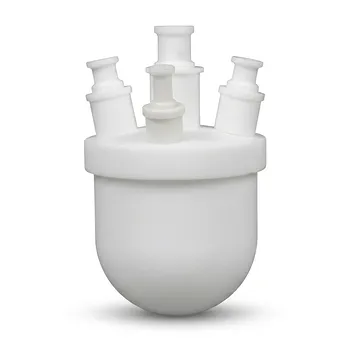
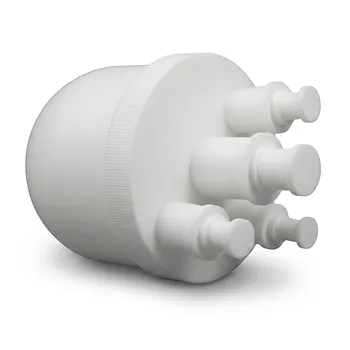
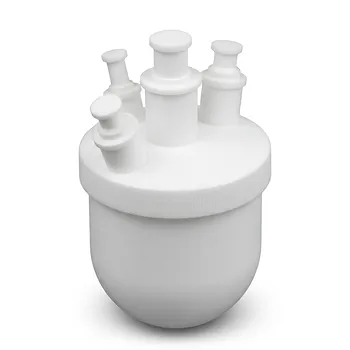
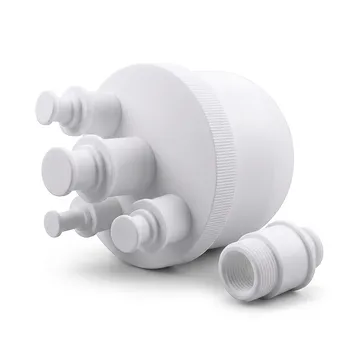
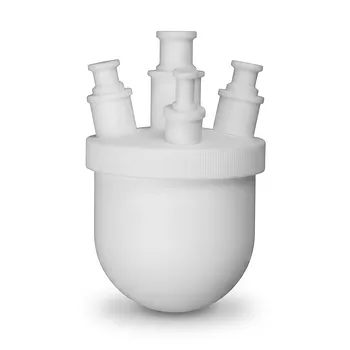
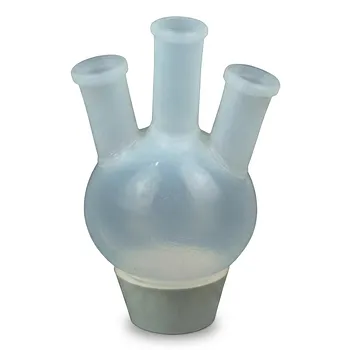
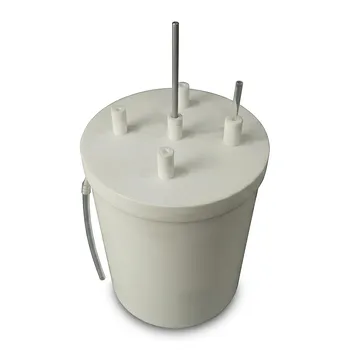
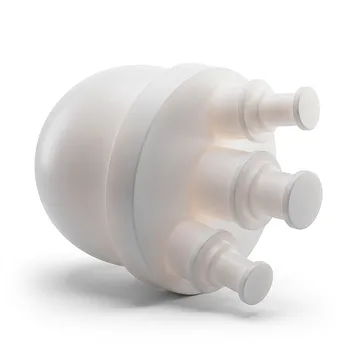
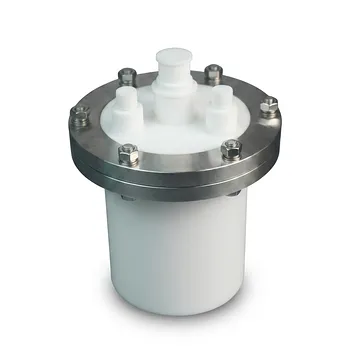
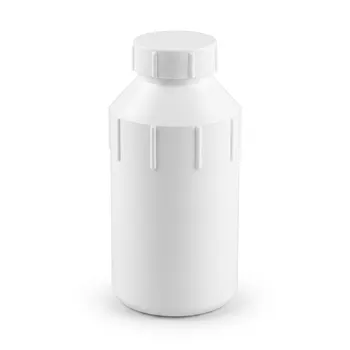
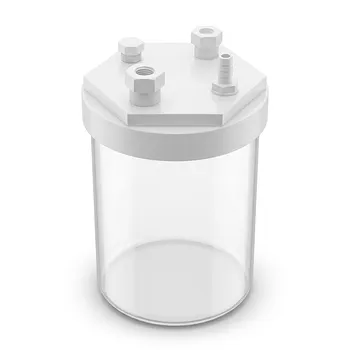
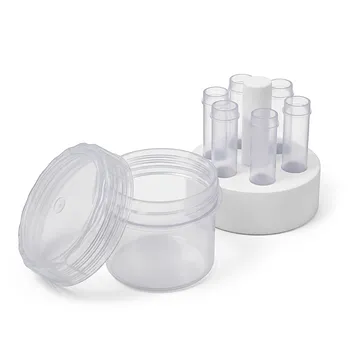
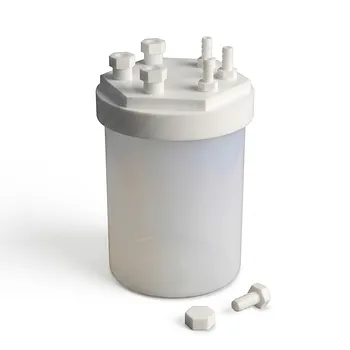
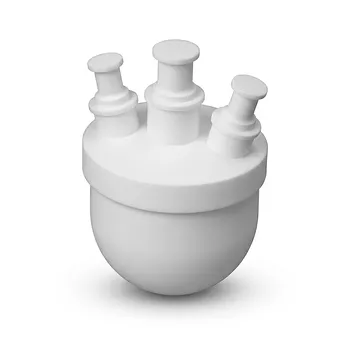
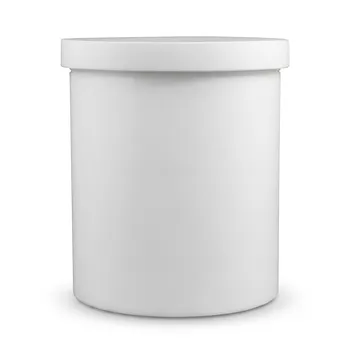
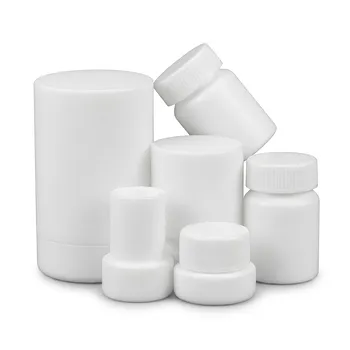
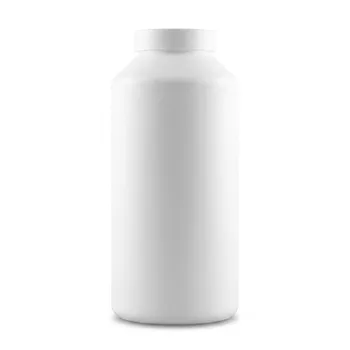
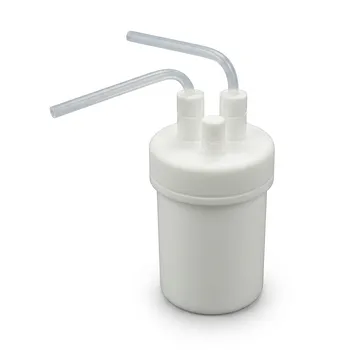
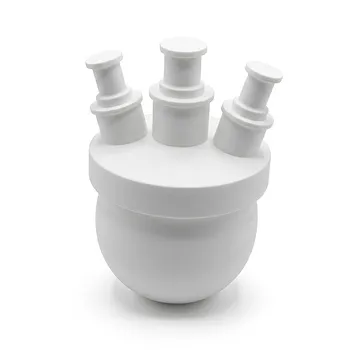
Fluoropolymer laboratory components used for TFVE synthesis must combine chemical inertness, high purity, non-wetting surfaces, and dependable mechanical performance. PTFE and PFA vessels, tubing, fittings, and valves are well suited to reaction sequences involving DMF, THF, DMSO, acetonitrile, active metals, organolithium and Grignard reagents, and corrosive Lewis acids such as TiCl₄. Their resistance to chemical attack and low tendency to retain or release contaminants help protect monomer purity during synthesis, transfer, and isolation.
The required material is not merely “solvent resistant.” It must remain chemically stable, dimensionally reliable, low-contaminating, and leak-tight throughout exposure to polar solvents, reactive organometallics, corrosive reagents, heat, and—where applicable—pressure or vacuum.
Why TFVE Synthesis Demands High-Performance Materials
Reactive Organometallic Reagents Can Attack Conventional Components
TFVE routes may involve zinc, magnesium, aryl lithium reagents, and Grignard reagents. These materials can react with, extract impurities from, or otherwise compromise ordinary metals, elastomers, and inadequately selected plastics.
PTFE and PFA provide highly inert contact surfaces that reduce the risk of reaction, corrosion, leaching, and trace-metal contamination. This is especially important when the final monomer must be isolated at high purity.
Aggressive Polar Solvents Increase Compatibility Demands
DMF, THF, DMSO, and acetonitrile can challenge seals, tubing, coatings, and vessel linings even when the primary vessel material appears stable. Compatibility must therefore be evaluated for the complete fluid path rather than for the container alone.
Fully fluorinated materials are generally preferred because they combine broad solvent resistance with low absorption and low extractables. PTFE is commonly used for vessels, valve seats, and chemically exposed parts, while PFA offers a melt-processable fluoropolymer option for tubing and molded or transparent vessels.
Lewis Acids and Halogenating Conditions Require Chemical Inertness
Corrosive Lewis acids such as TiCl₄ and aggressive halogenation or dehalogenation steps can damage ordinary metallic surfaces or introduce corrosion products. Those contaminants can interfere with downstream purification and analytical results.
The wetted surfaces should resist strong acids, corrosive reagents, and reactive intermediates without embrittling, dissolving, or releasing additives. This is a central reason to use high-purity PTFE or PFA in the reaction and transfer path.
Material Characteristics That Matter Most
Broad Chemical Resistance
The vessel and fluid-transfer components should withstand the specific combination of solvents, organometallic reagents, acids, bases, and temperature used in the process. Compatibility with one reagent does not establish compatibility with the full synthesis sequence.
PTFE and PFA are valuable because their fully fluorinated structures provide exceptional resistance to many acids, solvents, and oxidative or halogenating environments. Final selection should still be based on actual concentration, temperature, exposure time, pressure, and mechanical loading.
Low Surface Energy and Non-Wetting Behavior
Fluoropolymer surfaces have very low surface energy and are both hydrophobic and lipophobic. This limits wetting, sample adhesion, and retention of residual monomer or reagent.
For TFVE synthesis, that behavior helps reduce carryover between batches and supports more complete drainage and recovery. It also makes vessels and tubing easier to clean without relying on aggressive mechanical treatment that could introduce particles.
Low Absorption and Low Extractables
High-purity monomer production requires materials that do not absorb significant quantities of solvent or release contaminants into the reaction mixture. Low water and solvent absorption helps preserve composition and reduces the risk of memory effects between process steps.
The material should also have low volatility and minimal additive content. These characteristics reduce trace contamination from plasticizers, stabilizers, corrosion products, and other leachable substances.
Thermal Stability
Reaction and purification steps may require heating, cooling, or rapid temperature changes. The selected fluoropolymer must retain its chemical and mechanical properties across the process temperature range.
PTFE and PFA offer high thermal stability, but the practical limit depends on pressure, wall thickness, component geometry, and the specific grade. Thermal resistance should therefore be considered together with pressure rating and mechanical stress.
Dimensional and Mechanical Reliability
Tubing, fittings, valve seats, and seals must retain their dimensions during solvent exposure. Swelling, softening, creep, or loss of stiffness can create leaks, restrict flow, or compromise connections.
Rigid vessels also need adequate resistance to deformation under vacuum, pressure, clamping loads, and thermal cycling. Chemical inertness alone is insufficient if the component cannot maintain its shape.
Requirements for Reaction Vessels and Fluid Transfer Systems
Reaction Vessels Need Clean, Inert Wetted Surfaces
The vessel interior should be made from high-purity PTFE or PFA, or from a carefully selected fluoropolymer lining that fully isolates the reaction mixture from the structural material. The design should minimize crevices and dead legs where reactive residues can accumulate.
For pressurized systems, the structural pressure boundary may require 316 or higher-grade stainless steel, with appropriate passivation and a chemically compatible fluoropolymer wetted layer. The metal structure must not be assumed to be chemically isolated unless the lining and all penetrations are properly designed.
Tubing and Fittings Must Preserve the Entire Fluid Path
Transfer tubing, fittings, and valves should use fluoropolymer wetted surfaces wherever the reagents contact the component. A chemically resistant tube connected to a vulnerable fitting or seal still creates a system-level failure point.
Connections should maintain leak-tightness during solvent exposure, thermal cycling, vacuum operation, and pressure changes. High-purity fittings and valves also reduce the risk that metallic ions, elastomer fragments, or machining residues will enter the product stream.
Valves and Seals Need Both Chemical and Mechanical Compatibility
Valve bodies, seats, diaphragms, and seals must be selected as a matched system. A PTFE valve seat does not eliminate compatibility concerns associated with an elastomeric O-ring or backing component.
Seal materials should be checked for swelling, compression-set resistance, permeability, and strength in the actual reagent mixture. Where fluoropolymer seals are used, their dimensional behavior under temperature and pressure must also be considered.
Pressure and Vacuum Controls Must Be Designed Into the Apparatus
If the synthesis uses pressure, vacuum, or gas-phase fluorination, the apparatus must maintain controlled pressure and reliable sealing. High-purity fluoropolymer components can support chemical containment, but they do not replace a properly engineered pressure boundary.
Pressurized vessels should include appropriate heating and cooling control and a correctly specified rupture disc or other overpressure protection. Relief devices require inspection and cleaning because accumulated fluoropolymer or process residue can obstruct venting.
Understanding the Trade-offs
Fluoropolymers Are Chemically Resistant, Not Universally Immune
PTFE and PFA provide broad resistance, but no material should be described as compatible with every chemical under every condition. Strong bases, certain amines, ketones, methanol, elevated temperatures, and long exposure times can create swelling, absorption, softening, or permeation concerns in some fluoropolymer formulations.
Compatibility data should be reviewed for the exact grade and operating conditions. Thin tubing walls, stressed parts, and highly loaded seals are more vulnerable than unstressed bulk material.
Dimensional Change Can Become a Leak Problem
Localized solvent uptake may produce weight gain or mechanical softening. Even modest dimensional changes can affect valve seating, fitting engagement, tubing connections, and seal compression.
This risk is particularly relevant when transferring ketones or amines, or when components remain continuously exposed. The design should allow for expected swelling and should be validated through pressure, vacuum, and leak testing.
Mechanical Strength May Require a Composite Design
Fluoropolymers offer strong chemical protection but are not always the best standalone material for high-pressure structural service. PTFE can creep under sustained load, and fluoropolymer components may require external support.
A practical design may combine a passivated stainless-steel pressure shell with PTFE or PFA wetted surfaces. This preserves structural strength while limiting contact between the process fluid and the metal.
Glass and Metal Are Not Automatically Unusable
Glass can be compatible with many solvents and reagents, and properly selected metals may provide the required mechanical strength. However, glass can be vulnerable to mechanical damage or unsuitable reagents, while metals may corrode, catalyze side reactions, or contribute trace ions.
The correct decision depends on the complete reaction chemistry and purity requirement. Fluoropolymers are preferred when minimizing wetting, contamination, and chemical attack is more important than optical transparency or high structural stiffness.
Making the Right Choice for Your Goal
The specification should cover the whole wetted system, including vessels, tubing, fittings, valves, seals, linings, and pressure-relief components.
- If your primary focus is monomer purity: Use high-purity PTFE or PFA wetted surfaces with low extractables, low absorption, and non-wetting behavior to limit contamination and product retention.
- If your primary focus is organometallic compatibility: Select fully fluorinated components verified for the specific solvents, metals, organolithium or Grignard reagents, Lewis acids, concentrations, and temperatures involved.
- If your primary focus is reliable fluid transfer: Evaluate tubing, fittings, valve seats, and seals together for swelling, softening, creep, permeability, and leak-tightness under actual operating conditions.
- If your primary focus is pressure or vacuum operation: Combine chemically resistant fluoropolymer contact surfaces with a properly rated structural vessel, controlled heating and cooling, and inspected overpressure protection.
- If your primary focus is halogenating or fluorinating service: Use high-purity PTFE or PFA components and seals qualified for the reactive gas, pressure, temperature, evacuation, and exposure profile.
Selecting fluoropolymer laboratory components by chemical compatibility, purity, thermal stability, and mechanical reliability gives TFVE synthesis systems the best chance of maintaining safe operation and high-purity monomer recovery.
Summary Table:
| Characteristic | Why It Matters | PTFE/PFA Advantage |
|---|---|---|
| Broad Chemical Resistance | Withstands aggressive solvents, organometallics, acids | Fully fluorinated structure resists most chemicals |
| Low Surface Energy | Minimizes wetting, sample retention, carryover | Hydrophobic and lipophobic surfaces |
| Low Absorption & Extractables | Preserves monomer purity | Low solvent uptake, minimal leachables |
| Thermal Stability | Endures heating/cooling cycles | Stable across wide temperature range |
| Dimensional & Mechanical Reliability | Maintains leak-tightness, prevents deformation | Resists swelling, creep, and softening |
Ensure high-purity TFVE synthesis with our PTFE and PFA labware. From reaction vessels to transfer systems, our components provide unmatched chemical resistance and purity. Contact us today to discuss your custom requirements and benefit from our end-to-end CNC machining capabilities. Get in touch now and elevate your process.
Related Products
- Custom PTFE Flask 250ml High Purity Fluoropolymer Laboratory Vessel for Chemical Research
- Laboratory PTFE Three Neck Reaction Flask Corrosion Resistant 2000ml Low Background Fluoropolymer Vessel
- Custom 12L PTFE Multi Neck Reaction Flask Laboratory Fluoropolymer Chemical Vessel with Stirrer Compatibility
- Large Capacity PTFE Reaction Flask 20L Custom Multi Neck Laboratory Boiling Flask Fluoropolymer Chemical Processing Vessel
- High Temperature Corrosion Resistant PTFE Reaction Flask Custom Multi Neck Laboratory Vessel with Flat or U Bottom
People Also Ask
- What are the key steps for structural integrity in molded PTFE lab reaction vessels? Master fine powder processing.
- Why Are High-Purity Fluoropolymer Vessels and Tubing Critical for Trace Analysis? Prevent Contamination Reliably
- Why do PTFE fluoropolymer laboratory vessels and containers exhibit superior chemical resistance against harsh solvents and corrosive acids compared to standard plastic labware? Discover the molecular secrets
- Why are fluoropolymer reaction vessels essential for SnO2/rGO synthesis? The Key to High-Performance Composites
- How do choice of solvent and chain transfer activity affect molecular weight during vinylidene fluoride (VDF) radical polymerization? Learn Key Factors for High-MW PVDF