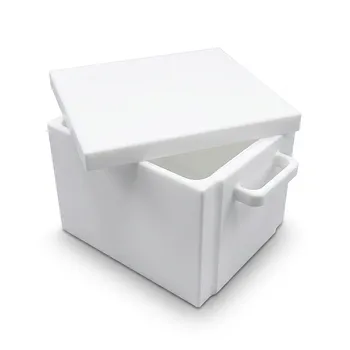
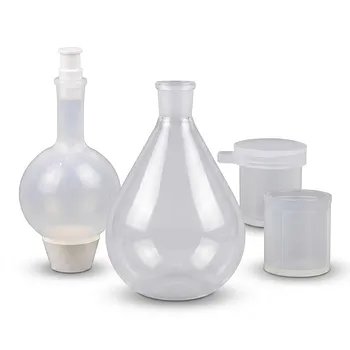
Fluoropolymers are suitable for lithium-ion battery separators because they combine porous ion transport with strong electrical isolation, mechanical durability, and resistance to aggressive battery chemistries. Their fine pore networks can absorb and retain electrolyte while allowing lithium-ion movement, and their chemical and thermal stability helps the separator remain reliable during elevated-temperature operation and long-term cycling. In laboratory testing, PTFE and PFA tubing, fittings, vessels, and related supplies help preserve test accuracy by minimizing chemical reaction, leaching, adsorption, and contamination.
A separator must perform two jobs at once: permit electrolyte-mediated ion transport while preventing direct contact between the electrodes. Fluoropolymer separator materials and fluoropolymer laboratory supplies support those requirements through porosity, chemical inertness, thermal stability, mechanical strength, and low surface adhesion.
Why Separator Material Properties Matter
Fine Porosity Supports Ion Transfer
A functional separator contains interconnected pores that hold electrolyte and provide pathways for lithium-ion movement between the electrodes.
High porosity supports electrolyte uptake, while fine pore interconnectivity helps maintain continuous ion transport without allowing the electrodes to contact one another.
Electrical Isolation Prevents Internal Shorts
The separator physically separates the anode and cathode while remaining permeable to the electrolyte.
This insulating barrier is essential because direct electrode contact can cause an internal short circuit, rapid heat generation, capacity loss, or safety failure.
Electrolyte Absorption Improves Wetting
Fluoropolymer separator structures can provide strong electrolyte absorption and retention, helping maintain contact between the electrolyte and the active electrode surfaces.
Consistent wetting is particularly important during separator evaluation because incomplete or uneven electrolyte uptake can distort measurements of ionic resistance, cycling behavior, and rate capability.
Mechanical Strength Preserves the Pore Structure
Separators must withstand handling, assembly pressure, dimensional changes, and stresses that develop during battery operation.
High mechanical strength helps prevent tearing, excessive shrinkage, or pore deformation that could compromise ion transport or bring the electrodes into contact.
Chemical Stability Resists Battery Components
Battery electrolytes can contain aggressive solvents and salts, while some chemistries generate reactive intermediates.
Fluoropolymers offer high chemical inertness, reducing the likelihood that the separator will degrade, swell unpredictably, or release extractable contaminants into the electrolyte.
Thermal Stability Supports Safer Testing
Temperature changes influence electrolyte behavior, separator dimensions, and the rate of chemical reactions inside a cell.
A thermally stable fluoropolymer can better retain its structural and chemical properties during elevated-temperature testing, although the operating limit must always be verified for the specific polymer grade and separator design.
How Laboratory Supplies Support Separator Testing
Inert Fluid Handling Protects the Test Chemistry
PTFE and PFA tubing and fittings can transfer electrolytes and test solutions with a low risk of chemical reaction or material degradation.
This matters when evaluating electrolyte wettability, uptake, retention, or compatibility because contamination from the fluid-handling system can be mistaken for a separator-related effect.
Sealed Vessels Enable Controlled Experiments
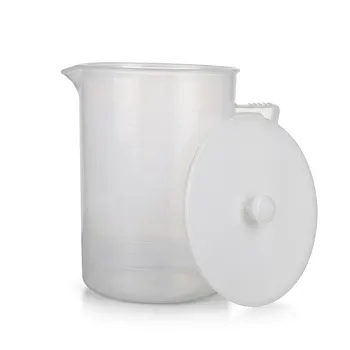
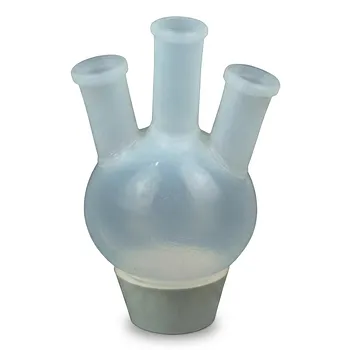
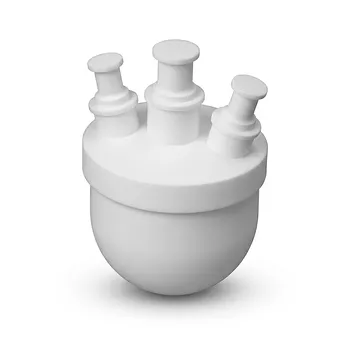
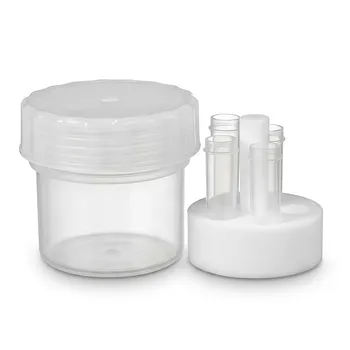
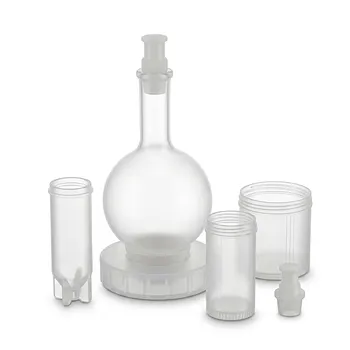
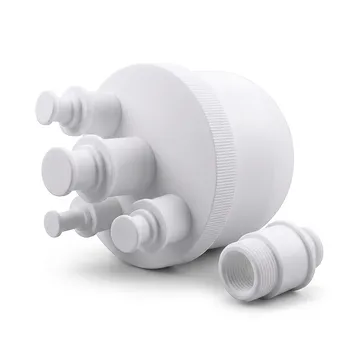
Fluoropolymer reaction vessels and sealed containers can support controlled immersion, soaking, and high-temperature compatibility tests.
Their chemical resistance helps maintain the intended electrolyte composition during extended exposure, provided that the vessel design, seal materials, pressure rating, and temperature rating are appropriate for the experiment.
Low Surface Adhesion Reduces Sample Loss
Fluoropolymers have very low surface energy and strong non-stick behavior.
These characteristics can minimize electrolyte or dissolved-component adhesion to vessel walls and transfer paths, improving recovery and reducing variability between samples.
Low Adsorption Helps Preserve Composition
In sensitive experiments, even small losses of additives or reactive species to laboratory surfaces can affect results.
Fluoropolymer components generally offer low solute adsorption compared with many alternative materials, helping preserve additive ratios and reduce unwanted interactions during separator and electrolyte studies.
Cleanability Supports Repeatable Testing
Smooth, non-adhesive fluoropolymer surfaces are easier to clean and less likely to retain residues from previous experiments.
That supports repeatability across separator batches, electrolyte formulations, and long-duration cycling tests, especially when trace contamination could influence electrochemical performance.
Components Maintain Integrity Under Harsh Conditions
Fluoropolymer supplies can withstand aggressive solvents, corrosive salts, and elevated temperatures without rapidly degrading.
This makes them useful in fluid-transfer assemblies, sample containers, reaction systems, and custom test fixtures used to investigate separator behavior under demanding conditions.
Connecting Material Properties to Test Results
Wettability Tests Reflect Electrolyte Access
A separator's electrolyte wettability influences how quickly and uniformly its pores become filled.
Using inert vessels and transfer components helps ensure that observed wetting behavior reflects the separator and electrolyte interaction rather than contamination, surface residue, or solvent loss from the test apparatus.
Cycling Tests Require Long-Term Stability
Long-term cycling exposes the separator and surrounding test system to repeated chemical, thermal, and mechanical stress.
Fluoropolymer laboratory supplies help maintain stable contact with the electrolyte over time, reducing the risk that tubing, fittings, or vessels introduce degradation products or alter the test environment.
Elevated-Temperature Tests Increase Material Demands
Higher temperatures accelerate chemical reactions and can amplify leaching, swelling, adsorption, or degradation from unsuitable laboratory materials.
PTFE and PFA supplies are valuable in these tests because their thermal and chemical resistance can reduce apparatus-related interference, but their specific temperature and pressure limits must still be respected.
Trace Analysis Benefits From Low Contamination
Separator research may involve measuring electrolyte composition, additive concentration, degradation products, or dissolved impurities.
Low-adhesion, chemically inert fluoropolymer components can reduce cross-contamination and sample loss, improving confidence in analytical comparisons between materials and formulations.
Understanding the Trade-offs
Fluoropolymer Does Not Guarantee Separator Performance
The polymer alone does not determine separator quality. Pore size distribution, porosity, thickness, tensile strength, dimensional stability, electrolyte compatibility, and manufacturing consistency also control performance.
A chemically stable material can still fail if its pore structure is unsuitable or if it shrinks excessively at operating temperature.
Hydrophobicity Can Affect Initial Wetting
Fluoropolymers often have low surface energy and hydrophobic or oleophobic behavior.
That non-stick property benefits laboratory cleanliness and low adsorption, but it can make initial electrolyte wetting more challenging depending on the polymer, electrolyte, pore structure, and surface treatment.
Chemical Inertness Requires Grade Verification
PTFE and PFA are broadly resistant to many aggressive chemicals, but compatibility is not universal under every combination of solvent, temperature, pressure, and exposure time.
Testing should use documented material grades and confirm compatibility with the exact electrolyte, salt concentration, additives, and operating conditions.
Seals and Accessories Can Be the Weak Point
A fluoropolymer vessel or tube may be chemically resistant while its gasket, valve, adhesive, or connector is not.
The complete fluid path must be evaluated because degradation or leaching from a non-fluoropolymer accessory can compromise an otherwise inert test system.
Mechanical and Thermal Limits Still Apply
Fluoropolymers can soften, deform, or creep under sustained load and elevated temperature, even when they remain chemically stable.
For sealed or heated experiments, select components according to their actual temperature, pressure, dimensional, and mechanical ratings rather than chemical resistance alone.
How to Apply This to Your Project
The most reliable approach is to assess the separator and the test apparatus as one controlled materials system.
- If your primary focus is ion transport: Prioritize fine, interconnected porosity, high electrolyte uptake, and stable pore dimensions, then verify ionic resistance and wetting behavior experimentally.
- If your primary focus is safety: Prioritize electrical isolation, mechanical strength, thermal stability, and resistance to shrinkage or tearing during elevated-temperature testing.
- If your primary focus is electrolyte compatibility: Use PTFE or PFA fluid paths and vessels that are verified for the specific solvents, salts, additives, temperature, and exposure duration.
- If your primary focus is analytical accuracy: Select smooth, low-adsorption fluoropolymer supplies and control cleaning procedures to reduce sample loss, leaching, and cross-contamination.
- If your primary focus is long-term cycling: Evaluate the entire assembly, including seals and fittings, for chemical stability, dimensional reliability, and resistance to repeated thermal and electrochemical exposure.
The right fluoropolymer system preserves both separator function and test integrity, allowing measured battery performance to reflect the material being evaluated rather than the limitations of the laboratory setup.
Summary Table:
| Property | Why It Matters | How Lab Supplies Help |
|---|---|---|
| Porosity | Allows ion transport | Inert vessels and tubing maintain electrolyte integrity |
| Electrical Insulation | Prevents short circuits | Clean, non-conductive surfaces avoid interference |
| Electrolyte Absorption | Ensures wetting | PTFE/PFA components resist adsorption, preserving composition |
| Mechanical Strength | Prevents tearing/shrinkage | Durable components withstand handling and testing |
| Chemical Stability | Resists solvents/salts | PTFE/PFA minimize leaching and degradation |
| Thermal Stability | Withstands high temperatures | Heat-resistant supplies maintain performance |
Ensure accurate separator testing with KINTEK's high-purity PTFE and PFA laboratory supplies. Our range includes inert tubing, fittings, vessels, and custom components designed to minimize contamination and maintain chemical integrity. Ideal for battery R&D, quality control, and advanced electrochemical studies, our fluoropolymer products help you achieve reliable results. Contact us today to find the perfect solution for your testing needs!
Related Products
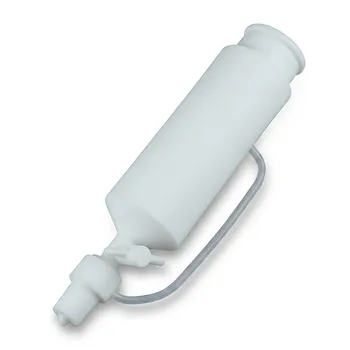
- Custom PTFE Constant Pressure Separatory Funnel 100ml Fluoropolymer Labware for Corrosive Chemical Transfer
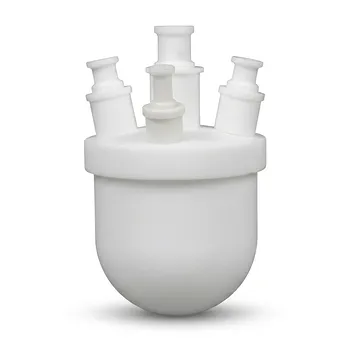
- Custom PTFE Flask 250ml High Purity Fluoropolymer Laboratory Vessel for Chemical Research
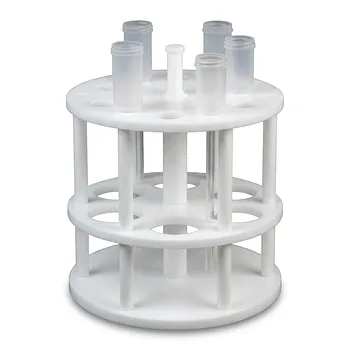
- Custom PFA Microcolumn Racks and PTFE Machined Low Background Corrosion Resistant Laboratory Fixtures
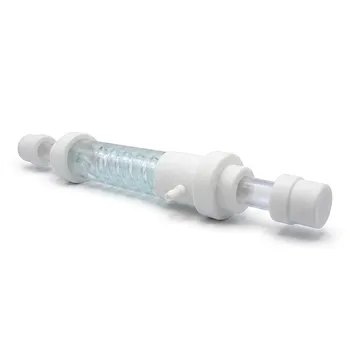
- Custom PTFE Condenser Tube 100ml Serpentine and Straight Fluoropolymer Laboratory Heat Exchanger with Flask Adapters
- High Purity PFA Beaker with Handle and Large Capacity Washable Soak Basket Multi Spec Teflon Laboratory Labware
People Also Ask
- How does structural integration of flame-retardant elements in fluorinated polymers compare to small-molecule additives, and why is this relevant to fluoropolymer laboratory material selection?
- How do perfluorinated monomer building blocks impart superhydrophobic and oleophobic properties? Low surface energy is critical for fluoropolymer labware.
- What inherent physical and chemical properties make fluoropolymers ideal for high-performance laboratory equipment and reaction apparatus? Discover the Key to Durability & Purity
- What performance changes occur when increasing the fluorine content in fluoropolymer materials used for specialized laboratory supplies?
- How does resin stratification occur during the curing of fluoropolymer coatings, and why might solid fluoropolymer laboratory apparatus be preferred over surface coatings for aggressive chemical applications?