Increasing fluorine content generally improves the chemical, thermal, electrical, and surface performance of fluoropolymer laboratory supplies. Fully fluorinated materials such as PTFE and PFA resist aggressive acids, solvents, heat, flame, and weathering while providing very low friction and non-stick surfaces. The principal compromise is that some mechanical properties, including cut-through resistance and strength, may decline slightly as fluorination increases.
Higher fluorination favors chemical inertness, thermal endurance, electrical insulation, and low-adhesion surfaces. PTFE and PFA are therefore strong choices for high-purity fluid handling, digestion vessels, reagent storage, and trace-analysis equipment, provided that mechanical loading and wear are designed appropriately.
Why Fluorine Changes Polymer Performance
Stronger resistance to chemical attack
Fluorine forms highly stable carbon-fluorine bonds. As fluorine substitution increases, the polymer becomes less reactive and less vulnerable to aggressive acids, solvents, and other laboratory reagents.
This makes highly fluorinated materials suitable for tubing, bottles, valves, beakers, reaction vessels, and components exposed to corrosive or high-purity chemicals.
Lower solvent absorption and contamination risk
Higher fluorination reduces the ability of solvents to dissolve or swell the polymer. It also reduces the likelihood of sample absorption, leaching, and chemical interaction with the component surface.
That characteristic is especially important in trace analysis, where even small levels of contamination can affect results.
Greater thermal stability
Higher fluorine content generally increases thermal stability, melting temperature, flame resistance, and resistance to photochemical degradation. The material can therefore retain its chemical integrity under elevated-temperature processing and repeated laboratory use.
Among commonly used perfluorinated materials, the cited thermal-stability hierarchy is generally PTFE, then PFA, then FEP, although the correct choice still depends on the component design and processing requirements.
How Higher Fluorination Affects Physical Properties
Lower coefficient of friction
Fluorination lowers the coefficient of friction, producing smooth, low-adhesion surfaces. This supports non-stick behavior and smoother movement in valves, fittings, pistons, seals, and sliding interfaces.
In fluid-transfer systems, lower surface adhesion can also help reduce residue retention and simplify cleaning.
Lower surface energy
Highly fluorinated surfaces have low surface energy. Liquids spread differently on these surfaces and tend to adhere less strongly, which is valuable for laboratory vessels, liners, tubing, and machined fluid-control parts.
This property contributes to the characteristic non-stick behavior of PTFE and related fluoropolymers.
Improved electrical insulation
Higher fluorine content increases surface resistivity and volume resistivity while lowering the dielectric constant and dissipation factor. These changes improve electrical insulation and reduce dielectric energy loss.
The benefit is relevant to electrically isolated laboratory components, sensor assemblies, analytical instruments, and equipment exposed to humid or chemically challenging environments.
Greater resistance to weathering
Increased fluorination improves resistance to ultraviolet exposure, oxidation, and environmental weathering. Although this may be less important for enclosed laboratory equipment, it matters for external components, outdoor analytical systems, and installations exposed to changing environmental conditions.
What This Means for Laboratory Supplies
PTFE for maximum chemical and thermal endurance
PTFE provides exceptional chemical inertness, very low friction, and high thermal stability. It is commonly selected for aggressive chemical handling, liners, digestion vessels, seals, gaskets, and custom-machined components.
Its limitations include difficult melt processing and mechanical behavior that may require careful support in thin, highly loaded, or wear-intensive designs.
PFA for high-purity fluid handling
PFA combines strong chemical resistance and thermal performance with melt processability. It is particularly useful for tubing, bottles, containers, fittings, and fluid-transfer components where cleanability, low contamination, and chemical purity are priorities.
PFA is often favored when a transparent or more easily fabricated perfluoropolymer component is needed.
FEP for lower-temperature applications
FEP also provides strong chemical resistance, low friction, and useful electrical insulation. Its thermal capability is generally lower than that of PTFE and PFA, so it is better suited to applications where processing temperature and continuous service temperature remain within its limits.
Material selection should be based on the actual temperature, reagent exposure, pressure, and mechanical demands rather than fluorine content alone.
How Performance Changes in Fluid Transfer
Lower adhesion supports cleaner transfer
Low surface energy and low friction reduce the tendency of reagents to adhere to tubing and valve surfaces. This can improve drainability and reduce carryover between fluids.
However, surface behavior also depends on tubing geometry, flow conditions, surface finish, and the chemical properties of the liquid.
Chemical inertness protects fluid purity
Highly fluorinated components are less likely to react with or contaminate the fluid they carry. This is valuable for ultra-pure chemicals, aggressive reagents, and analytical workflows where extractables and trace contamination must be minimized.
No polymer should be treated as universally inert under every condition. Temperature, exposure time, pressure, additives, and the specific chemical combination must still be checked.
Dimensional integrity supports reliable operation
Improved thermal and chemical stability helps tubing, vessels, valve bodies, and fittings retain their function during heating and chemical exposure. This supports repeatable fluid control and reduces degradation-related maintenance.
Dimensional stability is still influenced by wall thickness, applied stress, thermal cycling, and the design of the component.
Understanding the Trade-offs
Some mechanical properties may decrease
Higher fluorination can slightly reduce certain mechanical properties, including strength and cut-through resistance. The material may remain chemically stable while being less suitable for concentrated loads, sharp edges, or severe mechanical abuse.
This distinction is important: chemical durability does not automatically mean mechanical durability.
Low friction can increase creep concerns
The same low-friction behavior that benefits valves and sliding parts does not eliminate creep or deformation under sustained load. PTFE components subjected to compression, pressure, or elevated temperature may require thicker sections, mechanical support, or an alternative design.
Thermal capability is not unlimited
Higher fluorination improves thermal performance, but each resin still has defined melting, processing, and continuous-use limits. A component exposed to repeated heating may also experience dimensional changes or stress effects even when the polymer is not chemically attacked.
Material grade and construction matter
Fluorine content is only one selection factor. Resin grade, fillers, reinforcement, fabrication method, wall thickness, surface finish, and component geometry can materially change performance.
For high-purity work, filled grades may introduce contamination or extractables that would not be acceptable in an unfilled PTFE or PFA component.
Making the Right Choice for Your Goal
Select the material by balancing fluorination benefits against the actual chemical, thermal, electrical, and mechanical conditions of the application.
- If your primary focus is maximum chemical resistance: Choose a highly fluorinated material such as PTFE or PFA, then verify compatibility with the specific acids, solvents, temperatures, and exposure times involved.
- If your primary focus is high-purity fluid handling: Favor clean, unfilled PTFE or PFA grades with low extractables and low absorption, especially for trace analysis and semiconductor or analytical applications.
- If your primary focus is high-temperature service: Compare the resin's melting and continuous-use limits with the complete thermal cycle, not only the nominal operating temperature.
- If your primary focus is smooth valve or fitting operation: Use the low-friction surface of a highly fluorinated polymer, while checking pressure, creep, sealing force, and wear requirements.
- If your primary focus is mechanical load or cut-through resistance: Do not select solely for maximum fluorination; evaluate reinforcement, component geometry, support, and alternative materials where necessary.
Higher fluorination is most valuable when chemical purity, inertness, thermal endurance, and low adhesion matter more than maximum mechanical strength.
Summary Table:
| Property | Effect of Higher Fluorine Content | Laboratory Relevance |
|---|---|---|
| Chemical resistance | Improved resistance to acids, solvents, and aggressive reagents | Ideal for corrosive chemical handling and storage |
| Thermal stability | Increased melting point, flame resistance, and heat tolerance | Suitable for high-temperature digestion and processing |
| Friction and adhesion | Lower coefficient of friction and surface energy | Non-stick surfaces, clean fluid transfer, and low residue |
| Electrical insulation | Higher resistivity and lower dielectric constant | Reliable insulation for sensors and analytical equipment |
| Weathering | Enhanced UV and oxidation resistance | Durable in outdoor or harsh environmental conditions |
| Mechanical strength | Slight decrease in toughness and cut-through resistance | Requires design consideration for load-bearing parts |
Optimize your laboratory with high-performance PTFE and PFA supplies from KINTEK. Our products deliver superior chemical inertness, thermal endurance, and low adhesion, ensuring reliable results in even the most demanding applications. From trace-analysis vessels to custom-machined fluid components, we provide uncompromised purity and durability. Contact us today to discuss your requirements and elevate your lab's performance!
Related Products
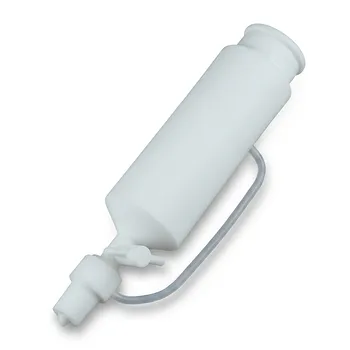
- Custom PTFE Constant Pressure Separatory Funnel 100ml Fluoropolymer Labware for Corrosive Chemical Transfer
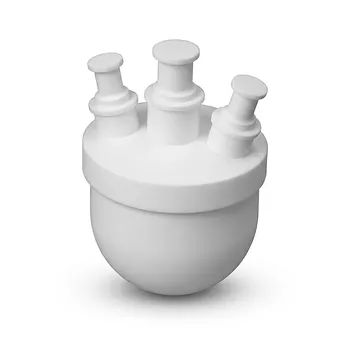
- Custom PTFE Flask 250ml High Purity Fluoropolymer Laboratory Vessel for Chemical Research
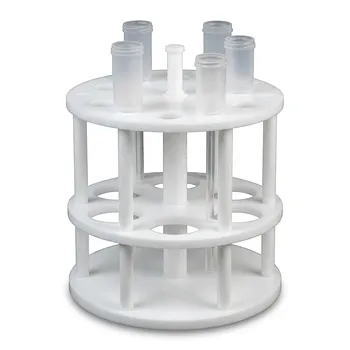
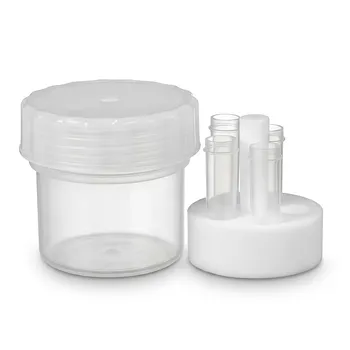
- Custom PFA Microcolumn Racks and PTFE Machined Low Background Corrosion Resistant Laboratory Fixtures
- Custom PTFE Condenser Tube 100ml Serpentine and Straight Fluoropolymer Laboratory Heat Exchanger with Flask Adapters
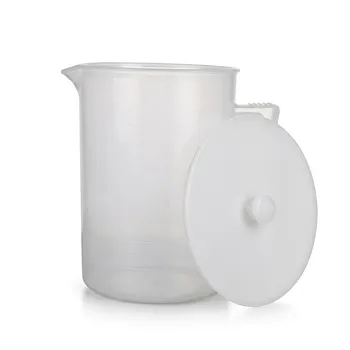
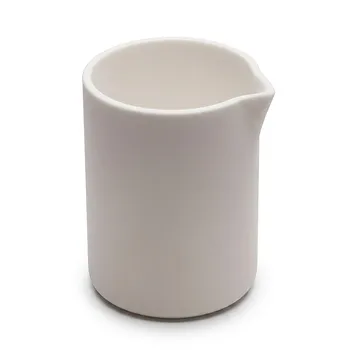
- High Purity PFA Beaker with Handle and Large Capacity Washable Soak Basket Multi Spec Teflon Laboratory Labware
People Also Ask
- How do synthetic processability advantages of semi-fluorinated aromatic ether polymers influence custom fluoropolymer equipment? Discover how PTFE/PFA apparatus enhances synthesis
- Which material characteristics make fluoropolymers suitable for lithium-ion battery separators, and how do fluoropolymer laboratory supplies support separator performance testing?
- How do block length and domain segregation in fluoropolymers influence surface tension and interfacial behavior? Choosing PTFE & PFA Labware for Non-Wetting
- How does substituting fluorine for hydrogen in polymer backbones enhance the performance of fluoropolymer laboratory supplies exposed to aggressive chemicals? Discover the key benefits for your lab.
- How does structural integration of flame-retardant elements in fluorinated polymers compare to small-molecule additives, and why is this relevant to fluoropolymer laboratory material selection?