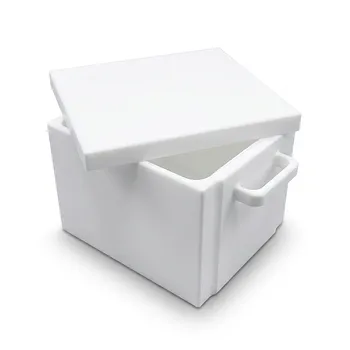
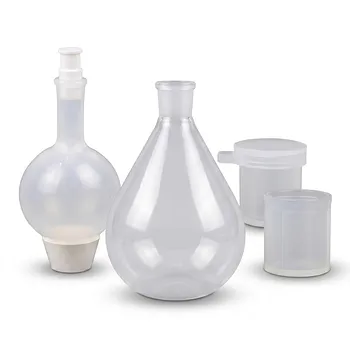
Block length and domain segregation determine how effectively fluorine concentrates at a fluoropolymer surface. Longer fluorinated blocks generally promote stronger separation between fluorinated and protonated regions, producing a narrower, more fluorine-rich interfacial layer and lower solid surface energy. In PTFE and PFA laboratory supplies, this low-energy surface creates non-wetting behavior that reduces droplet retention, adsorption, and sample carryover during aggressive chemical handling and trace analysis.
The practical principle is simple: greater fluorine enrichment at the exposed surface usually means lower surface energy and weaker liquid adhesion. Selecting PTFE or PFA labware therefore helps protect sample recovery and cleanliness, but the exact result still depends on polymer structure, processing, temperature, and the liquid being handled.
How Block Length Changes Fluoropolymer Interfaces
Longer blocks increase domain segregation
Fluorinated copolymers contain chemically distinct regions. Fluorinated blocks preferentially orient toward interfaces, while protonated or less-fluorinated blocks remain more concentrated in the bulk.
As fluorinated block length increases, the thermodynamic distinction between these regions becomes more pronounced. The result is stronger phase segregation both within the material and near its exposed surface.
Fluorine becomes concentrated at the interface
A fluorine-rich surface is energetically favorable because fluorinated groups have very low polarizability and interact weakly with many liquids. Longer blocks can therefore increase the surface excess of fluorine at the vapor or liquid interface.
The interfacial region also becomes relatively sharper, meaning the transition from the fluorine-rich surface to the underlying material occurs over a smaller distance. This sharper segregation reinforces the surface’s low-energy character.
Chain dimensions influence the trend
The relationship is not controlled by block length alone. Surface behavior can change as the block dimension approaches the characteristic end-to-end chain distance, after which additional length may produce diminishing structural changes.
Consequently, surface tension or interfacial properties may show a maximum or plateau near a characteristic chain dimension rather than changing indefinitely in a simple linear manner. Molecular architecture and morphology must therefore be considered alongside nominal fluorine content.
Why Surface Energy and Surface Tension Matter
Solid surfaces are usually described by surface energy
For PTFE, PFA, and other solid fluoropolymers, surface energy is the more precise term. It describes the energetic cost of creating or exposing the solid surface.
Liquids are commonly described by surface tension, which governs how strongly the liquid surface resists deformation. These properties interact at the solid–liquid interface and determine whether a liquid spreads, beads, or remains partially attached.
Low surface energy produces non-wetting behavior
When a fluoropolymer surface has very low surface energy, many aqueous, organic, and chemically aggressive liquids do not spread readily across it. Instead, they form droplets or thin mobile films with limited adhesion.
This is the physical basis of fluoropolymer non-stick behavior. High water contact angles are a visible consequence, although contact angle alone does not fully characterize performance with every solvent or formulation.
Wetting depends on both surfaces
A liquid’s behavior is determined by the balance between the liquid’s surface tension and the solid’s surface energy, together with the chemical interactions at the interface.
For a liquid coating or formulation to spread over PTFE or PFA, its surface tension generally needs to be sufficiently low relative to the substrate’s surface energy. Otherwise, the liquid may bead up, causing incomplete coverage, bubbles, pinholes, or poor adhesion.
This distinction is important: low surface energy is beneficial for preventing unwanted adhesion but challenging when intentional coating or bonding is required.
Why This Matters for Laboratory Supplies
Lower retention improves sample recovery
In trace analysis, even a small droplet left on a vessel wall or inside tubing can affect measured concentration. A low-energy fluoropolymer surface minimizes liquid attachment and helps more of the sample move through the intended process.
This is particularly valuable for beakers, digestion vessels, reagent bottles, sample containers, and fluid-transfer tubing.
Reduced adsorption limits cross-contamination
Fluorine-rich surfaces have weak interactions with many chemicals and biological or particulate residues. That reduces the tendency of analytes, reagents, and contaminants to remain attached after transfer or cleaning.
The practical benefits include lower carryover between batches, reduced memory effects, and less risk that a previous sample will contaminate a subsequent one.
Chemical resistance supports aggressive workflows
PTFE and PFA are widely selected for contact with aggressive reagents because their chemical resistance complements their low surface energy.
In digestion, concentration, storage, and transfer operations, the combination helps maintain material integrity while limiting adhesion and sample loss. However, chemical compatibility must still be checked for the specific reagent, temperature, pressure, and exposure time.
Geometry and material choice affect actual performance
A low-energy material does not automatically eliminate retention in every design. Narrow tubing, dead legs, rough surfaces, sharp transitions, and trapped gas can retain liquid even when chemical adhesion is weak.
PFA and PTFE should therefore be evaluated together with wall finish, fitting design, internal volume, flexibility, and cleaning requirements.
Understanding the Trade-offs
Non-wetting surfaces are difficult to coat or bond
The same low surface energy that prevents sample adhesion also makes fluoropolymer surfaces difficult to wet with coatings, adhesives, or sealants.
If a laboratory component must be labeled, overmolded, bonded, or internally coated, surface treatment and process validation may be required. A material chosen for non-stick performance may be a poor choice for permanent adhesion.
Block length is not the only design variable
Increasing fluorinated block length generally strengthens segregation, but surface behavior also depends on block composition, architecture, molecular weight, side-chain structure, morphology, processing history, and temperature.
It is therefore unsafe to infer final laboratory performance from block length alone. Finished-component testing is more meaningful than polymer formulation data by itself.
Temperature can change interfacial behavior
Higher operating temperatures can enhance the mobility and segregation of fluorinated segments toward the exposed interface. This may alter surface composition, wetting, and liquid retention during use.
Temperature can also affect chemical resistance, dimensional stability, permeation, and mechanical strength. The operating range must be assessed as a complete system rather than using surface energy as the sole selection criterion.
“Non-wetting” does not mean zero interaction
Fluoropolymer surfaces strongly reduce adhesion, but they do not make every liquid completely inert or incapable of spreading. Solvent composition, surface tension, temperature, contamination, and contact time all influence the result.
For critical trace applications, validate recovery and carryover with the actual analytes and solvents rather than relying only on published contact-angle or surface-energy values.
Selecting Supplies for Non-Wetting Applications
Match the material to the handling task
PTFE is often appropriate where maximum chemical inertness and low adhesion are priorities. PFA is frequently preferred when a fluoropolymer component must also provide greater transparency, flexibility, or suitability for certain fluid-handling configurations.
The correct choice depends on the complete use case, including reagent compatibility, temperature, mechanical demands, visibility, and required cleanliness.
Prioritize low-retention geometries
For sample transfer and trace analysis, select components with smooth internal surfaces, minimal dead volume, and fittings that avoid pockets where liquid can collect.
A chemically non-wetting polymer cannot compensate for a geometry that mechanically traps fluid.
Validate recovery and carryover
Use representative solvents, analytes, concentrations, temperatures, and cleaning procedures during qualification. Measure recovery, blank levels, and carryover rather than evaluating only visual beading.
This is especially important where the sample is scarce or where adsorption at parts-per-billion or lower levels can affect the result.
Distinguish non-wetting from intentional wetting
If the objective is to keep samples from adhering, low surface energy is an advantage. If the objective is to apply a coating, achieve adhesive bonding, or ensure uniform liquid coverage, the same property becomes a processing challenge.
The supply should be selected according to whether the desired interface is repellent or well-wetted.
Making the Right Choice for Your Goal
Use the material’s interfacial behavior as one part of a broader laboratory-supply qualification.
- If your primary focus is trace-sample recovery: Choose smooth PTFE or PFA components with low dead volume and verify recovery using the actual sample matrix.
- If your primary focus is minimizing cross-contamination: Prioritize fluoropolymer surfaces with low adsorption, then validate blanks, cleaning, and carryover between representative runs.
- If your primary focus is aggressive chemical handling: Confirm PTFE or PFA compatibility at the intended reagent concentration, temperature, pressure, and exposure time.
- If your primary focus is coating or bonding: Do not assume non-wetting is beneficial; assess whether the liquid can adequately wet the fluoropolymer or whether surface treatment is necessary.
- If your primary focus is reliable fluid transfer: Combine low-energy fluoropolymer tubing with appropriate internal geometry, fittings, bend radius, and drainage design.
Understanding how block length drives fluorine segregation lets you select fluoropolymer labware for the interface you actually need: minimal adhesion for clean, high-recovery handling or controlled wetting when coating and bonding are the real objectives.
Summary Table:
| Factor | Influence on Surface/Interface | Practical Relevance |
|---|---|---|
| Fluorinated block length | Longer blocks → stronger domain segregation → higher surface fluorine concentration | Lower solid surface energy, reduced liquid adhesion |
| Domain segregation | Sharper interface, thinner fluorine-rich layer | Enhanced non-wetting, less sample retention |
| Surface energy (solid) | Low surface energy → high contact angle | Minimal droplet adhesion, easy sample recovery |
| Surface tension (liquid) | Must be low enough relative to solid | Limits spreading; useful for repellency, challenging for coating |
| Temperature | Can enhance segregation or alter surface composition | Performance may change during use; test at operating conditions |
| Geometry | Roughness, dead volume, fittings | Even non-wetting surfaces can trap liquid; design matters |
Ensure non-wetting performance in your lab with precision PTFE/PFA components from KINTEK. Our custom CNC-machined parts, from high-purity digestion vessels to low-retention tubing, are designed to maximize sample recovery and minimize cross-contamination. Contact us today to discuss your application and discover how our fluoropolymer expertise can optimize your workflows. Get in touch with us.
Related Products
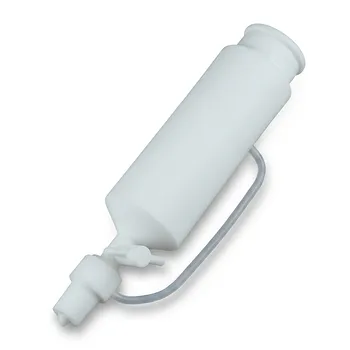
- Custom PTFE Constant Pressure Separatory Funnel 100ml Fluoropolymer Labware for Corrosive Chemical Transfer
- Custom PTFE Flask 250ml High Purity Fluoropolymer Laboratory Vessel for Chemical Research
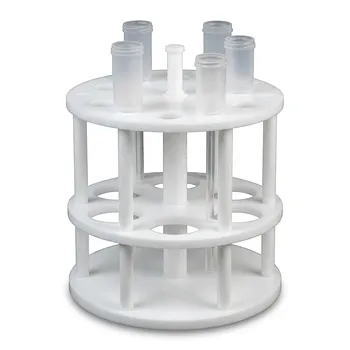
- Custom PFA Microcolumn Racks and PTFE Machined Low Background Corrosion Resistant Laboratory Fixtures
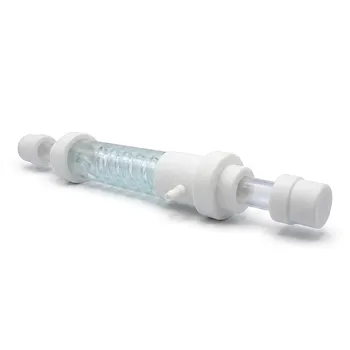
- Custom PTFE Condenser Tube 100ml Serpentine and Straight Fluoropolymer Laboratory Heat Exchanger with Flask Adapters
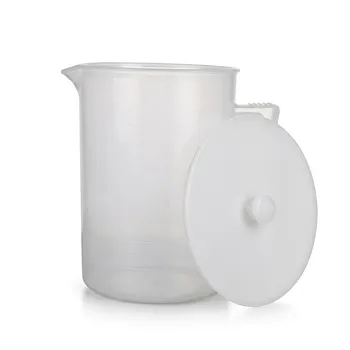
- High Purity PFA Beaker with Handle and Large Capacity Washable Soak Basket Multi Spec Teflon Laboratory Labware
People Also Ask
- How do synthetic processability advantages of semi-fluorinated aromatic ether polymers influence custom fluoropolymer equipment? Discover how PTFE/PFA apparatus enhances synthesis
- How does increasing fluorine content affect the physical and chemical performance of fluoropolymer laboratory supplies and components?
- Which material characteristics make fluoropolymers suitable for lithium-ion battery separators, and how do fluoropolymer laboratory supplies support separator performance testing?
- How does substituting fluorine for hydrogen in polymer backbones enhance the performance of fluoropolymer laboratory supplies exposed to aggressive chemicals? Discover the key benefits for your lab.
- How does structural integration of flame-retardant elements in fluorinated polymers compare to small-molecule additives, and why is this relevant to fluoropolymer laboratory material selection?