Semi-fluorinated aromatic ether polymers reduce some processing barriers, but they do not eliminate the need for custom fluoropolymer laboratory equipment. Their enhanced solubility can enable solution-based handling and reduce dependence on the extreme temperatures and pressures associated with difficult-to-melt fluoropolymers. However, multi-step fluoroalkene polymerizations, aggressive solvents, precise thermal control, and chemical post-modifications still require equipment designed for chemical compatibility, containment, and experimental flexibility.
The key effect is a shift in equipment requirements: improved processability may reduce the need for highly specialized melt-processing hardware, while increasing the value of custom PTFE and PFA apparatus for solvent-intensive synthesis and tailored laboratory configurations.
How Improved Processability Changes Equipment Needs
Solubility Reduces Dependence on High-Temperature Processing
Traditional fluoropolymers can be difficult or impossible to process through ordinary melt techniques because of their high melting points and extreme melt viscosity. Semi-fluorinated aromatic ether polymers offer greater solubility, allowing researchers to work with polymer solutions under conditions that may be less demanding than melt processing.
This can reduce reliance on equipment built for very high melt temperatures, high torque, and high pressure. In laboratory-scale synthesis, the central challenge may shift from forcing a viscous resin through processing machinery to controlling dissolution, reaction chemistry, and solvent management.
Solution Processing Increases the Importance of Chemical Compatibility
Improved solubility does not make the process chemically mild. The solvents used to dissolve or modify these polymers may be aggressive, and fluoroalkene polymerizations can generate demanding reaction environments.
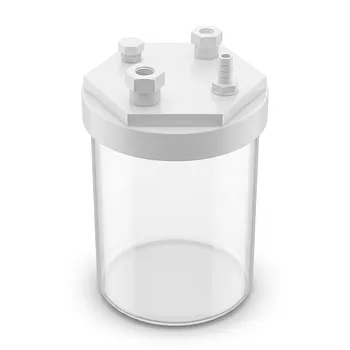
Standard glass, metal, elastomeric seals, or general-purpose plastic components may not provide sufficient resistance across the full combination of solvents, temperature, pressure, and reaction chemistry. Custom-machined PTFE and PFA components can provide a more reliable compatibility envelope for reaction vessels, fittings, tubing, and fluid-transfer assemblies.
Property Tuning Creates Nonstandard Configurations
Functional side-chains and chromophoric units allow researchers to tune the polymer's properties for specific applications. That flexibility can also produce experimental setups that do not match the dimensions or interfaces of standard laboratory equipment.
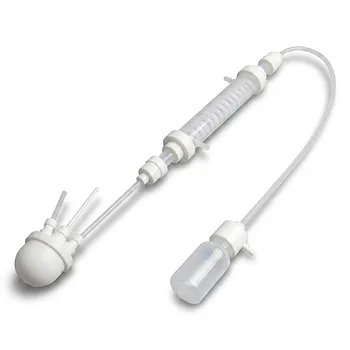
Custom apparatus becomes valuable when a reaction requires unusual vessel geometry, specialized ports, integrated digestion features, or dedicated transfer paths. The equipment must accommodate the chemistry rather than force the chemistry into a standardized configuration.
Why Custom Equipment Remains Necessary
Multi-Step Synthesis Requires Controlled Thermal Conditions
The synthesis route involves fluoroalkene polymerizations followed by chemical post-modifications. These steps may require precise and stable thermal control, particularly when reaction rates, solvent behavior, or functional-group transformations are temperature-sensitive.
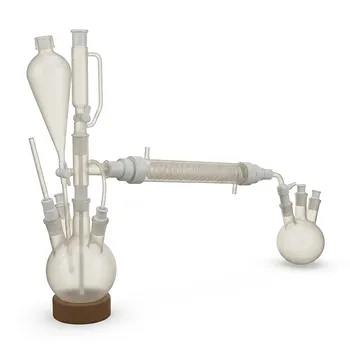
A custom reaction vessel can be designed around the required heating profile, connection layout, internal volume, and containment needs. This improves experimental control without assuming that a conventional vessel will meet every process requirement.
Fluoropolymer Components Protect Purity and Reliability
PTFE and PFA offer strong resistance to many aggressive chemical environments and can help reduce contamination from the apparatus itself. This matters when the polymer's final properties depend on controlled functionalization or sensitive optical, electronic, or mechanical characteristics.
Custom-machined components also allow the laboratory to minimize unnecessary joints, dead spaces, and incompatible materials. The result is an apparatus better aligned with both chemical purity and repeatable operation.
Apparatus Must Accommodate the Physical State of the Process
Enhanced solubility may allow a polymer to be handled as a solution, but the synthesis can still involve volatile reagents, corrosive byproducts, digestion steps, or elevated temperatures. Equipment therefore needs to support safe transfer, containment, sampling, and post-reaction processing.
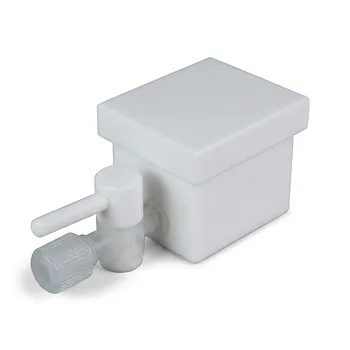
Specialized fittings, valves, tubing, and digestion components help maintain a chemically consistent flow path. Their design should reflect the actual solvents and temperatures used rather than rely on generic fluoropolymer compatibility assumptions.
Understanding the Trade-offs
Less Melt Processing Does Not Mean Less Specialized Engineering
Semi-fluorinated aromatic ether polymers can reduce the need for equipment intended to process extremely viscous, high-temperature melts. However, their synthesis may still demand custom engineering because solution chemistry introduces its own requirements for solvent resistance, sealing, thermal control, and configuration.
The equipment burden is therefore redistributed rather than removed. A laboratory may need less heavy melt-processing machinery but more carefully designed reaction and fluid-handling hardware.
PTFE and PFA Are Not Interchangeable in Every Application
PTFE and PFA are both useful for demanding chemical environments, but the appropriate material depends on the component's geometry, fabrication method, temperature exposure, flexibility requirements, and dimensional tolerances. Selecting a fluoropolymer solely because it is broadly corrosion-resistant can overlook mechanical or fabrication constraints.
Material selection should account for the complete operating environment, including solvents, pressure, thermal cycling, and the need for machined or formed features.
High-Temperature Fabrication Has Its Own Risks
Fluoropolymer fabrication can involve temperatures approaching 500°C. Heating fluoropolymers above their melting points may generate highly corrosive volatile compounds, so fabrication equipment requires appropriate ventilation, corrosion-resistant construction, and process controls.
This concern applies primarily to manufacturing the laboratory components, not necessarily to the polymer synthesis itself. It nevertheless influences supplier capability, quality assurance, and the reliability of the finished apparatus.
Extreme Melt Viscosity Still Matters Where Melt Processing Is Used
If a semi-fluorinated polymer or a related component is processed through a melt route, equipment may still require elevated torque and pressure ratings. The improved solubility of the material does not automatically eliminate the mechanical demands associated with high-viscosity fluoropolymer melts.
Where melt processing remains necessary, machinery must be selected for the actual resin behavior. Where solution processing is practical, the laboratory can often avoid some of these demands by using solvent-compatible reaction and transfer equipment instead.
Making the Right Choice for Your Goal
The correct equipment strategy depends on whether the process benefits primarily from solution handling, specialized synthesis control, or eventual melt fabrication.
- If your primary focus is solution-based synthesis: Prioritize custom PTFE or PFA reaction vessels, fittings, tubing, and seals that match the solvents, temperatures, and transfer requirements of the process.
- If your primary focus is reducing high-temperature equipment demands: Use the polymer's enhanced solubility to limit dependence on high-torque, high-pressure melt-processing machinery where the chemistry permits.
- If your primary focus is precise functionalization: Specify apparatus with tailored geometry, thermal control, sampling access, and minimal contamination risk for multi-step post-modification work.
- If your primary focus is fabricating finished fluoropolymer components: Work with processing equipment designed for corrosive high-temperature conditions and the high torque and pressure associated with viscous resins.
Better processability simplifies the processing route, but custom equipment remains essential for controlling the chemistry that makes these polymers valuable.
Summary Table:
| Aspect | Impact on Equipment Needs |
|---|---|
| Improved solubility | Reduces reliance on high-temperature melt processing |
| Solution-based handling | Increases importance of chemical compatibility with aggressive solvents |
| Property tuning | Creates nonstandard configurations requiring custom apparatus |
| Multi-step synthesis | Demands precise thermal control and containment |
| Fluoropolymer purity | Protects sensitive properties and reduces contamination |
| Physical state | Requires safe handling of volatile/corrosive reagents |
Ready to optimize your fluoropolymer synthesis with custom PTFE/PFA equipment? At KINTEK, we specialize in high-performance fluoropolymer labware, from standard vessels to fully customized reaction systems. Our end-to-end CNC machining ensures precise, reliable components for your most demanding applications. Enhance your research efficiency and purity—contact us today for a tailored solution.
Related Products
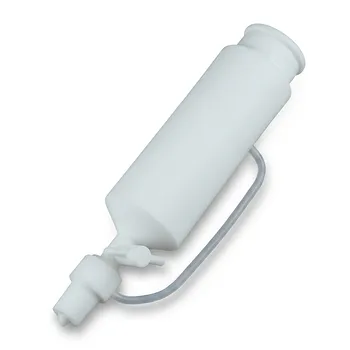
- Custom PTFE Constant Pressure Separatory Funnel 100ml Fluoropolymer Labware for Corrosive Chemical Transfer
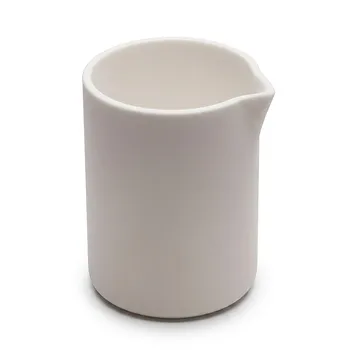
- Custom PTFE Flask 250ml High Purity Fluoropolymer Laboratory Vessel for Chemical Research
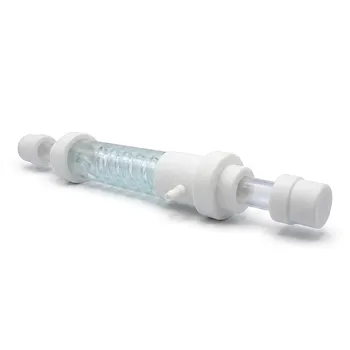
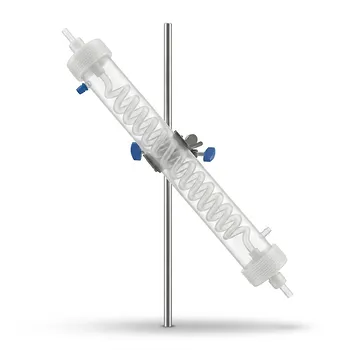
- Custom PTFE Condenser Tube 100ml Serpentine and Straight Fluoropolymer Laboratory Heat Exchanger with Flask Adapters
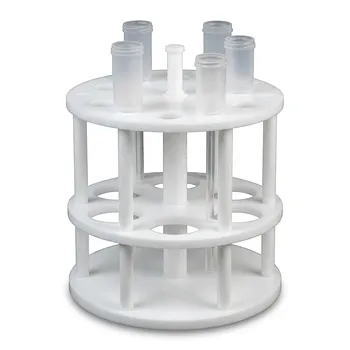
- Custom PFA Microcolumn Racks and PTFE Machined Low Background Corrosion Resistant Laboratory Fixtures
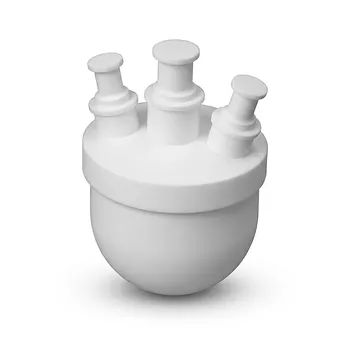
- Custom PFA Pear Shaped Flask High Purity Corrosion Resistant Labware Custom Molded Fluoropolymer Flask Glass Replacement Solution
People Also Ask
- How does increasing fluorine content affect the physical and chemical performance of fluoropolymer laboratory supplies and components?
- Which material characteristics make fluoropolymers suitable for lithium-ion battery separators, and how do fluoropolymer laboratory supplies support separator performance testing?
- How do block length and domain segregation in fluoropolymers influence surface tension and interfacial behavior? Choosing PTFE & PFA Labware for Non-Wetting
- How does substituting fluorine for hydrogen in polymer backbones enhance the performance of fluoropolymer laboratory supplies exposed to aggressive chemicals? Discover the key benefits for your lab.
- How does structural integration of flame-retardant elements in fluorinated polymers compare to small-molecule additives, and why is this relevant to fluoropolymer laboratory material selection?