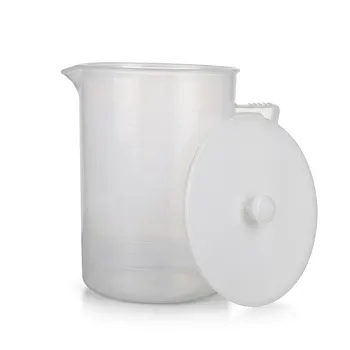
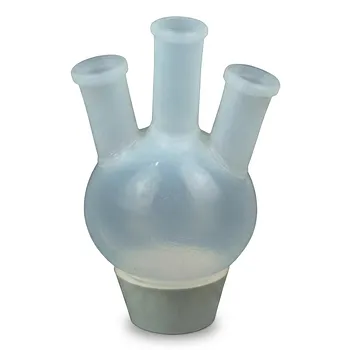
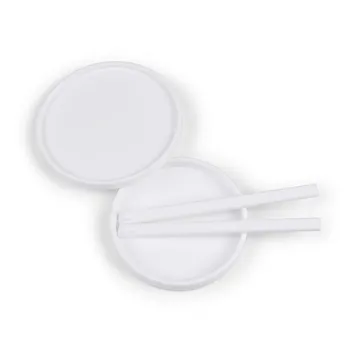
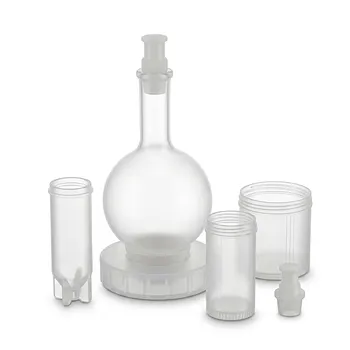
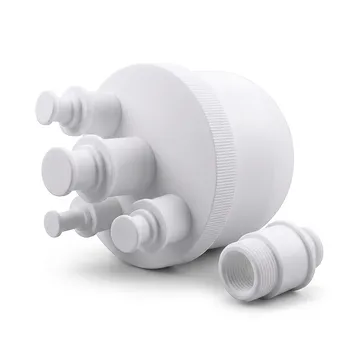
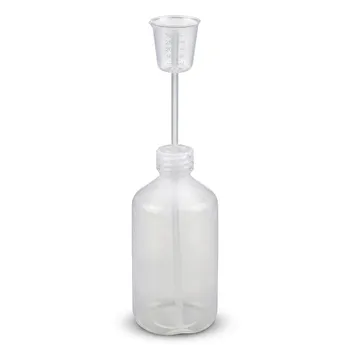
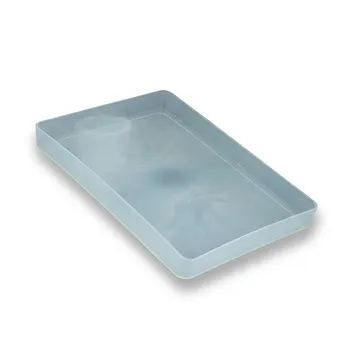
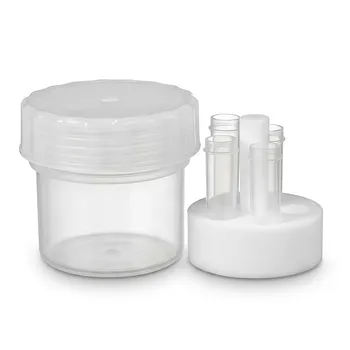
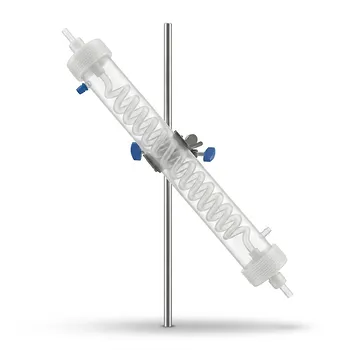
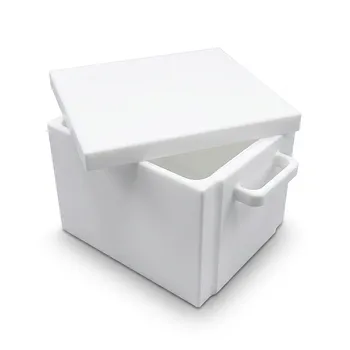
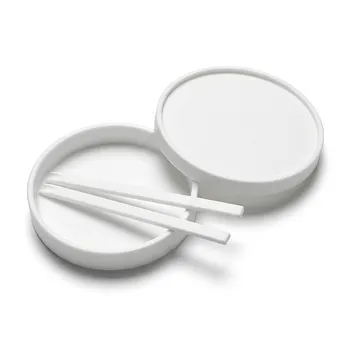
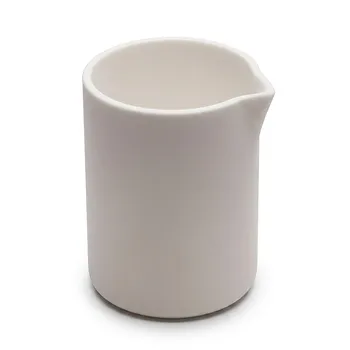
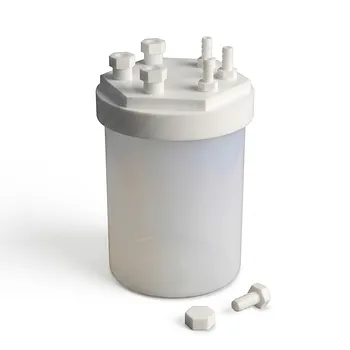
Replacing hydrogen with fluorine makes a polymer backbone far less vulnerable to chemical attack. The strong carbon-fluorine bond and fluorine’s high electronegativity shield the carbon chain from oxidizing reagents, strong acids, bases, and organic solvents. In laboratory supplies such as PTFE and PFA bottles, digestion tubes, reaction vessels, and tubing, this reduces degradation, leaching, moisture uptake, and sample contamination, even at elevated temperatures.
Fluorination improves performance by creating a chemically inert, thermally stable, and highly hydrophobic polymer surface and backbone. Fully fluorinated materials such as PTFE and PFA are therefore well suited to aggressive chemical handling, provided concentration, temperature, mechanical loading, and chemical compatibility limits are respected.
Why Fluorine Improves Chemical Resistance
The carbon-fluorine bond resists attack
Fluorine forms one of the strongest bonds commonly found in organic polymer structures. When hydrogen is replaced by fluorine, the resulting C-F bonds are difficult for many acids, bases, solvents, and oxidizing chemicals to break.
This makes the polymer backbone less reactive and slows the chain-scission and surface-erosion processes that cause ordinary plastics to soften, crack, swell, or contaminate a chemical sample.
Fluorine shields the carbon backbone
Fluorine atoms surround and electronically protect the carbon chain. Their high electronegativity lowers the polymer’s susceptibility to reactions involving aggressive oxidizing species, including oxygen and strong chemical reagents.
This shielding is especially valuable in digestion and reaction applications, where chemical exposure is combined with heat. Fluorinated polymers can remain stable in environments that would rapidly damage many hydrocarbon-based plastics.
Fully fluorinated backbones provide the strongest protection
Materials such as PTFE and PFA contain highly fluorinated structures. Their fluorine-rich surfaces expose very few reactive hydrogen-containing sites to the chemical environment.
As fluorine content increases, chemical inertness generally improves. Fully fluorinated polymers therefore outperform partially fluorinated materials when maximum resistance to corrosive acids, bases, and solvents is required.
How This Benefits Laboratory Supplies
Less degradation and leaching
Chemical degradation can release polymer fragments, additives, or extractable compounds into a reagent or analytical sample. A stable fluoropolymer surface greatly reduces this risk.
For high-purity work, this helps preserve reagent quality and minimizes background interference during trace analysis, digestion, and sensitive instrumental measurements.
Low moisture absorption
Fluorinated polymers are strongly hydrophobic. Replacing hydrogen with fluorine reduces the polymer’s affinity for water and substantially limits moisture uptake.
This helps prevent dimensional changes, chemical dilution, and water-mediated contamination during storage or fluid transfer. It is particularly useful for reagent bottles, tubing, and vessels exposed to humid environments or aqueous chemicals.
Resistance to organic solvents and corrosive reagents
The fluorine-shielded structure resists many organic solvents as well as strong inorganic acids and bases. This allows PTFE and PFA components to handle a broad range of laboratory chemicals without the swelling or embrittlement associated with less resistant plastics.
Compatibility still depends on the specific chemical, concentration, temperature, exposure time, and mechanical condition of the component.
High-temperature chemical processing
Fluorination also increases thermal stability, melting temperature, and resistance to thermal decomposition. PTFE and PFA can consequently support demanding applications involving heated reactions, chemical digestion, and fluid transfer.
Some fluoropolymer components support continuous service temperatures near 260°C, but the allowable temperature depends on the product design and operating conditions rather than on resin identity alone.
Low surface energy and friction
Fluorine lowers surface energy and the coefficient of friction. Chemicals and particles are less likely to adhere to the surface, while fluids can move smoothly through tubing, valves, and fittings.
This non-stick behavior supports easier cleaning, lower carryover, and reduced cross-contamination between samples.
Understanding the Trade-offs
Chemical resistance does not mean universal compatibility
A fluoropolymer is not automatically safe for every chemical at every temperature. Strong oxidizers, highly concentrated reagents, or combined chemical and thermal stress can change the recommended operating limit.
For example, fluoropolymer equipment may tolerate 30% hydrogen peroxide at temperatures up to approximately 120°C under specified conditions, while highly concentrated 90% hydrogen peroxide may require a substantially lower limit, such as 65°C.
Mechanical strength can be a limiting factor
Increasing fluorination improves chemical and thermal performance but can reduce some mechanical properties, including cut-through resistance and, in certain designs, overall strength.
PTFE and PFA are excellent for chemical containment and fluid handling, but they may require structural support when used in load-bearing, pressure-intensive, or wear-heavy equipment.
Temperature and concentration must be evaluated together
A material that performs well at room temperature may have a lower safe limit at elevated temperature or under prolonged exposure. Chemical concentration and operating temperature can amplify one another rather than acting as independent variables.
Selection should therefore use the supplier’s compatibility data for the actual reagent concentration, temperature, pressure, exposure duration, and component geometry.
Surface inertness does not eliminate handling risks
Fluoropolymer labware can prevent leaching and chemical attack, but contamination may still result from inadequate cleaning, residues from previous chemicals, poor seals, or incompatible connected components.
The entire fluid path should be evaluated, including fittings, gaskets, tubing supports, and closures.
How to Apply This to Your Project
Fluorine substitution is most valuable when laboratory supplies must combine chemical purity, corrosion resistance, and thermal endurance.
- If your primary focus is maximum chemical resistance: Choose highly fluorinated materials such as PTFE or PFA, then verify compatibility against the reagent’s concentration and temperature.
- If your primary focus is trace-analysis purity: Use high-purity fluoropolymer vessels, bottles, and tubing to minimize leaching, moisture uptake, adhesion, and sample carryover.
- If your primary focus is high-temperature digestion or reaction work: Confirm the product’s rated service temperature under the specific chemical exposure, rather than relying only on the polymer’s general temperature capability.
- If your primary focus is fluid transfer: Use fluoropolymer tubing, valves, and fittings to combine chemical inertness with low friction and low surface adhesion.
- If your primary focus is mechanical durability: Check cut-through, pressure, wear, and load requirements carefully, because chemical resistance alone does not guarantee adequate structural performance.
Fluorine transforms a conventional polymer backbone into a more protected, hydrophobic, and thermally stable structure, enabling laboratory supplies to remain reliable where aggressive chemicals would compromise ordinary plastics.
Summary Table:
| Feature | Benefit |
|---|---|
| Strong C-F bond | Resists chemical attack, reducing degradation and leaching |
| Fluorine shielding | Protects backbone from oxidizing agents and solvents |
| High electronegativity | Lowers reactivity with acids, bases, and solvents |
| Hydrophobicity | Minimizes moisture absorption, preventing contamination |
| Thermal stability | Withstands high temperatures for digestion and reactions |
| Low surface energy | Reduces adhesion, friction, and sample carryover |
Ready to upgrade your lab with high-performance PTFE/PFA supplies? At KINTEK, we specialize in manufacturing virtually all imaginable laboratory products from PTFE and PFA, tailored to your exact needs. Whether you require standard labware, custom fluoropolymer parts, or high-purity digestion vessels, our end-to-end CNC machining capabilities ensure precision and reliability. Don't let aggressive chemicals compromise your results—contact us today to discuss your requirements and experience the KINTEK advantage! Get in touch now.
Related Products
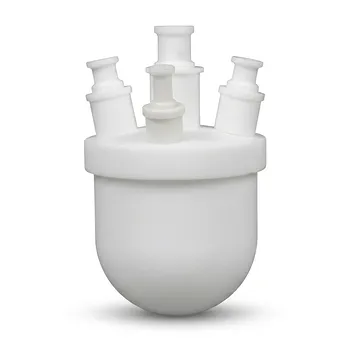
- Custom PTFE Flask 250ml High Purity Fluoropolymer Laboratory Vessel for Chemical Research
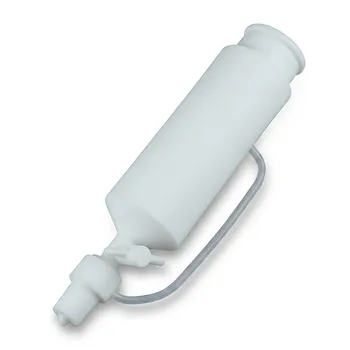
- Custom PTFE Constant Pressure Separatory Funnel 100ml Fluoropolymer Labware for Corrosive Chemical Transfer
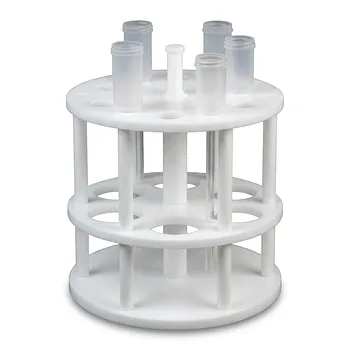
- Custom PFA Microcolumn Racks and PTFE Machined Low Background Corrosion Resistant Laboratory Fixtures
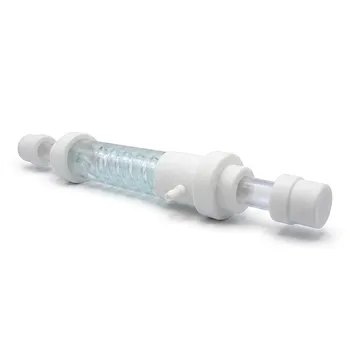
- Custom PTFE Condenser Tube 100ml Serpentine and Straight Fluoropolymer Laboratory Heat Exchanger with Flask Adapters
- High Purity PFA Beaker with Handle and Large Capacity Washable Soak Basket Multi Spec Teflon Laboratory Labware
People Also Ask
- What are the key steps for structural integrity in molded PTFE lab reaction vessels? Master fine powder processing.
- When synthesizing TFVE monomers involving reactive organometallic reagents and aggressive polar solvents, what material performance characteristics are required? Ensure purity with PTFE/PFA.
- Why Are High-Purity Fluoropolymer Vessels and Tubing Critical for Trace Analysis? Prevent Contamination Reliably
- Why do PTFE fluoropolymer laboratory vessels and containers exhibit superior chemical resistance against harsh solvents and corrosive acids compared to standard plastic labware? Discover the molecular secrets
- How do choice of solvent and chain transfer activity affect molecular weight during vinylidene fluoride (VDF) radical polymerization? Learn Key Factors for High-MW PVDF