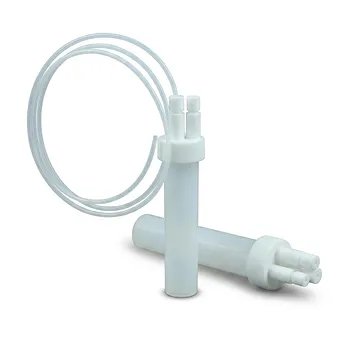
PFA laboratory products are melt-processable and tougher than standard PTFE because their molecular structure is deliberately modified to disrupt PTFE’s exceptionally tight crystalline packing. PTFE’s fully extended, rigid helical chains create very high crystallinity—typically about 95% to 98%—and extremely high melt viscosity, so it does not flow readily through conventional molding equipment. PFA incorporates perfluoroalkoxy vinyl ether comonomers, whose bulky side chains reduce crystallinity, lower the effective melting range to approximately 305–315°C, and improve toughness and optical clarity.
The key difference is molecular packing: PTFE maximizes rigidity and crystallinity, while PFA introduces controlled chain irregularity. That change preserves fluoropolymer chemical resistance while allowing PFA to melt, flow, and form complex, seamless laboratory products.
Why PTFE Is Difficult to Melt-Process
PTFE chains pack exceptionally tightly
Standard PTFE consists primarily of long, fully fluorinated chains with a regular, extended helical structure. Their regularity allows the chains to pack closely into highly crystalline regions.
This high crystallinity contributes to PTFE’s excellent chemical resistance, thermal stability, low surface energy, and low friction. However, it also makes the polymer unusually resistant to flowing during conventional melt processing.
High melt viscosity limits conventional molding
PTFE does pass through a melting transition, but its melt viscosity remains extremely high. In practical terms, it does not behave like a typical thermoplastic that can readily flow through an injection-molding tool or extrusion die.
Manufacturers therefore commonly rely on compression molding, paste extrusion, sintering, or machining. These methods are effective, but they can restrict geometry and make seamless fabrication more difficult.
How PFA’s Molecular Structure Changes Processing
PAVE comonomers disrupt the crystal structure
PFA is based on a tetrafluoroethylene backbone, like PTFE, but incorporates perfluoroalkoxy vinyl ether, or PAVE, comonomers. These comonomers add longer, bulkier pendant side chains to the otherwise regular fluoropolymer structure.
The side chains act like deliberate interruptions in a tightly organized molecular assembly. They prevent the chains from packing as efficiently, reducing PFA’s crystalline content to approximately 70% as polymerized and often lower after thermal processing.
Lower crystallinity enables melt flow
With fewer and smaller crystalline regions, PFA has greater molecular mobility when heated. Its melting range of roughly 305–315°C is low enough, relative to PTFE’s processing behavior, for the material to be shaped using conventional melt techniques.
This enables injection molding, melt extrusion, thermoforming, and welding. The important distinction is not simply that PFA melts, but that its molten state can flow sufficiently for practical manufacturing.
Complex geometries become feasible
PFA can be formed into products such as:
- Molded fittings and valves
- Smooth-bore tubing
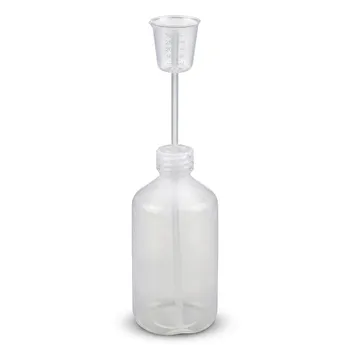
- Wash bottles and storage containers
- Trace-analysis digestion vessels
- Low-dead-volume fluid-handling components
- Seamless reaction and transfer labware
Melt processing can produce continuous, pore-free shapes with fewer joints and assembly-related weaknesses than constructions assembled from separately sintered or machined PTFE parts.
Why Lower Crystallinity Can Improve Structural Toughness
Crystalline regions increase rigidity
In a highly crystalline polymer such as PTFE, tightly packed regions act as rigid domains. They provide dimensional stability and contribute to the material’s characteristic chemical and thermal performance.
However, a very rigid molecular structure can also limit how much the material deforms before damage begins. The chains have less freedom to move and redistribute stress locally.
PFA has more molecular flexibility
The PAVE side chains interrupt the regularity of the PTFE-like backbone. This gives PFA a greater proportion of less-ordered, flexible molecular regions that can absorb and redistribute mechanical stress.
As a result, PFA can offer greater toughness and resistance to mechanical damage than pure PTFE in many laboratory-product applications, especially where components must tolerate molded features, handling, pressure, or repeated thermal exposure.
Toughness is linked to processability
The same structural irregularity that allows PFA to flow during molding also reduces its tendency to behave as a highly rigid, crystalline solid. In this sense, melt-processability and toughness have a common molecular origin: reduced chain packing efficiency.
PFA therefore provides a useful balance between fluoropolymer inertness and practical mechanical performance. It is less structurally constrained than standard PTFE while retaining the fully fluorinated chemistry required for demanding laboratory environments.
What This Means for Laboratory Products
Seamless construction improves component integrity
PFA can be molded into complex shapes rather than being assembled from multiple pieces. Fewer seams and joints can reduce potential leak paths, crevices, and contamination sites.
This is particularly valuable for high-purity fluid handling and trace analysis, where small dead volumes or residual contaminants can affect results.
Smooth surfaces support high-purity applications
Melt processing can create smooth internal surfaces and uniform geometries. These characteristics are useful in tubing, fittings, digestion vessels, and other components that must minimize fluid retention and clean easily.
PFA also retains very low surface energy and minimal ionic leaching, supporting applications where chemical purity is more important than low material cost.
Optical clarity can aid inspection
PFA generally provides greater optical clarity than pure PTFE. This allows users to observe fluid levels, interfaces, particulates, or reaction progress more readily.
The clarity is another consequence of reduced crystallinity: less crystalline scattering produces a more transparent material structure.
Understanding the Trade-offs
PFA does not outperform PTFE in every property
PFA’s lower crystallinity improves flow and toughness, but it also changes the balance of properties. PTFE remains highly attractive where maximum chemical inertness, low friction, and established high-temperature performance are the primary requirements.
Material selection should therefore be based on the component’s geometry, mechanical demands, purity requirements, temperature profile, and fabrication method.
Lower crystallinity can affect dimensional behavior
Crystalline content influences shrinkage, dimensional stability, and thermal expansion. Because PFA is less crystalline and can undergo additional structural changes during thermal processing, manufacturers must control molding conditions and design tolerances carefully.
A molded PFA component is not automatically interchangeable with a machined PTFE component of the same nominal dimensions.
Processing capability does not eliminate design constraints
PFA can be injection molded and extruded, but successful production still depends on appropriate wall thickness, cooling, tooling, weld design, and thermal control. Complex shapes may also require attention to residual stress and sealing behavior.
The advantage is greater manufacturing freedom—not the absence of engineering limitations.
“Tougher” is application-dependent
PFA’s structural toughness advantage should be understood comparatively and in context. Actual performance depends on grade, temperature, wall geometry, loading mode, processing history, and exposure to chemicals or cyclic stress.
For critical components, test data from the specific PFA grade and design should take precedence over general material descriptions.
Making the Right Choice for Your Goal
PFA is usually the stronger choice when the laboratory product must combine fluoropolymer purity with complex geometry and practical mechanical toughness.
- If your primary focus is complex molded geometry: Choose PFA because its lower crystallinity and lower melt viscosity allow injection molding, extrusion, thermoforming, and welding.
- If your primary focus is structural toughness: Consider PFA because its less tightly packed molecular structure provides greater flexibility for absorbing and redistributing mechanical stress.
- If your primary focus is ultra-trace chemical analysis: Choose PFA when seamless construction, smooth surfaces, optical clarity, and low leachables are important.
- If your primary focus is maximum PTFE-like chemical and thermal performance: Compare PFA and PTFE at the specific operating temperature and chemical exposure rather than assuming one is universally superior.
PFA succeeds by relaxing PTFE’s molecular regularity just enough to make the material flow and toughen without sacrificing the core advantages of a fully fluorinated polymer.
Summary Table:
| Property | PTFE | PFA |
|---|---|---|
| Crystallinity | ~95-98% | ~70% (polymerized) |
| Melt viscosity | Extremely high | Lower, allows melt processing |
| Processing methods | Compression molding, paste extrusion, sintering, machining | Injection molding, melt extrusion, thermoforming, welding |
| Melting range | Not typically defined for processing | 305-315°C |
| Toughness | Rigid, limited deformation | Enhanced flexibility and toughness |
| Optical clarity | Opaque | More transparent |
| Typical products | Machined parts, simple shapes | Complex molded fittings, valves, tubing, vessels |
Elevate your laboratory with high-purity PFA or PTFE products designed for superior performance. Whether you need custom-machined components or standard labware, KINTEK offers a comprehensive range of fluoropolymer solutions. Leverage our expertise in PTFE/PFA custom CNC machining to meet your exact specifications. Contact us today to discuss your requirements and benefit from our dedicated support and high-quality manufacturing.
Related Products
- High Purity PFA Crucible and Corrosion Resistant PTFE Beaker for Trace Analysis and Custom Laboratory Applications
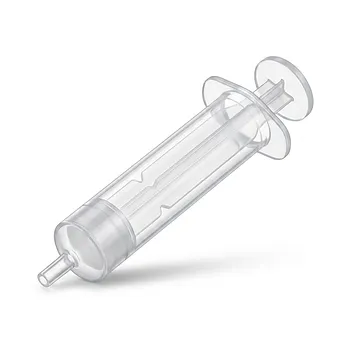
- Corrosion Resistant PFA Syringe Translucent Visual Fluoropolymer Labware 10ml Chemical Handling Tool
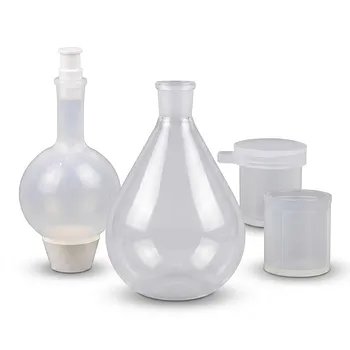
- PFA Eggplant Flask Custom Molded Pear Shaped Laboratory Flask Corrosion Resistant Glass Alternative
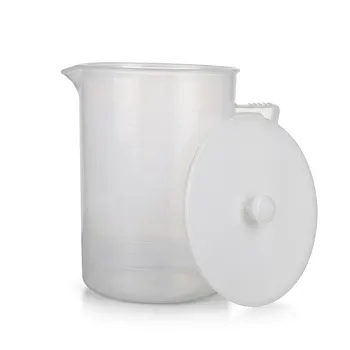
- High Purity PFA Beaker with Handle and Large Capacity Washable Soak Basket Multi Spec Teflon Laboratory Labware
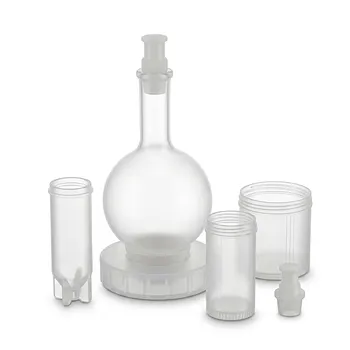
- Custom PFA Pear Shaped Flask High Purity Corrosion Resistant Labware Custom Molded Fluoropolymer Flask Glass Replacement Solution
People Also Ask
- Why are high-purity vessels critical for BiFeO3 synthesis? Ensuring Phase Purity
- Why is the use of high-purity PFA or PTFE labware critical during TiO2 nanoparticle purification? Protect Sample Purity
- Why is high-purity PFA trace analysis labware used for MXene? Ensure Superior Material Integrity in Research
- Why is high-purity PFA labware necessary for Znx@LS-2 zeolite ICP-OES analysis? Ensure Trace-Level Precision
- Why is high-purity PFA trace analysis labware used for sample processing when preparing Mo2CTx@MoS2? Ensure Material Purity