The fundamental limitation of virgin PTFE is its tendency to "cold flow" or creep under pressure. While pure PTFE offers elite chemical resistance, its molecular chains move easily under load, causing the material to deform over time. To solve this, engineers use filled PTFE to increase physical strength or expanded PTFE (ePTFE) to create a structurally stable, multidirectional fiber network.
While virgin PTFE provides a high-purity seal, it lacks the dimensional stability required for rigorous mechanical environments. Filled PTFE uses internal reinforcements to resist deformation, whereas ePTFE utilizes a microporous structure to eliminate cold flow and conform to irregular surfaces.
The Mechanical Limitations of Virgin PTFE
The Challenge of Cold Flow
Virgin PTFE is a homogeneous material with unrestrained molecular chains that slide past one another when subjected to a load. This "cold flow" means the gasket will gradually thin out and spread radially, leading to a loss of bolt torque and potential seal failure.
Purity vs. Structural Integrity
Because it contains no additives, virgin PTFE is the gold standard for high-purity applications like food, beverage, and pharmaceuticals. However, its poor long-term dimensional stability makes it unsuitable for applications involving significant thermal cycling or vibration.
Filled PTFE: Engineering Strength Through Additives
Restricting Molecular Mobility
Filled PTFE grades incorporate 5% to 40% reinforcement materials—such as glass fiber, carbon, or graphite—directly into the PTFE matrix. These additives act as physical barriers that restrict the movement of PTFE molecules, significantly increasing compressive strength.
Enhanced Dimensional Stability
The presence of fillers allows the gasket to maintain its shape under much higher loads than virgin material. This makes filled PTFE the preferred choice for high-pressure environments or hydraulic systems where mechanical wear resistance is a priority.
ePTFE: The Microstructural Revolution
The Fibrillated Advantage
Expanded PTFE (ePTFE) is created by stretching the material to create a microporous structure consisting of interconnected nodes and fibrils. This "marshmallow-like" texture allows the material to be soft and flexible while remaining chemically inert.
Superior Conformability and Resilience
ePTFE boasts incredible compressibility ratios of 55% to 80%, allowing it to flow into surface irregularities, scratches, or pitted areas. Despite this softness, its internal fibers interlock under pressure to form a solid, impermeable structure with 15% to 20% recovery.
Elimination of Creep
Unlike virgin PTFE, ePTFE’s unique bi-directional fiber structure largely eliminates cold flow. This ensures the gasket maintains uniform radial stress and resists "blow-out" even during intense thermal cycling or mechanical vibration.
Understanding the Trade-offs
Chemical and Purity Constraints
While fillers improve strength, they can compromise the chemical universalism of PTFE; for example, glass-filled grades may react with certain acids. If your application requires absolute purity, the additives in filled PTFE may be considered contaminants.
Pressure and Surface Requirements
Virgin PTFE is often sufficient for low-pressure, static applications with perfectly machined flanges. However, using it on irregular or rusted surfaces often results in leaks that ePTFE would easily prevent through its superior mechanical compensation.
How to Apply This to Your Project
When selecting a PTFE variant, your choice should be driven by the mechanical demands of the flange and the nature of the media.
- If your primary focus is high purity (Food/Pharma): Use Virgin PTFE, provided the application has low pressure and minimal thermal cycling.
- If your primary focus is high-pressure mechanical strength: Select Filled PTFE (glass or carbon) to ensure the material resists crushing and maintains dimensional stability.
- If your primary focus is sealing irregular or worn surfaces: Opt for ePTFE for its unmatched conformability and resistance to creep and vibration.
- If your primary focus is thermal cycling or "blow-out" resistance: Choose ePTFE due to its interlocking fiber structure that prevents the material from flowing out of the flange.
Choosing the right PTFE variant transforms a simple seal into a robust mechanical component capable of withstanding the specific stresses of your industrial environment.
Summary Table:
| Feature | Virgin PTFE | Filled PTFE | Expanded PTFE (ePTFE) |
|---|---|---|---|
| Mechanical Strength | Low (prone to creep) | High (reinforced) | Moderate (fibrillated) |
| Cold Flow Resistance | Poor | Good | Excellent |
| Conformability | Moderate | Low | Superior |
| Purity Level | Maximum (100% PTFE) | Lower (contains additives) | High (100% PTFE structure) |
| Primary Use Case | Food & Pharma (High Purity) | High Pressure & Hydraulics | Irregular Surfaces & Thermal Cycling |
Elevate Your Lab Performance with KINTEK’s Fluoropolymer Expertise
Don't let mechanical failure or material creep compromise your critical processes. KINTEK provides an exhaustive range of high-performance fluoropolymer solutions tailored to your specific mechanical and chemical requirements.
Whether you need:
- Everyday Basic Labware: Beakers, measuring cylinders, crucibles, reagent bottles, and centrifuge tubes.
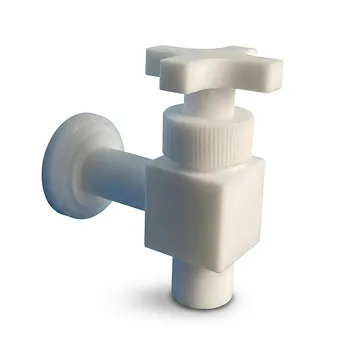
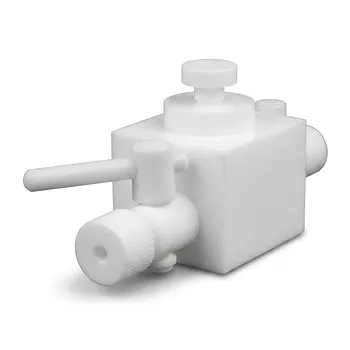
- Fluid Transfer & Sample Prep: Tubing, fittings, valves, filters, pipettes, and high-purity trace analysis instruments.
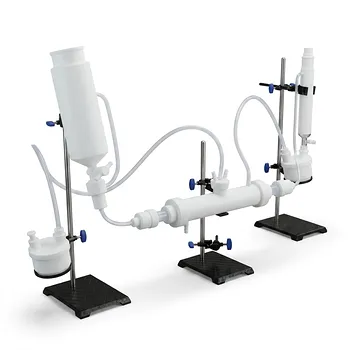
- Advanced Reaction Apparatus: Custom electrochemical cells, battery testing fixtures, microwave digestion vessels, and microchannel reactors.
- Bespoke Engineering: Complex non-standard machined parts crafted via end-to-end custom CNC fabrication.
From high-volume consumables like O-rings and gaskets to sophisticated bespoke laboratory setups, we maintain an exclusive focus on high-performance PTFE and PFA materials. Let our technical experts help you select the perfect material grade for your application.
Contact KINTEK today to discuss your custom project or bulk requirements!
Related Products
- Customizable High Temperature Resistant Anti Static PTFE Insulating Gaskets Flame Retardant Corrosion Proof Industrial Seals
- Custom PTFE Insulating Gaskets Corrosion Resistant Teflon Seals Tailored Engineering Plastic Components
- Custom PTFE Insulating Gaskets and Corrosion Resistant Fluoropolymer Seals for Industrial Electrical Applications
- Custom PTFE Acid Resistant Support Rack Multi Hole PFA Hydrogen Absorption System Bracket
- High Corrosion Resistant PTFE Faucet Polytetrafluoroethylene Valve for Chemical Storage Drums and Fluid Transfer Systems Customizable Industrial Grade
People Also Ask
- Why is PTFE an ideal material choice for sealing gaskets, valves, and fluid transfer tubing exposed to extremely aggressive chemicals? Discover Its Superior Chemical Resistance and Reliability
- How is PTFE utilized in seals and gaskets? Leverage Its Chemical & Temperature Resistance
- What are the key properties of PTFE that make it suitable for seals and gaskets? Unlock Superior Sealing Performance
- What are the different types of PTFE gaskets available? Choose the Right Seal for Your Application
- How does the sealing performance of PTFE gaskets benefit industrial applications? Ensure Leak-Free Reliability in Harsh Environments