Knowledge PTFE gaskets How does an acid primer containing a PTFE dispersion work? Bonding fluoropolymers to metal substrates effectively
Author avatar

Tech Team · Kintek

Updated 1 month ago

How does an acid primer containing a PTFE dispersion work? Bonding fluoropolymers to metal substrates effectively


An acid primer containing PTFE dispersion works by creating an inorganic-to-fluoropolymer bonding bridge. Chromic acid and phosphoric acid react during processing to form a hard inorganic glass-like matrix that adheres to the metal substrate. The PTFE dispersion becomes integrated with this matrix, allowing the finished fluoropolymer coating to remain attached despite heat, chemicals, and mechanical handling.

The primer is significant because PTFE itself is chemically inert and difficult to bond directly to metals. The acid-derived inorganic matrix provides the substrate adhesion that the fluoropolymer layer lacks, while also retaining compatibility with the PTFE coating.

Why Direct PTFE Adhesion Is Difficult

PTFE is highly chemically resistant

PTFE has very low chemical reactivity and a low surface energy. Those properties make it valuable for corrosion-resistant and nonstick coatings, but they also make direct adhesion to metals challenging.

Without an effective primer, the coating may have little opportunity to form a durable interface with the substrate.

The coating must survive more than initial application

A fluoropolymer finish may experience elevated temperatures, aggressive chemicals, pressure cycling, or repeated cleaning. Adhesion that appears adequate immediately after application can fail later if the interface cannot tolerate these stresses.

The primer therefore performs an essential structural function rather than merely improving wetting during application.

How the Acid Primer Creates the Bonding Bridge

The formulation combines inorganic acids with PTFE

The primer uses a two-package formulation containing chromic acid, phosphoric acid, and a PTFE dispersion. Keeping components separate until processing helps control the formulation before application and curing.

The PTFE is dispersed within the primer rather than used as the sole bonding agent.

Acid processing forms a hard inorganic matrix

During processing, the chromic and phosphoric acid components react to form a hard, glass-like inorganic structure. This matrix becomes the mechanically robust portion of the primer layer.

It provides a continuous phase capable of adhering to the underlying metal surface.

The matrix connects the metal and fluoropolymer

The inorganic matrix forms an adhesive bridge between two otherwise difficult-to-join materials: the metal substrate and the fluoropolymer dispersion. It anchors to the substrate while incorporating or supporting the PTFE phase that connects with the subsequent fluoropolymer coating.

This is best understood as an interfacial architecture, not as ordinary chemical bonding between bare PTFE and metal.

Processing converts the wet primer into a functional interface

Application deposits the acid and polymer components across the substrate. Subsequent processing develops the inorganic matrix and consolidates the primer into a thin, adherent layer that supports the fluoropolymer finish.

The final result is a graded interface: metal at one side, inorganic primer in the middle, and PTFE-rich fluoropolymer coating above it.

Why This Binder Mechanism Matters

It compensates for PTFE’s intrinsic bonding limitations

The primer supplies the adhesion mechanism that PTFE cannot easily provide on its own. This allows the system to retain PTFE’s chemical resistance without sacrificing attachment to the substrate.

The value lies in combining low reactivity in the finished coating with strong adhesion at the interface.

It improves durability under thermal stress

Metal substrates and fluoropolymer coatings can expand and contract differently as temperature changes. A firmly attached inorganic primer helps maintain contact between the materials during these thermal cycles.

A weak interface could allow blistering, peeling, or delamination even when the fluoropolymer itself remains chemically intact.

It supports chemically demanding applications

The hard inorganic matrix helps protect the bond line when the coated component encounters aggressive fluids or cleaning conditions. This is particularly important for laboratory supplies and fluid-transfer components, where coating failure can affect both service life and contamination control.

It enables high-purity fluoropolymer finishes

For applications requiring high-purity PTFE surfaces, the primer is valuable because it keeps the fluoropolymer securely attached without relying on a conventional organic adhesive layer that may be less suitable for the operating environment.

The primer is therefore part of the coating system’s performance and reliability, not merely a preparatory step.

Understanding the Trade-offs

The mechanism depends on controlled processing

The inorganic matrix develops during processing, so application and curing conditions are important. Inadequate preparation or processing can prevent the primer from forming the intended continuous, adherent structure.

The formulation should therefore be treated as a complete process rather than as a simple paint-like coating.

The primer is not a substitute for substrate preparation

A strong binder cannot reliably overcome oil, oxide scale, particulate contamination, or an unsuitable surface condition. The metal must be prepared so the inorganic phase can establish effective contact with the substrate.

Poor surface preparation can make the primer appear ineffective even when its chemistry is appropriate.

The inorganic phase may be rigid

A glass-like inorganic matrix provides hardness and adhesion, but it is generally less flexible than a soft organic binder. The coating design must account for substrate movement, impact, bending, and thermal expansion.

The primer is most effective when its thickness, processing, and overlying fluoropolymer layer are matched to the service conditions.

Acid components require responsible handling

Chromic and phosphoric acids introduce processing, worker-safety, and environmental considerations. The system must be managed with suitable controls, equipment, and waste procedures.

These concerns do not invalidate the mechanism, but they are part of evaluating the technology for production use.

How to Apply the Principle to a Coating System

The primer should be viewed as an interfacial layer

Its primary role is to connect the substrate and fluoropolymer coating. It should not be evaluated only by the appearance of the wet film or by the properties of PTFE in isolation.

The relevant question is whether the complete metal–primer–fluoropolymer structure remains intact under service conditions.

Performance should be judged after environmental exposure

Adhesion testing should consider the expected combination of heat, chemicals, fluid contact, and handling. Initial adhesion is useful, but long-term retention is the more meaningful measure for protective components.

This approach tests the actual reason for using the primer: durable attachment under stress.

Making the Right Choice for Your Goal

  • If your primary focus is adhesion: Use the acid primer as the inorganic bridge that gives the PTFE-containing coating a reliable connection to the metal substrate.
  • If your primary focus is thermal durability: Validate the complete primer and fluoropolymer system under the temperature cycles expected in service.
  • If your primary focus is chemical resistance: Confirm that the cured interface remains intact when exposed to the actual process fluids and cleaning conditions.
  • If your primary focus is high-purity components: Treat secure coating adhesion as part of contamination control and component reliability, not only as a cosmetic requirement.
  • If your primary focus is manufacturing consistency: Control substrate preparation, two-package handling, application, and processing because each affects development of the inorganic binder matrix.

A PTFE-dispersion acid primer is significant because it solves the central adhesion problem of fluoropolymers by inserting a durable inorganic bridge between an inert coating and the metal beneath it.

Summary Table:

Aspect Description
Bonding Mechanism Inorganic acid matrix adheres to metal, integrates PTFE, bonding to fluoropolymer.
Challenge PTFE is inert, low surface energy, resists direct adhesion.
Primer Components Chromic acid, phosphoric acid, PTFE dispersion.
Functionality Forms glass-like matrix, creates interfacial bridge, ensures thermal/chemical durability.
Importance Critical for corrosion resistance, high-purity applications, and long-term performance.

Secure durable fluoropolymer coatings for your lab equipment. At KINTEK, we specialize in high-performance PTFE and PFA solutions, offering custom machining and comprehensive labware. Our acid primers ensure reliable bonding for demanding applications. Contact us today to discuss your needs and enhance your lab's efficiency.

Related Products

People Also Ask

Related Products

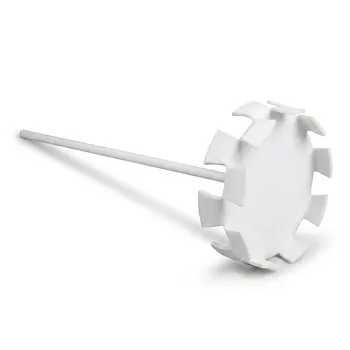
PTFE Dispersion Disk Food Cosmetic Grade Non Stick Corrosion Resistant Large Stirring Paddle Customizable Impeller

PTFE Dispersion Disk Food Cosmetic Grade Non Stick Corrosion Resistant Large Stirring Paddle Customizable Impeller

High-performance PTFE dispersion disk designed for food and cosmetic processing. This non-stick, corrosion-resistant stirring paddle ensures zero leaching and superior chemical inertness. Custom-engineered dimensions available to meet specific industrial mixing requirements and high-purity laboratory standards today for B2B professionals.

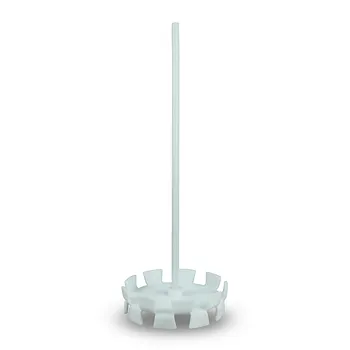
Corrosion Resistant PTFE Dispersing Disc and High Temperature Propeller Stirring Paddle for Laboratory Chemical Mixing

Corrosion Resistant PTFE Dispersing Disc and High Temperature Propeller Stirring Paddle for Laboratory Chemical Mixing

Optimize laboratory mixing with corrosion-resistant PTFE dispersing discs and propeller stirrers. Engineered for high-temperature stability and ultra-pure trace analysis, these custom-fabricated stirring paddles ensure maximum chemical compatibility and long-term durability in demanding industrial and research environments.

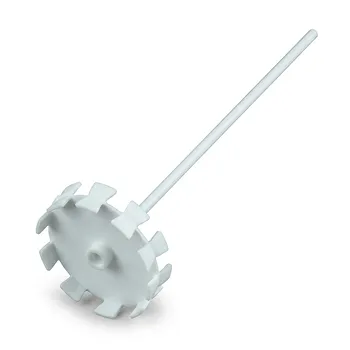
Corrosion Resistant PTFE Stirring Paddle and Customizable Toothed Dispersion Disk for Chemical Pharmaceutical Mixing

Corrosion Resistant PTFE Stirring Paddle and Customizable Toothed Dispersion Disk for Chemical Pharmaceutical Mixing

High-performance corrosion resistant PTFE stirring paddle and toothed dispersion disk engineered for demanding chemical pharmaceutical mixing. Fully customizable diameters and configurations ensure optimal fluid dynamics, superior chemical inertness, and long-term durability in aggressive industrial processing environments.

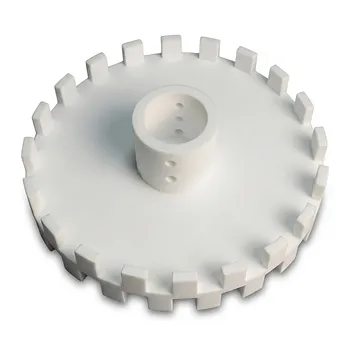
Corrosion Resistant PTFE Stirring Disk Chemical Dispersion Plate 350mm Diameter Fluoropolymer Mixer Accessory

Corrosion Resistant PTFE Stirring Disk Chemical Dispersion Plate 350mm Diameter Fluoropolymer Mixer Accessory

Optimize chemical processing with our corrosion resistant PTFE stirring disks. These 350mm dispersion plates offer extreme chemical inertness, high temperature stability, and customizable CNC fabrication for demanding industrial laboratory environments and complex chemical mixing applications.

High Purity Corrosion Resistant PTFE Acid Reflux Cleaning System for Laboratory Trace Analysis

High Purity Corrosion Resistant PTFE Acid Reflux Cleaning System for Laboratory Trace Analysis

Optimize your laboratory efficiency with this high-purity PTFE acid reflux cleaning system. Precision engineered for superior airtightness and absolute chemical inertness, our customizable unit ensures contaminant-free cleaning for trace analysis across all demanding industrial and research environments. Expertly manufactured solution.

Custom PTFE Filtration System Acid Resistant High Purity Semiconductor Grade Chemical Processing Filter

Custom PTFE Filtration System Acid Resistant High Purity Semiconductor Grade Chemical Processing Filter

Optimized for semiconductor and chemical processing, this customizable PTFE filtration system offers unparalleled acid resistance and high-purity performance. Engineered for demanding industrial environments, our bespoke solutions ensure zero contamination and exceptional long-term durability in highly corrosive media.

High Purity PTFE Ultrapure Liquid Sampler for Acid Extraction and Reactor Sampling Customizable Dimensions

High Purity PTFE Ultrapure Liquid Sampler for Acid Extraction and Reactor Sampling Customizable Dimensions

Secure high-purity acid samples with our corrosion-resistant PTFE liquid samplers. Engineered for large 200L reactors, these customizable tools ensure zero contamination and absolute chemical inertness in critical industrial and laboratory trace analysis workflows throughout your entire facility and complex systems.

High Purity PTFE Acid Steam Cleaning System Trace Analysis Labware Decontamination Unit with Leak Proof Closed Reflux Technology and Customizable Multi Position Capacity

High Purity PTFE Acid Steam Cleaning System Trace Analysis Labware Decontamination Unit with Leak Proof Closed Reflux Technology and Customizable Multi Position Capacity

Optimize trace analysis workflows with this high-purity PTFE acid steam cleaning system. Featuring a leak-proof closed-loop design for significant acid savings and superior decontamination, this customizable unit ensures ultra-low background levels for sensitive ICP-MS and ICP-OES laboratory applications.

PTFE Acid Steam Cleaning System HF Resistant Trace Analysis Beaker Digestion Tank Customizable

PTFE Acid Steam Cleaning System HF Resistant Trace Analysis Beaker Digestion Tank Customizable

Precision-engineered PTFE acid steam cleaning systems provide contaminant-free trace analysis environments. These high-purity PFA systems resist hydrofluoric acid, ensuring non-polluting results for digestion tanks and laboratory beakers through automated, customizable vapor cleaning protocols for demanding scientific laboratory research.

PTFE Hydrofluoric Acid Dilutor and Corrosion Resistant Reaction Vessel with Flange Sealing White PTFE Raw Material Storage Barrel

PTFE Hydrofluoric Acid Dilutor and Corrosion Resistant Reaction Vessel with Flange Sealing White PTFE Raw Material Storage Barrel

This high-performance PTFE hydrofluoric acid dilutor and corrosion-resistant reaction vessel features secure flange sealing for critical industrial chemical processing. Fully customizable configurations ensure maximum safety and durability in demanding high-purity material storage applications.

High Purity PTFE Microwave Digestion Vessel for Soil and Food Analysis Acid Resistant Fluoropolymer Sample Preparation Liners

High Purity PTFE Microwave Digestion Vessel for Soil and Food Analysis Acid Resistant Fluoropolymer Sample Preparation Liners

Engineered for high-pressure microwave digestion these ultra-pure PTFE liners provide exceptional resistance to concentrated acids during soil and food sample preparation ensuring zero contamination and uniform heating for precise heavy metal trace analysis in laboratory environments.

High Purity Virgin PTFE Square Tank Corrosion Resistant Acid Soaking Bath Custom Fluoropolymer Cleaning Vessel

High Purity Virgin PTFE Square Tank Corrosion Resistant Acid Soaking Bath Custom Fluoropolymer Cleaning Vessel

Procure high-purity virgin PTFE square tanks and acid soaking baths designed for extreme chemical resistance. Our custom-fabricated fluoropolymer vessels ensure zero contamination and superior thermal stability for demanding semiconductor and trace analysis laboratory applications. Request a bespoke quote.

Virgin PTFE Precision Syringe for Chemical Dispensing and Syringe Pump Integration with FEP Tubing Compatibility

Virgin PTFE Precision Syringe for Chemical Dispensing and Syringe Pump Integration with FEP Tubing Compatibility

Discover this premium 30ml virgin PTFE syringe designed for extreme chemical resistance and high-purity fluid handling. Perfect for syringe pump integration and compatible with FEP extension tubing, it ensures reliable performance in demanding laboratory and industrial applications for precision dispensing.

Corrosion Resistant PTFE Polytetrafluoroethylene Valve and Customizable Laboratory Fluid Dispensing Faucet for Aggressive Chemical Handling in Industrial Storage Tanks and Plastic Drums

Corrosion Resistant PTFE Polytetrafluoroethylene Valve and Customizable Laboratory Fluid Dispensing Faucet for Aggressive Chemical Handling in Industrial Storage Tanks and Plastic Drums

Secure your fluid transfer systems with our customizable high-purity PTFE valves and faucets. Engineered for ultimate corrosion resistance against strong acids and bases, these precision-machined components ensure leak-free performance and long-term durability in demanding industrial and laboratory environments.

High Purity Virgin PTFE Square Tank Corrosion Resistant Acid Soaking Vessel Custom Fluoropolymer Industrial Cleaning Tank

High Purity Virgin PTFE Square Tank Corrosion Resistant Acid Soaking Vessel Custom Fluoropolymer Industrial Cleaning Tank

Expertly engineered virgin PTFE square tanks designed for ultra-pure acid soaking and corrosive chemical handling. These custom-fabricated fluoropolymer vessels ensure zero contamination and extreme chemical resistance for semiconductor, laboratory, and high-precision industrial cleaning applications worldwide.

Custom PTFE Square Tank Semiconductor Soaking Cleaning Acid Resistant Fluoropolymer Filtration Vessel

Custom PTFE Square Tank Semiconductor Soaking Cleaning Acid Resistant Fluoropolymer Filtration Vessel

Maximize efficiency in semiconductor fabrication with our custom PTFE square tanks, engineered for superior acid resistance and trace analysis purity. These high-performance fluoropolymer vessels ensure contaminant-free soaking and reliable chemical handling for demanding laboratory and industrial processes today.

Custom PTFE Constant Pressure Separatory Funnel Corrosion Resistant Low Background Labware for PFA Flasks

Custom PTFE Constant Pressure Separatory Funnel Corrosion Resistant Low Background Labware for PFA Flasks

Engineered for high-purity trace analysis, this custom PTFE constant pressure separatory funnel offers unmatched chemical resistance and low-background performance. The unit ensures precise fluid transfer and fits PFA flasks, delivering zero-contamination results for demanding industrial, chemical, and laboratory applications.

Corrosion Resistant Heating Plate with Modified PTFE Coating 400x300mm Acid Resistant Laboratory Hot Plate Customizable Heating Solution

Corrosion Resistant Heating Plate with Modified PTFE Coating 400x300mm Acid Resistant Laboratory Hot Plate Customizable Heating Solution

Optimize your laboratory's thermal processing with our high-performance 400x300mm anti-corrosion heating plate featuring modified PTFE coating. Engineered for extreme chemical resistance and uniform temperature distribution, this customizable unit ensures reliable, long-term performance in harsh environments.

Custom PTFE Digestion Tubes and Corrosion Resistant Centrifuge Tube Racks for Low Background Trace Analysis

Custom PTFE Digestion Tubes and Corrosion Resistant Centrifuge Tube Racks for Low Background Trace Analysis

High-purity custom PTFE digestion tubes and corrosion-resistant centrifuge racks optimized for trace analysis. These low-background laboratory solutions offer exceptional chemical stability and bespoke configurations tailored to demanding industrial sample preparation workflows and acidic environments.

Custom PTFE Acid Resistant Support Rack for PFA Hydrogen Absorption Systems Multi Hole Configurations

Custom PTFE Acid Resistant Support Rack for PFA Hydrogen Absorption Systems Multi Hole Configurations

Optimize laboratory safety and precision with our custom PTFE support racks. Specifically engineered for PFA hydrogen absorption units, these acid-resistant frames provide superior stability and chemical inertness for demanding industrial chemical processing and trace analysis workflows in modern facilities worldwide.


Leave Your Message