Knowledge PTFE(Teflon) Parts Why is pH control critical in aqueous fluoropolymer dispersions? Maintain stability with persistent pH control
Author avatar

Tech Team · Kintek

Updated 3 months ago

Why is pH control critical in aqueous fluoropolymer dispersions? Maintain stability with persistent pH control


pH control is critical because it protects both the microbiological integrity and physical stability of aqueous fluoropolymer dispersions. A basic pH—often around 10 for as-supplied PTFE dispersions—helps resist bacterial attack on organic formulation components and helps keep fluoropolymer particles suspended. Ammonium hydroxide establishes this alkalinity effectively, but its volatility allows ammonia to escape over time, causing pH drift and loss of protection.

The key issue is not simply reaching a basic pH; it is maintaining the correct pH throughout storage and processing. Volatile ammonium hydroxide can provide short-term adjustment but may not provide reliable long-term control, particularly in warm conditions or permeable packaging.

Why pH control matters

It limits biological degradation

Aqueous fluoropolymer dispersions often contain organic components, such as nonionic surfactants, that can support microbial growth. Maintaining a basic pH reduces the risk of bacterial attack during storage.

If the pH falls toward neutral, microbial activity can increase. The resulting degradation may cause souring, rancid odor, dark discoloration, and loss of product integrity.

It preserves particle suspension

pH also affects the physical stability of the fluoropolymer dispersion. If the formulation becomes too acidic, fluoropolymer particles can aggregate or flocculate.

Aggregation changes flow behavior and can produce non-uniform coatings, inconsistent wall thickness, surface defects, or other processing problems.

It supports consistent processing

A stable dispersion must remain uniform from storage through application. Changes in pH can alter particle interactions and the behavior of surfactants, making the formulation more sensitive to mixing, handling, and processing conditions.

For that reason, pH should be treated as a continuing quality attribute rather than a one-time adjustment made during manufacture.

Why ammonium hydroxide is useful

It establishes alkalinity efficiently

Ammonium hydroxide is an effective alkaline agent for bringing a fluoropolymer dispersion to the required basic range. It is therefore useful for initial neutralization and for correcting pH during quality-control or storage checks.

As-supplied aqueous PTFE dispersions are commonly alkaline, with a pH around 10, although the exact target depends on the formulation and application.

It is easy to apply in controlled corrections

A diluted ammonium hydroxide solution can be used to restore pH when testing shows that a stored dispersion has drifted downward. Such corrections must be made carefully to avoid local concentration gradients and formulation instability.

The adjustment should be accompanied by appropriate mixing and verification rather than relying only on the calculated addition amount.

The limitations of volatile bases

Ammonia can escape from the formulation

The small molecular size of ammonia makes it highly volatile. Over time, ammonia can diffuse out of the liquid and may also permeate through some plastic packaging.

As ammonia is lost, the formulation’s pH gradually decreases. This can occur even when the initial pH was correctly established.

pH drift reduces biological resistance

The loss of ammonium hydroxide can move the dispersion toward neutral conditions. That reduces the alkaline protection against microbial attack and increases the risk of spoilage during prolonged storage.

The risk is especially important under warm and humid ambient conditions, where biological activity and storage-related degradation can become more consequential.

Initial pH does not guarantee shelf-life stability

A formulation may pass its initial pH specification and still lose alkalinity during storage. Measuring pH only at manufacture can therefore miss the central failure mechanism: gradual loss of the volatile base.

Long-term storage programs should include periodic pH monitoring and, where appropriate, controlled pH restoration.

Packaging becomes part of pH control

Because ammonia can diffuse through packaging materials, container selection and closure performance influence pH retention. A formulation that is stable in one container may show greater pH drift in another.

This is why storage validation should evaluate the actual packaging system, not just the liquid formulation.

Why non-volatile alternatives may be preferred

They provide more persistent alkalinity

Non-volatile amines can help maintain basicity after the initial adjustment and reduce the rate of pH drift caused by ammonia loss. This makes them potentially more suitable for high-purity applications or extended storage.

Their role is not necessarily to replace ammonium hydroxide in every formulation, but to provide a more durable pH-control strategy where long-term stability is important.

They require formulation-specific evaluation

A non-volatile amine must be screened for compatibility with the fluoropolymer, surfactants, packaging, processing conditions, and purity requirements. A lower volatility does not automatically make an additive suitable.

The selected system must maintain the required pH without harming dispersion quality or introducing unacceptable residues.

Understanding the trade-offs

Higher alkalinity is not an unlimited solution

The objective is a controlled pH range, not the highest possible pH. Excessive or poorly controlled alkalinity can affect formulation compatibility and processing behavior, so pH targets should be established for the specific dispersion.

The supplementary claim that strongly basic conditions inherently encourage bacterial growth should not be treated as a general rule. The better-supported concern is that loss of alkalinity toward neutral conditions increases biological risk.

pH correction can create local instability

Adding base too quickly or without adequate mixing can create localized high-pH regions. These gradients may disturb surfactant behavior, promote non-uniformity, or contribute to foam and other processing problems.

Controlled addition rate, suitable mixing, and post-addition pH verification are essential.

Stability depends on more than pH

pH control cannot compensate for poor formulation practice. Ingredient addition order, powder addition rate, and mixing shear also affect wetting, particle distribution, foaming, and gel formation.

Powders should be introduced gradually, while excessive shear should be avoided because it can generate foam or trigger gel formation.

How to apply this to your formulation

The practical approach is to control pH, monitor its drift, and validate the complete formulation and packaging system.

  • If your primary focus is microbial resistance: Maintain the formulation within its validated basic pH range and monitor it during storage, especially under warm or humid conditions.
  • If your primary focus is long-term storage: Do not rely solely on ammonium hydroxide; evaluate a compatible non-volatile amine or other persistent pH-control strategy.
  • If your primary focus is dispersion quality: Prevent acidic drift and use controlled addition and mixing to avoid aggregation, flocculation, foam, and non-uniform particle distribution.
  • If your primary focus is high purity: Select pH-control agents based on volatility, residue, compatibility, and purity requirements rather than alkalinity alone.

Reliable fluoropolymer dispersion performance comes from maintaining the right pH over time—not merely achieving it at the start.

Summary Table:

Aspect Importance Limitation
Biological stability Basic pH prevents microbial growth and spoilage. Ammonia loss lowers pH, reducing protection.
Physical stability Proper pH keeps particles suspended, avoiding aggregation. Acidic drift can cause flocculation and defects.
pH control agent Ammonium hydroxide is effective for initial adjustments. Volatility leads to pH drift over time.
Long-term storage Persistent alkalinity is needed for prolonged shelf life. Volatile bases may not maintain pH in permeable packaging.
Processing consistency Stable pH ensures uniform coatings and handling. pH fluctuations can alter particle interactions and flow.

Ensure the long-term stability of your PTFE and PFA formulations with KINTEK's high-performance lab supplies and expert support. From precise pH monitoring equipment to contamination-free storage solutions, our fluoropolymer products are designed to meet your rigorous standards. Contact us today to optimize your dispersion processes and maintain product integrity — our team is ready to assist you with tailored solutions. Get in touch with our specialists.

Related Products

People Also Ask

Related Products

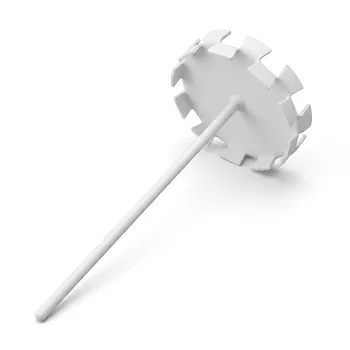
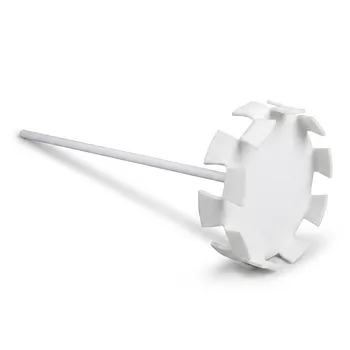
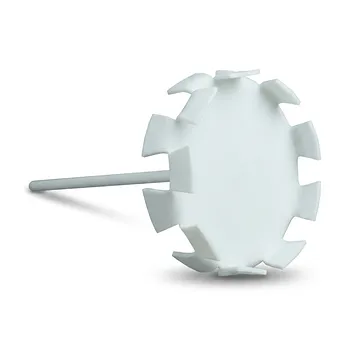
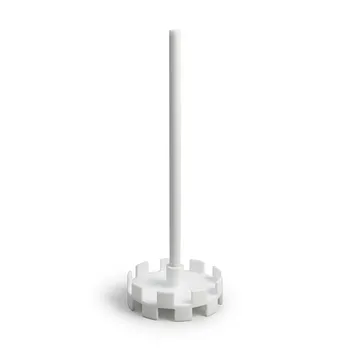
High Purity Corrosion Resistant PTFE Dispersion Disk and Inert Stirring Paddle for Food Pharmaceutical and Cosmetic Mixing

High Purity Corrosion Resistant PTFE Dispersion Disk and Inert Stirring Paddle for Food Pharmaceutical and Cosmetic Mixing

Secure superior chemical purity with our custom PTFE dispersion disks and stirring paddles. Engineered for food, pharma, and cosmetic applications, these inert mixing tools ensure zero contamination, exceptional corrosion resistance, and long-term durability in high-performance laboratory and industrial environments.

PTFE Dispersion Disk Food Cosmetic Grade Non Stick Corrosion Resistant Large Stirring Paddle Customizable Impeller

PTFE Dispersion Disk Food Cosmetic Grade Non Stick Corrosion Resistant Large Stirring Paddle Customizable Impeller

High-performance PTFE dispersion disk designed for food and cosmetic processing. This non-stick, corrosion-resistant stirring paddle ensures zero leaching and superior chemical inertness. Custom-engineered dimensions available to meet specific industrial mixing requirements and high-purity laboratory standards today for B2B professionals.

High Purity PTFE Dispersion Disk for Food and Cosmetic Processing Non Stick Corrosion Resistant Large Stirring Paddle Customizable Fluoropolymer Impeller

High Purity PTFE Dispersion Disk for Food and Cosmetic Processing Non Stick Corrosion Resistant Large Stirring Paddle Customizable Fluoropolymer Impeller

Professional grade PTFE dispersion disk designed for ultra-pure food and cosmetic mixing. Features high corrosion resistance, non-stick surface, and zero leaching. This customizable large stirring paddle ensures optimal emulsification and consistency for industrial laboratory and large-scale chemical processing.

Corrosion Resistant PTFE Stirring Impeller and Customizable Polytetrafluoroethylene Dispersion Disk

Corrosion Resistant PTFE Stirring Impeller and Customizable Polytetrafluoroethylene Dispersion Disk

Our high-purity PTFE stirring impellers and dispersion disks offer absolute corrosion resistance and bespoke dimensions to replace stainless steel in demanding industrial laboratory applications, reactive fluid environments, and high-purity pharmaceutical or chemical manufacturing processes.

Custom PTFE Dispersing Disc and Stirring Rod for Chemical Processing and Laboratory Mixing

Custom PTFE Dispersing Disc and Stirring Rod for Chemical Processing and Laboratory Mixing

Engineered for aggressive chemical environments, this custom PTFE dispersing disc and stirring rod offer superior corrosion resistance and a low-background profile. Ideal for high-purity laboratory mixing, pharmaceutical processing, and industrial dispersion applications requiring virgin fluoropolymer materials.

Corrosion Resistant PTFE Stirring Paddle and Customizable Toothed Dispersion Disk for Chemical Pharmaceutical Mixing

Corrosion Resistant PTFE Stirring Paddle and Customizable Toothed Dispersion Disk for Chemical Pharmaceutical Mixing

High-performance corrosion resistant PTFE stirring paddle and toothed dispersion disk engineered for demanding chemical pharmaceutical mixing. Fully customizable diameters and configurations ensure optimal fluid dynamics, superior chemical inertness, and long-term durability in aggressive industrial processing environments.

Corrosion Resistant PTFE Dispersing Disc and High Temperature Propeller Stirring Paddle for Laboratory Chemical Mixing

Corrosion Resistant PTFE Dispersing Disc and High Temperature Propeller Stirring Paddle for Laboratory Chemical Mixing

Optimize laboratory mixing with corrosion-resistant PTFE dispersing discs and propeller stirrers. Engineered for high-temperature stability and ultra-pure trace analysis, these custom-fabricated stirring paddles ensure maximum chemical compatibility and long-term durability in demanding industrial and research environments.

Corrosion Resistant PTFE Stirring Disk Chemical Dispersion Plate 350mm Diameter Fluoropolymer Mixer Accessory

Corrosion Resistant PTFE Stirring Disk Chemical Dispersion Plate 350mm Diameter Fluoropolymer Mixer Accessory

Optimize chemical processing with our corrosion resistant PTFE stirring disks. These 350mm dispersion plates offer extreme chemical inertness, high temperature stability, and customizable CNC fabrication for demanding industrial laboratory environments and complex chemical mixing applications.

Virgin PTFE Precision Syringe for Chemical Dispensing and Syringe Pump Integration with FEP Tubing Compatibility

Virgin PTFE Precision Syringe for Chemical Dispensing and Syringe Pump Integration with FEP Tubing Compatibility

Discover this premium 30ml virgin PTFE syringe designed for extreme chemical resistance and high-purity fluid handling. Perfect for syringe pump integration and compatible with FEP extension tubing, it ensures reliable performance in demanding laboratory and industrial applications for precision dispensing.

Custom PTFE Constant Pressure Separatory Dropping Funnel Corrosion Resistant Low Background Labware Trace Analysis Dropping Funnel

Custom PTFE Constant Pressure Separatory Dropping Funnel Corrosion Resistant Low Background Labware Trace Analysis Dropping Funnel

High-purity PTFE constant pressure separatory dropping funnels for precision fluid control in trace analysis. These corrosion-resistant units feature ultra-low background levels and integrated pressure equalization, ensuring reliable addition of aggressive reagents in demanding industrial laboratory environments.

Custom PTFE Constant Pressure Separatory Funnel Corrosion Resistant Low Background Labware for PFA Flasks

Custom PTFE Constant Pressure Separatory Funnel Corrosion Resistant Low Background Labware for PFA Flasks

Engineered for high-purity trace analysis, this custom PTFE constant pressure separatory funnel offers unmatched chemical resistance and low-background performance. The unit ensures precise fluid transfer and fits PFA flasks, delivering zero-contamination results for demanding industrial, chemical, and laboratory applications.

PTFE Corrosion Resistant Filter with PFA Valve Connections and Integrated Sieve Plate

PTFE Corrosion Resistant Filter with PFA Valve Connections and Integrated Sieve Plate

High-performance PTFE filtration system featuring PFA valve connections and customizable sieve plates for extreme chemical resistance. Ideal for pharmaceutical and semiconductor processes requiring absolute purity, durability, and bespoke engineering solutions for aggressive fluid handling.

Custom Polytetrafluoroethylene PTFE Constant Pressure Dropping Funnel Corrosion Resistant Fluid Control Assembly with Conversion Stopper Compatibility

Custom Polytetrafluoroethylene PTFE Constant Pressure Dropping Funnel Corrosion Resistant Fluid Control Assembly with Conversion Stopper Compatibility

High-performance PTFE constant pressure dropping funnel designed for corrosive chemical transfer. Featuring superior chemical resistance, 0.1MPa pressure stability, and full customization options, this assembly ensures precise fluid control in demanding industrial laboratory and pilot plant environments.

Custom PTFE Filtration System Acid Resistant High Purity Semiconductor Grade Chemical Processing Filter

Custom PTFE Filtration System Acid Resistant High Purity Semiconductor Grade Chemical Processing Filter

Optimized for semiconductor and chemical processing, this customizable PTFE filtration system offers unparalleled acid resistance and high-purity performance. Engineered for demanding industrial environments, our bespoke solutions ensure zero contamination and exceptional long-term durability in highly corrosive media.

PTFE PFA Vacuum Filtration System Corrosion Resistant Customizable Shatterproof Laboratory Device

PTFE PFA Vacuum Filtration System Corrosion Resistant Customizable Shatterproof Laboratory Device

High-performance PTFE and PFA vacuum filtration systems designed for extreme chemical resistance. This customizable, shatterproof unit ensures trace-level purity and exceptional thermal stability for demanding laboratory processes and hazardous fluid transfers in industrial and research applications.

High Temperature PTFE Reaction Sieve with Customizable Layers and Precision Pore Sizes for Threaded Sample Separation Devices

High Temperature PTFE Reaction Sieve with Customizable Layers and Precision Pore Sizes for Threaded Sample Separation Devices

Engineered for extreme chemical environments, this customizable PTFE reaction sieve features adjustable layers and pore counts. Designed with secure threaded connections, it ensures reliable sample separation and high-temperature performance for demanding laboratory and industrial chemical reaction processes.

High Purity PTFE PM2.5 Filter Sample Splitter for Environmental Monitoring Customizable Square Filter Divider for CDC Analysis

High Purity PTFE PM2.5 Filter Sample Splitter for Environmental Monitoring Customizable Square Filter Divider for CDC Analysis

Ensure sample integrity with our customizable PTFE PM2.5 filter splitters. Designed specifically for environmental monitoring and CDC laboratories, these high-purity dividers provide precise, contamination-free 2, 4, or 8-way partitioning for critical trace analysis and heavy metal detection processes.

Custom Machined PTFE Conical Sample Cell Corrosion Resistant Triangular Fluoropolymer Container for Trace Analysis

Custom Machined PTFE Conical Sample Cell Corrosion Resistant Triangular Fluoropolymer Container for Trace Analysis

Discover high-purity custom PTFE conical sample cells and triangular containers. Engineered for trace analysis, these corrosion-resistant fluoropolymer components feature low background interference and precision CNC fabrication to meet your specific laboratory requirements and demanding industrial chemical processing needs.

High Purity PTFE Filter with PFA Valve Connections and Integrated Sieve Plate for Corrosive Fluid Processing

High Purity PTFE Filter with PFA Valve Connections and Integrated Sieve Plate for Corrosive Fluid Processing

Optimize laboratory workflows with our high-purity PTFE filtration equipment featuring PFA valve connections and customizable sieve plates. Engineered for absolute chemical resistance and zero-contaminant trace analysis in demanding industrial and research environments. High performance guaranteed for every critical application process.

Custom Virgin Polytetrafluoroethylene Sieve Mesh Solid Waste Analysis Round Square Customizable PTFE Screens

Custom Virgin Polytetrafluoroethylene Sieve Mesh Solid Waste Analysis Round Square Customizable PTFE Screens

Optimize your laboratory filtration with custom virgin PTFE sieve mesh designed for solid waste analysis. Available in 100 mesh or bespoke specifications, these chemically resistant round and square screens deliver unmatched durability and precision for critical industrial testing applications today.


Leave Your Message