ASTM D4441 evaluates aqueous PTFE dispersions through a defined set of physical, chemical, and thermal properties. The key measurements are solids content, surfactant content, dispersion and raw particle size, pH, coagulated polymer content, Standard Specific Gravity (SSG), and melting characteristics measured by DSC. The standard also classifies dispersions according to target solids levels, approximately 20% to 63%, and surfactant levels, approximately 0.5% to 10%.
ASTM D4441 is fundamentally a consistency and processability standard: it confirms how much PTFE and surfactant a dispersion contains, how stable and uniform its particles are, and whether the isolated polymer has the expected density and melting behavior.
What ASTM D4441 Measures
Solids Content
Solids content is the weight percentage of PTFE polymer present in the aqueous dispersion. It indicates the concentration of usable resin and directly affects coating build, dilution requirements, handling, and material yield.
Because solids content influences deposited film thickness, controlling it is important for achieving repeatable fluoropolymer coatings and surface treatments.
Surfactant Content
Surfactant content measures the total stabilizing surfactant associated with the dispersion. This includes intentionally added surfactant and residual polymerization surfactant.
Surfactant helps keep PTFE particles suspended, but its concentration also affects foaming, wetting, co-coagulation behavior, drying, and downstream processing.
Dispersion Particle Size
Dispersion particle size characterizes the PTFE particles in the stabilized dispersion, typically with the applicable surfactant present. Particle size affects suspension stability, coating uniformity, film formation, and the tendency of particles to agglomerate.
A consistent particle-size distribution helps produce predictable application and processing behavior.
Raw Dispersion Particle Size
Raw dispersion particle size evaluates the particle population without added surfactant. Comparing raw and stabilized dispersion particle sizes helps distinguish the inherent PTFE particle characteristics from changes caused by surfactant stabilization.
This distinction is useful when assessing dispersion quality, particle interaction, and the potential for aggregation during handling.
pH
pH provides a basic measure of the dispersion’s chemical condition and stability. Significant variation can indicate differences in formulation, residual process chemicals, or storage and handling conditions.
pH control supports consistent behavior during blending, coating, dilution, and other aqueous processing steps.
Coagulated Polymer Content
Coagulated polymer content measures the amount of PTFE that has separated from the intended dispersion. Excess coagulated material may indicate inadequate stability, mechanical damage, contamination, or unfavorable storage and processing conditions.
Low coagulated polymer content is generally associated with better dispersion integrity and more reliable use in coating or composite processes.
Polymer Properties After Isolation
Standard Specific Gravity
Standard Specific Gravity (SSG) is determined using PTFE isolated from the dispersion and then molded and sintered under defined conditions. It provides an indirect indication of the polymer’s molecular structure and related resin characteristics.
SSG is not simply the density of the liquid dispersion. It is a property of the processed, isolated PTFE resin and can help distinguish material differences that are not apparent from solids content alone.
Melting Characteristics
ASTM D4441 characterizes PTFE melting behavior using Differential Scanning Calorimetry (DSC). The relevant results include the melting peak temperature and heat of fusion of the isolated PTFE resin.
These thermal measurements help evaluate resin identity, crystallinity-related behavior, and consistency between production lots. The melting data are commonly associated with ASTM D4591 test methodology.
How the Classification Works
Solids-Based Classification
ASTM D4441 groups aqueous PTFE dispersions according to specified target ranges of PTFE solids content. The covered range extends approximately from 20 wt.% to 63 wt.%, allowing the standard to address relatively dilute and highly concentrated dispersions.
The solids category helps users select and compare dispersions according to application requirements such as coating concentration, transport efficiency, and processing method.
Surfactant-Based Classification
The classification also considers surfactant level, with target levels approximately ranging from 0.5 wt.% to 10 wt.%. This identifies how strongly the dispersion is stabilized and provides context for wetting, foaming, co-coagulation, and film-forming behavior.
The exact type designation should be taken from the current ASTM table and the supplier’s certificate of analysis rather than inferred from a single property.
Why These Measurements Matter
Coating Uniformity
Solids content, particle size, surfactant content, and pH collectively influence how a dispersion spreads, dries, and forms a PTFE layer. Variations can lead to inconsistent thickness, poor coverage, or defects.
For high-purity laboratory components, consistent coating formation helps maintain chemical resistance and reduce locations where contamination or corrosion could begin.
Co-Coagulation and Processing
Particle size, surfactant level, and coagulated polymer content are particularly important when PTFE is processed with other materials or converted from a dispersion into a solid resin.
These measurements help predict whether the dispersion will remain stable during mixing and whether the PTFE will separate or agglomerate prematurely.
Performance Consistency
SSG and DSC results provide information about the isolated polymer itself, complementing the measurements made on the liquid dispersion. Together, the results create a more complete profile of both formulation quality and resin behavior.
This is important when dispersions are used as precursors for fluoropolymer coatings, molded components, fluid-handling parts, or composite materials.
Understanding the Trade-offs
Higher Solids Are Not Always Better
A higher-solids dispersion can reduce water removal and improve material efficiency, but it may also require more careful control of viscosity, mixing, storage, and application conditions.
The appropriate solids level depends on the process, equipment, desired film thickness, and required surface finish.
More Surfactant Can Improve Stability
Additional surfactant can improve particle suspension and wetting, but excessive surfactant may increase foaming, complicate drying, and affect subsequent processing or purity requirements.
Surfactant content should therefore be evaluated together with particle size, pH, and the intended application.
Particle Size Does Not Predict Every Performance Attribute
Particle-size measurements are important indicators of dispersion behavior, but they do not independently establish coating durability, adhesion, chemical resistance, or final component performance.
Those properties also depend on substrate preparation, application conditions, drying, sintering, and the broader formulation.
Do Not Confuse D4441 With Micropowder Testing
ASTM D4441 addresses aqueous PTFE dispersions. Related PTFE micropowder evaluations may use other standards for properties such as laser-scattering particle size, apparent density, specific surface area, melting point, or melt flow rate.
Those tests should not be presented as core ASTM D4441 measurements unless the applicable standard specifically includes them.
How to Apply This to Your Project
The most useful approach is to evaluate the full property profile rather than relying on solids content alone.
- If your primary focus is coating uniformity: Compare solids content, particle size, surfactant content, and pH to control spreading, film build, and drying behavior.
- If your primary focus is dispersion stability: Pay particular attention to coagulated polymer content, pH, surfactant level, and the difference between raw and stabilized particle size.
- If your primary focus is resin consistency: Review SSG, DSC melting peak temperature, and heat of fusion together with the dispersion measurements.
- If your primary focus is material classification: Use the ASTM D4441 solids and surfactant categories, confirming the exact type designation against the current standard and supplier documentation.
A complete ASTM D4441 property profile gives users a defensible basis for selecting, comparing, and processing aqueous PTFE dispersions consistently.
Summary Table:
| Property | Category | Significance |
|---|---|---|
| Solids Content | Dispersion | Indicates PTFE concentration, affects coating build and yield. |
| Surfactant Content | Dispersion | Stabilizes particles, influences foaming and processing. |
| Dispersion Particle Size | Dispersion | Affects stability and coating uniformity. |
| Raw Dispersion Particle Size | Dispersion | Distinguishes inherent particle characteristics. |
| pH | Dispersion | Affects chemical stability and processing. |
| Coagulated Polymer Content | Dispersion | Indicates dispersion integrity and stability. |
| Standard Specific Gravity (SSG) | Polymer | Reflects molecular structure and resin characteristics. |
| Melting Characteristics (DSC) | Polymer | Confirms resin identity and consistency. |
Need high-quality PTFE dispersions for your application? Trust KINTEK's expertise in fluoropolymers. Our range of PTFE/PFA lab supplies and custom machining ensures consistent performance. Contact us today to discuss your needs and get the best solutions for your lab or production line. Contact us.
Related Products
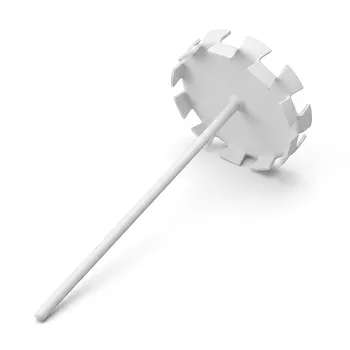
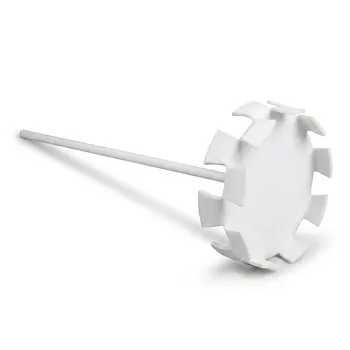
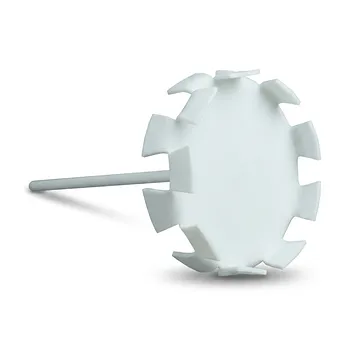
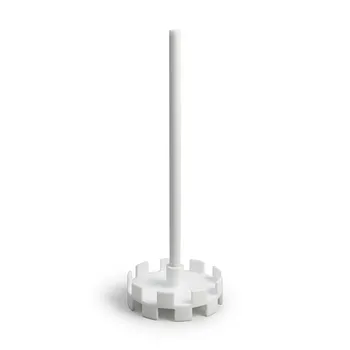
- High Purity Corrosion Resistant PTFE Dispersion Disk and Inert Stirring Paddle for Food Pharmaceutical and Cosmetic Mixing
- PTFE Dispersion Disk Food Cosmetic Grade Non Stick Corrosion Resistant Large Stirring Paddle Customizable Impeller
- High Purity PTFE Dispersion Disk for Food and Cosmetic Processing Non Stick Corrosion Resistant Large Stirring Paddle Customizable Fluoropolymer Impeller
- Corrosion Resistant PTFE Stirring Impeller and Customizable Polytetrafluoroethylene Dispersion Disk
- Custom PTFE Dispersing Disc and Stirring Rod for Chemical Processing and Laboratory Mixing
People Also Ask
- What is Dispersion PTFE used for? Creating Thin, High-Performance Coatings and Films
- How many variations of PTFE disks are available and what parameters do they differ in? Choose the Right Material for Your Application
- What is PTFE dispersion, and how is it used? A Guide to Non-Stick Coatings & Chemical Resistance
- What is the dispersion method of producing PTFE and what are its products? Ideal for Thin Coatings and Films
- What are the applications of PTFE dispersion? A Guide to Non-Stick, Chemical-Resistant Coatings & More