All Questions
How Do Transverse Stretch Ratios And Expansion Speeds Influence The Pore Size And Porosity Of Eptfe Filtration Membranes? Optimize Your Membrane Performance
Learn how stretch ratio and speed control ePTFE pore size and porosity, balancing flow and retention for filtration.
What Resin Properties Are Critical When Selecting Ptfe Raw Material For Manufacturing High-Performance Micro-Porous Eptfe Filtration Media?
Discover key PTFE resin properties for ePTFE filtration media: high crystallinity, molecular weight, homopolymer purity, and stress-relaxation.
Why Is Differential Scanning Calorimetry (Dsc) Used To Characterize Eptfe Fluoropolymer Materials, And What Thermal Signature Indicates An Expanded Structure? Discover The Key Thermal Marker At 378-381 °C
Learn how DSC identifies ePTFE's unique high-temperature melting peak, revealing expansion history and molecular orientation.
How Does The Expansion Process Affect The Tensile Strength And Porosity Of Porous Eptfe Membranes Used In Laboratory Filtration? Discover The Key Structural Changes And Performance Trade-Offs.
Learn how ePTFE expansion creates a node-fibril structure, boosting tensile strength to ~69 MPa at ~90% porosity while tuning pore size.
How Are Porous Fluoropolymer Separation Membranes Applied In Liquid Clarification, Sterile Filtration, And Gas De-Aeration Workflows? Explore Their Key Roles And Selection Criteria.
Learn how porous PTFE membranes work in clarification, sterile filtration, and degassing. Understand pore structure, hydrophobicity, and system design.
What Key Performance Advantages Do Expanded Fluoropolymer (Eptfe) Membranes And Specialized Tubing Offer? Achieve Precision Fluid Handling With Advanced Fluoropolymer Solutions.
Discover how ePTFE membranes and fluoropolymer tubing enhance precision fluid handling with chemical resistance, low contamination, and reliable sealing.
How Does The Microscopic Node-And-Fibril Structure Of Eptfe Function In Filtration And Gas Venting? Discover The Key Mechanisms For Optimal Lab Performance.
Learn how ePTFE's node-and-fibril structure enables precise filtration and venting, balancing retention, flow, and chemical resistance.
How Do The Mechanical Tensile Strength And Porosity Of Expanded Ptfe (Eptfe) Compare With Standard Molded Or Extruded Ptfe Material? Discover Key Differences
Compare ePTFE vs standard PTFE: tensile strength, porosity, and structural differences to choose the right material for your application.
How Does The Node-And-Fibril Microstructure Of Expanded Ptfe (Eptfe) Benefit High-Performance Porous Filtration Membranes And Tools? Achieve Unmatched Filtration Precision And Durability
Discover how ePTFE's node-and-fibril structure enhances filtration: high porosity, precise retention, and chemical resistance for demanding lab applications.
What Key Molecular Structure Considerations Guide The Material Selection Of Fluoropolymers For High-Efficiency Gas Permeation And Separation Tools? Optimize For Free Volume & Selectivity
Learn how fluoropolymer molecular structure—fluorinated groups, rigidity, heterocycles—affects gas permeation and separation. Optimize free volume and selectivity.
How Do Bulky Fluorinated Groups Overcome The Permeability-Selectivity Trade-Off? Discover The Molecular Design That Boosts Efficiency.
Learn how hexafluoroisopropylidene and trifluoromethyl groups increase gas permeability without losing selectivity in fluoropolymer membranes.
How Does Replacing Isopropylidene With Hexafluoroisopropylidene Improve Fluoropolymer Gas Separation Membranes? Boost Permeability While Preserving Selectivity.
Learn how hexafluoroisopropylidene units increase free volume and rigidity in fluoropolymer membranes, enhancing gas permeation without sacrificing selectivity.
How Does The Node And Fibril Structure Of Porous Expanded Ptfe (Eptfe) Affect Material Selection? Optimize For Filtration And Custom Apparatus
Learn how ePTFE's node-fibril structure impacts permeability, retention, and strength, guiding material selection for lab filtration and custom components.
What Are The Fundamental Microstructural Characteristics Of Expanded Ptfe (Eptfe) Materials? Optimize Filtration With Porous Eptfe Structure
Explore ePTFE's node-and-fibril structure, porosity, and how they drive performance in filtration and fluid handling.
What Structural Features Enable Eptfe Membranes To Deliver Effective Filtration And Chemical Resistance?
Learn how ePTFE's node-fibril network and fluorinated chemistry enable precise filtration and broad chemical resistance.
Why Is Solid Ptfe Difficult To Stretch Using Traditional Thermoplastic Processing Methods, And How Is Porous Fluoropolymer Membrane Produced? Discover The Key To Eptfe Manufacturing.
Learn why PTFE resists conventional stretching and how rapid expansion creates porous ePTFE membranes.
How Is Crushability Of An Eptfe Membrane Evaluated, And Why Does Crush Resistance Matter For Fluoropolymer Sealing And Filtration Products?
Learn how ePTFE membrane crushability is measured and why crush resistance is crucial for sealing and filtration performance.
What Temperature And Stretching Parameters Are Required To Prevent Film Rupture During The Expansion Of Extruded Ptfe Materials? Heat To 300°C For Safe Stretching
Learn the critical temperature for PTFE film expansion: heat to ~300°C to avoid rupture. Stretching rate alone doesn't prevent tears.
How Does Increasing The Prestretch Density Of Ptfe Film Affect Fibril Length, Bubble Point, And Crush Resistance? Discover The Key Trade-Offs And Optimize Your Eptfe Performance.
Learn how higher prestretch density increases fibril length, lowers bubble point, and improves crush resistance in ePTFE, with key data and practical guidance.
Which Side Of An Asymmetric Eptfe Membrane Faces The Fluid? Key Orientation Tips For Filtration
Learn which side of an asymmetric ePTFE membrane faces the process fluid and why orientation is critical for filtration efficiency.
How Do Fluoropolymer Materials Enhance The Reliability And Efficiency Of Laboratory Filtration Tools And Separation Membranes When Processing Aggressive Liquids? Discover Key Benefits
Learn how fluoropolymers boost filtration reliability, resist chemical attack, and improve separation efficiency for aggressive liquids.
How Do Hydrophobic Eptfe Membranes Block Liquid But Allow Gas Flow? Explore The Mechanisms Of Selective Permeation.
Discover how hydrophobic ePTFE membranes resist liquid water while allowing gas and vapor transport, and their key applications.
How Does Uniaxial Expansion Alter The Physical And Permeability Characteristics Of Ptfe Film Used In Laboratory Filtration Applications? Unlock Enhanced Flow And Porosity For Your Lab's Filtration Needs.
Discover how uniaxial expansion significantly increases PTFE film's surface area and permeability while reducing density, enabling efficient lab filtration.
What Resin Characteristics Are Critical When Selecting Raw Materials For Expanding Ptfe Into High-Performance Eptfe Filtration Membranes? Focus On 98% Crystallinity, High Molecular Weight, And Fine-Powder Homopolymer.
Learn the critical PTFE resin traits for ePTFE membranes: high crystallinity, high MW, low amorphous content, and proper polymerization.
How Does Increasing The Calendering Roll Temperature Alter The Mechanical Properties Of Ptfe Tapes Used In Component Manufacturing? Boost Md Strength By 45% And Td Elongation By 175%
Discover how raising roll temperature from 50°C to 80°C enhances PTFE tape's directional strength and flexibility for better component manufacturing.
Why Is Temperature Control Critical When Blending Ptfe Resin With Lubricants During Initial Processing Of Fluoropolymer Membrane Preforms? Achieve Uniform Membrane Quality
Discover why precise temperature control during PTFE blending prevents premature fibrillation, ensuring uniform pores and superior membrane performance.
What Key Resin Characteristics Are Required To Successfully Expand Fine-Powder Ptfe Into Porous Eptfe Structures For Laboratory Filtration And Separation Equipment? High Crystallinity And Molecular Weight Are Key.
Learn the critical resin properties—high crystallinity, high molecular weight, and homopolymer purity—needed for ePTFE membranes in lab filtration.
Why Is Lubricant Volatility Control Critical When Extruding Ptfe Preforms Intended For Calendering Into Thin Microporous Filtration Membranes? Essential Guide For Uniform Pore Formation
Learn why lubricant volatility is key in PTFE membrane production: retains processability, controls pore uniformity, and avoids defects in calendered sheets.
What Are The Performance Benefits Of Fluoropolymer Coatings And Porous Membranes In Filtration And Sample Prep? Enhance Purity, Flow & Longevity
Discover how fluoropolymer coatings and membranes improve chemical resistance, low adsorption, and durability for cleaner samples and longer service life.
What Are The Key Operational Differences Between Aqueous Emulsion And Solvent-Based Fluoropolymer Dispersion Systems? Compare Safety, Drying, Film Quality, And Choose Wisely.
Explore how water vs. solvent carriers impact drying, safety, film quality, and equipment in fluoropolymer processing. Make an informed choice.
How Do Fluoropolymer-Based Treatments Compare To Silicone Or Hydrocarbon Alternatives In Achieving High-Performance Water And Oil Repellency? Discover The Superior Choice For Durable Protection.
Compare fluoropolymer, silicone, and hydrocarbon treatments for water and oil repellency. Learn why fluoropolymers excel in oleophobicity and durability.
What Key Properties Are Measured Under Astm D4441 To Classify And Evaluate Ptfe Dispersions?
Discover the key properties measured under ASTM D4441 for PTFE dispersions: solids, surfactant, particle size, pH, SSG, and melting behavior.
What Is Stress Relaxation Time In Expanded Polytetrafluoroethylene (Eptfe) Processing? Improve Eptfe Manufacturing With High Thermal Stability
Learn why stress relaxation time is critical for ePTFE processing and how it ensures high-integrity porous products.
Why Are Resin Crystallinity And Stress Relaxation Time Critical Parameters When Selecting Raw Ptfe For Eptfe Filtration Media? Achieve Reliable Eptfe Performance
Discover how crystallinity & stress relaxation time impact ePTFE filtration. Learn to select the right PTFE resin for durability.
How Do Pvdf, Ptfe, And Pfa Compare For Chemical Process And Filtration Applications?
Compare PVDF vs PTFE vs PFA: chemical resistance, temperature limits, mechanical strength, and filtration performance for your application.
How Do Fluoropolymer Composite Membranes Enhance Pollutant Adsorption Capacity While Maintaining Structural Stability In Laboratory Filtration Setups? Discover The Key Mechanisms For Optimal Performance.
Learn how fluoropolymer composite membranes boost adsorption capacity while ensuring stability. Explore additive loading, morphology, and trade-offs for lab filtration.
Why Are Fluoropolymers Preferred Over Natural Polymers In Membrane-Based Water Treatment? Key Benefits And Morphology Control Tips
Discover why fluoropolymers outperform natural polymers in water treatment membranes and how morphology control enhances filtration performance.
How Do Fluoropolymer Matrix Materials Prevent Secondary Contamination And Maintain Reusability In Nanoparticle-Functionalized Filtration Setups? Understanding The Containment Mechanism And Long-Term Performance
Discover how fluoropolymer matrices lock nanoparticles in place, prevent leaching, and ensure reusable filtration with minimal contamination.
Why Are Fluorinated Polymers Like Pvdf And Its Copolymers Considered Ideal Matrix Materials For Environmental Remediation Membranes And Liquid Filtration Tools? Discover Their Chemical Resistance, Durability, Tunable Wettability, And Applications For Reliable Performance.
Explore why PVDF fluoropolymers excel in environmental remediation membranes and liquid filtration due to their toughness, chemical resistance, and tunable properties.
What Is The Mechanism Of Fibrillation In Polytetrafluoroethylene (Ptfe), And How Does It Impact The Material Properties Essential For Expanded Ptfe (Eptfe) Applications?
Learn how PTFE fibrillation creates ePTFE's unique node-and-fibril structure, impacting strength, porosity, and flexibility.
How Do Eptfe And Solid Ptfe Differ? Discover Eptfe's Filtration And Sealing Advantages
Learn how ePTFE's porous structure differs from solid PTFE, offering superior filtration and conformable sealing for demanding applications.
Why Is Emulsion-Polymerized Fine Powder Ptfe Specifically Required For Manufacturing Expanded Ptfe Porous Components And Filtration Media? Unlock The Key To High-Performance Eptfe
Discover why fine-powder PTFE is essential for ePTFE, focusing on its molecular structure, fibrillation, and paste extrusion advantages.
How Does Surface Modification Alter The Functional Performance Of Microporous Eptfe Filtration Membranes Used In Lab Applications? Enhance Aqueous Filtration, Reduce Dewetting, And Tailor Selectivity.
Discover how surface-modified ePTFE membranes enable direct aqueous filtration, reduce dewetting, and improve performance while retaining chemical resistance.
Why Use High-Purity Ptfe Syringe Filters For Cellulose Photoreforming? Ensure Sample Integrity & Protect Hplc Hardware
Discover why PTFE syringe filters are essential for cellulose photoreforming to protect HPLC columns and ensure accurate analysis of intermediates.
Why Is It Necessary To Use A 0.45 Micron Ptfe Syringe Filter? Protect Instruments & Ensure Accurate Dissolved Lead Data.
Learn why 0.45μm PTFE filters are essential for lead analysis. Prevent instrument clogging, reduce interference, and ensure accurate sample data.
What Is The Significance Of High-Purity Chemical Filtration For Mof Materials? Ensure Purity & Precise Characterization
Discover why high-purity filtration is vital for MOF cleaning, preventing contamination and ensuring accurate XRD, SEM, and ICP-OES analysis.
Why Is A 0.2 Μm Ptfe Filter Needed For Nanocomposite Photoresists? Achieve High-Resolution, Defect-Free Film
Learn why 0.2 μm PTFE filtration is crucial for nanocomposite photoresists to ensure sub-micron precision, film uniformity, and chemical purity.
Why Are Sub-Micron Ptfe Syringe Filters Necessary For 2.5D Cof Solutions? Control Nucleation For Pure Single Crystals
Discover why sub-micron PTFE filters are essential for 2.5D COFs to suppress nucleation and ensure pure, high-quality single-crystal growth.
What Is The Purpose Of Using Teflon (Ptfe) Mesh To Seal Both Ends Of A Column? Ensure Chemical Inertness & Stability
Learn why Teflon (PTFE) mesh is essential for fixed-bed adsorption, offering chemical resistance, preventing adsorbent loss, and ensuring purity.
Why Is A 0.22 Micrometer Pore Size Ptfe Syringe Filter Necessary? Ensure Accurate Copper Adsorption Data
Discover why 0.22 μm PTFE syringe filters are essential for copper adsorption analysis, ensuring chemical inertness and protecting lab equipment.
Why Is A 0.2 Μm Ptfe Syringe Filter Used During Photocatalytic Dye Degradation? Ensure Kinetic Accuracy & Protect Hplc
Learn why 0.2 μm PTFE filters are essential for stopping photocatalytic reactions, ensuring UV-Vis accuracy, and protecting HPLC columns from damage.
What Is The Technical Necessity Of Using A Ptfe Syringe Filter Before The Deposition Of Zno–Wo3 Films? Ensure Pure Films
Learn why PTFE syringe filters are essential for ZnO–WO3 thin-film deposition to prevent physical defects and maintain chemical purity for ETLs.
How Is The Pore Size And Permeability Of A Ptfe Membrane Controlled During The Stretching Process? Expert Control Guide
Learn how draw ratio, temperature, and stretching rates control PTFE membrane porosity and permeability for superior filtration and venting results.
Why Are Ptfe Filter Membranes Preferred For Applications Involving Aggressive Chemicals Or High-Temperature Gases? Expert Guide
Explore why PTFE filter membranes are the top choice for aggressive chemicals and high temperatures, featuring 260°C stability and chemical inertness.
What Are The Performance Advantages Of Ptfe Filter Membranes Vs Depth Filters? Boosting Lab Purity And Efficiency
Compare PTFE membranes vs depth filters. Learn about chemical inertness, energy savings, and surface filtration for high-purity lab applications.
How Does The Inherent Hydrophobicity Of Ptfe Filter Membranes Affect Liquid And Gas Separation? Optimize Performance
Learn how PTFE membranes act as selective barriers, allowing gas transport while repelling liquids for superior industrial and lab separation.
What Filtration Mechanisms Allow Ptfe Membranes To Capture Particles Of Various Sizes? Master High-Precision Filtration
Learn how PTFE membranes use sieving, impaction, and Brownian diffusion to capture particles down to 0.1 µm with unmatched chemical stability.
What Are The Primary Manufacturing Steps For Producing Expanded Ptfe (Eptfe) Filter Membranes? A 4-Step Production Guide
Learn the 4 key stages of ePTFE membrane production: paste extrusion, drying, expansion, and sintering for high-performance filtration efficiency.
How Is The Node-And-Fibril Microstructure Of Expanded Ptfe (Eptfe) Membranes Formed? Engineering Material Strength
Learn how mechanical expansion creates the node-and-fibril structure of ePTFE, offering high porosity, chemical resistance, and tensile strength.
What Is The Chemical Composition And Temperature Resistance Of Ptfe Filter Membranes? Essential Specs For Labs
Explore PTFE filter membrane properties: a linear fluoropolymer structure with a -200°C to +260°C range for extreme chemical and thermal stability.
How Does The Non-Stick Surface Of Ptfe Membranes Improve Dust Collection Efficiency? Boost Release & Reduce Energy.
Discover how PTFE membranes enhance dust collection efficiency through superior cake release, surface filtration, and extended component lifespan.
Why Is Polytetrafluoroethylene (Ptfe) The Reference Medium For Pm2.5 And Pm10 Regulatory Air Quality Sampling? Guide
Discover why PTFE is the gold standard for PM2.5 and PM10 air sampling, offering unmatched gravimetric precision, chemical purity, and stability.
How Do Polytetrafluoroethylene (Ptfe) Membranes Facilitate Membrane Distillation? Key Benefits For Water Treatment
Discover how PTFE membranes use hydrophobicity and chemical stability to achieve high-purity water recovery in harsh industrial environments.
Why Are Polytetrafluoroethylene (Ptfe) Filters Preferred For Pharmaceutical And Laboratory Bioprocessing Applications?
Discover why PTFE filters are essential for pharmaceutical purity, offering chemical inertness, low protein binding, and thermal stability.
What Are The Advantages Of Using Ptfe Membranes In Hepa Filtration? Boost Efficiency And Purity In Semiconductor Labs
Discover why PTFE membranes are superior for HEPA filtration. Reduce pressure drop, save energy, and ensure high-purity air for cleanrooms.
How Does The Hydrophobicity Of Polytetrafluoroethylene (Ptfe) Membranes Improve The Performance Of Air And Gas Filtration?
Discover how PTFE's hydrophobic properties prevent filter blinding, reduce energy costs, and ensure durability in corrosive gas filtration.
What Is The Thermal Stability Range For Ptfe Filter Membranes? Master Extremes From -200°C To +260°C
Discover the vast thermal operating window of PTFE membranes, offering continuous service from -200°C to +260°C for extreme industrial environments.
How Does The Chemical Resistance Of Polytetrafluoroethylene (Ptfe) Filter Membranes Benefit Industrial Filtration?
Explore how PTFE's chemical inertness protects industrial filtration systems from aggressive media while ensuring fluid purity and durability.
What Are The Structural Characteristics And Manufacturing Principles Of Polytetrafluoroethylene (Ptfe) Filter Membranes?
Understand the unique fibrillar structure and manufacturing of PTFE membranes. Learn how extrusion and sintering ensure high-precision lab filtration.
Why Are Ptfe Laminated Membrane Filters Preferred For Solvent Filtration? Unmatched Chemical Resistance & Hydrophobicity
Discover why PTFE laminated membrane filters excel in solvent filtration with superior chemical resistance, hydrophobicity, and structural integrity for pure results.
What Is The Role Of Polypropylene Netting In Ptfe Laminated Membrane Filters? Ensuring Durability And Performance
Discover how polypropylene netting provides critical structural support to fragile PTFE membranes, enabling robust filtration for aggressive solvents and venting.
How Does The Structure Of Eptfe Contribute To Its Functionality? Unlock Superior Performance With A Unique Microporous Design
Discover how ePTFE's unique node-and-fibril structure enables breathability, chemical resistance, and superior sealing for demanding applications.
What Are The Advantages Of Hydrophobic Ptfe Membrane Filters? Achieve Unmatched Chemical Resistance & Purity
Discover the key benefits of hydrophobic PTFE filters: extreme chemical inertness, superior thermal stability, and reliable water repellency for demanding applications.
What Support Is Available For Using Ptfe Laminated Membrane Filters? From Prototype To Production Success
Get expert technical support for PTFE laminated filters. Learn about their hydrophobic nature, chemical resistance, and applications from prototyping to full-scale production.
What Benefits Do Eptfe Membranes And Laminates Provide To Device Manufacturers? Solve The Venting Vs. Contamination Paradox
Discover how ePTFE membranes offer device manufacturers a selective barrier for air permeability, waterproofing, and microbial protection with unmatched chemical and thermal stability.
How Is Eptfe Structured And What Are Its Properties? Unlock Advanced Performance With Microporous Ptfe
Learn how ePTFE's unique microporous structure delivers breathability, chemical resistance, and extreme temperature stability for demanding applications.
What Applications Are Ptfe Laminated Membrane Filters Suitable For? Master Filtration For Harsh Chemicals
Learn how PTFE laminated membrane filters excel in aggressive solvent filtration, sterile venting, and air sampling due to their chemical inertness and hydrophobicity.
What Are The Key Features Of Ptfe Laminated Membrane Filters? Hydrophobic, Chemically Inert, And Durable
Discover the key features of PTFE laminated membrane filters: hydrophobic, chemically inert, thermally stable, and reinforced for durability.
What Are The Differences Between Porous Ptfe Sheets And Expanded Ptfe Membranes? Choose The Right Material For Your Application
Learn the key differences between porous PTFE and ePTFE membranes, including manufacturing, pore structure, and applications for filtration and sealing.
How Is Ptfe Used In Filtration Applications? Essential For Corrosive & High-Temp Environments
Learn how PTFE's chemical inertness and hydrophobic properties make it ideal for demanding filtration in semiconductor, pharma, and industrial processes.
What Industries Extensively Use Ptfe Membrane? The Critical Material For Safety & Purity
Discover how PTFE membrane is essential in chemical, medical, semiconductor, food & beverage, and aerospace industries for its inertness and reliability.
What Makes Eptfe Suitable For Filtration Applications? Unlock Superior Performance For Demanding Environments
Discover how ePTFE's microporous structure, hydrophobicity, and chemical inertness make it ideal for high-performance filtration in harsh conditions.
What Are The Advantages Of Eptfe's Microporous Structure? Achieve Selective Permeability For Your Product
Discover how ePTFE's microporous structure provides breathability, waterproofing, and chemical resistance for medical, industrial, and consumer applications.
Why Is Eptfe Preferred Over Ptfe In Certain Applications? Unlock Superior Sealing & Filtration
Learn when to choose ePTFE over PTFE for superior conformability, controlled porosity, and strength in demanding sealing, filtration, and medical applications.
What Are The Industrial Applications Of Eptfe? Solve Critical Sealing, Filtration & Medical Challenges
Explore the critical industrial uses of ePTFE material for sealing, filtration, medical implants, and electronics in demanding environments.
In Which Industries Is Porous Ptfe Applied? Solve Harsh Environment Challenges With Kintek
Discover how porous PTFE's chemical inertness and hydrophobic properties make it essential for pharmaceuticals, automotive, chemical processing, and more.
What Are The Benefits Of Porous Ptfe? Unlock Superior Filtration And Chemical Resistance
Discover the key advantages of porous PTFE, including extreme chemical inertness, high-temperature stability, and superior filtration capabilities for demanding applications.
What Is Porous Ptfe Used For? Advanced Filtration For Harsh Chemical & High-Temp Environments
Discover the key uses of porous PTFE in filtration, venting, and diffusion for demanding industries like semiconductor, medical, and chemical processing.
What Makes Ptfe Filtration Systems Advantageous For Industrial And Scientific Use? Unmatched Chemical & Thermal Stability
Discover why PTFE filtration systems excel in harsh environments with superior chemical inertness, temperature resistance, and durability for industrial and scientific use.
What Are Common Industrial Applications Of Ptfe Filters? Master Critical Filtration In Demanding Industries
Explore the key industrial uses of PTFE filters for sterile gas, aggressive chemicals, and high-temperature applications in pharma, semiconductors, and more.
Which Chemicals Are Fully Compatible With Ptfe Filters? Discover Unmatched Chemical Resistance
Learn about PTFE filter's broad compatibility with acids, bases, solvents, and food products, plus key exceptions like alkali metals.
What Steps Are Involved In Selecting The Proper Ptfe Filter? A 4-Step Guide To Optimal Filtration
Learn the 4 critical steps to select the right PTFE filter: chemical compatibility, pore size, diameter, and prefilter needs for reliable results.
What Sizes And Pore Options Are Available For Ptfe Filters? Choose The Right Filter For Your Application
PTFE filters are available in 13mm-47mm diameters and 0.3-10.0 micron pore sizes for chemical, pharmaceutical, and industrial filtration.
What Are The Typical Applications Of Ptfe Filters In Scientific Filtration? Master Harsh Chemical And Gas Filtration
Discover the key applications of PTFE filters in HPLC, sterile venting, and aggressive chemical filtration. Learn how their chemical inertness and hydrophobicity ensure sample purity.
How Do Ptfe Syringe Filters Compare To Membrane Filters? A Guide To Chemical Compatibility
Learn why PTFE syringe filters are a type of membrane filter, chosen for their unmatched chemical resistance and suitability for harsh solvents.
What Specifications Do Ptfe Filters Meet For Polychlorobenzenes? Ensure Compliance With Niosh Method 5517
Learn the critical PTFE filter specs for NIOSH 5517 compliance to accurately sample polychlorobenzenes and ensure worker safety.
What Temperature Resistance Do Ptfe Filters Offer? Unmatched Thermal Stability From -200°C To +260°C
Learn how PTFE filters handle extreme temperatures, from cryogenic -200°C to high-heat +260°C, for sterilization, cryogenics, and industrial processing.
Why Are Ptfe Filters Advantageous For Gravimetric Analysis? Achieve Unmatched Accuracy And Precision
Discover how PTFE filters' chemical inertness, hydrophobicity, and mass stability ensure precise, reliable results in gravimetric analysis.
How Does The Hydrophobicity Of Ptfe Filters Benefit Their Use? Ensure Uninterrupted Gas Flow And Solvent Filtration
Learn how PTFE filter hydrophobicity prevents moisture blockage, ensuring reliable performance in gas venting, solvent filtration, and air monitoring applications.
What Are The Main Benefits Of Ptfe Filters? Achieve Unmatched Chemical Resistance And Purity
Discover the key benefits of PTFE filters: extreme chemical inertness, thermal stability from -196°C to +260°C, and inherent hydrophobicity for superior filtration.
Related Products
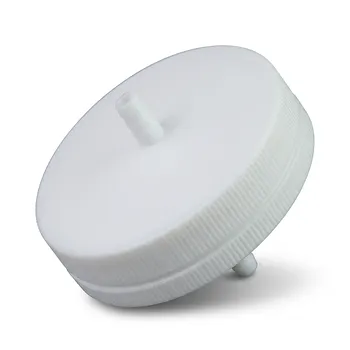
PTFE Filter Membrane Holder 47mm Leak Proof Corrosion Resistant Environmental Sampling Unit Customizable
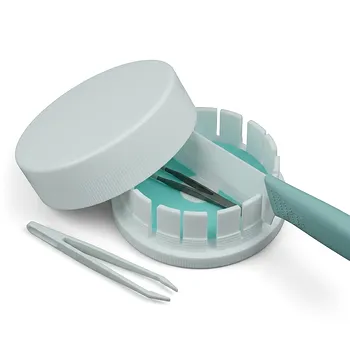
High Purity PTFE Circular Filter Membrane Cutter with Ceramic Blade for Trace Analysis and CDC Laboratory Sample Preparation
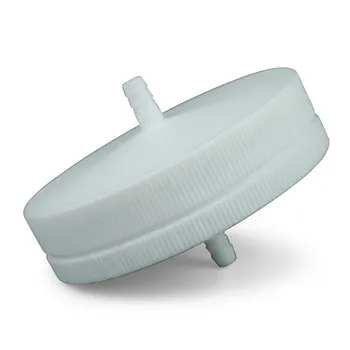
PTFE Membrane Filter Holder for Aerosol Environmental Monitoring and Low Concentration Particulate Matter Sampling Chemical Resistant Air Quality Analysis Component
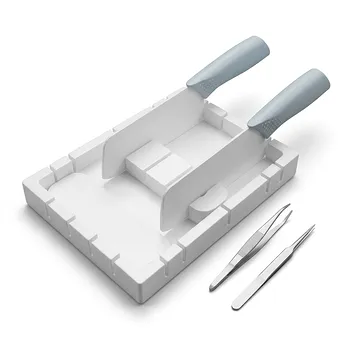
High Purity PTFE Square Membrane Cutter and Filter Aliquot Device for Trace Analysis and Cleanroom Laboratory Applications

Customizable PTFE Seals Filter Holders for Versatile Applications