The key operational difference is the processing environment: aqueous fluoropolymer dispersions use water as the primary carrier, while solvent-based systems use organic liquids. Aqueous systems are safer, non-flammable, and produce very low VOC emissions, but they require more controlled drying and often high-temperature baking or sintering. Solvent-based systems dry faster and can be useful for localized treatments, but they introduce flammability, exposure, emissions, and equipment-handling requirements.
Aqueous systems are generally preferred for industrial-scale fluoropolymer processing because they balance safety, environmental performance, and uniform coating formation. Solvent-based systems offer faster drying and convenient localized application, but their operational and safety constraints limit where they are practical.
How the Carrier Changes the Process
Aqueous systems use water as the continuous phase
Aqueous fluoropolymer dispersions suspend fine polymer particles in water rather than dissolving the polymer. This is particularly important for materials such as PTFE and PFA, which are insoluble in standard organic solvents.
The formulation typically combines mechanical emulsification with compatibilizing additives, such as acetone or propylene glycol, to maintain dispersion stability. These additives help the system remain uniform during storage, pumping, application, and drying.
Solvent-based systems use organic carrier liquids
Solvent-based formulations use organic liquids to transport and apply the fluoropolymer. In many cases, the fluoropolymer remains dispersed rather than truly dissolved, because perfluoropolymers have limited solubility in conventional solvents.
The solvent carrier evaporates rapidly after application, which can be valuable when equipment downtime must be minimized or when only a small, localized area requires treatment.
Both systems must create a uniform thin film
The carrier does not eliminate the need for controlled deposition. Both systems must distribute fluoropolymer particles consistently to form a continuous or sufficiently uniform thin film, often in the range of several to tens of nanometers for repellent or protective treatments.
Film uniformity directly affects chemical resistance, fluid repellency, surface coverage, and appearance. Poor dispersion stability, uneven application, or uncontrolled drying can produce defects regardless of the carrier selected.
Differences in Drying and Thermal Processing
Aqueous dispersions dry more slowly
Water has a relatively high evaporation burden compared with many organic solvents. Aqueous systems therefore generally require longer drying times, controlled airflow, elevated temperatures, or staged drying to remove the carrier effectively.
Industrial processes may use immersion and squeezing, Nip-Dip application, foam processing, or related methods. After drying, high-temperature baking or sintering may be required to consolidate the fluoropolymer film and remove formulation residues.
Solvent-based systems provide rapid evaporation
Organic solvents typically evaporate faster, allowing solvent-based coatings to reach a dry state quickly. This can support rapid-turnaround operations and localized spray applications.
The faster evaporation rate also makes the process more sensitive to spray distance, substrate temperature, ventilation, and ambient conditions. If the solvent leaves too quickly, the coating can level poorly or develop nonuniform coverage.
Thermal treatment has different purposes
In aqueous systems, thermal processing is important not only for polymer consolidation but also for removing residual water, co-solvents, and surfactants. In solvent-based systems, the main early-stage task is usually rapid carrier evaporation, although the fluoropolymer may still require additional thermal treatment depending on its chemistry and application.
The correct temperature profile must be selected around the polymer, substrate, additives, and desired film properties. Excessive or insufficient heating can affect adhesion, appearance, cleanliness, and thermal stability.
Differences in Safety and Equipment
Aqueous systems reduce fire and VOC controls
Waterborne fluoropolymer systems are generally non-flammable and produce substantially lower VOC emissions than organic solvent systems. They reduce worker exposure to solvent vapors and typically avoid the need for solvent recovery equipment.
They may also reduce the need for explosion-proof processing areas, ventilation capacity, and specialized solvent storage. These advantages explain why aqueous systems account for the majority of industrial fluoropolymer application systems.
Solvent-based systems require stricter controls
Solvent-based systems can generate flammable vapor and require appropriate ventilation, ignition-source control, solvent storage, and waste management. Depending on the solvent and process scale, facilities may also need explosion-proof equipment and solvent recovery systems.
These requirements affect more than capital cost. They influence line layout, operator procedures, maintenance, environmental permitting, and the maximum practical application volume.
Waterborne does not mean operationally simple
Aqueous systems remove many solvent-related hazards, but they still require process control. Water quality, dispersion stability, surfactant content, drying capacity, and wastewater handling can all affect the final result.
The process must also prevent freezing, microbial contamination, settling, or agglomeration where those risks apply to the specific formulation.
Differences in Film Quality and Cleanliness
Surfactant residues are a major aqueous-system concern
Aqueous fluoropolymer dispersions commonly contain nonionic surfactants, sometimes at approximately 6% to 10% by weight of resin. These surfactants help stabilize the dispersion but must be removed or decomposed during subsequent thermal processing.
Incomplete removal can cause dark discoloration, surface defects, reduced optical transparency, or lower thermal stability. It can also compromise cleanliness when the coating is used in applications with strict contamination limits.
Solvent systems can reduce water-removal demands
Because the carrier evaporates quickly, solvent-based systems avoid the specific challenge of removing large quantities of water from the wet film. This can simplify rapid localized application and reduce the size of drying equipment.
However, solvent evaporation can create its own defects, including dry spray, pinholes, poor leveling, or uneven thickness. The final quality still depends on dispersion stability and application control.
Substrate and geometry influence the choice
Aqueous methods are well suited to scalable operations such as immersion, Nip-Dip, foam processing, and other controlled coating approaches. Solvent sprays may be more practical for irregular parts, repairs, small treated zones, or situations where rapid drying is essential.
The substrate must tolerate the drying and baking conditions of the selected system. Sensitive materials may favor a lower-temperature process, while high-performance fluoropolymer films may require conditions that only certain substrates can withstand.
Understanding the Trade-offs
Aqueous systems trade speed for safety and scale
The principal disadvantage of aqueous dispersions is slower drying and the need for careful thermal processing. They may require larger drying zones, longer line residence times, and tighter control of residual surfactants.
Their advantages are substantial: lower VOC emissions, reduced flammability, safer large-scale operation, and reduced dependence on solvent recovery infrastructure.
Solvent systems trade speed for compliance and risk
Solvent-based systems offer fast drying and useful application flexibility, especially for localized sprays. Their disadvantages include flammability, VOC emissions, operator exposure, solvent storage, waste handling, and potentially higher facility costs.
These constraints become more significant as coating volume increases. A formulation that is convenient for a small repair may be inefficient or impractical for continuous industrial production.
Rapid drying can reduce process latitude
Fast evaporation is not automatically better. It shortens the time available for the coating to flow, level, and form a uniform film, making application parameters more critical.
Aqueous systems provide a longer evaporation period but require enough drying energy and time to prevent residual carrier or additive content from remaining in the film.
Additives must be evaluated as part of the system
Compatibilizers and surfactants are functional process components, but they can become sources of defects if their removal is incomplete or if they alter surface properties. Their impact should be evaluated together with the drying, baking, and sintering profile.
The carrier should therefore be selected as part of a complete formulation and process, not as an isolated choice between water and solvent.
Making the Right Choice for Your Goal
The best system depends on production scale, drying requirements, safety controls, substrate limitations, and the cleanliness and performance demanded by the final film.
- If your primary focus is large-scale industrial production: Favor an aqueous dispersion and design sufficient drying and thermal-processing capacity for water, surfactants, and other formulation residues.
- If your primary focus is rapid localized treatment: Consider a solvent-based spray where fast drying justifies the additional flammability, VOC, ventilation, and handling controls.
- If your primary focus is minimizing environmental and worker-safety burdens: Use an aqueous system to reduce solvent exposure, VOC emissions, and fire risk.
- If your primary focus is optical cleanliness or defect-free appearance: Validate surfactant removal and the complete bake or sinter profile before scaling the aqueous process.
- If your primary focus is uniform repellency and chemical resistance: Prioritize dispersion stability, controlled deposition, and thin-film uniformity regardless of the carrier.
The right operational choice is the one that delivers a uniform fluoropolymer film while matching the facility’s safety, environmental, throughput, and quality requirements.
Summary Table:
| Aspect | Aqueous Dispersion | Solvent-Based Dispersion |
|---|---|---|
| Carrier | Water | Organic solvent |
| Drying Speed | Slower | Faster |
| Flammability | Non-flammable | Flammable |
| VOC Emissions | Low | High |
| Safety Controls | Fewer required | Strict controls needed |
| Film Defects | Surfactant residues possible | Drying-related defects (pinholes, etc.) |
| Environmental Impact | Lower | Higher |
| Suitability | Large-scale industrial | Localized/rapid treatment |
For high-performance fluoropolymer labware and custom PTFE/PFA solutions, choose KINTEK. Our complete line, from beakers to custom electrochemical cells, is engineered for precision and reliability. Whether you need standard labware or bespoke CNC-machined components, KINTEK delivers quality you can trust. Contact us today to find the perfect fluoropolymer solution for your lab: #ContactForm.
Related Products
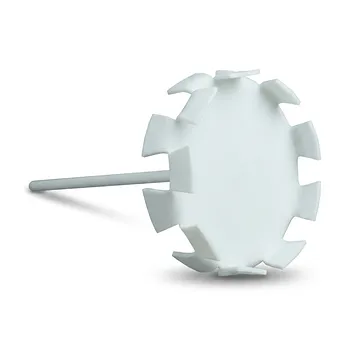
- High Purity PTFE Dispersion Disk for Food and Cosmetic Processing Non Stick Corrosion Resistant Large Stirring Paddle Customizable Fluoropolymer Impeller
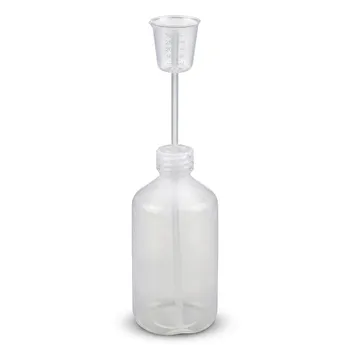
- Translucent PFA Bottle Top Dispenser for Corrosion Resistant Chemical Squeeze Extraction
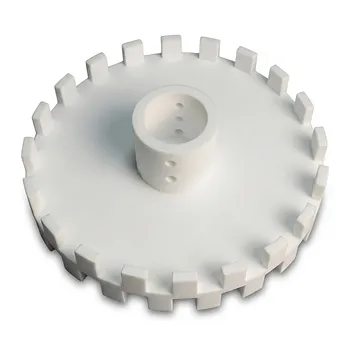
- Corrosion Resistant PTFE Stirring Disk Chemical Dispersion Plate 350mm Diameter Fluoropolymer Mixer Accessory
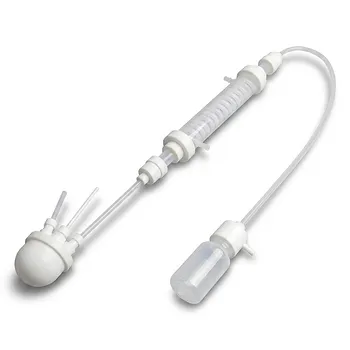
- Corrosion Resistant Hydrogen Fluoride Reflux Apparatus PTFE Flask Condenser Separatory Funnel Collection Bottle High Temperature Laboratory System
- High Purity PFA Chromatography Column with Collection Bottle Corrosion Resistant Fluoropolymer Filtration System for Trace Analysis
People Also Ask
- How many variations of PTFE disks are available and what parameters do they differ in? Choose the Right Material for Your Application
- What is the chemical formula and material of PTFE Disk? Unlock the Power of C₂F₄ Polymer
- What are the tolerance specifications for the thickness of PTFE disks? Why ±20% is the Industry Standard
- What is Dispersion PTFE used for? Creating Thin, High-Performance Coatings and Films
- What key properties are measured under ASTM D4441 to classify and evaluate PTFE dispersions?