Fluoropolymer coatings and porous fluoropolymer membranes improve filtration performance by combining chemical inertness, thermal stability, low surface energy, and durable pore access. In practice, they withstand corrosive gases, aggressive solvents, and hot process streams while reducing sample adsorption, fouling, and particle release. These properties support cleaner filtrates, easier filter-cake removal, more reliable sample preparation, and longer service life.
Fluoropolymer media protect both the sample and the filtration tool: they resist chemical and thermal degradation while maintaining predictable flow, low adhesion, and clean separation performance.
Why Fluoropolymers Improve Filtration
Resistance to aggressive chemicals
Porous fluoropolymers such as PTFE and FEP resist nearly all common solvent environments without dissolving or leaching contaminants. They also tolerate corrosive acids, bases, and gases that can degrade conventional filter materials.
This chemical stability helps preserve the composition of the sample and prevents the filtration medium from introducing interfering substances. That is particularly important before sensitive analyses using HPLC or GC-MS.
Stability at elevated temperatures
Fluoropolymer media retain their functional properties across broad temperature ranges. They can therefore handle hot corrosive gas streams and thermally demanding liquid processes with less risk of media degradation.
A stable filter is less likely to shed fibers, deform, or lose its surface treatment during operation. The result is more consistent filtration and less contamination of the filtrate.
Lower sample adsorption
Fluoropolymer surfaces have low surface energy, which reduces the tendency of target compounds and droplets to adhere to the membrane. This is valuable when recovering trace analytes or preparing samples containing chemically active organic compounds.
Reduced adsorption can improve sample recovery and make analytical results more representative of the original sample.
Performance Benefits in Sample Preparation
Cleaner analytical samples
Chemical inertness reduces the likelihood that the membrane, coating, or support hardware will contaminate the sample. This helps protect downstream analytical equipment and lowers the risk of background interference.
For complex mixtures, the filtration medium can remain chemically passive while removing particulates or separating phases.
More reliable liquid-liquid separation
Fluoropolymer membranes can create strong wettability contrasts. Their surfaces may repel water while allowing oil or other nonaqueous phases to pass more readily, supporting applications such as oil-water separation and hydrophobic membrane processes.
Their low-adhesion surfaces also minimize sticky droplet buildup and organic fouling. In repeated filtration of stabilized oil-in-water emulsions, this can help maintain filtration rate and separation efficiency over multiple cycles.
Improved particulate cake release
Non-stick surface characteristics make it easier to discharge accumulated particulate cake from the filter surface. This can simplify cleaning, reduce residual buildup, and shorten maintenance or changeover time.
The benefit is especially relevant in industrial gas filtration and liquid clarification, where deposited solids can otherwise adhere strongly to the media.
Preservation of pore structure
Conformal fluoropolymer coatings can cover complex internal and external geometries without blocking nanoscale or microscale pores. The underlying support retains its open structure and permeability while gaining fluorinated surface chemistry.
This allows designers to modify wettability, chemical resistance, or fouling behavior without replacing the bulk support material.
Benefits of Fluoropolymer Coatings
Surface properties can be tailored independently
A coating can add hydrophobicity, oleophobicity, or biofouling resistance without substantially changing the mechanical structure of the underlying filter or component. This separates surface function from bulk strength and geometry.
That flexibility is useful for ceramic tubes, electrospun fibers, porous meshes, microfluidic channels, and other complex filtration structures.
Conformal coverage protects intricate components
Vapor-phase fluoropolymer processes can uniformly coat 3D-printed lattices, nanostructured surfaces, and porous filtration meshes. High conformality helps protect features that would be difficult to coat with a conventional liquid treatment.
Maintaining pore openness is essential because a chemically resistant coating that blocks flow paths would undermine the filtration tool's primary function.
Durable treatment with simplified processing
Some vapor-phase processes combine surface grafting and crosslinking in situ. This can produce durable protection without requiring a separate high-temperature annealing or ultraviolet-curing step.
The resulting treatment can remain functional during exposure to solvents, acids, bases, ultrasonic processing, and repeated washing.
Greater service life
Fluoropolymer-treated media can withstand severe chemical and mechanical stresses while retaining their surface properties. Reported treated substrates maintained high water contact angles and oil-water separation efficiencies above 95% under demanding conditions.
Longer-lasting surface performance reduces replacement frequency and helps preserve filtration behavior across repeated operating cycles.
How Membrane Structure Affects Results
Permeability and selectivity require balance
For gas-handling tools, higher gas permeability often comes with lower ideal permselectivity. In other words, increasing gas flux can reduce the membrane's ability to distinguish between gases such as O2 and N2 or CO2 and CH4.
Material selection must therefore match the priority of the application. A high-throughput process may favor permeability, while analytical separation may require stronger selectivity even at lower flux.
Fluorinated group placement matters
The structure and spatial arrangement of fluorinated groups influence gas transport. In the cited examples, ortho- and para-trifluoromethyl substitutions increased permeability relative to meta-substitutions, while dual trifluoromethyl groups produced substantially larger increases.
These effects show that fluoropolymer performance depends on molecular design, not simply on the presence of fluorine.
Wettability determines phase behavior
Fluoropolymer surfaces can be engineered to control which liquid wets the membrane and which phase passes through it. This supports selective routing of water, oil, and other fluids in separation membranes and microfluidic tools.
The correct wettability profile depends on the sample, pressure, pore size, and desired phase separation mechanism.
Understanding the Trade-offs
Chemical resistance does not guarantee universal compatibility
Fluoropolymers are broadly resistant, but real performance still depends on temperature, exposure time, pressure, concentration, and the specific polymer formulation. Compatibility should be confirmed for unusual solvents, highly reactive chemicals, or elevated operating conditions.
The support material, seals, adhesives, and hardware may be less resistant than the fluoropolymer itself.
Higher permeability can reduce separation precision
In gas filtration and membrane separation, maximizing flow may compromise selectivity. Choosing a material solely for its permeability can produce insufficient separation or poorer analytical resolution.
Performance should be evaluated using both flux and selectivity rather than either metric alone.
Coatings can alter wetting and flow behavior
A coating that improves water repellency may make aqueous samples more difficult to wet or pass through. Surface treatment must therefore be matched to the intended liquid phase and operating mode.
The goal is controlled wettability, not maximum hydrophobicity in every application.
Fouling resistance is not fouling elimination
Low surface energy reduces droplet adhesion and organic fouling, but it does not prevent all deposits. Suspended solids, surfactants, pressure, and repeated cycling can still affect flow and separation performance.
Appropriate prefiltration, cleaning procedures, and replacement criteria remain necessary.
How to Apply This to Your Project
Fluoropolymer selection should begin with the sample chemistry, operating temperature, required flow rate, and separation target.
- If your primary focus is chemical compatibility: Choose fluoropolymer media or coatings that resist the specific solvents, acids, bases, and gases in the process, and verify the complete filter assembly rather than the membrane alone.
- If your primary focus is sample integrity: Favor chemically inert, low-adsorption media that minimize leaching, target-compound loss, and particulate shedding before HPLC, GC-MS, or other sensitive analysis.
- If your primary focus is throughput: Evaluate permeability, pore structure, and pressure drop while recognizing that higher gas or liquid flux may reduce separation selectivity.
- If your primary focus is repeated use: Select a fluoropolymer treatment or membrane that maintains wettability, fouling resistance, and mechanical stability through washing, ultrasonic processing, and chemical cycling.
- If your primary focus is complex geometries: Use a conformal coating process that modifies surface chemistry while preserving the open pores and permeability of the underlying structure.
The right fluoropolymer solution is the one that balances chemical protection, sample recovery, flow, selectivity, and service life for the complete filtration system.
Summary Table:
| Benefit | How It Helps |
|---|---|
| Chemical inertness | Resists acids, bases, and solvents without leaching, protecting sample purity. |
| Thermal stability | Withstands high temperatures, reducing media degradation and fiber shedding. |
| Low surface energy | Minimizes sample adsorption, improving recovery of trace analytes. |
| Non-stick surface | Facilitates filter cake release and reduces fouling. |
| Conformal coating | Covers complex geometries without blocking pores, preserving permeability. |
| Wettability control | Enables selective phase separation (e.g., oil-water). |
| Durability | Extends service life, reducing replacement frequency. |
Elevate your filtration and sample preparation with KINTEK's advanced PTFE/PFA labware and custom components. Our fluoropolymer solutions ensure chemical compatibility, low adsorption, and long-lasting performance. Contact us today to optimize your lab's efficiency and accuracy — Get in touch with our experts!
Related Products
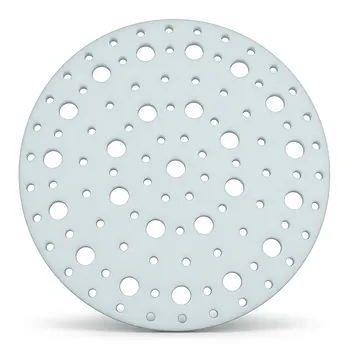
- High Temperature Resistant Insulating TFM Separator and Ultra Clean Laboratory PTFE Baffle Plate with Customizable Pore Size and Hole Configuration
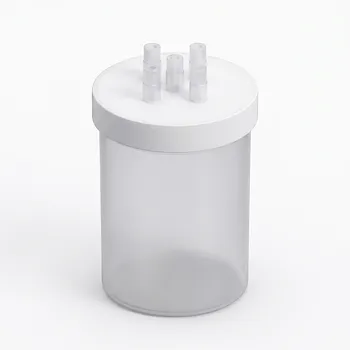
- High Purity 4L PFA Reaction Tank for Proton Exchange Membrane Electrolysis Water Oxygen Separation Systems
- High Purity PFA Chromatography Column with Collection Bottle Corrosion Resistant Fluoropolymer Filtration System for Trace Analysis
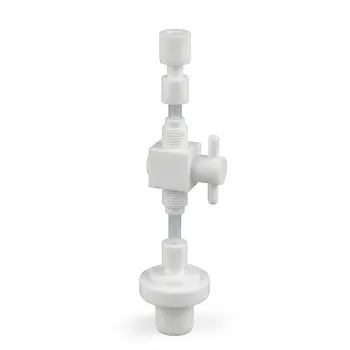
- High Purity PFA PTFE Flare Stop Valves Customizable 2-Way 3-Way Reducing Fluoropolymer Fluid Control Solutions
- High Purity PTFE Square Membrane Cutter Equipartition Device for Trace Analysis and Disease Control Centers Clean Non Stick No Leaching
People Also Ask
- What are the limitations of pure PTFE in high temperature applications? Understanding the 200°C Ceiling
- Are Teflon parts capable of withstanding high temperatures? Understanding the 260°C Limit for Performance
- What future advancements are expected in temperature-resistant PTFE seals? Discover Smarter, Tougher Sealing Solutions
- What is porous PTFE used for? Advanced Filtration for Harsh Chemical & High-Temp Environments
- What are the benefits of porous PTFE? Unlock Superior Filtration and Chemical Resistance