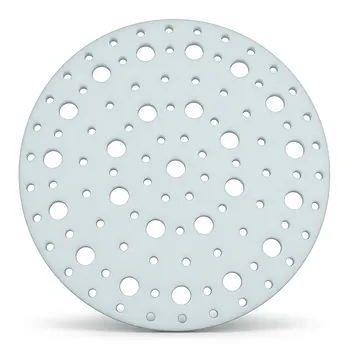
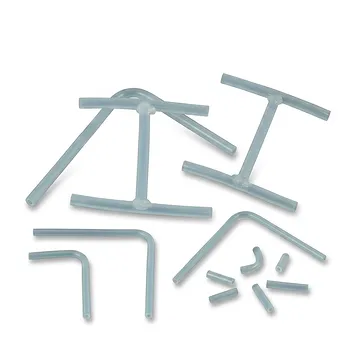
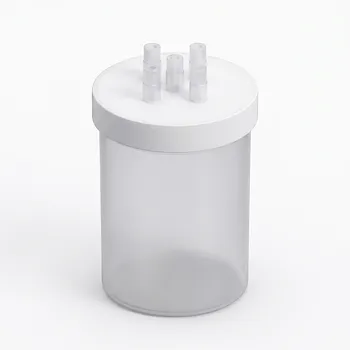
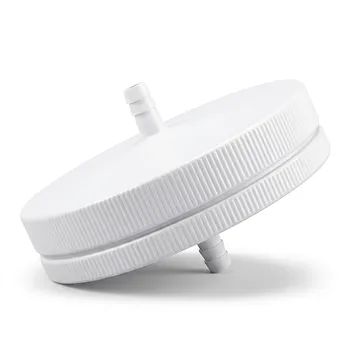
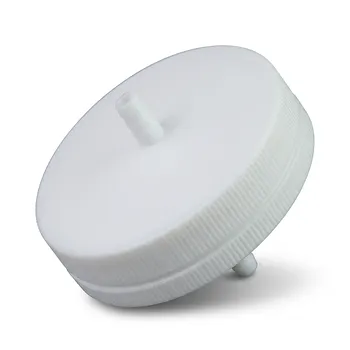
Expanded fluoropolymer materials improve precision fluid handling in two complementary ways: ePTFE membranes provide controlled porosity for gas exchange, sterile venting, and fine filtration, while PTFE, PFA, and modified fluoropolymer tubing and seals provide chemically inert, low-contamination fluid paths. Their flexibility, low surface energy, thermal stability, and resistance to aggressive chemicals help maintain flow accuracy and prevent leakage in demanding analytical and chemical systems.
The central advantage is controlled performance: ePTFE contributes a tunable microporous structure for selective transport, while dense or modified fluoropolymers provide durable, chemically resistant barriers and seals.
How ePTFE Membranes Improve Fluid Handling
Efficient gas–liquid separation
The interconnected nodes and fibrils in ePTFE create a microporous structure with controllable pore size and high porosity. This allows gases to pass while retaining liquids when the membrane is properly selected for the fluid, pressure, and wettability conditions.
That makes ultrathin ePTFE membranes useful for gas–liquid separation, pressure equalization, and breathable venting in analytical and fluid-transfer equipment.
Sterile venting and particulate control
Controlled submicron pores can allow air or process gases to move through a system while restricting liquid passage and capturing fine particles. This supports sterile venting and submicron filtration where contamination control is important.
The membrane’s effectiveness depends on pore size, membrane construction, pressure differential, and the chemical and surface-tension characteristics of the fluid.
High performance with low material mass
ePTFE can provide high porosity at relatively low density, allowing manufacturers to produce thin, responsive membranes without adding unnecessary bulk to the fluid path. This is valuable in compact laboratory components and filtration assemblies.
Its low thermal conductivity can also help reduce heat transfer through the membrane, although the overall thermal behavior depends on the complete assembly.
Why Fluoropolymer Tubing Supports Precision Transfer
Broad chemical resistance
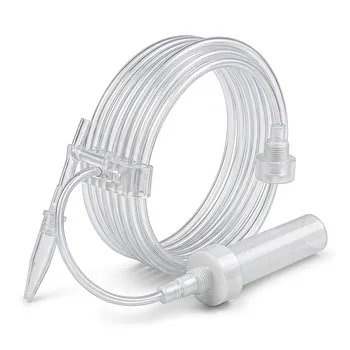
PTFE and PFA tubing resist degradation from a wide range of strong acids, bases, and organic solvents. This protects the tubing from swelling, embrittlement, dissolution, or chemical attack that could otherwise cause leaks or contaminate the process stream.
For highly alkaline electrolytes such as KOH or KHCO₃, fluoropolymer tubing and fittings help maintain system integrity over extended operation.
Low contamination and fluid retention
Fluoropolymers have very low surface energy, so fluids are less likely to adhere strongly to the internal tubing wall. This reduces fluid hold-up and makes carryover and cross-contamination less likely during transfers, rinsing, titration, and sampling.
Their low dissolution and adsorption characteristics are particularly important when trace impurities could affect electrochemical measurements or quantitative chemical analysis.
Thermal and dimensional stability
Fluoropolymer tubing remains useful across a broad temperature range and maintains its chemical resistance under thermal stress. ePTFE structures also offer strong flexural fatigue resistance and flexibility, which can benefit applications involving repeated movement or dynamic routing.
However, the temperature rating must always be based on the specific grade, pressure, chemical environment, and tubing construction—not on the polymer family alone.
Flexibility for difficult routing
Compared with rigid solid fluoropolymer components, flexible fluoropolymer constructions can accommodate movement, vibration, and tight equipment layouts. This helps reduce installation stress at fittings and supports reliable operation in pumps, analyzers, and laboratory fluid circuits.
How Fluoropolymer Seals Prevent Leakage
Conformability at joints and valve stems
The soft, conformable character of ePTFE makes it suitable for valve stem packing, joint sealants, and certain gasket constructions. It can fill small surface irregularities and maintain contact across a joint more effectively than a rigid material.
This conformability is especially valuable when sealing corrosive fluids or assemblies that experience minor movement.
Resistance to cold flow and deformation
Conventional solid PTFE is chemically excellent but can experience creep or cold flow under sustained mechanical load. Engineered, expanded, or modified PTFE constructions can improve resistance to deformation and help preserve sealing force.
The exact improvement depends on density, fiber or matrix structure, filler content, compression, temperature, and applied load.
Protection of fluid purity
A seal that resists chemical attack is less likely to shed degradation products or introduce extractables into the process. This matters in electrochemical testing, trace analysis, and other applications where metal-ion contamination or nitrogen-containing impurities could distort results.
Fluoropolymer seals therefore contribute not only to leak prevention but also to analytical repeatability and process cleanliness.
The Performance Advantages in Combination
Separation plus containment
Membranes manage what can pass through a system, while tubing and seals control where the fluid travels. Using the two material types together provides both selective transport and chemical containment.
For example, an ePTFE vent membrane may support gas exchange, while PFA tubing and modified PTFE seals preserve the purity and integrity of the liquid circuit.
Reliability under dynamic service
Flexible ePTFE and engineered fluoropolymer components can tolerate repeated bending, vibration, or cycling better than many conventional sealing materials. This is useful in peristaltic pumping, valve actuation, and equipment subject to frequent maintenance.
Material selection remains critical because flexibility, strength, permeability, and sealing behavior are not identical across all fluoropolymer designs.
Reduced maintenance risk
Chemical degradation, contamination, and leakage are common causes of fluid-system downtime. Fluoropolymer components address these failure mechanisms by combining chemical inertness with low surface interaction and, in suitable designs, improved mechanical stability.
The result is a longer-lasting fluid path with fewer unplanned seal replacements and fewer compromised samples.
Understanding the Trade-offs
Porosity is an advantage only when it is controlled
The microporosity that makes ePTFE effective for venting and filtration can also permit unwanted permeation if the membrane is used as a barrier without appropriate design. A membrane must be matched to liquid pressure, pore size, wetting behavior, and chemical compatibility.
Dense PTFE or PFA is generally the more appropriate choice when the primary requirement is a nonporous, chemically resistant fluid barrier.
Solid PTFE and ePTFE are not interchangeable
Expanded PTFE has a fibrillar, porous structure and different mechanical behavior from full-density PTFE. Its performance depends heavily on how it is processed and whether it is used as a membrane, gasket, packing, laminate, or flexible component.
Do not assume that a property measured for an ePTFE membrane applies directly to a solid PTFE tube or a modified PTFE gasket.
Creep and permeation still require engineering attention
Fluoropolymer seals can perform exceptionally well, but sustained compression, elevated temperature, pressure cycling, and aggressive chemicals can still affect dimensional stability and sealing force. Modified PTFE may reduce creep and chemical permeation, but it does not eliminate the need for correct gland design and compression control.
Seal geometry, surface finish, installation torque, and pressure direction are as important as the material specification.
Chemical resistance is broad, not unlimited
PTFE and related fluoropolymers resist most common aggressive chemicals, but compatibility must be verified for the actual concentration, temperature, pressure, exposure duration, and presence of unusual reactive species.
A material labeled “chemically resistant” is not automatically suitable for every operating condition.
Making the Right Choice for Your Goal
Choose the material architecture according to the function the component must perform.
- If your primary focus is gas–liquid separation or sterile venting: Use an appropriately rated ePTFE membrane with controlled pore size, and verify liquid breakthrough pressure and wettability.
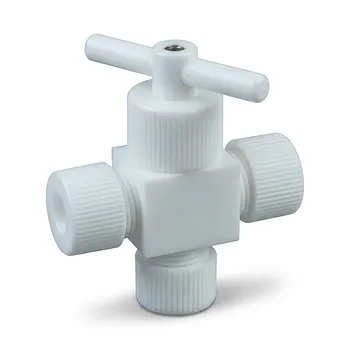
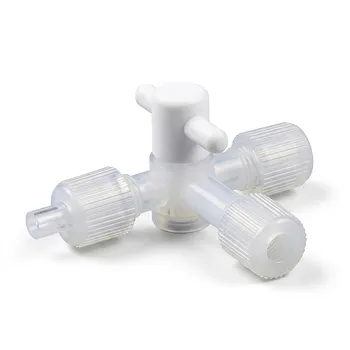
- If your primary focus is aggressive chemical transfer: Use dense PTFE or PFA tubing and fittings selected for the chemical, temperature, pressure, and required purity level.
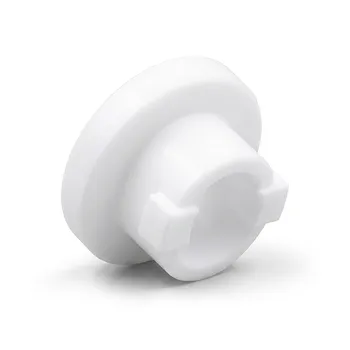
- If your primary focus is leak-free sealing: Consider conformable ePTFE packing, gaskets, or modified PTFE designs, while controlling compression and accounting for creep.
- If your primary focus is analytical accuracy: Prioritize low-adsorption, low-extractable fluoropolymer fluid paths to reduce carryover and trace contamination.
- If your primary focus is repeated flexing or cycling: Select a flexible fluoropolymer construction with verified fatigue and pressure performance rather than relying on chemical compatibility alone.
The right combination of ePTFE membranes and engineered fluoropolymer tubing or seals delivers selective transport, chemical containment, low contamination, and dependable long-term performance.
Summary Table:
| Material | Key Advantages | Key Considerations |
|---|---|---|
| ePTFE Membranes | Controlled porosity for gas exchange, sterile venting, fine filtration; high porosity with low mass; chemical resistance | Pore size must match application; not for nonporous barrier use; permeation control essential |
| PTFE/PFA Tubing | Broad chemical resistance, low surface energy reduces contamination, thermal stability, flexibility | Temperature rating varies by grade; not interchangeable with ePTFE; verify chemical compatibility |
| Fluoropolymer Seals | Conformability for leak prevention, resistance to creep (in modified forms), protect purity | Proper gland design and compression control; permeation still possible; creep in solid PTFE |
Ready to enhance your fluid handling systems with reliable, high-purity fluoropolymer components? At KINTEK, we specialize in manufacturing precision PTFE and PFA labware, tubing, fittings, valves, and custom solutions. With our end-to-end CNC machining capabilities, we can deliver everything from standard components to bespoke assemblies, ensuring optimal performance and durability. Contact our experts today to discuss your specific needs — Get in touch and elevate your lab's efficiency and accuracy.
Related Products
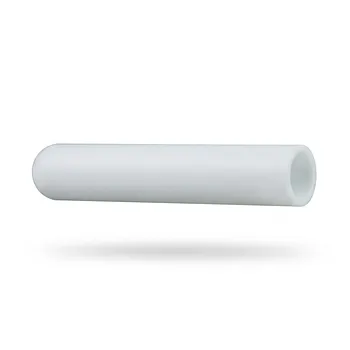
- Custom PTFE Test Tubes Corrosion Resistant Low Background Fluoropolymer Labware 50ml 30ml
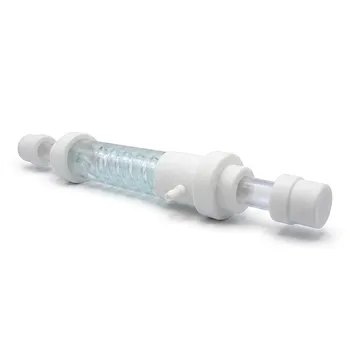
- Custom PTFE Condenser Tube 100ml Serpentine and Straight Fluoropolymer Laboratory Heat Exchanger with Flask Adapters
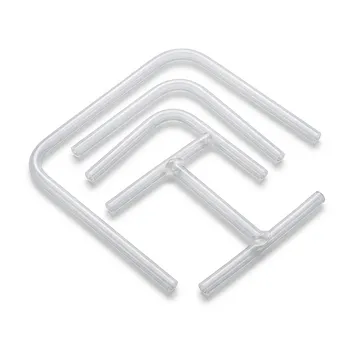
- High Purity PFA Coiled Tubing Custom PTFE Machining PFA Welding and Precision Bending Solutions
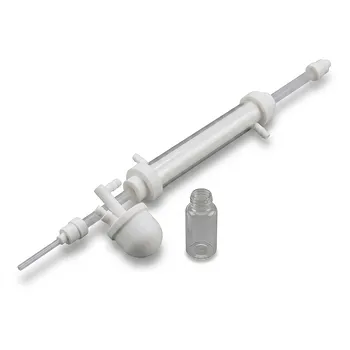
- Custom PTFE Condenser Tube Reflux Reaction Condensation Purification Device Semiconductor Chemical Lab Equipment
- High Purity PTFE Centrifuge Tubes for Trace Analysis Custom Laboratory Centrifugation Containers with Racks
People Also Ask
- How are PTFE tubes manufactured and what are their uses? A Guide to High-Performance Tubing Solutions
- How does paste extrusion impart structural integrity to unsintered PTFE lab tubing?
- What are the benefits of using PTFE tubing in aerospace and defense systems? Reliability in Extreme Conditions
- How does PTFE tubing contribute to the accuracy of laboratory and analytical instrumentation? Ensure Purity & Precision
- What causes the low coefficient of friction and non-stick behavior in PTFE tubing? Explore the Molecular Secrets