Paste extrusion gives unsintered PTFE its temporary strength through fibrillation, not melting. Fine-powder PTFE is blended with a hydrocarbon lubricant, compacted into a preform, and forced through a die under pressure. The resulting shear stresses draw polymer chains from the surfaces of the crystalline particles into long, interconnecting fibrils, creating a microscopic network that binds the particles together. This network provides the green strength needed for the tubing or preform to survive handling, lubricant removal, and transfer to the sintering stage.
The structural integrity of unsintered PTFE comes primarily from mechanically induced fibrillation. Interlocking PTFE fibrils connect the powder particles into a coherent body, while controlled compaction and extrusion conditions preserve dimensional and wall integrity until sintering creates the final dense structure.
Why PTFE Requires Paste Extrusion
PTFE Does Not Flow Like a Conventional Thermoplastic
Fine-powder PTFE has extremely high molecular weight and high crystallinity. Its melt viscosity is too high for conventional melt extrusion to shape it reliably.
Paste extrusion is therefore a cold-forming process. The resin is shaped while substantially below its sintering temperature, with a temporary lubricant reducing friction between particles during compaction and extrusion.
The Lubricant Enables Particle Movement
The hydrocarbon lubricant helps the powder compact into a billet and pass through the die without excessive friction. It acts as a processing aid rather than a permanent structural component.
After extrusion, the lubricant is thermally evaporated. The remaining PTFE body must already have enough strength to retain its shape during this drying step.
How Fibrillation Creates Green Strength
Shear Draws Out Polymer Chains
As the lubricated PTFE paste moves through the die, the particles experience substantial deformation and shear. These stresses pull linear polymer chains from the surfaces of the crystalline particles.
The chains extend into microscopic fibrils, forming bridges between neighboring particles.
The Fibrils Form an Interconnected Network
The fibrils interlock throughout the extrudate, mechanically tying the particles together. This network acts somewhat like temporary reinforcement distributed through the entire PTFE body.
It does not produce the fully consolidated structure of sintered PTFE, but it supplies sufficient cohesion for the unsintered tubing or preform to be handled without falling apart.
Fibril Orientation Supports the Extrudate
Material flow through the die tends to orient fibrils along the extrusion direction. This orientation contributes to the strength and dimensional stability of the tube, particularly along its length.
The degree and consistency of fibrillation depend on processing conditions such as extrusion pressure, powder preparation, lubricant content, and reduction ratio.
How Preforming Contributes Before Extrusion
Compaction Produces a Coherent Billet
Before ram extrusion, the paste is compacted into a cylindrical preform or billet. Compaction brings the powder particles into close contact and removes voids and entrapped air.
The preform gains enough cohesion to be loaded into the extrusion equipment, but its strength is not equivalent to that of an extruded, fibrillated body.
Pressure Must Be Controlled
Preforming pressure is commonly increased gradually from a low starting level to avoid trapping air or forcing out excessive lubricant. Excessive pressure or overly rapid compaction can create internal flaws or initiate premature fibrillation in an uncontrolled way.
A sound preform provides a uniform feed to the die, which is essential for producing tubing with consistent walls and minimizing defects.
The Role of Reduction Ratio and Die Flow
Reduction Ratio Governs Deformation
The reduction ratio is the ratio of the preform cross-sectional area to the die-orifice cross-sectional area. It strongly influences the pressure required for extrusion and the amount and orientation of fibrillation generated during flow.
A suitable reduction ratio promotes cohesive particle bonding without imposing unnecessarily severe deformation.
Flow Conditions Affect Wall Integrity
For tubing, the annular die must maintain stable flow around the mandrel as well as through the outer die opening. Consistent flow helps produce uniform wall thickness, a smooth inner bore, and fewer micro-voids.
These features matter in laboratory tubing because irregularities can reduce burst strength, promote leakage, or create sites where samples and contaminants may be retained.
What Happens During Drying and Sintering
Drying Removes the Temporary Lubricant
The fibrillated structure must support the tube while the hydrocarbon lubricant evaporates. If the extrudate contains cracks, excessive voids, or poorly bonded regions, drying can expose or worsen those defects.
Controlled extrusion and preforming reduce the risk of dimensional distortion during this stage.
Sintering Creates Permanent Consolidation
During sintering, the PTFE is heated above its melting transition. Particle boundaries progressively fuse, voids are reduced, and the fibrillar green structure is transformed into a continuous, dense PTFE body.
The fibrils are therefore a pre-sintering reinforcement mechanism. Sintering provides the final mechanical strength, chemical resistance, pressure capability, and dimensional stability of the finished tube.
Understanding the Trade-offs
More Pressure Does Not Always Mean Better Strength
Higher pressure can improve compaction and promote fibrillation, but excessive pressure may squeeze out lubricant, trap or redistribute air, and create nonuniform flow. The result can be cracking, surface defects, or inconsistent wall structure.
The objective is controlled deformation that produces uniform fibrillation, not maximum pressure alone.
Fibrillation Must Be Uniform
Insufficient shear can leave weakly connected particles and reduce green strength. Excessive or uneven shear can create orientation differences, dimensional variation, or localized defects.
Process parameters must therefore be matched to the resin, lubricant system, billet geometry, and die design.
Green Strength Is Not Final Strength
An unsintered extrudate can withstand handling because of its fibril network, but it remains more vulnerable than sintered PTFE to deformation, abrasion, and damage. It should be supported and handled carefully during drying and furnace loading.
Making the Right Choice for Your Goal
The key is to control the entire sequence from powder preparation through preforming, extrusion, drying, and sintering.
- If your primary focus is preform integrity: Compact the lubricated powder gradually and remove entrapped air without applying excessive pressure or expelling too much lubricant.
- If your primary focus is unsintered tubing strength: Use extrusion conditions and a reduction ratio that generate a continuous, well-oriented fibrillar network throughout the wall.
- If your primary focus is laboratory fluid-transfer performance: Prioritize stable annular flow, uniform wall thickness, a smooth inner bore, and minimal micro-void formation before sintering.
- If your primary focus is final mechanical performance: Treat fibrillation as temporary green-strength reinforcement and control the subsequent lubricant-removal and sintering cycles carefully.
Controlled fibrillation is what turns compacted PTFE powder into a handleable unsintered form, while sintering converts that temporary network into the finished structure.
Summary Table:
| Aspect | Impact on Unsintered PTFE |
|---|---|
| Fibrillation | Forms interlocking network binding particles, providing green strength |
| Lubricant | Enables cold forming, removed later |
| Preforming | Compacts powder, removes air, creates billet |
| Reduction ratio | Influences deformation and fibril orientation |
| Flow uniformity | Ensures consistent wall thickness and smooth bore |
| Drying | Tests green strength as lubricant evaporates |
| Sintering | Fuses particles into dense, permanent structure |
Achieve reliable PTFE tubing with optimal green strength for your lab applications. Contact KINTEK today for expert guidance and high-quality PTFE/PFA products.
Related Products
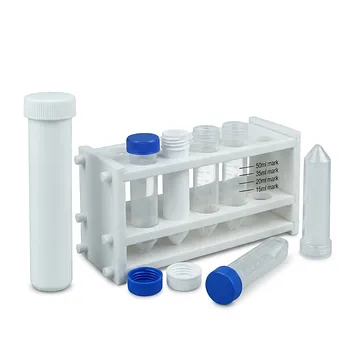
- Custom PTFE Digestion Tubes and High Purity Polytetrafluoroethylene Centrifuge Vessels 60ml for Trace Analysis
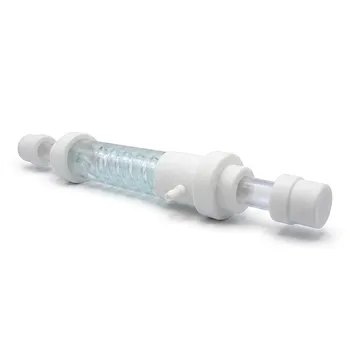
- Custom PTFE Condenser Tube 100ml Serpentine and Straight Fluoropolymer Laboratory Heat Exchanger with Flask Adapters
- Custom PTFE Test Tubes Corrosion Resistant Low Background Fluoropolymer Labware 50ml 30ml
- Corrosion Resistant PTFE Digestion Tube White Opaque Tubular Bottle for Geological Mineral Sample Preparation Screw Cap Sealed Laboratory Vessel
- Virgin PTFE Laboratory Syringe 50ml for Corrosive Chemical Handling and Automated Syringe Pump Systems with FEP Tube Compatibility
People Also Ask
- What are the common capacities and physical configurations available for PTFE digestion tubes? Expert Selection Guide
- How do PTFE digestion tubes minimize contamination during ultra-trace elemental analysis? Achieve high-purity results.
- What is the primary function of PTFE digestion tubes in a laboratory setting? Essential for Pure Sample Mineralization
- How do PTFE digestion tubes assist in pharmaceutical and biological sample preparation? Ensure High Recovery & Purity
- How do PTFE digestion tubes facilitate the analysis of food and agricultural products? Ensure High-Purity Mineralization