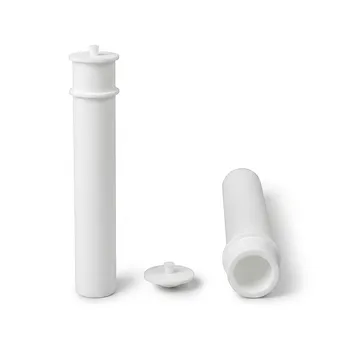
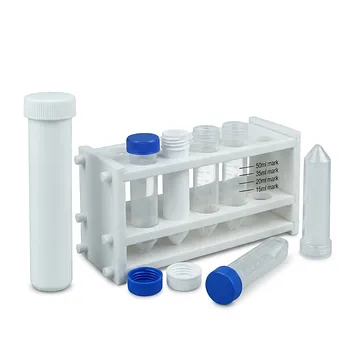
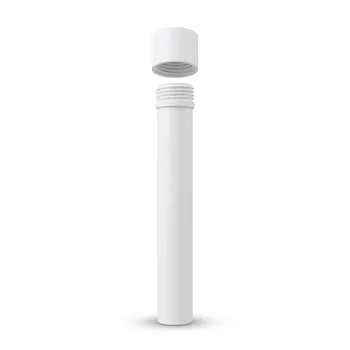
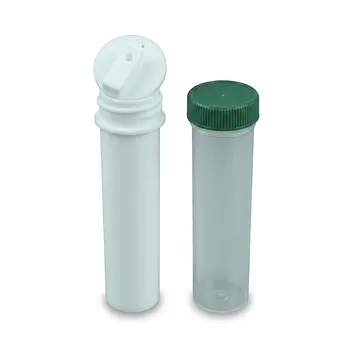
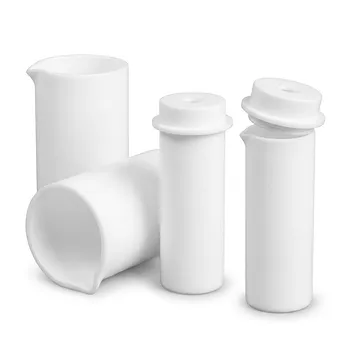
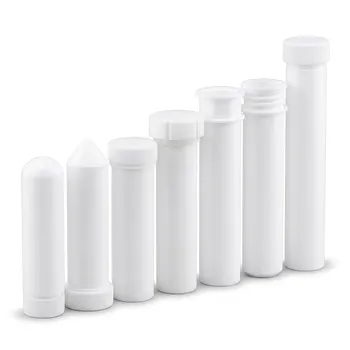
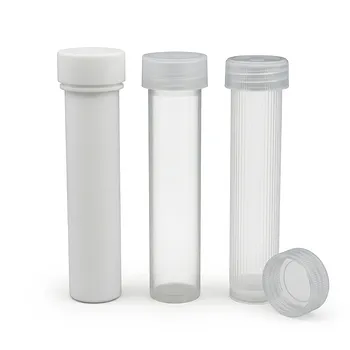
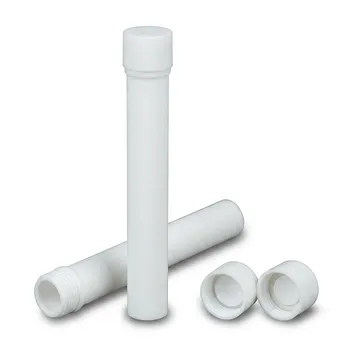
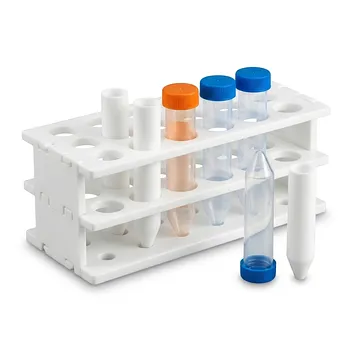
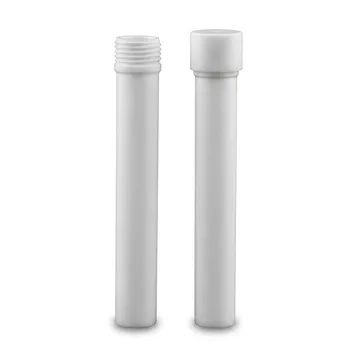
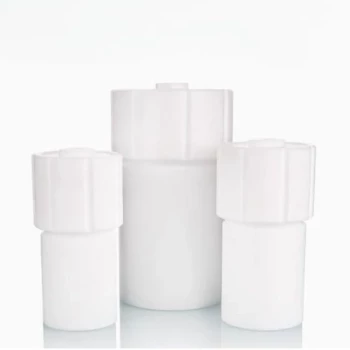
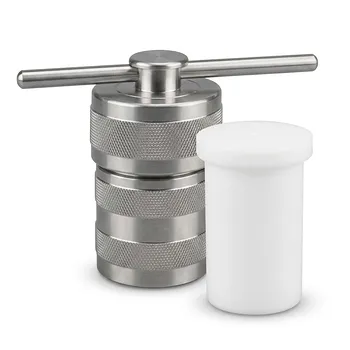
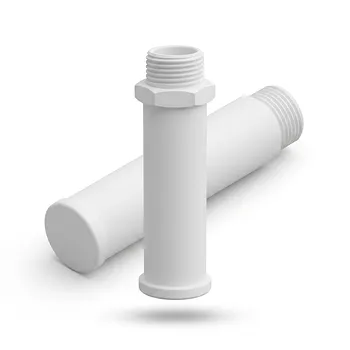
PTFE digestion tubes facilitate the analysis of food and agricultural products by providing a chemically inert, high-pressure environment for the complete mineralization of complex organic matrices. These vessels allow aggressive acids to break down fats, proteins, and carbohydrates into a homogeneous aqueous solution. This process is essential for preparing samples for high-precision elemental analysis techniques like ICP-MS, ICP-OES, and Atomic Absorption Spectroscopy (AAS).
The core takeaway is that PTFE digestion tubes serve as robust, high-purity reactors that ensure the total oxidation of organic matter while preventing sample contamination or the loss of volatile analytes. They provide the necessary stability for accurate trace element detection in diverse agricultural samples.
Achieving Complete Mineralization of Organic Matrices
Rapid Oxidation of Fats and Proteins
Food samples are often rich in organic-rich matrices, including complex lipids, proteins, and carbohydrates. PTFE tubes allow for the use of concentrated nitric acid and peroxide-assisted digestions to rapidly oxidize these components at elevated temperatures.
Reducing Residual Carbon for Signal Stability
Effective digestion must minimize residual carbon to ensure stable signals during downstream analysis. By facilitating complete decomposition, PTFE vessels prevent carbon-based interferences that could otherwise skew results in sensitive instruments like ICP-OES.
Homogenization of Solid Agricultural Samples
Agricultural products are typically solid or semi-solid and cannot be analyzed directly by most spectrometers. These tubes enable the decomposition of complex matrices into clear, aqueous solutions, providing an accurate reference baseline for verifying extraction efficiencies.
Maintaining Sample Integrity and Trace Accuracy
Eliminating Metallic Impurity Leaching
PTFE is selected for its extremely low metallic impurity background, ensuring that container walls do not leach ions like aluminum, calcium, or sodium into the sample. This chemical inertness is critical when measuring mineral concentrations that must originate solely from the food or plant sample itself.
Preventing the Loss of Volatile Contaminants
High-temperature, pressurized digestion in closed PTFE systems prevents the loss of volatile toxic contaminants. By sealing the reaction, the tubes ensure that elements which might evaporate under open-vessel conditions are retained for accurate measurement.
Chemical Resistance to Aggressive Reagents
The material exhibits exceptional chemical stability, allowing it to withstand severe corrosion from concentrated nitric acid and hydrofluoric acid. This resistance ensures the vessel remains structural integrity even when processing the most difficult agricultural formulations.
Engineering for High-Pressure Environments
Microwave Transparency and Uniform Heating
In microwave digestion systems, PTFE’s microwave transparency allows energy to pass through the vessel wall and heat the digestion solution directly. This leads to uniform heating and faster reaction times compared to traditional conductive heating methods.
Managing Exothermic Reactions Safely
Digesting protein-rich or fatty formulations often results in exothermic reactions that increase internal pressure. High-performance PTFE vessels are designed with excellent pressure resistance to safely manage these spikes during the mineralization process.
Durability at Elevated Temperatures
These tubes are designed to operate at temperatures reaching up to 200°C. This thermal ceiling is necessary to reach the activation energy required to break down the resilient molecular bonds found in many food products.
Understanding the Trade-offs
Temperature and Pressure Limitations
While PTFE is highly resilient, it has a functional temperature limit (typically around 200°C to 260°C depending on the grade) and can deform if internal pressures exceed design specifications. Exceeding these limits can lead to vessel "memory" effects or physical failure, potentially compromising sample batch safety.
Potential for Cross-Contamination
Despite its inertness, PTFE is a porous material compared to quartz or glass. If not cleaned using rigorous acid-leaching protocols, trace amounts of previous samples can be retained in the pores, leading to carryover errors in subsequent agricultural analyses.
How to Apply This to Your Analysis Goals
To ensure the best results when using PTFE digestion tubes for food and agricultural products, align your vessel selection with your specific analytical requirements:
- If your primary focus is trace element detection (e.g., Lead or Arsenic): Prioritize high-purity PTFE vessels with the lowest possible metallic background to prevent leaching.
- If your primary focus is high-throughput sample processing: Utilize PTFE tubes in a microwave digestion system to take advantage of microwave transparency and rapid, uniform heating.
- If your primary focus is volatile element recovery: Ensure the use of a closed-system PTFE design to prevent the escape of gaseous analytes during high-temperature digestion.
- If your primary focus is analyzing fatty or oily matrices: Employ peroxide-assisted digestion within the tubes to ensure the reduction of residual carbon and a clear final solution.
By leveraging the unique material properties of PTFE, laboratories can transform complex agricultural matter into precise data with high reproducibility and regulatory compliance.
Summary Table:
| Feature | Benefit for Food & Agricultural Analysis |
|---|---|
| Chemical Inertness | Prevents metallic leaching; ensures accurate trace element detection (ICP-MS/OES). |
| Thermal Stability | Operates up to 200°C to break down complex fats, proteins, and carbohydrates. |
| Microwave Transparency | Enables rapid, uniform heating for faster sample mineralization. |
| Closed-System Design | Retains volatile contaminants like Arsenic or Mercury for precise measurement. |
| Acid Resistance | Withstands aggressive nitric and hydrofluoric acid used in organic digestion. |
Upgrade Your Lab with KINTEK’s High-Performance Fluoropolymer Solutions
Ensure the integrity of your trace analysis with KINTEK’s premium laboratory supplies. From everyday basic labware like PFA/PTFE beakers, crucibles, and digestion tubes to specialized sample prep and filtration tools, we provide the high-purity environment your food and agricultural research demands.
At KINTEK, we focus exclusively on high-performance fluoropolymers, offering everything from comprehensive fluid transfer components (tubing, valves) and general consumables (O-rings, seal tapes) to advanced reaction apparatus like custom electrochemical cells and microwave digestion vessels. Benefit from our end-to-end custom CNC fabrication for bespoke setups or high-volume orders tailored to your exact specifications.
Ready to eliminate contamination and boost accuracy? Contact our experts today to find the perfect solution for your laboratory.
Related Products
- Custom 100ml PTFE Digestion Tube for Heavy Metal Trace Analysis and High Temperature Acid Digestion
- Custom PTFE Digestion Tube Double Sided Openable High Temperature Corrosion Resistant Low Background
- Corrosion Resistant PTFE Digestion Tube White Opaque Tubular Bottle for Geological Mineral Sample Preparation Screw Cap Sealed Laboratory Vessel
- Custom PTFE Digestion Tubes and High Purity Polytetrafluoroethylene Centrifuge Vessels 60ml for Trace Analysis
- High Purity PTFE Digestion Tubes for Microwave Systems Soil and Food Trace Analysis Acid Resistant Customizable
People Also Ask
- What are the common capacities and physical configurations available for PTFE digestion tubes? Expert Selection Guide
- How do PTFE digestion tubes assist in pharmaceutical and biological sample preparation? Ensure High Recovery & Purity
- What is the primary function of PTFE digestion tubes in a laboratory setting? Essential for Pure Sample Mineralization
- How do PTFE digestion tubes minimize contamination during ultra-trace elemental analysis? Achieve high-purity results.
- What is the primary role of a PTFE digestion tube in analytical chemistry? Ensure High Purity and Trace Accuracy