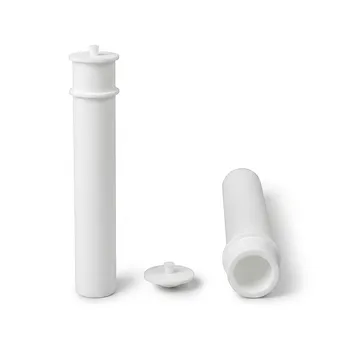
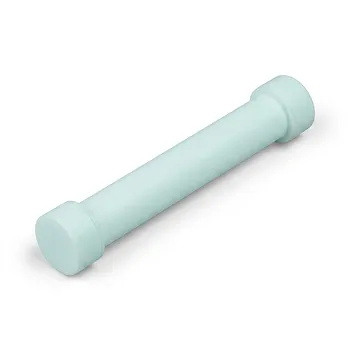
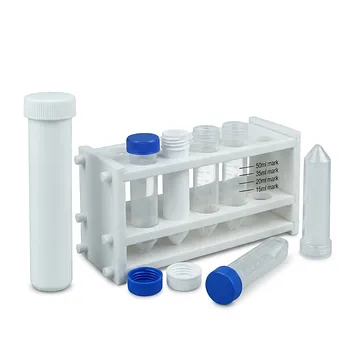
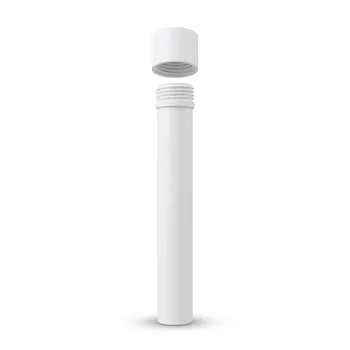
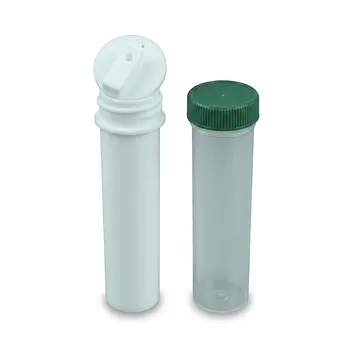
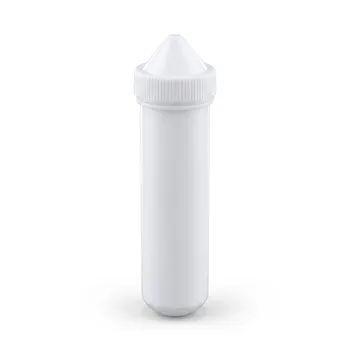
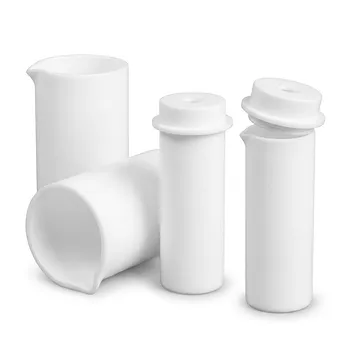
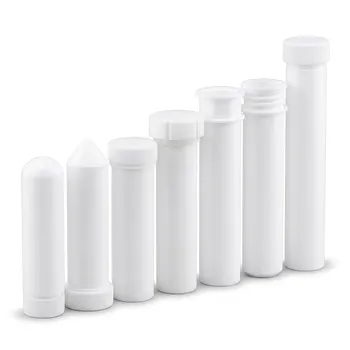
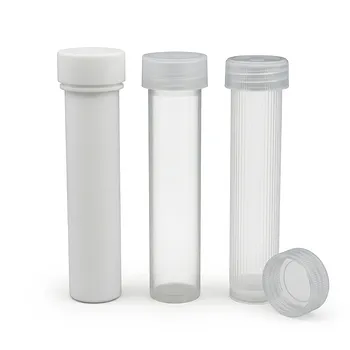
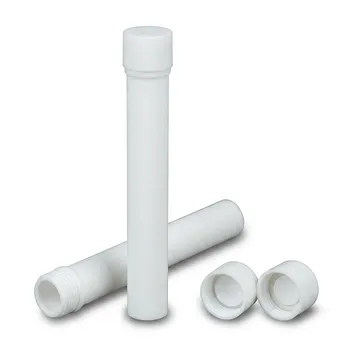
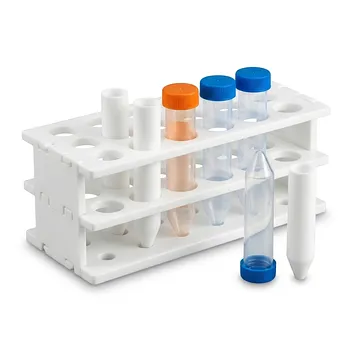
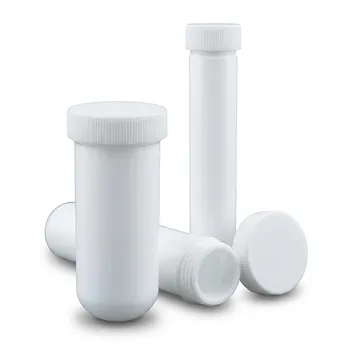
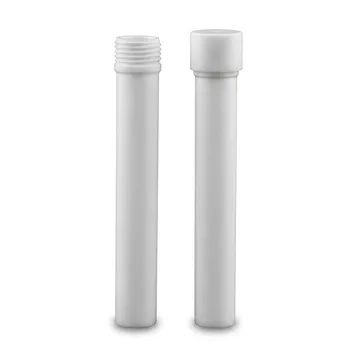
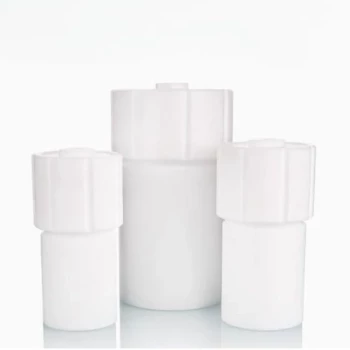
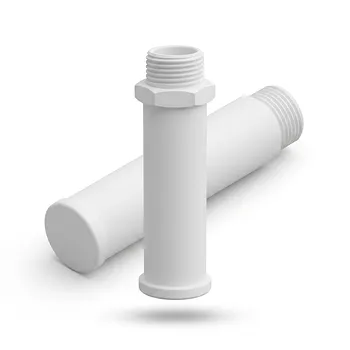
The primary role of a PTFE digestion tube is to act as a chemically inert, high-pressure reaction vessel used to decompose complex samples into clear aqueous solutions for elemental analysis. This critical component allows scientists to break down solid or semi-solid matrices using aggressive acids—such as nitric or hydrofluoric acid—at elevated temperatures, ensuring the sample is fully prepared for techniques like ICP-MS, ICP-OES, or atomic absorption spectroscopy.
Core Takeaway: PTFE digestion tubes provide a non-reactive environment that withstands extreme heat and corrosive chemistry, ensuring that samples are completely mineralized without being contaminated by the container itself.
Facilitating Complex Sample Decomposition
Transforming Matrices into Analyzable Liquids
The digestion tube is the fundamental site where "wet chemical digestion" occurs. It allows for the total breakdown of organic and inorganic matter, turning a physical sample into a homogeneous liquid that can be safely processed by sensitive laboratory instrumentation.
Handling Aggressive Chemical Reagents
Unlike glass, which can be etched by certain chemicals, PTFE is designed to hold the most aggressive reagents used in the lab. This includes hydrofluoric acid (HF), which is essential for dissolving silicates but would quickly destroy traditional glassware.
Withstanding Elevated Temperature and Pressure
During the digestion process, temperatures often reach 120°C or higher, creating significant internal pressure. PTFE maintains its structural integrity under these conditions, providing a stable, closed environment necessary for complete sample mineralization.
Ensuring Analytical Purity and Accuracy
Eliminating Metal Contamination
A primary challenge in trace element analysis is preventing the container from leaching impurities into the sample. PTFE is used specifically because it has extremely low heavy metal background levels, ensuring that the results reflect the sample content rather than the vessel's material.
Preventing Trace Element Adsorption
In trace-level work, sample loss is as dangerous as contamination. The high-performance fluoropolymer surface of these tubes prevents adsorption loss, where trace elements might otherwise "stick" to the walls of the container, leading to falsely low readings.
Protecting Laboratory Infrastructure
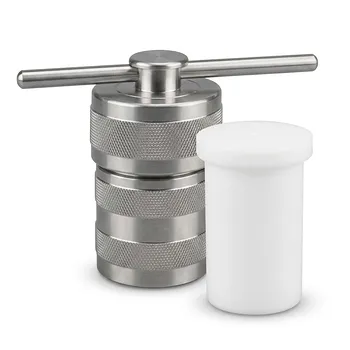
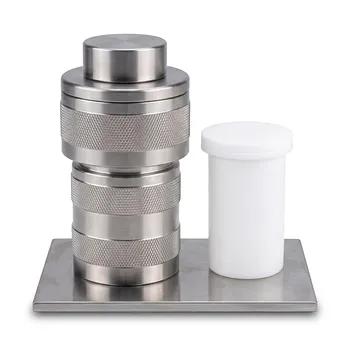
In applications like hydrothermal synthesis or microwave digestion, the PTFE tube often acts as a liner. This liner protects the outer stainless steel jackets or microwave components from being corroded by escaping acid vapors, extending the life of expensive equipment.
Understanding the Trade-offs
Temperature Limitations
While PTFE is thermally stable, it has a functional ceiling; it typically begins to soften or deform if temperatures exceed 260°C. For applications requiring extreme heat beyond this range, alternative materials like quartz or TFM may be required.
Potential for Memory Effects
Over long periods of repeated use, certain volatile elements or compounds can occasionally "soak" into the porous surface of the polymer. This requires rigorous cleaning protocols (often involving acid steaming) to prevent carry-over contamination between different samples.
Physical Deformation Under Stress
PTFE is a "soft" plastic compared to metals or ceramics. Under repeated high-pressure cycles, digestion tubes can experience creep or deformation, eventually requiring replacement to ensure a proper seal and safety during pressurized runs.
Making the Right Choice for Your Goal
How to Apply This to Your Project
- If your primary focus is trace-level metal analysis: Utilize high-purity PTFE tubes to ensure the lowest possible background noise and prevent leaching of heavy metals.
- If your primary focus is silicate or soil digestion: Ensure you are using PTFE specifically to allow for the safe use of hydrofluoric acid, which is incompatible with glass vessels.
- If your primary focus is high-throughput microwave digestion: Select reinforced PTFE or TFM liners designed to withstand the rapid pressure spikes and temperature fluctuations common in microwave systems.
By providing an environment that is both chemically resilient and analytically "clean," the PTFE digestion tube serves as the silent guardian of data integrity in the modern analytical laboratory.
Summary Table:
| Feature | Benefit to Analytical Chemistry | Common Application |
|---|---|---|
| Chemical Inertness | Resists HF and strong acids without leaching | Silicate and soil decomposition |
| High Purity | Extremely low heavy metal background | ICP-MS and trace element analysis |
| Non-stick Surface | Prevents adsorption and sample loss | Accurate concentration measurement |
| Thermal Stability | Maintains integrity up to 260°C | Pressurized wet chemical digestion |
| Durability | Protects microwave and stainless steel hardware | Acid mineralization liners |
Elevate Your Analytical Precision with KINTEK
At KINTEK, we understand that in trace analysis, your results are only as good as your containers. We specialize in high-performance fluoropolymer solutions, manufacturing virtually all imaginable laboratory supplies from PTFE and PFA.
Whether you need everyday basics like beakers, reagent bottles, and centrifuge tubes, or specialized tools such as high-purity digestion vessels, hydrothermal synthesis liners, and custom electrochemical cells, we have you covered. Our end-to-end custom CNC fabrication allows us to deliver everything from high-volume consumables to complex, non-standard machined parts designed for your unique research needs.
Ready to eliminate contamination and optimize your fluid transfer?
Contact us today to discuss your laboratory requirements!
Related Products
- Custom 100ml PTFE Digestion Tube for Heavy Metal Trace Analysis and High Temperature Acid Digestion
- Custom PTFE Digestion Tube Double Sided Openable High Temperature Corrosion Resistant Low Background
- Corrosion Resistant PTFE Digestion Tube White Opaque Tubular Bottle for Geological Mineral Sample Preparation Screw Cap Sealed Laboratory Vessel
- Custom PTFE Digestion Tubes and High Purity Polytetrafluoroethylene Centrifuge Vessels 60ml for Trace Analysis
- High Purity PTFE Digestion Tubes for Microwave Systems Soil and Food Trace Analysis Acid Resistant Customizable
People Also Ask
- What are the common capacities and physical configurations available for PTFE digestion tubes? Expert Selection Guide
- How do PTFE digestion tubes assist in pharmaceutical and biological sample preparation? Ensure High Recovery & Purity
- How do PTFE digestion tubes minimize contamination during ultra-trace elemental analysis? Achieve high-purity results.
- What is the primary function of PTFE digestion tubes in a laboratory setting? Essential for Pure Sample Mineralization
- How do PTFE digestion tubes facilitate the analysis of food and agricultural products? Ensure High-Purity Mineralization