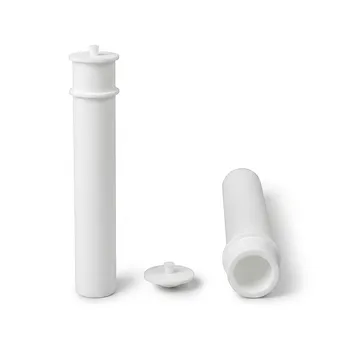
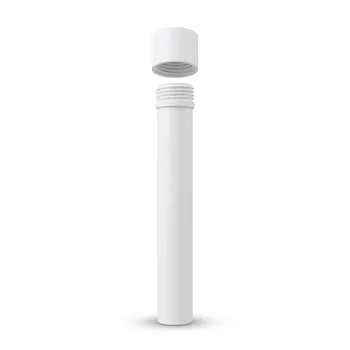
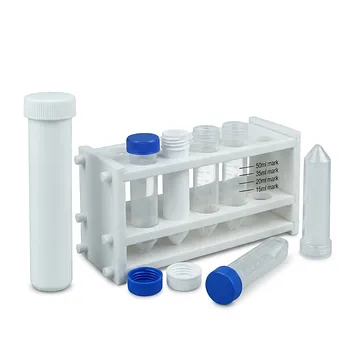
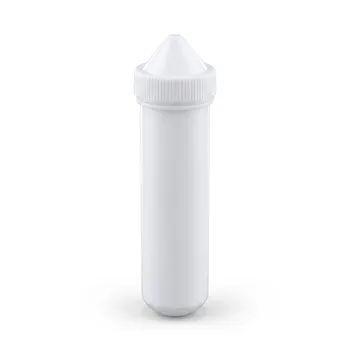
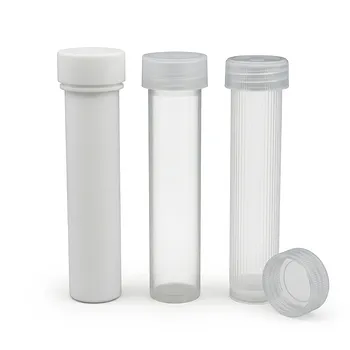
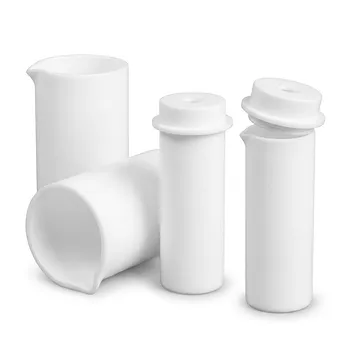
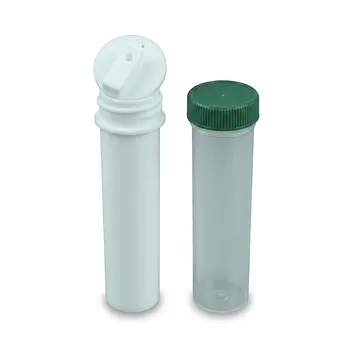
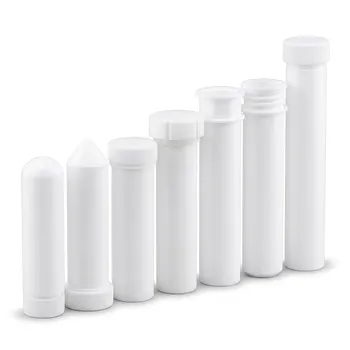
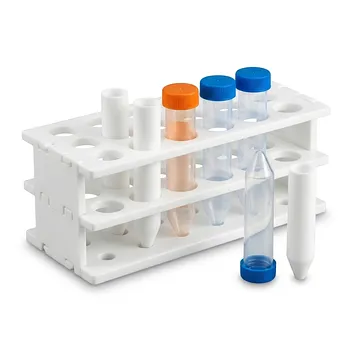
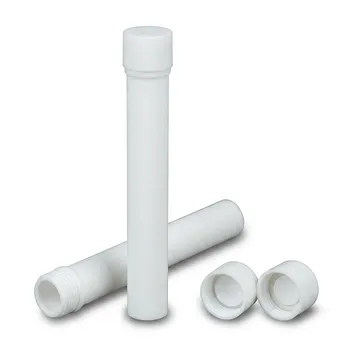
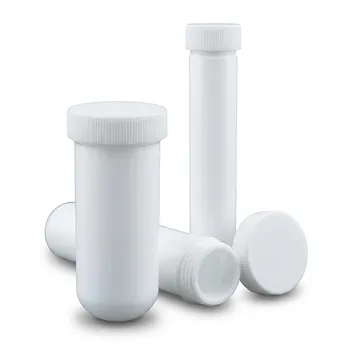
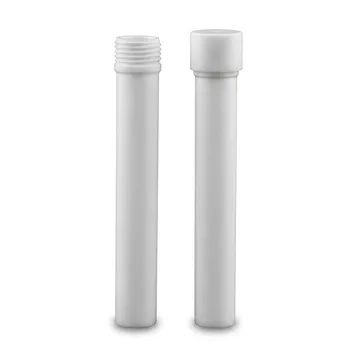
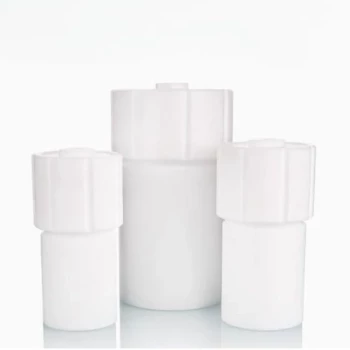
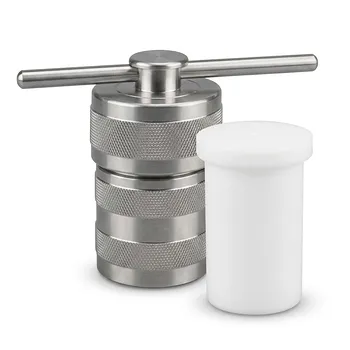
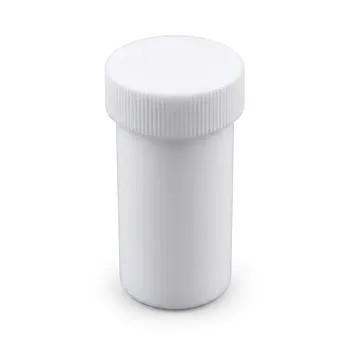
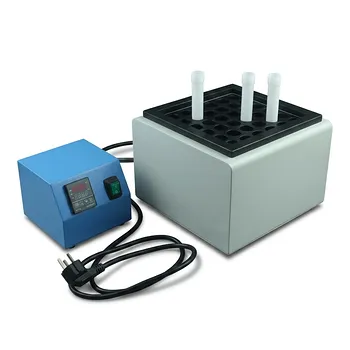
PTFE digestion tubes minimize contamination through a combination of chemical inertness, non-porous surface architecture, and exceptionally low elemental leaching. These vessels create a passive environment where samples do not react with or adhere to the container walls, nor do the walls release trace impurities into the acid matrix. This stability is essential for maintaining the ultra-low "blank" levels required for the precision of modern ICP-MS and other spectroscopy techniques.
High-purity PTFE provides a hydrophobic, non-stick barrier that prevents both the loss of analytes via adsorption and the introduction of impurities via leaching. This dual protection ensures that the elemental profile of the final solution accurately reflects the sample itself, maintaining the integrity of ultra-trace measurements.
The Mechanics of Surface Purity
Non-Porous and Hydrophobic Barrier
The surface of high-purity PTFE is naturally non-porous and hydrophobic. This prevents liquid samples and acid reagents from penetrating the material, which effectively eliminates the "memory effect" where residues from previous samples linger within the vessel walls.
Minimizing Analyte Adsorption
In ultra-trace analysis, losing even a small fraction of the sample to the container wall can skew results. PTFE’s non-stick properties ensure that target elements do not adhere to the vessel, leading to exceptionally high recovery rates during the transfer of the digestion solution.
Surface Smoothness and Carryover
The ultra-smooth surface of fluoropolymer materials prevents the physical trapping of micro-particles or reagents. This characteristic makes the tubes easier to clean and significantly reduces the risk of carryover contamination between different sample batches.
Chemical Inertness Under Extreme Conditions
Resistance to Aggressive Digestion Reagents
Sample preparation often requires the use of concentrated nitric, hydrochloric, or hydrofluoric acids at elevated temperatures. PTFE is extraordinarily non-reactive, allowing it to withstand these harsh chemicals without degrading or introducing secondary contaminants into the sample.
Low Elemental Leaching Rates
Unlike glass or standard plastics, high-purity PTFE contains virtually no trace metal impurities. It prevents the vessel from "bleeding" elements such as Aluminum (Al), Iron (Fe), or Lead (Pb) into the solution, which is critical for maintaining the high sensitivity required for microplastic or soil analysis.
Stability During Prolonged Heating
During processes involving prolonged contact with strong acids at high temperatures, PTFE maintains its chemical passivity. This ensures that the container does not become a source of error even during intensive, multi-hour digestion cycles.
Understanding the Trade-offs
Thermal Limits
While PTFE offers excellent thermal resistance, it has a lower maximum operating temperature than materials like quartz or certain ceramics. Exceeding its thermal threshold can lead to mechanical deformation or the potential release of fluorinated vapors.
Mechanical Sensitivity
The internal surface of a PTFE tube is susceptible to physical scratching if handled with abrasive tools or improper cleaning brushes. Scratches create microscopic crevices that can trap contaminants, undermining the non-porous advantages of the material.
Cost and Cleaning Protocols
High-purity fluoropolymers represent a significant investment compared to disposable alternatives. To maintain their low-background status, they require rigorous acid-leaching cleaning protocols, which can be time-consuming for laboratory staff.
Making the Right Choice for Your Goal
When integrating PTFE digestion tubes into your workflow, consider your specific analytical requirements:
- If your primary focus is ultra-trace metal analysis (e.g., ICP-MS): High-purity PTFE is the gold standard because it ensures the lowest possible elemental background and prevents analyte loss.
- If your primary focus is high-throughput, routine digestion: PTFE is ideal for its ease of cleaning and durability, provided that temperature limits are strictly monitored to prevent tube warping.
- If your primary focus is maximum sample recovery: The hydrophobic, non-stick nature of PTFE ensures that the entire digested solution can be transferred, which is vital when working with limited sample volumes.
By leveraging the unique material properties of PTFE, laboratories can ensure the highest levels of accuracy and sensitivity in their most demanding elemental assessments.
Summary Table:
| Feature | Mechanism of Action | Analytical Benefit |
|---|---|---|
| Chemical Inertness | Resists aggressive acids (HF, $HNO_3$, HCl) | Prevents container degradation and blanks |
| Hydrophobic Surface | Repels liquids and prevents adsorption | Ensures high analyte recovery rates |
| Non-Porous Structure | Eliminates "memory effects" and carryover | Reduces cross-contamination between batches |
| Low Leaching Rate | Negligible trace metal content (Al, Fe, Pb) | Maintains ultra-low background for ICP-MS |
| Ultra-Smooth Finish | Prevents physical trapping of micro-particles | Simplifies cleaning and decontamination |
Elevate Your Analytical Precision with KINTEK
At KINTEK, we maintain an exclusive focus on high-performance fluoropolymers to protect the integrity of your most sensitive samples. From everyday basic labware like PTFE/PFA digestion tubes, beakers, and reagent bottles to advanced derivative apparatus such as microwave digestion vessels and custom reaction cells, we deliver the purity your lab demands.
Our end-to-end custom CNC fabrication allows us to provide everything from high-volume consumables to bespoke, non-standard machined parts—ensuring your fluid transfer components, filtration tools, and sample prep equipment meet the rigorous standards of ultra-trace analysis.
Ready to minimize your blanks and maximize recovery? Contact us today to discuss your standard or custom laboratory requirements and see how our fluoropolymer expertise can optimize your workflow.
Related Products
- Custom 100ml PTFE Digestion Tube for Heavy Metal Trace Analysis and High Temperature Acid Digestion
- High Purity PTFE Digestion Tubes for Microwave Systems Soil and Food Trace Analysis Acid Resistant Customizable
- Custom PTFE Digestion Tubes and High Purity Polytetrafluoroethylene Centrifuge Vessels 60ml for Trace Analysis
- High Purity PTFE Digestion Tubes and Custom Centrifuge Tubes 100ml for Trace Analysis and Chemical Digestion
- Custom PTFE Digestion Tube Double Sided Openable High Temperature Corrosion Resistant Low Background
People Also Ask
- What are the common capacities and physical configurations available for PTFE digestion tubes? Expert Selection Guide
- How do PTFE digestion tubes assist in pharmaceutical and biological sample preparation? Ensure High Recovery & Purity
- What is the primary function of PTFE digestion tubes in a laboratory setting? Essential for Pure Sample Mineralization
- What is the primary role of a PTFE digestion tube in analytical chemistry? Ensure High Purity and Trace Accuracy
- How does a PTFE digestion tube facilitate sample decomposition in a conventional hot-block heating system? Boost Efficiency & Purity