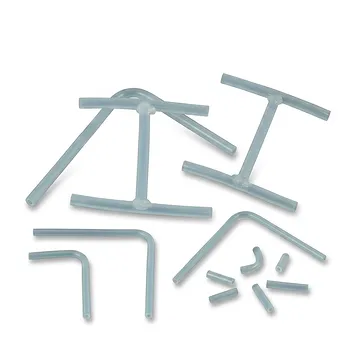
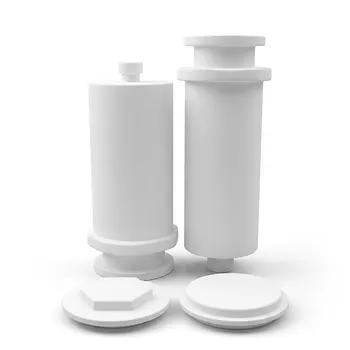
PTFE tubing ensures analytical accuracy by providing a chemically inert and low-friction fluid path that prevents sample contamination and ensures precise flow control. In high-precision environments like HPLC or mass spectrometry, it conveys reagents without reacting with them or adsorbing analytes. This "passive" behavior guarantees that the data collected reflects the sample's true composition rather than artifacts of the tubing material.
Core Takeaway: PTFE is the foundational material for analytical fluid paths because its near-universal chemical resistance and non-stick surface eliminate the chemical and physical variables that typically skew experimental results.
Eliminating Chemical Interference and Contamination
Protecting Sample Integrity through Inertness
PTFE is virtually non-reactive, meaning it will not leach ions or degrade when exposed to aggressive acids, strong bases, or organic solvents. This ensures that sensitive reagents remain pure and that the tubing itself does not introduce "ghost peaks" or impurities into the analysis.
Preventing Analyte Adsorption
In trace analysis, losing a small amount of a sample to the tubing walls can lead to significant errors. PTFE’s surface properties prevent analytes from sticking or adsorbing, which is especially critical in microfluidics to avoid the denaturation of sensitive biological molecules.
Resistance to Harsh Electrochemical Electrolytes
For electrochemical systems, PTFE maintains its integrity against electrolytes like potassium hydroxide without leaching impurities. This prevents the "poisoning" of expensive catalysts, ensuring that long-term tests remain accurate and reproducible.
Optimizing Fluid Dynamics for Precise Delivery
Smooth Bore for Low-Flow Precision
The internal surface of PTFE tubing is exceptionally smooth, which reduces friction and allows for precise, low-flow delivery of mobile phases. This consistency is vital for maintaining the stable laminar flow regimes required in microfluidic reaction channels.
Minimizing Carry-over and Peak Broadening
PTFE’s non-stick properties and the availability of zero dead-volume fittings prevent sample residue from being trapped between runs. By eliminating these "pockets" of old sample, researchers avoid carry-over contamination and the broadening of peaks in chromatography.
Visual Confirmation and Monitoring
Thin-walled versions of PTFE tubing offer enough transparency for researchers to visually confirm flow and identify air bubbles. This real-time monitoring capability allows for the immediate correction of flow disruptions that would otherwise invalidate a data set.
Understanding the Trade-offs and Limitations
Pressure Limitations in High-Flow Systems
While PTFE is excellent for many applications, it has lower burst pressure ratings compared to materials like PEEK or stainless steel. In ultra-high-pressure liquid chromatography (UHPLC), PTFE may fail if used in the high-pressure side of the system.
Challenges with Gas Permeability
PTFE is slightly porous to certain gases, which can lead to the "degassing" of solvents or the intake of atmospheric oxygen. If your application is highly sensitive to dissolved oxygen or requires absolute gas-tightness, specialized grades or alternative materials may be necessary.
Mechanical "Creep" or Cold Flow
Under constant mechanical stress or high-pressure fitting compression, PTFE tends to "creep" or deform over time. This can lead to leaks at connection points if fittings are not regularly inspected or if the tubing is not properly supported.
Applying PTFE Tubing to Your Analytical Goals
How to Choose the Right Configuration
Selecting the right tubing depends on the specific chemical and mechanical demands of your instrumentation.
- If your primary focus is Trace Analysis: Use high-purity PTFE to ensure zero analyte adsorption and prevent the leaching of contaminants into your sample stream.
- If your primary focus is Microfluidic Stability: Prioritize smooth-bore, thin-walled PTFE to maintain stable laminar flow and allow for visual monitoring of reaction channels.
- If your primary focus is Handling Aggressive Chemicals: Leverage PTFE’s universal compatibility to safely transport substances like hydrofluoric acid that would destroy glass or metal components.
- If your primary focus is High-Pressure Chromatography: Limit PTFE to the low-pressure solvent intake lines and use PEEK or stainless steel for the high-pressure flow path.
By understanding the unique chemical and physical properties of PTFE, you can design fluid paths that protect the integrity of your samples and ensure the highest possible level of analytical precision.
Summary Table:
| Feature | Impact on Analytical Accuracy | Ideal Application |
|---|---|---|
| Chemical Inertness | Prevents sample contamination and leaching of impurities | Trace analysis & handling aggressive acids |
| Non-stick Surface | Eliminates analyte adsorption and sample carry-over | Chromatography & protein-sensitive microfluidics |
| Smooth-Bore Design | Ensures stable laminar flow and precise low-flow delivery | Microfluidic reaction channels & HPLC intake |
| Visual Transparency | Allows real-time monitoring to detect disruptive air bubbles | General laboratory fluid monitoring |
| Thermal Stability | Maintains integrity across wide temperature ranges | High-temperature reaction and synthesis |
Upgrade Your Lab’s Precision with KINTEK’s Fluoropolymer Expertise
Achieving absolute analytical accuracy starts with the right materials. At KINTEK, we specialize in high-performance PTFE and PFA solutions tailored for the most demanding laboratory environments. Whether you need everyday essentials like beakers, measuring cylinders, crucibles, and reagent bottles, or specialized fluid transfer components (tubing, fittings, valves) and filtration tools, we ensure your fluid path remains pure and precise.
Our expertise extends from general consumables like stirring bars and O-rings to advanced reaction apparatus, including standard or custom electrochemical cells, battery testing fixtures, and microwave digestion vessels. Backed by end-to-end custom CNC fabrication, we deliver everything from complex non-standard machined parts to high-volume orders with an exclusive focus on high-performance fluoropolymers.
Don't let material interference compromise your data. Contact KINTEK today to discover how our bespoke laboratory setups and high-purity instruments can optimize your research results!
Related Products
- Custom High Purity PTFE Digestion Tubes and Centrifuge Tubes for Trace Metal Analysis
- High Purity PTFE Digestion Tubes and Custom Centrifuge Tubes 100ml for Trace Analysis and Chemical Digestion
- Custom PTFE Digestion Tube Double Sided Openable High Temperature Corrosion Resistant Low Background
- Corrosion Resistant PTFE Digestion Tubes for Graphite Block Systems with Acid Reflux Caps Custom Dimensions
- Custom PTFE Condenser Tube 100ml Serpentine and Straight Fluoropolymer Laboratory Heat Exchanger with Flask Adapters
People Also Ask
- What are the common capacities and physical configurations available for PTFE digestion tubes? Expert Selection Guide
- How do PTFE digestion tubes minimize contamination during ultra-trace elemental analysis? Achieve high-purity results.
- What is the primary function of PTFE digestion tubes in a laboratory setting? Essential for Pure Sample Mineralization
- How do PTFE digestion tubes assist in pharmaceutical and biological sample preparation? Ensure High Recovery & Purity
- How does the synergy of pressure and temperature within a PTFE digestion tube improve digestion efficiency? Accelerate Sample Prep