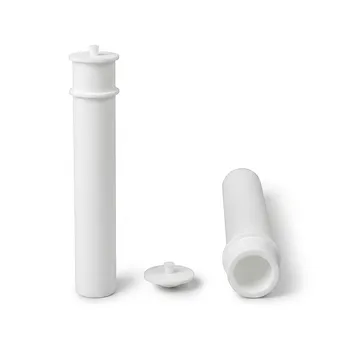
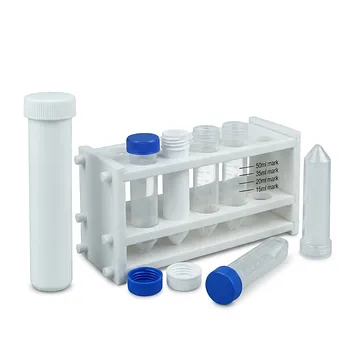
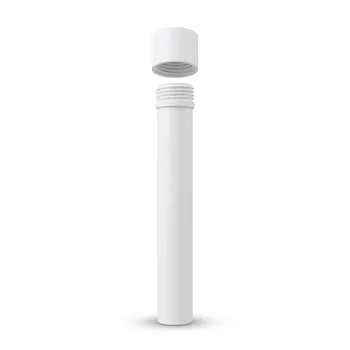
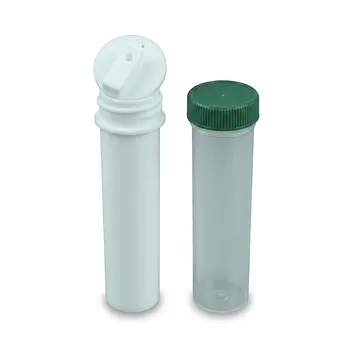
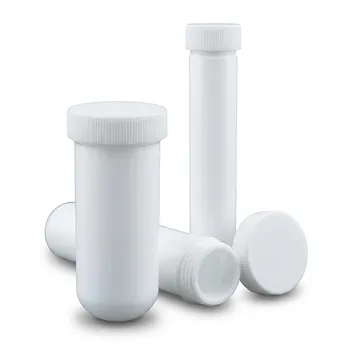
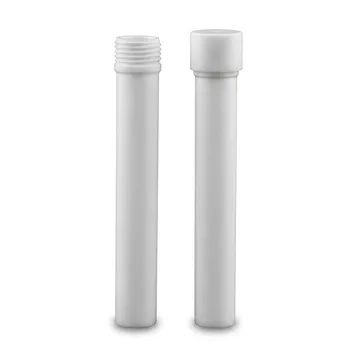
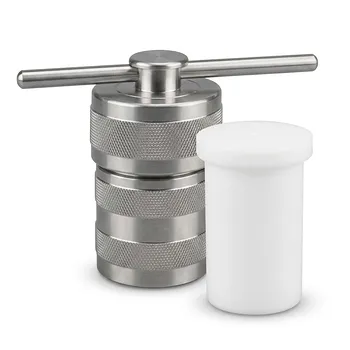
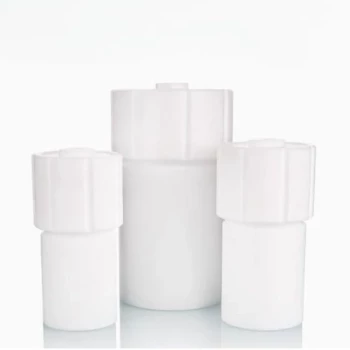
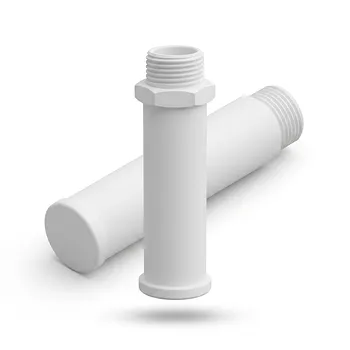
The synergy of pressure and temperature in a PTFE digestion tube acts as a kinetic multiplier for chemical decomposition. By creating a sealed, high-pressure environment, the tube prevents acids from boiling away, allowing them to reach temperatures far exceeding their atmospheric boiling points. This elevated thermal energy triggers Arrhenius kinetics, exponentially accelerating the reaction rate to decompose even the most "stubborn" organic and inorganic matrices.
Closed-vessel digestion leverages internal pressure to bypass standard boiling limits, enabling acids to operate at higher energy states. This synergy ensures rapid, complete sample breakdown while simultaneously preventing the loss of volatile elements and protecting sample purity.
Overcoming Thermodynamic Limits with Pressure
Elevating the Acid Boiling Point
In an open vessel, an acid cannot exceed its boiling point because the energy escapes as vapor. A sealed PTFE digestion tube utilizes a closed-system design to trap this vapor, causing internal pressure to rise.
This increased pressure forces the acid to remain in a liquid state at temperatures significantly higher than its normal boiling point. Consequently, the acid possesses much higher thermal energy, which is necessary to break down complex molecular bonds.
Retention of Volatile Elements
High-temperature digestion in open systems often results in the loss of volatile elements like arsenic, mercury, or selenium. The high-pressure environment of the PTFE tube ensures these elements remain contained within the liquid phase.
This containment is critical for analytical accuracy. By preventing the escape of sample components, the synergy of pressure and temperature ensures that the final digestate is a true representation of the original material.
Accelerating Reaction Rates via Arrhenius Kinetics
The Exponential Impact of Temperature
The primary driver of digestion efficiency is the Arrhenius principle, which states that chemical reaction rates increase as temperature rises. In a pressurized PTFE tube, the reaction rate roughly doubles for every 10°C increase in temperature.
Small increases in temperature lead to massive gains in efficiency. A digestion that might take hours at atmospheric pressure can be completed in minutes when the synergy of pressure and temperature is optimized.
Driving Complete Matrix Decomposition
High temperatures provide the activation energy required to decompose intractable matrices, such as oils, polymers, or geological minerals. When the acid is superheated under pressure, it becomes a much more aggressive oxidant.
This leads to a "cleaner" digestion with fewer residual carbon particles or undissolved solids. The result is a clear solution that is ready for precise instrumental analysis, such as ICP-MS.
The Role of PTFE Material Properties
Chemical Inertness and Purity
PTFE (Polytetrafluoroethylene) is chosen for these high-stress environments because of its exceptional chemical inertness. It resists corrosion from strong oxidizing agents like concentrated nitric acid, even at extreme temperatures.
The material’s smooth surface and low adsorption properties prevent heavy metal ion cross-contamination. This ensures that trace elements do not stick to the vessel walls, maintaining the integrity of the sample.
Structural Integrity and Microwave Transparency
Modern PTFE liners are designed to withstand significant mechanical stress, often supporting internal pressures up to 200 bar. This strength allows the system to maintain the high-pressure environment necessary for the temperature synergy to function.
In microwave-assisted systems, PTFE’s microwave transparency is a vital asset. It allows the energy to pass directly through the tube to heat the sample-acid mixture volumetrically, ensuring rapid and uniform temperature distribution.
Understanding the Trade-offs and Constraints
Thermal Limits of the Material
While PTFE is thermally stable, it has a definitive upper temperature limit (typically around 260°C). Exceeding these limits can lead to mechanical deformation or "creeping" of the tube, which compromises the seal.
Users must balance the desire for higher temperatures with the physical constraints of the material. Operating too close to the limit reduces the lifespan of the digestion vessels and increases maintenance costs.
Pressure Management and Safety
The very synergy that improves efficiency also creates a potential safety hazard. If a sample contains high levels of organic matter, the rapid production of CO2 gas can lead to pressure spikes that exceed the vessel's rating.
Modern systems use venting mechanisms or pressure-relief membranes to manage these risks. Understanding the carbon load of a sample is essential to prevent "catastrophic venting" or vessel failure.
Applying This Synergy to Your Lab Goals
Effective digestion requires balancing the power of the pressure/temperature synergy with the safety and purity requirements of your specific application.
- If your primary focus is rapid sample throughput: Prioritize microwave-assisted PTFE systems that utilize high-pressure liners (up to 200 bar) to reach the highest possible temperatures safely.
- If your primary focus is trace element analysis: Focus on the purity of the PTFE material and the closed-system design to ensure zero leaching and total retention of volatile analytes.
- If your primary focus is digesting unknown organic matrices: Use a "step-up" temperature program to manage the pressure generated by gas evolution, preventing safety vents from triggering.
By mastering the relationship between pressure and temperature, you transform the digestion tube from a simple container into a high-performance chemical reactor.
Summary Table:
| Factor | Impact of Pressure/Temp Synergy | Key Benefit for Lab Efficiency |
|---|---|---|
| Acid Boiling Point | Prevents vapor escape, raising internal pressure | Enables superheated acids for higher thermal energy |
| Reaction Rate | Follows Arrhenius kinetics (doubles every 10°C) | Dramatically reduces digestion time from hours to minutes |
| Volatile Retention | Maintains a pressurized sealed environment | Ensures accurate analysis of volatile elements like Hg and As |
| Matrix Breakdown | Increases activation energy for aggressive oxidation | Achieves complete decomposition of stubborn organic samples |
Elevate Your Lab Efficiency with KINTEK Fluoropolymer Solutions
Maximize your analytical precision with KINTEK’s high-performance laboratory supplies. From everyday basic labware (beakers, measuring cylinders, crucibles, and digestion tubes) to high-purity trace analysis instruments and comprehensive fluid transfer components (tubing, fittings, valves), we provide the tools you need for success.
Our expertise extends to sample prep and filtration tools (filters, pipettes, tweezers), general consumables, and advanced reaction apparatus like custom electrochemical cells and microwave digestion vessels. Every product is crafted from premium PTFE and PFA, backed by end-to-end custom CNC fabrication to meet your exact specifications—from high-volume orders to complex, non-standard machined parts.
Ready to optimize your digestion workflows? Contact KINTEK today for bespoke solutions tailored to your research!
Related Products
- Custom 100ml PTFE Digestion Tube for Heavy Metal Trace Analysis and High Temperature Acid Digestion
- Corrosion Resistant PTFE Digestion Tube White Opaque Tubular Bottle for Geological Mineral Sample Preparation Screw Cap Sealed Laboratory Vessel
- Custom PTFE Digestion Tubes and High Purity Polytetrafluoroethylene Centrifuge Vessels 60ml for Trace Analysis
- High Purity PTFE Digestion Tubes for Microwave Systems Soil and Food Trace Analysis Acid Resistant Customizable
- Custom PTFE Digestion Tube Double Sided Openable High Temperature Corrosion Resistant Low Background
People Also Ask
- What are the common capacities and physical configurations available for PTFE digestion tubes? Expert Selection Guide
- How do PTFE digestion tubes assist in pharmaceutical and biological sample preparation? Ensure High Recovery & Purity
- How do PTFE digestion tubes minimize contamination during ultra-trace elemental analysis? Achieve high-purity results.
- What is the primary function of PTFE digestion tubes in a laboratory setting? Essential for Pure Sample Mineralization
- What is the primary role of a PTFE digestion tube in analytical chemistry? Ensure High Purity and Trace Accuracy