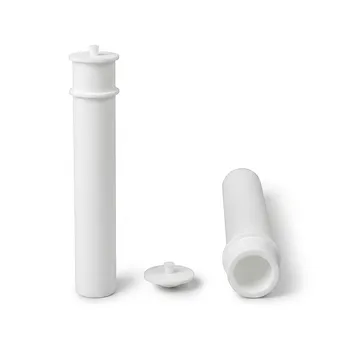
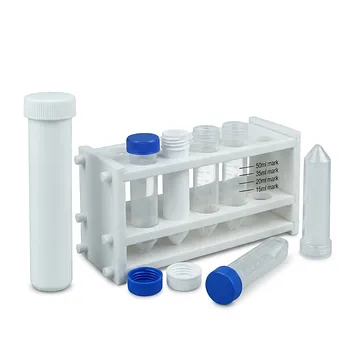
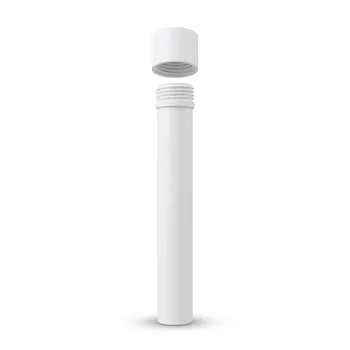
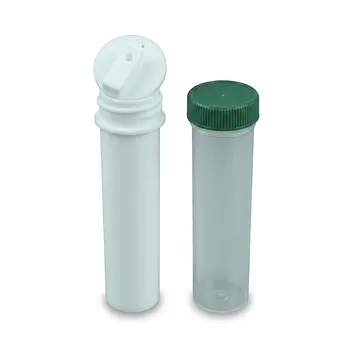
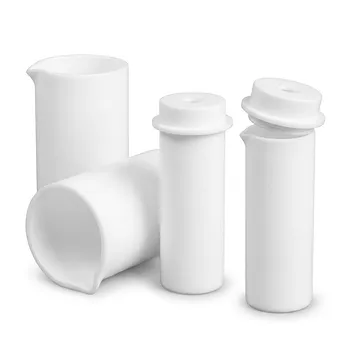
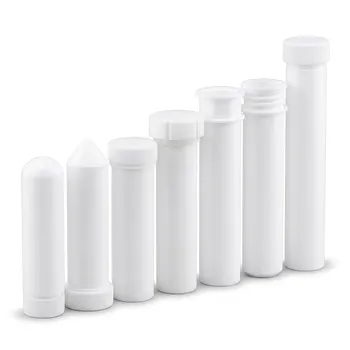
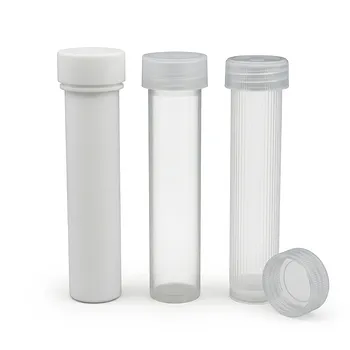
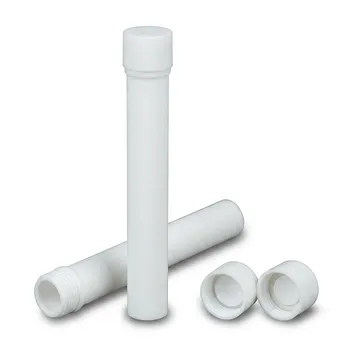
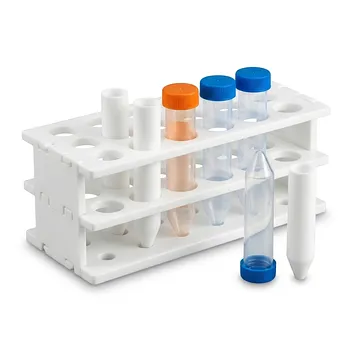
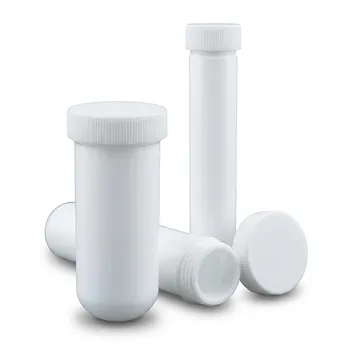
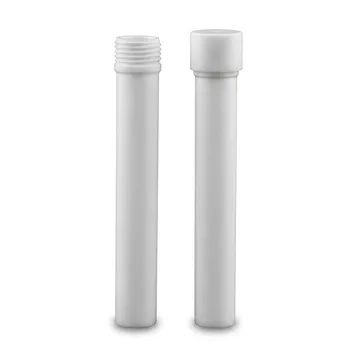
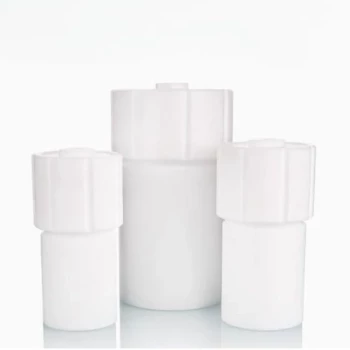
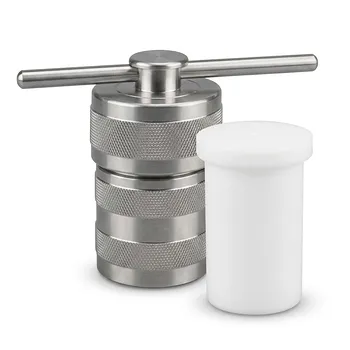
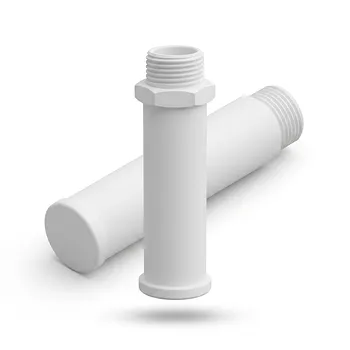
PTFE digestion tubes facilitate sample decomposition by transforming a standard hot-block into a pressurized reaction environment. In this setup, the tube acts as a semi-closed vessel that allows acids to reach temperatures far exceeding their normal boiling points, which drastically accelerates the chemical breakdown of the sample matrix.
Core Takeaway: By containing vapor pressure, PTFE tubes enable superheated conditions that leverage Arrhenius kinetics to achieve rapid, complete mineralization while ensuring high sample purity through chemical inertness.
The Thermodynamics of Pressurized Digestion
The Pressure Vessel Mechanism
In a conventional hot-block system, the PTFE tube functions as a closed or semi-closed pressure vessel. As external heat is transferred through the PTFE walls to the acid-sample mixture, internal vapor pressure begins to rise.
Elevation of Boiling Points
The increasing internal pressure effectively raises the boiling point of the acids used in the digestion process. This allows the system to reach superheated conditions, often ranging between 200°C and 250°C, which would be impossible in an open-vessel configuration.
Acceleration via Arrhenius Kinetics
The primary driver of decomposition at these high temperatures is enhanced Arrhenius kinetics. The elevated thermal energy significantly accelerates matrix oxidation and analyte solubilization, leading to faster and more complete sample breakdown.
Maintaining Chemical and Analytical Integrity
Exceptional Chemical Inertness
PTFE (Polytetrafluoroethylene) provides an inert surface that does not participate in the chemical reactions. This ensures that the container does not introduce background interference or allow for the adsorption of trace analytes onto the vessel walls.
Prevention of Leaching
Because of its high purity and stability, PTFE prevents the leaching of impurities or trace elements into the sample. This is critical for pharmaceutical and biological analyses where maintaining a low trace-element background is a regulatory requirement.
Retention of Volatile Elements
The sealing capabilities of these tubes are vital for the retention of volatile elements. By preventing the escape of vapors, the system ensures that the entire elemental profile of the sample is preserved for subsequent analysis.
Managing Complex and Reactive Samples
Handling Exothermic Reactions
The closed-system design of PTFE tubes is specifically engineered to safely manage exothermic reactions. This is particularly important when digesting protein-rich or fatty pharmaceutical formulations that can release significant energy during oxidation.
Resistance to Concentrated Acids
PTFE exhibits superior thermal stability and resistance to aggressive reagents like concentrated nitric acid and hydrogen peroxide. This allows for the complete mineralization of organic matrices, such as those found in vegetable or biological tissue samples.
Understanding the Trade-offs
Temperature and Pressure Thresholds
While PTFE is highly resilient, it has physical limits; exceeding 250-260°C can lead to material deformation. Users must ensure the hot-block temperature is precisely controlled to prevent "venting" or permanent damage to the tube's sealing surface.
Potential for Memory Effects
Despite its inertness, PTFE is slightly porous compared to materials like quartz. If used with extremely high concentrations of certain elements, there is a small risk of carryover or memory effects, requiring rigorous cleaning protocols between different sample types.
How to Apply This to Your Project
Recommendations for Implementation
- If your primary focus is trace metal analysis: Utilize high-purity PTFE tubes to ensure the lowest possible leaching background and prevent analyte loss.
- If your primary focus is high-throughput organic digestion: Leverage the pressurized environment to reduce digestion times through superheated acid kinetics.
- If your primary focus is volatile element recovery: Ensure the tubes are rated for the specific pressure levels generated by your acid mix to prevent the escape of analytes like mercury or arsenic.
The strategic use of PTFE tubes allows laboratory professionals to turn basic heating equipment into a high-performance digestion system capable of handling the most demanding sample matrices.
Summary Table:
| Feature | Mechanism | Analytical Benefit |
|---|---|---|
| Pressure Vessel | Elevates acid boiling points to 200°C-250°C | Drastically accelerates matrix breakdown |
| Chemical Inertness | Non-reactive PTFE surfaces | Prevents leaching and trace element adsorption |
| Sealing Capability | Contains internal vapor pressure | Ensures full retention of volatile elements |
| Thermal Stability | Resists aggressive concentrated acids | Safe mineralization of complex organic samples |
Elevate Your Research with Precision Fluoropolymer Solutions from KINTEK
Unlock the full potential of your laboratory with high-performance PTFE and PFA equipment. From everyday basic labware (beakers, digestion tubes, and crucibles) and comprehensive fluid transfer components (valves, fittings, and tubing) to advanced reaction apparatus like electrochemical cells and microwave digestion vessels, KINTEK provides the tools necessary for flawless trace analysis and chemical processing.
Why choose KINTEK?
- End-to-End Customization: Our advanced CNC fabrication allows us to deliver everything from high-volume consumables to complex, bespoke non-standard machined parts.
- Absolute Material Purity: We focus exclusively on high-performance fluoropolymers to ensure zero contamination and superior chemical resistance.
- Expert Support: Our team is equipped to handle the specific needs of pharmaceutical, biological, and environmental analysis.
Ready to upgrade your laboratory setup? Contact our experts today to discuss your custom requirements!
Related Products
- Custom 100ml PTFE Digestion Tube for Heavy Metal Trace Analysis and High Temperature Acid Digestion
- Custom PTFE Digestion Tube Double Sided Openable High Temperature Corrosion Resistant Low Background
- Corrosion Resistant PTFE Digestion Tube White Opaque Tubular Bottle for Geological Mineral Sample Preparation Screw Cap Sealed Laboratory Vessel
- Custom PTFE Digestion Tubes and High Purity Polytetrafluoroethylene Centrifuge Vessels 60ml for Trace Analysis
- High Purity PTFE Digestion Tubes for Microwave Systems Soil and Food Trace Analysis Acid Resistant Customizable
People Also Ask
- What are the common capacities and physical configurations available for PTFE digestion tubes? Expert Selection Guide
- How do PTFE digestion tubes assist in pharmaceutical and biological sample preparation? Ensure High Recovery & Purity
- How do PTFE digestion tubes minimize contamination during ultra-trace elemental analysis? Achieve high-purity results.
- What is the primary function of PTFE digestion tubes in a laboratory setting? Essential for Pure Sample Mineralization
- What is the primary role of a PTFE digestion tube in analytical chemistry? Ensure High Purity and Trace Accuracy