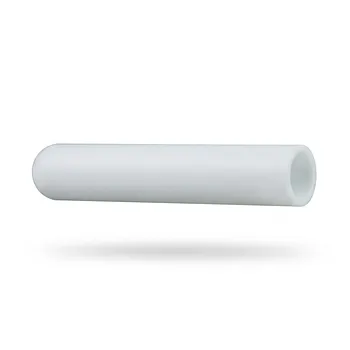
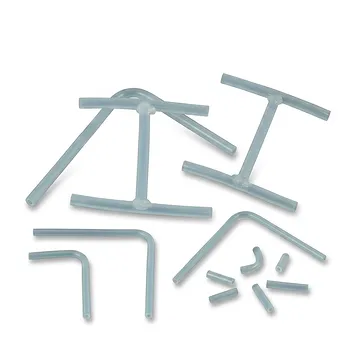
PTFE tubing is a cornerstone material in aerospace and defense due to its exceptional thermal stability, chemical inertness, and electrical insulation. It is specifically engineered to handle the transfer of aviation fuels, hydraulic fluids, and oxygen while maintaining flexibility and sealing integrity under extreme temperature cycling.
PTFE provides a unique solution for high-stakes environments where material failure is not an option. By combining low friction with resistance to corrosive chemicals and high-voltage arcing, it ensures the reliability of critical flight and defense systems.
Resilience Under Extreme Environmental Conditions
Thermal Stability and Cryogenic Performance
PTFE maintains its physical properties across a staggering temperature range, typically from -55 °C to +150 °C, and even into cryogenic levels. This stability is vital for systems exposed to the freezing temperatures of high-altitude flight or the intense heat generated by modern jet engines.
Vacuum Compatibility and Low Outgassing
In space applications, material "outgassing" can contaminate sensitive optical equipment or solar arrays. PTFE exhibits extremely low outgassing behavior, making it an ideal choice for tubing and seals in the vacuum of space.
Resistance to Moisture and Ice Formation
Unlike many polymers, PTFE does not absorb moisture. This prevents dimensional changes during altitude variations and stops ice from forming on the tubing surfaces, which is critical for maintaining fluid flow in cold-start scenarios.
Chemical and Mechanical Integrity
Resistance to Aviation Fluids and Corrosion
Aerospace systems are constantly exposed to aggressive substances like aviation fuels, hydraulic fluids, and de-icing chemicals. PTFE’s chemical inertness acts as a protective barrier, preventing degradation and extending the lifespan of the entire fluid delivery system.
Low Friction and Flow Efficiency
The material's legendary "non-stick" quality significantly reduces internal friction. This leads to smoother fluid flow, lower power consumption for pumps, and a reduced risk of clogging within capillary tubing or instrumentation lines.
Vibration Dampening and Structural Durability
Defense systems must withstand intense mechanical stress and high vibration. PTFE's inherent toughness and abrasion resistance help it absorb these forces, protecting the integrity of fuel-transfer lines and hydraulic control circuits.
Safety and Electrical Considerations
Dielectric Strength and Arc Prevention
PTFE is an excellent electrical insulator with high dielectric strength. When routed near complex electronics or high-voltage engine components, it prevents electrical arcing, providing a critical layer of safety in dense equipment bays.
Weight Reduction and Mass Efficiency
In the aerospace industry, every gram of weight matters. PTFE offers a lightweight alternative to heavier metal piping, allowing for a reduction in overall aircraft mass without sacrificing pressure resistance or durability.
Non-Flammability
Safety protocols in defense and aviation require materials that do not contribute to fire spread. PTFE is non-flammable, ensuring that it remains stable and safe even when positioned near high-heat engine zones or potential ignition sources.
Understanding the Trade-offs
Mechanical Limitations and "Cold Flow"
While PTFE is highly durable, it can be susceptible to creep or "cold flow" under sustained heavy loads. Engineers must often use spring-energized seals or reinforced fittings to ensure the material maintains its shape over long periods of mechanical stress.
Permeability and Gas Transfer
Despite its chemical inertness, PTFE is more permeable to certain gases than metal alternatives. In systems where absolute gas-tight containment is required over long durations, the permeability of the tubing must be carefully weighed against its other benefits.
Selecting PTFE for Your Specific Mission
When integrating PTFE into your aerospace or defense project, the choice should be driven by the specific environmental stressors of the mission.
- If your primary focus is Spacecraft or Satellites: Prioritize PTFE for its low outgassing properties and stability in vacuum conditions to protect sensitive instrumentation.
- If your primary focus is Fuel or Hydraulic Systems: Leverage PTFE-lined tubing to ensure resistance to corrosive chemicals and to benefit from the low friction that improves pump efficiency.
- If your primary focus is High-Altitude Avionics: Utilize the material's moisture resistance and dielectric strength to prevent icing and electrical interference in cold, high-voltage environments.
By matching the unique properties of PTFE to the specific demands of the aerospace environment, you ensure a system that is as reliable as it is efficient.
Summary Table:
| Key Property | Aerospace & Defense Benefit | Application Example |
|---|---|---|
| Thermal Stability | Operates from -55°C to +150°C+ | Jet engines & high-altitude flight |
| Chemical Inertness | Resists aviation fuels & hydraulic fluids | Fuel transfer & hydraulic lines |
| Low Outgassing | Prevents contamination in vacuums | Satellite & spacecraft instrumentation |
| Dielectric Strength | High-voltage insulation & arc prevention | Avionics & electronic equipment bays |
| Low Friction | Enhances fluid flow & pump efficiency | Capillary tubing & precision sensors |
| Non-Flammability | High safety in heat-intensive zones | Engine compartment fluid routing |
Elevate Your Mission Critical Systems with KINTEK
When failure is not an option, the quality of your fluoropolymer components makes the difference. KINTEK specializes in high-performance PTFE and PFA solutions tailored for the most demanding aerospace and defense applications.
From everyday basic labware like beakers, crucibles, and reagent bottles to advanced components such as high-purity trace analysis instruments, cleaning tanks, and fluid transfer systems (tubing, fittings, valves), we provide the precision you need. Our expertise extends to sample prep tools, filtration kits, and custom-engineered reaction apparatus like electrochemical cells and microwave digestion vessels.
Why partner with KINTEK?
- Comprehensive Range: We manufacture virtually all laboratory and industrial supplies crafted from premium PTFE and PFA.
- Precision Engineering: Backed by end-to-end custom CNC fabrication, we deliver everything from complex non-standard machined parts to high-volume orders.
- Material Focus: An exclusive and absolute focus on high-performance fluoropolymers ensures maximum chemical and thermal resistance.
Contact our engineering team today to discuss your bespoke laboratory setups or high-performance component requirements!
Related Products
- Custom High Purity PTFE Digestion Tubes and Centrifuge Tubes for Trace Metal Analysis
- High Purity PTFE Digestion Tubes and Custom Centrifuge Tubes 100ml for Trace Analysis and Chemical Digestion
- Corrosion Resistant PTFE Digestion Tubes for Graphite Block Systems with Acid Reflux Caps Custom Dimensions
- Custom PTFE Digestion Tube Double Sided Openable High Temperature Corrosion Resistant Low Background
- Custom PTFE Condenser Tube 100ml Serpentine and Straight Fluoropolymer Laboratory Heat Exchanger with Flask Adapters
People Also Ask
- What are the common capacities and physical configurations available for PTFE digestion tubes? Expert Selection Guide
- How do PTFE digestion tubes minimize contamination during ultra-trace elemental analysis? Achieve high-purity results.
- What is the primary function of PTFE digestion tubes in a laboratory setting? Essential for Pure Sample Mineralization
- How do PTFE digestion tubes assist in pharmaceutical and biological sample preparation? Ensure High Recovery & Purity
- How does the synergy of pressure and temperature within a PTFE digestion tube improve digestion efficiency? Accelerate Sample Prep