Fluoropolymer-based treatments generally deliver the highest combined water and oil repellency. Compared with silicone and hydrocarbon alternatives, fluoropolymers provide greater resistance to water pressure, substantially better oil repellency, and stronger antifouling performance. Their key advantage is that they can create a high-barrier surface while preserving important substrate properties such as flexibility and breathability.
The central distinction is oleophobicity: silicones and hydrocarbons can provide effective water repellency, but fluoropolymer treatments are better suited when the material must resist both aqueous liquids and organic oils, solvents, or contaminants.
Why Fluoropolymers Provide Stronger Repellency
Lower Surface Energy
Fluoropolymer surfaces can achieve exceptionally low surface energy, reducing the tendency of water, oils, and dissolved contaminants to spread or adhere.
This performance depends on the fluorinated chains reaching the material surface in a sufficiently concentrated and ordered structure. Well-organized fluorinated segments produce a more effective barrier than randomly distributed fluorinated groups.
Strong Water Resistance
Fluoropolymer-based formulations, including fluoroalkyl acrylate polymers, generally provide higher resistance to water pressure than silicone or hydrocarbon polymers.
This makes them appropriate for applications where repellency must remain effective under pressure, repeated fluid exposure, or prolonged contact rather than only during brief splash events.
Superior Oil Repellency
Silicone and hydrocarbon treatments are primarily effective against water because their surface chemistry does not consistently prevent low-surface-tension oils from spreading.
Fluoropolymers reduce the surface's affinity for organic liquids, making them the stronger choice when resistance to oils, fuels, solvents, or other organic reagents is required.
Improved Antifouling Behavior
Because both aqueous and organic contaminants have more difficulty wetting fluoropolymer-treated surfaces, residues are less likely to spread or remain attached.
In laboratory supplies, tubing, reaction vessels, and storage containers, this can support more complete fluid recovery and reduce sample adhesion, contamination, and cross-contamination.
How Silicone and Hydrocarbon Alternatives Compare
Silicone Treatments
Silicone polymers can offer useful hydrophobicity, flexibility, and water repellency. They may be a practical choice when the primary requirement is resistance to moisture rather than resistance to oils and aggressive chemicals.
Their limitation is that water repellency does not automatically translate into strong oleophobicity. A silicone-treated surface may still allow oils or organic liquids to spread, wet, or leave residues.
Hydrocarbon Treatments
Hydrocarbon-based polymers can provide basic water resistance and may be attractive where cost, processing simplicity, or general-purpose protection is more important than maximum performance.
However, they generally provide weaker resistance to water pressure and poor oil repellency compared with fluoropolymers. Their chemical stability is also more limited in demanding thermal or corrosive environments.
Fluoropolymer Treatments
Fluoropolymers are designed for simultaneous hydrophobic and oleophobic behavior. Their performance is especially valuable when the treated surface must resist both water-based solutions and organic solvents without compromising flexibility or breathability.
The carbon-fluorine bond contributes to this durability. Its high bond strength and the steric shielding provided by fluorine atoms help protect the polymer structure from thermal degradation and chemical attack.
What Controls Real-World Performance
Fluorinated Chain Organization
Not every fluorinated formulation delivers the same level of repellency. The fluorinated chains must reach the surface and organize effectively to produce the lowest surface energy.
When the chains form ordered crystalline or smectic surface structures, water and oil repellency can increase significantly. Poor surface organization can result in only moderate performance, even when fluorine is present in the formulation.
Treatment Concentration and Coverage
Repellency depends on sufficient fluorinated material being present at the exposed surface. Incomplete coverage, low fluorine concentration, or poor compatibility with the substrate can leave regions vulnerable to wetting and contamination.
The treatment must therefore be evaluated as a complete formulation and process, not solely by its polymer family.
Substrate Properties
A high-performance treatment should improve surface protection without excessively changing the substrate's flexibility, breathability, or other functional properties.
This balance is important in textiles, flexible components, tubing, and other products where a rigid or impermeable coating would undermine the original design.
Understanding the Trade-offs
Higher Performance Can Require More Specialized Formulation
Fluoropolymers are usually selected when ordinary water repellency is insufficient. Their value is greatest in applications involving oils, solvents, chemical exposure, contamination control, or high water pressure.
For simple moisture resistance, a silicone or hydrocarbon alternative may provide adequate performance with less specialized chemistry.
Repellency Is Not the Same as Universal Chemical Resistance
Fluoropolymer treatments have strong chemical inertness, but performance still depends on the specific polymer architecture, treatment thickness, substrate, temperature, and exposed chemical.
Claims of complete resistance should therefore be validated against the actual aqueous solutions, organic solvents, temperatures, and exposure times expected in service.
Surface Durability Must Be Verified
The initial contact angle or repellency result does not fully describe long-term behavior. Abrasion, cleaning, flexing, heat, and repeated chemical exposure can alter surface organization or remove the treatment.
Testing should measure retained water and oil repellency after the relevant mechanical, thermal, and chemical stresses.
Environmental and Regulatory Factors Matter
Fluorinated chemistries may be subject to application-specific environmental, health, and regulatory requirements. Product selection should consider the exact fluoropolymer chemistry, processing controls, end-of-life conditions, and applicable regulations rather than treating all fluoropolymers as identical.
Making the Right Choice for Your Goal
The correct treatment depends on whether the requirement is basic moisture resistance or simultaneous protection from water, oils, solvents, and contamination.
- If your primary focus is maximum combined water and oil repellency: Choose a well-formulated fluoropolymer treatment with sufficient fluorinated chain concentration and surface ordering.
- If your primary focus is general water repellency and flexibility: A silicone treatment may be adequate when substantial oil or solvent resistance is not required.
- If your primary focus is low-cost, general-purpose protection: A hydrocarbon formulation may be suitable for less demanding moisture-control applications.
- If your primary focus is laboratory or chemical-processing performance: Favor a fluoropolymer system validated for the specific solvents, temperatures, pressure conditions, and contamination risks involved.
For demanding applications, fluoropolymer treatments provide the most defensible route to durable, simultaneous water and oil repellency without sacrificing the substrate's essential physical properties.
Summary Table:
| Property | Fluoropolymer | Silicone | Hydrocarbon |
|---|---|---|---|
| Water repellency | Excellent | Good | Moderate |
| Oil repellency | Excellent | Poor | Poor |
| Surface energy | Very low | Low | Moderate |
| Chemical resistance | Excellent | Good | Limited |
| Durability | High | Moderate | Low |
| Best for | Labs, chemical processing | Moisture protection | Basic water resistance |
Elevate your lab's performance with KINTEK's premium PTFE and PFA products. Our fluoropolymer solutions provide unmatched water and oil repellency, ensuring contamination control and durability. Whether you need custom CNC machined parts or standard labware, our expertise in high-performance fluoropolymers guarantees superior results. Contact us today to discuss your specific requirements and experience the KINTEK advantage.
Related Products
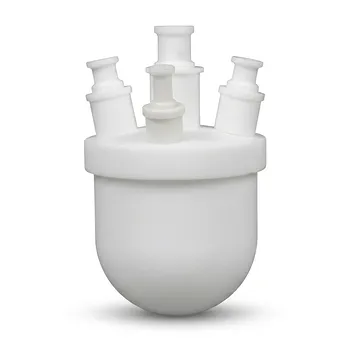
- Custom PTFE Flask 250ml High Purity Fluoropolymer Laboratory Vessel for Chemical Research
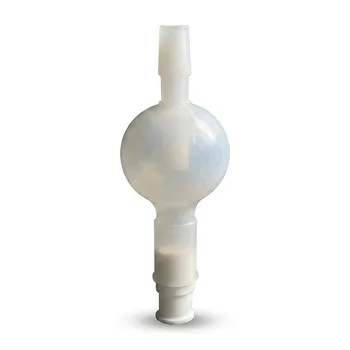
- High Purity PFA Chromatography Column with Collection Bottle Corrosion Resistant Fluoropolymer Filtration System for Trace Analysis
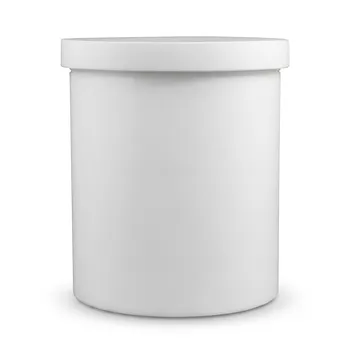
- Custom PTFE Reaction Tank Corrosion Resistant Fluoropolymer Chemical Processing Barrel 10L 20L 30L
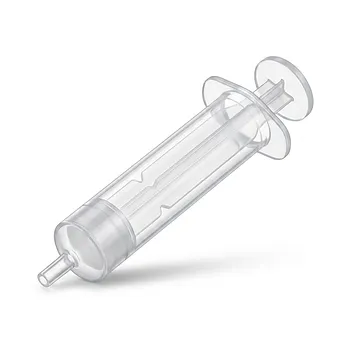
- Corrosion Resistant PFA Syringe Translucent Visual Fluoropolymer Labware 10ml Chemical Handling Tool
- Custom PFA Tubing 1/4 Inch High Purity Corrosion Resistant Fluoropolymer Tube with Welding and Machining Services
People Also Ask
- What are the key steps for structural integrity in molded PTFE lab reaction vessels? Master fine powder processing.
- When synthesizing TFVE monomers involving reactive organometallic reagents and aggressive polar solvents, what material performance characteristics are required? Ensure purity with PTFE/PFA.
- Why Are High-Purity Fluoropolymer Vessels and Tubing Critical for Trace Analysis? Prevent Contamination Reliably
- Why do PTFE fluoropolymer laboratory vessels and containers exhibit superior chemical resistance against harsh solvents and corrosive acids compared to standard plastic labware? Discover the molecular secrets
- Why are fluoropolymer reaction vessels essential for SnO2/rGO synthesis? The Key to High-Performance Composites