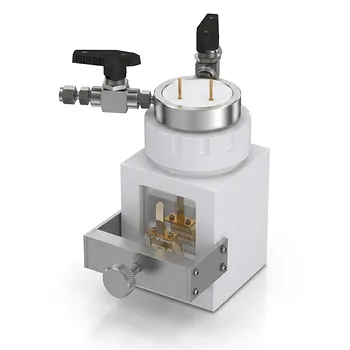
PVDF is the stronger, more mechanically capable choice for moderate chemical service, while PTFE and PFA provide the broadest chemical and thermal protection. Partially fluorinated PVDF retains hydrogen atoms in its polymer backbone, which improves stiffness, strength, and processability but reduces resistance to severe chemicals and elevated temperatures. Fully fluorinated PTFE and PFA are preferred for aggressive acids, strong organic solvents, high-temperature cycles, and ultra-clean trace analysis.
The practical distinction is not simply “chemical resistance versus cost.” PVDF often provides better structural performance and is well suited to porous filtration media, rigid components, and general process equipment. PTFE and PFA are the safer specification when universal chemical compatibility, minimal extractables, and severe thermal exposure are critical.
Why Fluorination Changes Performance
Partially Fluorinated PVDF
PVDF contains both carbon-fluorine and carbon-hydrogen bonds. The retained hydrogen atoms introduce greater polarity and reduce the material’s resistance to certain aggressive chemical and thermal conditions.
This structure also gives PVDF useful mechanical advantages. It generally offers higher tensile strength, greater stiffness, and better dimensional performance than PTFE and PFA in many rigid component applications.
Fully Fluorinated PTFE and PFA
PTFE and PFA contain a highly fluorinated molecular structure with no hydrogen atoms in the polymer backbone. The dense carbon-fluorine structure provides exceptional resistance to chemical attack, low surface energy, and highly non-wetting behavior.
PFA is melt-processable, which makes it suitable for tubing, molded components, and complex fluid-handling parts. PTFE has exceptionally low friction and excellent chemical resistance, although its processing and mechanical behavior differ from those of PFA.
Chemical and Thermal Performance
PVDF Handles Moderate Chemical Environments
PVDF provides good resistance to many acids, bases, salts, and process chemicals. It is commonly appropriate where chemical exposure is significant but does not involve the most aggressive solvents, oxidizers, or thermal cycles.
Its approximate upper operating range is around 150°C, depending on the grade, stress state, exposure duration, and application design.
PTFE and PFA Handle More Severe Exposure
PTFE and PFA are the benchmark materials for concentrated acids, strong bases, organic solvents, and demanding chemical digestion or reaction environments. Their continuous-use temperature limits can reach approximately 260°C, depending on the specific product and service conditions.
Their melting points are substantially higher than PVDF’s. PFA grades commonly melt in the approximate range of 280°C to 316°C, while the relevant engineering limit remains below the melting point and must be determined from the application.
Compatibility Still Requires Chemical-Specific Review
“Universal chemical resistance” is a useful engineering shorthand for PTFE and PFA, but it should not replace a compatibility review. Temperature, concentration, pressure, mechanical stress, permeation, and exposure time can all change material behavior.
PVDF requires particular caution with strong polar solvents and elevated-temperature solvent exposure, where swelling, softening, or degradation can become significant.
Mechanical and Process Performance
PVDF Is Better Suited to Structural Components
PVDF’s higher tensile strength and flexural modulus make it useful for valve bodies, rigid piping components, housings, supports, and other parts that must carry mechanical loads.
It is also easier to process into certain rigid or porous forms than PTFE. This combination makes PVDF attractive when the component must resist chemicals while retaining shape and stiffness.
PTFE Prioritizes Low Friction and Chemical Protection
PTFE has very low friction and a highly non-stick surface. These properties are valuable in seals, sliding interfaces, liners, and components exposed to chemicals that would attack conventional polymers.
The trade-off is that unfilled PTFE is relatively soft and can deform under sustained mechanical load. Design may require appropriate geometry, reinforcement, or a different fluoropolymer grade.
PFA Combines Fluoropolymer Resistance With Processability
PFA preserves the broad chemical resistance associated with perfluorinated materials while offering melt-processability. This supports the manufacture of complex tubing, fittings, vessels, and fluid-transfer components.
For process equipment that needs both severe chemical resistance and a more flexible manufacturing route, PFA is often more practical than PTFE.
Filtration Applications
PVDF Performs Well as a Porous Membrane
PVDF is widely suited to porous filtration media because it combines chemical resistance with mechanical strength and useful membrane processability. Its comparatively low gas permeability can also benefit applications where containment and barrier performance matter.
PVDF membranes may be supplied with different surface treatments or formulations, so wetting behavior must be verified for the actual product. The membrane’s chemical compatibility, pore structure, pressure rating, and sterilization or cleaning conditions should be evaluated together.
PTFE Is Strong for Hydrophobic and Gas-Filtration Duties
PTFE’s low surface energy and hydrophobic behavior make it well suited to applications involving air, gases, vent filtration, and protection against liquid intrusion. It also tolerates aggressive chemical exposure better than PVDF.
PTFE membranes can be less naturally wettable by aqueous liquids. Depending on the filtration process, that may be an advantage or may require a modified membrane or a different material selection.
PFA Is More Common in Severe Fluid-Contact Components
PFA is particularly valuable in high-purity fluid paths, vessels, liners, and fittings surrounding a filtration process. It provides excellent chemical protection and low contamination risk when aggressive reagents or high-temperature cleaning cycles are involved.
The choice between a PVDF membrane and a PTFE or PFA component is therefore often not either-or. A system may use PVDF for the porous filter and PFA or PTFE for the housing, tubing, seals, or upstream chemical-contact parts.
Purity and Trace Analysis
PTFE and PFA Minimize Contamination Risk
PTFE and PFA are preferred for high-purity trace analysis because of their extremely low extractables and resistance to chemical degradation. Their non-wetting surfaces also reduce the tendency of many liquids to remain on or interact with the material surface.
These characteristics are important for digestion vessels, reagent storage, custom liquid-transfer fittings, electrochemical cells, and other apparatus where contamination or sample loss can compromise results.
PVDF Is Appropriate When Ultra-Trace Purity Is Not the Primary Constraint
PVDF can be suitable for general chemical process equipment and filtration applications where mechanical durability and functional performance outweigh the need for the lowest possible extractables.
For critical trace-metal analysis, aggressive digestion, or ultra-clean fluid transfer, PVDF should not automatically be treated as equivalent to PTFE or PFA. The actual grade, additives, manufacturing cleanliness, and extraction data matter.
Understanding the Trade-offs
PVDF Can Fail at the Solvent or Temperature Boundary
PVDF’s useful chemical resistance does not extend equally to every solvent and operating condition. Strong polar solvents, especially at elevated temperatures, can cause swelling, softening, or other forms of material damage.
A compatibility table should be checked against the real concentration and temperature rather than against the chemical name alone.
PTFE Can Be Mechanically Less Robust
PTFE’s chemical resistance does not eliminate mechanical design concerns. It can exhibit creep, deformation under load, and lower stiffness than PVDF, particularly in unsupported or highly stressed parts.
For rigid structural components, a PVDF body or a reinforced PTFE design may be more appropriate than a simple unfilled PTFE replacement.
PFA and PTFE Are Not Always the Most Economical Choice
Perfluoropolymers generally cost more than PVDF and may impose different fabrication requirements. Selecting them for every component can increase system cost without improving performance where the chemical and thermal environment is moderate.
Material selection should be based on the most demanding credible condition, not on fluoropolymer classification alone.
Surface and Manufacturing Quality Affect Filtration Results
Polymer family is only one part of filtration performance. Pore size, pore-size distribution, membrane thickness, pressure differential, wetting state, extractables, and cleaning history can be equally important.
A chemically resistant membrane can still be unsuitable if it has the wrong wetting behavior, flow rate, retention characteristic, or contamination profile.
Making the Right Choice for Your Goal
Choose the material according to the dominant risk in the application:
- If your primary focus is structural strength and moderate chemical processing: Choose PVDF when its chemical compatibility and approximately 150°C operating range cover the process, particularly for rigid housings, valve bodies, piping components, and porous filtration membranes.
- If your primary focus is maximum chemical and thermal resistance: Choose PTFE or PFA for concentrated acids, strong bases, aggressive organic solvents, severe digestion, and elevated-temperature chemical cycles.
- If your primary focus is ultra-clean trace analysis: Prefer PTFE or PFA, supported by product-specific extractables and cleanliness data, to reduce contamination and material-degradation risks.
- If your primary focus is hydrophobic gas or vent filtration: Evaluate PTFE first, especially where resistance to liquid wetting and aggressive chemical exposure is important.
- If your primary focus is high-purity fluid transfer with complex molded or tubing components: Consider PFA for its perfluoropolymer resistance combined with melt-processability.
PVDF is the practical choice when mechanical performance and filtration functionality lead, while PTFE and PFA are the defensible choices when chemical severity, temperature, or purity leaves little margin for material failure.
Summary Table:
| Property | PVDF | PTFE | PFA |
|---|---|---|---|
| Chemical Resistance | Good for moderate acids/bases | Exceptional for aggressive chemicals | Exceptional for aggressive chemicals |
| Max Continuous Use Temp | ~150°C | ~260°C | ~260°C |
| Mechanical Strength | High | Low (soft, creeps) | Moderate |
| Processability | Easy (melt-processable) | Difficult (non-melt) | Easy (melt-processable) |
| Purity/Extractables | Moderate | Very low | Very low |
| Typical Applications | Rigid parts, membranes | Seals, liners, hydrophobic filters | Tubing, fittings, high-purity components |
Need help selecting the right fluoropolymer for your lab? At KINTEK, we specialize in high-performance PTFE and PFA products, from standard labware to custom machined parts. Our experts can guide you through material selection to ensure optimal performance and safety. Contact us today for a free consultation and discover how our end-to-end PTFE/PFA solutions can enhance your laboratory's efficiency and reliability.
Related Products
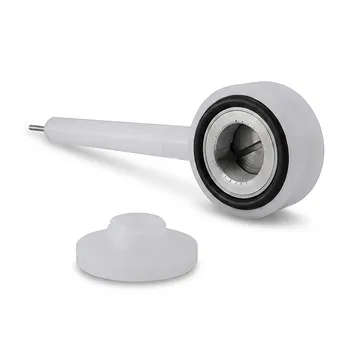
- PVDF Sample Support Body for Corrosion Testing and Electrochemical Analysis
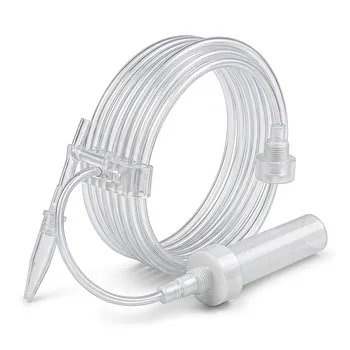
- Custom PFA Tubing 1/4 Inch High Purity Corrosion Resistant Fluoropolymer Tube with Welding and Machining Services
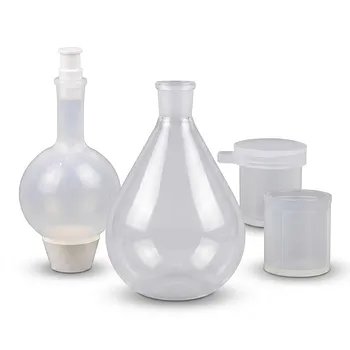
- PFA Eggplant Flask Custom Molded Pear Shaped Laboratory Flask Corrosion Resistant Glass Alternative
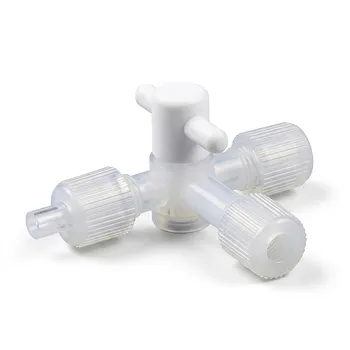
- Corrosion Resistant High Purity PFA Valve and Weldable Transparent Tubing for Semiconductor Fluid Transfer
- High Purity PFA Sample Vials Acid Resistant Trace Analysis Digestion Cups with Lids
People Also Ask
- What is the function of β-phase fluoropolymer interfaces in lithium dendrite suppression, and how does this guide the selection of fluoropolymer electrochemical testing apparatus?
- How to Balance Ionic Conductivity and Water Barrier in Amphiphilic Polymer Electrolyte Membranes? Optimize with Fluoropolymer Testing Supplies
- What role do non-stick fluoropolymer substrates play during the thermal processing and film casting of electroactive PVDF membranes? Optimize your fabrication with PTFE/PFA release surfaces.
- What are the primary operational challenges with gaseous fluorinated monomers like VDF? Discover how specialized PTFE/PFA apparatus enables safe, low-pressure photopolymerization.
- How does VA content affect PVDF ferroelectric properties? Boost breakdown strength with crosslinking