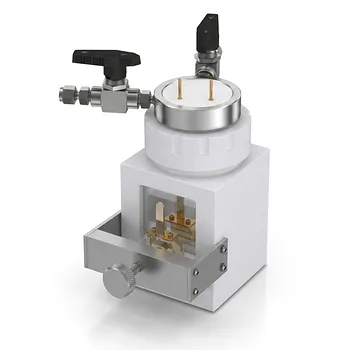
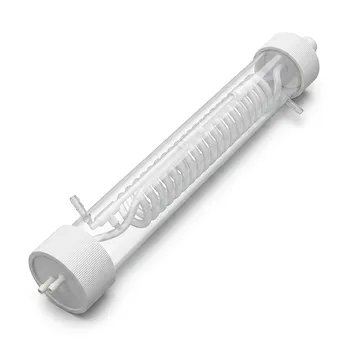
PVDF generally provides a substantially stronger gas barrier than standard PTFE and PFA. Based on the supplied comparison, PVDF has an oxygen permeability of approximately 20 cm³·m⁻²·day⁻¹·bar⁻¹, versus about 1,500 for PTFE and up to 2,900 for PFA/FEP. For nitrogen, PVDF measures around 30, compared with approximately 500 for PTFE and 1,200 for FEP.
For gas-sensitive fluid transfer and containment, PVDF is typically the better barrier material. PTFE and PFA remain valuable when maximum chemical inertness, temperature resistance, low friction, or melt-processability matters more than minimizing gas permeation.
What the Permeability Difference Means
PVDF limits gas ingress more effectively
The reported figures indicate that standard PVDF can provide roughly 25 to 75 times lower oxygen permeability than PTFE and PFA/FEP, respectively. Its nitrogen permeability is also approximately 17 times lower than PTFE and 40 times lower than FEP in the cited comparison.
This makes PVDF useful where atmospheric gases could oxidize a sample, change its composition, or interfere with analytical results.
PTFE and PFA are not impermeable
PTFE and PFA are often described as having excellent barrier performance because they resist many chemicals and water vapor. However, chemical inertness is not the same as gas impermeability.
Gas molecules can still migrate through fluoropolymers by moving through microscopic free-volume pathways or by dissolving into the polymer and diffusing across it. A component can therefore be chemically stable while still allowing measurable oxygen, nitrogen, or solvent-vapor transmission.
Component geometry affects the practical result
Permeability coefficients describe the material, but actual gas transmission also depends on wall thickness, exposed surface area, pressure differential, temperature, and exposure time.
A thin-walled tube with a large surface area may allow more total gas transfer than a thick-walled vessel made from the same polymer. Seals, joints, valve seats, and fittings can also dominate the system’s overall permeation behavior.
Implications for Fluid Transfer Components
PVDF tubing and fittings
PVDF is well suited to fluid transfer lines, valves, fittings, and manifolds where the fluid must be protected from atmospheric gas ingress. Its lower permeability is particularly relevant for oxygen-sensitive, nitrogen-sensitive, or composition-sensitive streams.
PVDF also offers high crystallinity, strong interchain attractions, good rigidity, creep resistance, and abrasion resistance. These properties help components retain their shape under load instead of relying only on chemical resistance.
PTFE tubing and valves
PTFE remains a strong choice when low friction, non-wetting behavior, broad chemical resistance, and high-temperature capability are the dominant requirements. It is widely used in tubing, seals, valve components, and custom laboratory apparatus.
However, standard PTFE should not be selected solely on the assumption that “fluoropolymer” means “lowest gas transmission.” In the supplied comparison, its oxygen and nitrogen permeability are materially higher than PVDF.
PFA tubing and molded fittings
PFA offers the chemical resistance and thermal stability associated with highly fluorinated polymers while also being melt-processable. This enables translucent molded tubing, fittings, wash bottles, and valve bodies where visual inspection and high-purity processing are useful.
For gas barrier performance, though, the cited values place standard PFA/FEP behind PVDF and PTFE. PFA is often chosen for its processing, purity, toughness, and chemical durability rather than for the lowest possible oxygen or nitrogen permeability.
Implications for Containment Vessels
Gas-sensitive sample storage
PVDF can be advantageous for containers holding samples that are vulnerable to oxidation or atmospheric contamination. Its lower gas permeability reduces the rate at which oxygen or nitrogen can migrate through the vessel wall.
The benefit is strongest when the container has a meaningful wall thickness and when the closure system is also designed for low permeation. A highly permeable cap liner or seal can undermine the advantage of a low-permeability vessel body.
Chemical storage and reaction vessels
PTFE and PFA remain appropriate for aggressive chemical storage and reaction applications because their fully fluorinated structures provide broad resistance across severe chemical environments. PFA is also useful when a translucent, molded, high-purity vessel is needed.
PVDF should be evaluated against the specific reagent, concentration, temperature, and pH range. Its mechanical advantages do not eliminate the need to verify chemical compatibility in extreme conditions.
Moisture and vapor containment
PFA and FEP demonstrate particularly low water-vapor permeation in the cited supplementary data, with PTFE also performing strongly. Therefore, a design focused primarily on moisture exclusion may reach a different material decision than one focused on oxygen or nitrogen transmission.
The relevant barrier depends on the molecule of concern. Oxygen, nitrogen, water vapor, chlorine, hydrogen chloride, and organic solvent vapors do not necessarily permeate a polymer at the same rate.
Understanding the Trade-offs
PVDF trades some chemical breadth for barrier and mechanical performance
PVDF is partially fluorinated, whereas PTFE and PFA are fully fluorinated. Its lower gas permeability, higher rigidity, lower density, and stronger mechanical behavior are important advantages, but PTFE and PFA generally offer broader chemical inertness in the most extreme environments.
PVDF is therefore not a universal replacement for perfluoropolymers. The fluid chemistry and operating temperature must be checked before specifying it for a containment vessel or transfer component.
Permeability data must be compared on a common basis
The numerical comparison is meaningful only when the measurements use compatible units, temperatures, pressures, specimen thicknesses, and test methods. Permeability can vary significantly with polymer grade, crystallinity, processing history, orientation, and temperature.
Claims that one material is “impermeable” or always superior should therefore be treated cautiously. The primary comparison supports PVDF as the lower-permeability option for the cited oxygen and nitrogen cases, not for every gas and service condition.
Modified PTFE changes the comparison
Modified PTFE can have much lower permeation than conventional standard PTFE. The cited data show helium permeability falling from 93 in standard PTFE to 1 in modified PTFE for a 2 mm specimen, with substantial reductions also reported for chlorine, hydrogen chloride, and organic solvent vapors.
If extreme chemical resistance is required together with improved barrier performance, modified PTFE may be a better candidate than standard PTFE. It should be compared directly with the specific PVDF and PFA grades under the actual service conditions.
Seals and closures can control the system
The vessel wall is only one part of a containment system. Elastomeric seals, valve stems, threaded interfaces, welds, and tubing connections may have much higher gas transmission than the primary fluoropolymer body.
Material selection should therefore address the complete assembly. A low-permeability PVDF vessel will provide limited practical benefit if its closure or gasket allows rapid gas exchange.
Making the Right Choice for Your Goal
Use the application’s dominant failure mode to guide the material decision.
- If your primary focus is minimizing oxygen or nitrogen permeation: Prefer PVDF for appropriately thick transfer lines, valves, fittings, and vessel walls, while qualifying the seals and closures separately.
- If your primary focus is maximum chemical inertness across extreme environments: Prefer PTFE or PFA after confirming their gas-permeation performance is acceptable for the application.
- If your primary focus is a molded, translucent, high-purity containment component: Consider PFA, particularly when visual monitoring and melt-processable fabrication are important.
- If your primary focus is chemical resistance with a stronger gas barrier: Evaluate modified PTFE alongside PVDF using the target gas, temperature, pressure, and wall thickness.
- If your primary focus is moisture exclusion: Compare PTFE, PFA, and FEP using water-vapor data rather than assuming the oxygen or nitrogen ranking will be identical.
For gas-sensitive fluid handling, PVDF is usually the strongest starting point, while PTFE and PFA remain essential options when chemical, thermal, processing, or purity requirements take priority.
Summary Table:
| Property | PVDF | PTFE | PFA/FEP |
|---|---|---|---|
| Oxygen Permeability (cm³·m⁻²·day⁻¹·bar⁻¹) | ~20 | ~1500 | ~2900 (PFA) |
| Nitrogen Permeability (cm³·m⁻²·day⁻¹·bar⁻¹) | ~30 | ~500 | ~1200 (FEP) |
| Water Vapor Permeability | (Not specifically ranked) | Low | Very Low |
| Chemical Inertness | Good but less than PTFE/PFA | Excellent | Excellent |
| Temperature Resistance | Moderate (up to ~150°C) | Excellent (up to ~260°C) | Excellent (up to ~260°C) |
| Mechanical Strength | High (rigid, creep-resistant) | Moderate (soft, high deformation) | Moderate (tough, less rigid) |
| Melt Processability | Yes | No (sintered) | Yes |
| Typical Gas Barrier Application | Better for oxygen/nitrogen sensitive fluids | Better for chemical resistance | Better for purity/translucency |
| Suitability | Gas-sensitive transfer/containment | Aggressive chemicals, high temp | High-purity, molded parts |
Confirm the best fluoropolymer for your gas-sensitive fluid handling needs.
At KINTEK, we specialize exclusively in high-performance fluoropolymers, offering a comprehensive range of PTFE and PFA labware, from beakers and tubing to custom CNC-machined components. Our expertise helps you balance gas permeability, chemical resistance, and mechanical performance to ensure your applications run with precision and reliability.
Whether you're selecting materials for oxygen-sensitive sample storage or need custom PFA/PTFE components for demanding environments, our team is ready to support you with tailored solutions and OEM/ODM capabilities.
Contact our specialists today to discuss your requirements and find the perfect fluoropolymer solution for your lab.
Related Products
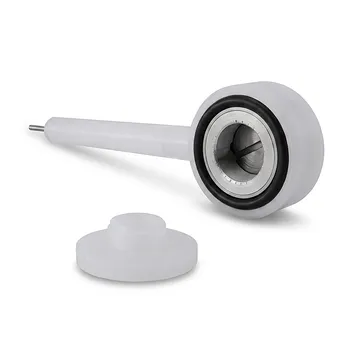
- PVDF Sample Support Body for Corrosion Testing and Electrochemical Analysis
- Custom PFA Tubing 1/4 Inch High Purity Corrosion Resistant Fluoropolymer Tube with Welding and Machining Services
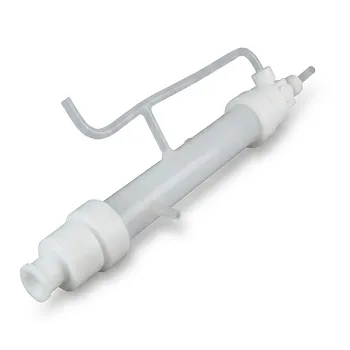
- Corrosion Resistant High Purity PFA Valve and Weldable Transparent Tubing for Semiconductor Fluid Transfer
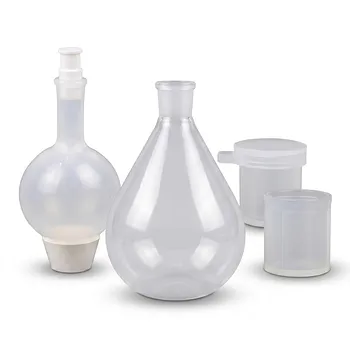
- PFA Eggplant Flask Custom Molded Pear Shaped Laboratory Flask Corrosion Resistant Glass Alternative
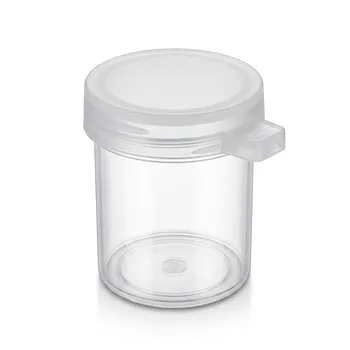
- High Purity PFA Sample Vials Acid Resistant Trace Analysis Digestion Cups with Lids
People Also Ask
- How do PVDF, PTFE, and PFA compare in thermal resistance and chemical solubility for lab apparatus?
- How do the mechanical properties and creep resistance of PVDF compare to perfluorinated polymers like PTFE for structural fluoropolymer components? Discover PVDF's superior strength and lower creep, while PTFE excels in extreme environments.
- How do PVDF, PTFE, and PFA compare for chemical process and filtration applications?
- What is the function of β-phase fluoropolymer interfaces in lithium dendrite suppression, and how does this guide the selection of fluoropolymer electrochemical testing apparatus?
- How to Balance Ionic Conductivity and Water Barrier in Amphiphilic Polymer Electrolyte Membranes? Optimize with Fluoropolymer Testing Supplies