PTFE and PFA provide substantially greater thermal and chemical stability than PVDF for demanding laboratory apparatus. PVDF melts at approximately 170–175 °C and has a lower heat-distortion temperature, while PTFE and PFA melt at approximately 327 °C and 310 °C, respectively. PVDF can also dissolve or swell in selected polar, aromatic, and chlorinated organic solvents, whereas PTFE and PFA are effectively insoluble and offer the broadest chemical resistance among these materials.
PVDF is a strong, rigid, wear-resistant choice for moderate-temperature laboratory components, but PTFE or PFA should be selected when the apparatus will encounter high heat, aggressive solvents, or ultra-trace analytical conditions.
How Thermal Resistance Affects Material Selection
PVDF Handles Heat Better Than Conventional Plastics
PVDF has considerably better thermal endurance than common vinyl polymers such as PVC and PVDC. Brief exposure to approximately 275 °C may cause only slight discoloration without immediate loss of structural properties.
This result should not be interpreted as a continuous operating limit. PVDF still has a substantially lower melting point and heat-distortion temperature than PTFE or PFA, so sustained heating can cause deformation before the material visibly decomposes.
PTFE and PFA Support Higher Operating Temperatures
PTFE melts at approximately 327 °C, while PFA melts at approximately 310 °C. Both are generally suitable for continuous service temperatures around 260 °C, depending on the specific grade, design, mechanical load, and exposure conditions.
This makes them better suited to heated reaction vessels, digestion systems, hot fluid-transfer lines, and other apparatus where dimensional stability is critical.
Mechanical Load Changes the Thermal Decision
Temperature alone does not determine whether a component will remain functional. A polymer under pressure, clamping force, or long-term mechanical load may deform at temperatures well below its melting point.
PVDF offers higher tensile strength, abrasion resistance, and creep resistance than PTFE. It may therefore be preferable for rigid fittings, structural supports, or load-bearing fluid-handling components when temperatures and chemical exposure remain moderate.
How Chemical Solubility Changes the Choice
PVDF Is Resistant but Not Universally Inert
PVDF resists most common chemicals and solvents, making it suitable for many laboratory fluid-handling applications. Its partially fluorinated structure, however, leaves it more vulnerable than fully fluorinated polymers to particular solvents and chemical environments.
Reported examples of solvents that can dissolve or attack PVDF include toluene, xylene, isooctane, chloroform, and carbon tetrachloride. Strong solvents or bases can also cause swelling, chemical attack, or loss of dimensional integrity depending on concentration, temperature, stress, and exposure time.
PTFE and PFA Resist Dissolution
PTFE and PFA have fully fluorinated backbones. The fluorine-rich structure shields the carbon backbone and gives both materials exceptionally broad chemical resistance and very low extractables.
They are effectively insoluble in ordinary laboratory solvents. This makes them more reliable for aggressive solvent service, high-purity containment, and applications where dissolution or swelling could contaminate a sample or compromise a seal.
Solubility Matters Even Without Visible Failure
A component does not need to dissolve completely to create a laboratory problem. Solvent uptake can cause swelling, softening, dimensional change, stress cracking, or extractable contamination.
These effects are particularly important in precision tubing, valve seats, seals, analytical cells, and vessels used for trace-level measurements. PTFE and PFA provide a larger chemical-resistance margin when the exact exposure conditions are uncertain.
Choosing Between PTFE and PFA
PTFE Favors Machined and Low-Friction Components
PTFE has the lowest coefficient of friction among the three materials and provides excellent non-stick behavior. It is well suited to stir bars, sliding seals, gaskets, custom-machined reaction apparatus, and electrochemical components.
PTFE is not conventionally melt-processible because of its extremely high melt viscosity. Complex parts therefore typically require compression molding, sintering, or precision machining.
PFA Favors High-Purity Molded Geometry
PFA offers chemical and thermal performance comparable to PTFE while being melt-processible. It can be molded into seamless tubing, valves, fittings, vessels, and other geometries that are difficult to produce from PTFE.
PFA is also available in translucent or transparent forms, which can help with fluid inspection and process monitoring. It is often the stronger choice for high-purity fluidic systems requiring molded or heat-sealed construction.
Both Materials Suit Critical Chemical Service
PTFE and PFA are appropriate when the primary requirements are maximum chemical inertness, high-temperature capability, low contamination, and long-term stability.
The choice between them is usually driven by fabrication method, transparency, sealing design, friction, and geometry rather than by a major difference in basic chemical resistance.
Understanding the Trade-offs
PVDF Provides Better Structural Performance
PVDF is mechanically stronger and more resistant to abrasion and creep than PTFE or PFA. It can produce more rigid components and may tolerate mechanical handling or sustained loading better.
This advantage can reduce the need for structural reinforcement in moderate-temperature systems. It does not compensate for PVDF's lower solvent resistance when aggressive chemicals are present.
PTFE and PFA Are Softer and More Difficult to Use Structurally
Fully fluorinated polymers generally have lower physical hardness than PVDF. They may deform under load, particularly at elevated temperatures, even though they remain chemically stable.
Designers must account for creep, sealing pressure, support spacing, and dimensional tolerances instead of assuming that a higher melting point guarantees structural performance.
Brief Thermal Survival Is Not Continuous Service
PVDF's ability to withstand a short exposure near 275 °C demonstrates thermal endurance, not suitability for continuous high-temperature apparatus. Long-duration exposure, pressure, mechanical stress, and repeated thermal cycling can produce different results.
The relevant specification is the manufacturer's continuous-use and heat-distortion data for the selected grade and geometry.
Chemical Compatibility Is Condition-Specific
No material-selection decision should rely only on a general label such as “chemical resistant.” Solvent concentration, temperature, exposure duration, pressure, mechanical stress, and mixed-chemical environments can all change performance.
Compatibility data for the actual chemical and operating conditions should be checked, especially for PVDF exposed to aromatic, chlorinated, or strongly polar solvents.
Making the Right Choice for Your Goal
Select the material according to the dominant failure risk in the apparatus:
- If your primary focus is high-temperature containment: Choose PTFE or PFA, because their higher melting points and higher continuous-use temperature capability provide greater resistance to thermal deformation.
- If your primary focus is aggressive or uncertain solvent exposure: Choose PTFE or PFA, which offer broader resistance to dissolution, swelling, and chemical attack.
- If your primary focus is ultra-pure trace analysis: Prefer PTFE or PFA to reduce the risk of solvent interaction, extractables, and contamination from material degradation.
- If your primary focus is mechanical rigidity and creep resistance: Consider PVDF for moderate-temperature, chemically compatible components that must withstand load, abrasion, or pressure.
- If your primary focus is molded transparent tubing or complex fluidic geometry: Choose PFA for its melt processibility and high-purity construction options.
- If your primary focus is low friction or custom-machined parts: Choose PTFE for its non-stick performance and suitability for machined laboratory components.
For demanding laboratory conditions, PTFE and PFA provide the widest safety margin, while PVDF is most effective when mechanical strength matters more than maximum thermal and chemical resistance.
Summary Table:
| Property | PVDF | PTFE | PFA |
|---|---|---|---|
| Melting Point | 170–175 °C | ~327 °C | ~310 °C |
| Continuous Service Temp | ~150 °C (typical) | ~260 °C | ~260 °C |
| Chemical Resistance | Good; susceptible to some solvents (e.g., toluene, chloroform) | Excellent; virtually insoluble | Excellent; virtually insoluble |
| Mechanical Strength | High; rigid, wear-resistant | Lower; soft, deforms under load | Lower; softer but more flexible than PTFE |
| Best For | Moderate temp, load-bearing components | High temp, aggressive chemicals, low friction | High temp, aggressive chemicals, molded parts |
Maximize lab performance and safety with high-quality PTFE and PFA components. At KINTEK, we exclusively craft lab supplies from premium PTFE/PFA, ensuring superior thermal and chemical resistance for even your most demanding applications. Whether you need standard labware, custom-machined parts, or high-purity fluidic systems, our experts are ready to support you. Contact us today to discuss your requirements and get a tailored solution.
Related Products
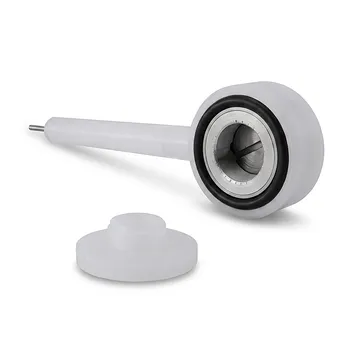
- PVDF Sample Support Body for Corrosion Testing and Electrochemical Analysis
- Custom PFA Tubing 1/4 Inch High Purity Corrosion Resistant Fluoropolymer Tube with Welding and Machining Services
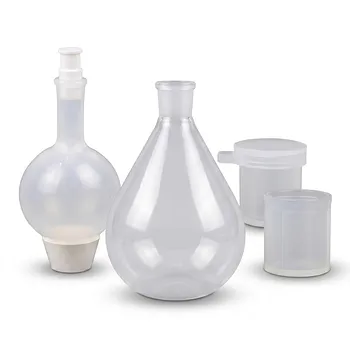
- PFA Eggplant Flask Custom Molded Pear Shaped Laboratory Flask Corrosion Resistant Glass Alternative
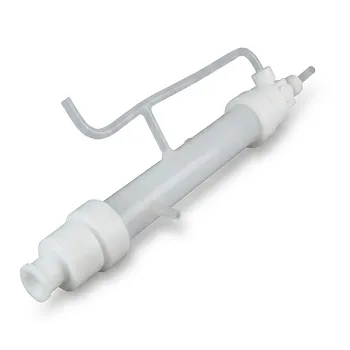
- Corrosion Resistant High Purity PFA Valve and Weldable Transparent Tubing for Semiconductor Fluid Transfer
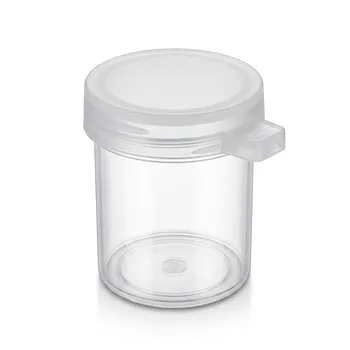
- High Purity PFA Sample Vials Acid Resistant Trace Analysis Digestion Cups with Lids
People Also Ask
- How does the gas permeability of PVDF compare with PTFE and PFA? Discover lower gas ingress for sensitive fluids
- How do the mechanical properties and creep resistance of PVDF compare to perfluorinated polymers like PTFE for structural fluoropolymer components? Discover PVDF's superior strength and lower creep, while PTFE excels in extreme environments.
- How do PVDF, PTFE, and PFA compare for chemical process and filtration applications?
- What is the function of β-phase fluoropolymer interfaces in lithium dendrite suppression, and how does this guide the selection of fluoropolymer electrochemical testing apparatus?
- How to Balance Ionic Conductivity and Water Barrier in Amphiphilic Polymer Electrolyte Membranes? Optimize with Fluoropolymer Testing Supplies