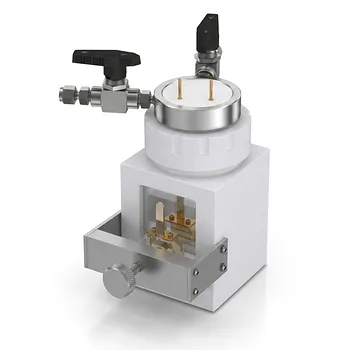
For structural fluoropolymer components, PVDF generally provides the better mechanical platform than PTFE. It offers higher stiffness and strength, better abrasion resistance, and substantially lower creep under sustained or cyclic loading. PTFE and related perfluorinated polymers remain preferable when maximum chemical inertness, purity, or continuous-temperature capability outweighs mechanical rigidity.
PVDF is usually the stronger choice for load-bearing, threaded, pressure-containing, or wear-prone components. PTFE is the safer choice for extreme chemical environments and higher-temperature service, but its greater cold flow can cause dimensional changes under continuous stress.
Why PVDF Performs Better Under Structural Load
Higher rigidity and mechanical strength
PVDF benefits from strong intermolecular interactions between its alternating –CH₂– and –CF₂– groups, along with a relatively high degree of crystallinity. As a result, it generally has higher tensile strength, flexural modulus, and structural rigidity than PTFE.
This makes PVDF better suited to components that must retain their shape, such as valve bodies, fittings, manifolds, threaded connectors, and load-bearing laboratory hardware.
Better resistance to creep
Creep, or cold flow, is the gradual deformation that occurs when a material remains under load for an extended period. PTFE is well known for its relatively high creep tendency, particularly near its upper service-temperature range.
PVDF generally resists this time-dependent deformation more effectively. Threads, sealing surfaces, and pressure-bearing sections therefore tend to maintain their dimensions more reliably when made from PVDF.
Better performance under cyclic loading
PVDF generally provides improved fatigue resistance and longer flex life than unfilled PTFE for mechanically stressed structural applications. This is especially relevant where components experience repeated pressure changes, vibration, or intermittent loading.
The comparison depends on geometry, temperature, stress level, and grade. PTFE remains useful for low-friction applications, but it is not usually the first choice when repeated structural loading and dimensional retention are the primary concerns.
Greater abrasion and wear resistance
PVDF typically offers better resistance to abrasion and mechanical wear than PTFE. This can extend service life in components exposed to sliding contact, particle-bearing fluids, repeated actuation, or frequent assembly and disassembly.
PTFE’s very low friction remains a major advantage, but low friction and high wear resistance are not the same property. PVDF often provides the better balance when the component must both resist wear and carry load.
How Material Structure Explains the Difference
Partially fluorinated versus fully fluorinated polymers
PVDF is partially fluorinated, while PTFE and PFA are perfluorinated. PVDF retains hydrogen-containing groups in its polymer chain, which allows stronger interchain interactions than those found in fully fluorinated PTFE.
That molecular difference contributes to PVDF’s higher mechanical strength and resistance to deformation. The same distinction also explains why PTFE generally offers broader chemical inertness and a higher thermal ceiling.
Reinforcement can further improve PVDF
PVDF’s mechanical performance can be enhanced through mechanical orientation or reinforcement with materials such as glass spheres or carbon fibers. These approaches can increase stiffness, dimensional stability, and resistance to deformation.
However, reinforcement may alter toughness, chemical compatibility, surface behavior, and processability. A reinforced grade must therefore be evaluated as a separate material rather than assumed to behave like unfilled PVDF.
Low moisture absorption supports dimensional stability
PVDF has very low moisture absorption, reported in the supplied references as less than 0.05% at room temperature. This minimizes moisture-related dimensional changes and generally simplifies processing because extensive pre-drying is not normally required.
This property supports consistent component dimensions, although it does not eliminate the need to consider thermal expansion, molding shrinkage, and long-term stress relaxation.
Where PTFE and PFA Still Have the Advantage
Higher continuous-temperature capability
PVDF has a lower melting point and lower heat-distortion temperature than PTFE and PFA. The supplied references identify approximate melting points of 170–175 °C for PVDF, about 327 °C for PTFE, and about 310 °C for PFA.
The melting point is not the same as the maximum continuous-use temperature, but the comparison correctly indicates the broader thermal margin of perfluorinated materials. Temperature must be evaluated together with applied stress because creep accelerates as the material approaches its thermal limits.
Broader chemical inertness
PTFE and PFA provide more universal chemical resistance than PVDF. PVDF resists many chemicals and solvents, but it can be vulnerable to certain strong bases, aggressive solvents, and highly polar organic liquids.
For exposure to unknown chemicals, extreme pH conditions, or aggressive solvent systems, PTFE or PFA generally provides a larger chemical safety margin.
Higher purity and lower interaction risk
Perfluorinated materials are often selected for ultra-trace analysis, high-purity chemical handling, and highly aggressive containment because of their chemical inertness and low tendency to interact with the fluid.
PVDF may still be suitable for many laboratory and fluid-handling applications, but it should not automatically replace PTFE or PFA where contamination control is the dominant requirement.
Understanding the Trade-offs
PVDF is not universally superior
PVDF’s mechanical advantages do not make it the best fluoropolymer for every application. Its lower thermal capability and narrower chemical resistance can become decisive limitations.
The correct comparison is therefore not simply “stronger versus weaker.” It is mechanical stability versus chemical and thermal margin.
Chemical compatibility must be checked at operating conditions
A compatibility chart based only on room-temperature immersion can be misleading. Concentration, temperature, exposure duration, mechanical stress, and the presence of mixtures can change the result.
A PVDF component under tensile or compressive stress deserves particularly careful review when exposed to strong bases or polar solvents, because chemical attack and mechanical creep can reinforce one another.
Avoid relying on material strength alone
A stronger polymer can still fail if the component has sharp thread roots, thin unsupported sections, excessive interference fits, or poorly supported seals. Design geometry, stress concentration, temperature, and load duration often control actual service life.
For critical parts, evaluate stress relaxation, creep, thermal expansion, pressure cycling, and chemical exposure together rather than selecting by tensile strength alone.
PTFE’s creep can be managed, but not ignored
PTFE can still be used structurally through design measures such as greater cross-sectional thickness, external support, anti-extrusion features, and appropriate filled grades. These measures reduce the consequences of cold flow but do not remove PTFE’s inherent tendency to deform under sustained load.
Filler systems may also improve wear and creep resistance, while potentially changing friction, purity, toughness, and chemical behavior.
Making the Right Choice for Your Goal
Use the application’s controlling failure mode—not the polymer’s general reputation—as the selection criterion.
- If your primary focus is structural rigidity and dimensional retention: Choose PVDF when the component must resist sustained loads, retain threads, or remain stable under pressure and cyclic stress.
- If your primary focus is creep resistance: Prefer PVDF, especially for long-term mechanical loading, while confirming performance at the actual temperature and stress level.
- If your primary focus is abrasion and repeated mechanical service: PVDF generally offers the better balance of strength, wear resistance, and flex durability.
- If your primary focus is maximum chemical inertness or purity: Choose PTFE or PFA, particularly for unknown aggressive chemicals, ultra-trace work, or highly polar solvents.
- If your primary focus is high-temperature operation: Prefer PTFE or PFA when the service temperature approaches PVDF’s thermal limits.
- If your primary focus is high mechanical performance from PVDF: Consider an oriented or reinforced grade, but recheck its chemical compatibility, toughness, and processing requirements.
For structural fluoropolymer components, PVDF is typically the better mechanical material, while PTFE and PFA provide the broader chemical and thermal safety margin.
Summary Table:
| Property | PVDF | PTFE/PFA |
|---|---|---|
| Tensile Strength | Higher | Lower |
| Modulus | Higher | Lower |
| Creep Resistance | Better | Poorer (cold flow) |
| Abrasion Resistance | Better | Lower |
| Continuous Temp. | ~150°C | ~260°C |
| Chemical Resistance | Good | Excellent |
| Purity | Good | Excellent |
| Applications | Structural, load-bearing | High-purity, extreme chemicals, high temp |
Choose the right fluoropolymer for your structural components. At KINTEK, we specialize in high-performance PTFE and PFA labware and custom parts, but we also offer PVDF options upon request. Our expert team can guide you in selecting the best material for your specific application, ensuring optimal performance and durability. Contact us today to discuss your requirements and leverage our end-to-end CNC machining capabilities for custom solutions. Get in touch with KINTEK now!
Related Products
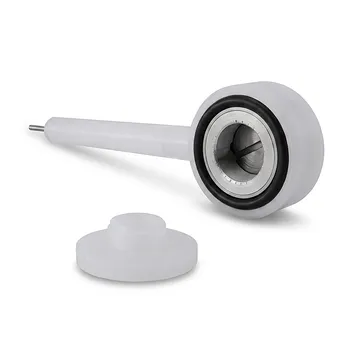
- PVDF Sample Support Body for Corrosion Testing and Electrochemical Analysis
- Custom PFA Tubing 1/4 Inch High Purity Corrosion Resistant Fluoropolymer Tube with Welding and Machining Services
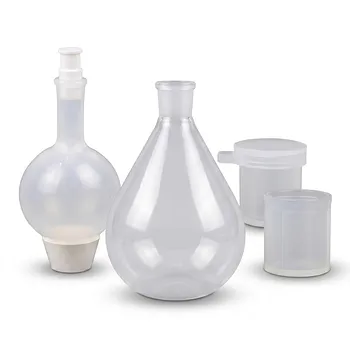
- PFA Eggplant Flask Custom Molded Pear Shaped Laboratory Flask Corrosion Resistant Glass Alternative
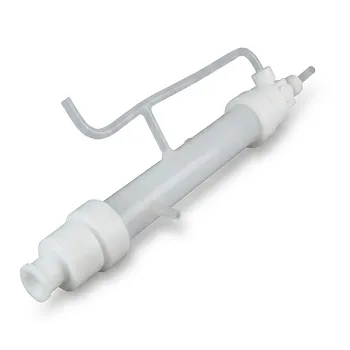
- Corrosion Resistant High Purity PFA Valve and Weldable Transparent Tubing for Semiconductor Fluid Transfer
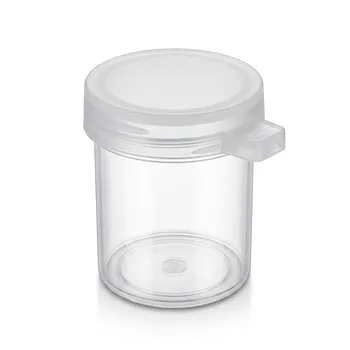
- High Purity PFA Sample Vials Acid Resistant Trace Analysis Digestion Cups with Lids
People Also Ask
- How does the gas permeability of PVDF compare with PTFE and PFA? Discover lower gas ingress for sensitive fluids
- How do PVDF, PTFE, and PFA compare in thermal resistance and chemical solubility for lab apparatus?
- How do PVDF, PTFE, and PFA compare for chemical process and filtration applications?
- What is the function of β-phase fluoropolymer interfaces in lithium dendrite suppression, and how does this guide the selection of fluoropolymer electrochemical testing apparatus?
- How to Balance Ionic Conductivity and Water Barrier in Amphiphilic Polymer Electrolyte Membranes? Optimize with Fluoropolymer Testing Supplies