Ensuring the integrity of copper adsorption data requires precise separation of the solid and liquid phases. A 0.22 micrometer (μm) PTFE syringe filter is necessary because it effectively removes suspended adsorbent fragments that would otherwise cause overestimation of copper concentrations, while the polytetrafluoroethylene (PTFE) material ensures that the filter itself does not adsorb the copper ions, maintaining the sample's true concentration.
The 0.22 μm PTFE filter serves as a critical bridge between the experiment and the analysis, ensuring that only truly dissolved copper ions are measured. It protects both the accuracy of the data by preventing solid interference and the health of the instruments by removing micro-particles.
Ensuring Chemical Integrity and Precision
Removal of Suspended Adsorbent Fragments
During adsorption experiments, fine particles of the adsorbent material can remain suspended in the water sample. If these fragments are not removed via a 0.22 μm pore size, they may be mistakenly analyzed as dissolved copper, leading to inaccurate results regarding the adsorbent's performance.
Chemical Inertness of PTFE
PTFE is selected for its excellent chemical inertness and low non-specific adsorption. Unlike other materials, PTFE does not bind to the copper ions being tested, ensuring that the concentration measured by Inductively Coupled Plasma Optical Emission Spectroscopy (ICP-OES) is representative of the original sample.
Prevention of Light Scattering
In analytical methods like UV-Vis spectrophotometry, residual micro-particles can cause light scattering interference. Using a 0.2 μm filter ensures that the liquid is clear of suspended solids, which is essential for obtaining a reliable and stable measurement of the solute concentration.
Safeguarding Sensitive Analytical Equipment
Avoiding Instrument Blockage
High-precision systems such as HPLC, UPLC, and ICP-OES utilize extremely narrow tubing and injection needles. A 0.22 μm filter intercepts sub-micron particles and secondary aggregates that would otherwise clog the injection system or the column frit, preventing costly downtime and hardware damage.
Enhancing Signal Stability
Removing insoluble by-products and trace organic residues ensures a stable baseline during analysis. By eliminating micro-particles before they enter the mass spectrometry or chromatography system, researchers can maintain the reproducibility of chromatographic peaks and the stability of the injection over long analytical runs.
Resistance to Harsh Solvents
PTFE filters possess wide chemical compatibility, allowing them to withstand strong organic solvents like methanol or acetonitrile without leaching impurities. This "low extractable" profile is vital for trace metal analysis, where even minor contaminants from the filter material could compromise the results.
Understanding the Trade-offs
Flow Resistance and Pressure
The extremely small 0.22 μm pore size creates significant backpressure during manual filtration. This can make the process slow and physically demanding, especially when dealing with high-viscosity samples or high concentrations of suspended solids.
Sample Volume Loss
Syringe filters inherently retain a small amount of liquid, known as hold-up volume. In experiments where the total sample volume is very limited, this loss can be a disadvantage, potentially requiring the use of specialized low-volume filter designs.
Potential for Filter Clogging
Because the 0.22 μm pores are so fine, they can clog rapidly if the sample contains a high density of large particles. In such cases, a "pre-filtration" step with a larger pore size (e.g., 0.45 μm) may be required to prevent the final 0.22 μm filter from seizing immediately.
How to Apply This to Your Project
Recommendations for Implementation
- If your primary focus is trace metal accuracy (ICP-OES): Always use PTFE to ensure the filter does not "steal" copper ions from your sample through non-specific binding.
- If your primary focus is instrument longevity (HPLC/UPLC): Ensure the 0.22 μm pore size is strictly maintained to protect the narrow internal diameters of the chromatography columns and needles.
- If your primary focus is high-concentration adsorbent powders: Consider a two-step filtration process to avoid frequent clogging of the 0.22 μm membrane.
By standardizing your filtration process with 0.22 μm PTFE filters, you ensure that your copper adsorption data is both scientifically valid and reproducible.
Summary Table:
| Key Feature | Functional Benefit | Analytical Importance |
|---|---|---|
| 0.22 μm Pore Size | Precise Solid-Liquid Separation | Prevents overestimation of Cu concentration |
| PTFE Material | Superior Chemical Inertness | Ensures no loss of copper ions to the filter |
| Particle Removal | Instrument Protection | Prevents clogging in HPLC and ICP-OES systems |
| Low Extractables | High Sample Purity | Maintains stable baseline and signal accuracy |
Elevate Your Lab's Precision with KINTEK’s Fluoropolymer Expertise
Achieving uncompromising accuracy in copper adsorption studies requires more than just standard tools—it demands high-performance materials. KINTEK specializes in an absolute focus on high-performance fluoropolymers, providing everything you need for critical analysis and fluid handling.
From everyday basic labware (beakers, measuring cylinders, crucibles, reagent/wash bottles, and digestion tubes) and high-purity trace analysis instruments to comprehensive fluid transfer components (tubing, fittings, valves) and sample prep tools (filters, pipettes, tweezers), we manufacture virtually all imaginable laboratory supplies crafted from PTFE and PFA. Our expertise also extends to advanced reaction apparatus, including custom electrochemical cells, battery testing fixtures, and microwave digestion vessels.
Need a specific solution? Backed by end-to-end custom CNC fabrication, KINTEK is equipped to deliver everything from complex non-standard machined parts to high-volume bespoke setups, ensuring your research is never limited by off-the-shelf components.
Ensure your data's integrity today. Contact our specialists to discuss your custom laboratory needs!
References
- Yun Lee, Youngkyun Jung. Controlled in-situ crystallization in amine-rich millicapsules for hyper-efficient copper recovery. DOI: 10.1007/s42114-025-01439-2
This article is also based on technical information from Kintek Knowledge Base .
Related Products
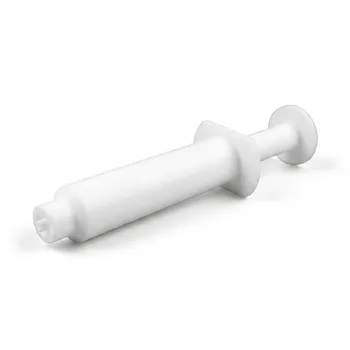
- High Purity 25ml PTFE Syringe for Trace Analysis and Automated Syringe Pump Systems
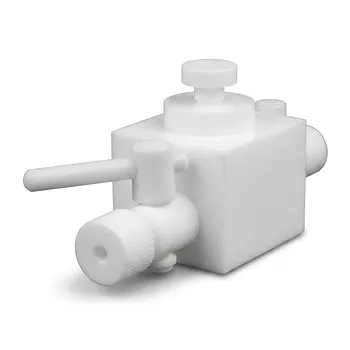
- Custom PTFE Filtration System Acid Resistant High Purity Semiconductor Grade Chemical Processing Filter
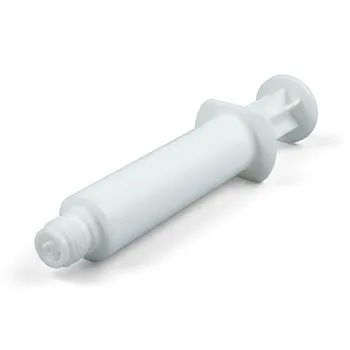
- Virgin PTFE Laboratory Syringe 50ml for Corrosive Chemical Handling and Automated Syringe Pump Systems with FEP Tube Compatibility
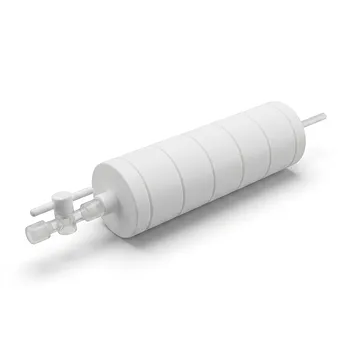
- PTFE Corrosion Resistant Filter with PFA Valve Connections and Integrated Sieve Plate
- High Purity PTFE Syringe 20ml Virgin Fluoropolymer Syringe Pump Compatible Chemical Resistant Sample Injection Tool
People Also Ask
- In what medical devices is PTFE commonly used? Essential Components for Safety and Reliability
- What are the primary applications of PTFE syringe filters in laboratories? Ensure Sample Purity & Protect Sensitive Instruments
- Why are PTFE syringe filters indispensable? For Superior Chemical Resistance and Sample Integrity
- How do PTFE syringe filters compare to membrane filters? A Guide to Chemical Compatibility
- What are the key properties of PTFE syringe filters? Unlock Unmatched Chemical Resistance and Versatility